
Soft and Airy Cinnamon-Walnut Rolls with Cream Cheese Frosting: The Recipe That Makes Your Kitchen Smell Like a Bakery
There is a sound that happens when you pull a pan of cinnamon rolls from the oven. It is not the timer. It is not the oven door. It is the sound of everyone in the house suddenly remembering they are hungry. Butter, sugar, and cinnamon hit the air in one warm wave, and you have an audience before the pan even hits the counter.
I have made a lot of cinnamon rolls over the years, changing a little here and a little there, learning what separates a decent roll from the kind that makes people close their eyes on the first bite. These cinnamon-walnut rolls are the ones that stuck. The dough is soft and pulls apart in feathery layers. The filling is melted butter, cinnamon, sugar, and toasted walnuts that stay crunchy in every swirl. Then the cream cheese frosting melts into the warm crevices and adds just enough tang so the sweetness never feels heavy.
This is not a bakery project. It is a Sunday-morning recipe. A “I want the house to smell incredible” recipe. A “watch the family gather around the pan” recipe. Once you make them from scratch, the plastic-clamshell version never quite measures up.
Why You'll Love This Recipe
The dough is straightforward. No special mixer is required, the kneading is simple, and the dough is forgiving enough for a first-time baker. When it rises properly, it doubles and turns light and airy instead of dense.
The filling is only four ingredients—melted butter, sugar, cinnamon, and crushed walnuts—but they do a lot of work in the oven. The butter soaks into the dough, the sugar caramelizes at the edges, the cinnamon blooms, and the walnuts toast a second time so they taste deeper and stay crunchy.
The cream cheese frosting is what makes people fight over the corner piece. It is tangy, sweet, and creamy. Spread it on warm rolls and it sinks into the swirls instead of sitting on top like a cap of icing.
These work for breakfast with coffee, brunch with friends, an afternoon snack, or dessert with ice cream. Holidays, lazy weekends, or no occasion at all. They earn a place in the rotation because they taste like more effort than they actually take.
Why This Recipe Works
Yeast is what gives the rolls their lift. Warm milk wakes it up, sugar feeds it, and the carbon dioxide it produces gets trapped in the gluten network you build by kneading. That trapped gas is why the finished rolls pull apart in soft layers instead of slicing like cake.
Kneading develops gluten so the dough can stretch, hold shape, and stay tender. Under-kneaded dough bakes up dense. Properly kneaded dough feels smooth, elastic, and only slightly tacky. Press it with a finger and it should spring back slowly.
The filling works because fat carries flavor. Melted butter helps the cinnamon and sugar cling to the dough and stay moist in the oven. Walnuts add a toasty, slightly bitter crunch that keeps the sweetness from becoming one-note. As the rolls bake, the butter-sugar mixture bubbles and caramelizes against the dough, which is how you get those sticky, glossy swirls.
Cream cheese frosting is the contrast. The natural tang from cream cheese cuts the rich filling. Powdered sugar sweetens it and keeps it smooth. A little milk loosens it so it spreads and melts without turning watery.
Ingredient Breakdown
Dough
Sugar (7 tablespoons)
Sweetens the dough and feeds the yeast. Granulated sugar is standard.
Dried yeast (1 teaspoon)
Active dry yeast is widely available. Check the date. If it does not foam in warm milk after 5 minutes, start over with fresh yeast. Instant yeast can be mixed with the flour and skip the blooming step.
Warm milk (1 cup)
Whole milk makes the richest dough. The milk should be about 100–110°F—warm on your wrist, never hot. Too hot kills the yeast. Too cold and it will not wake up.
Egg (1 large)
Adds richness, color, and structure. Room temperature is best so it does not slow the rise.
Vegetable oil (2 tablespoons)
Keeps the dough tender without the weight of butter. Melted butter can be used for a richer flavor if you prefer.
All-purpose flour (2 cups)
Enough protein for structure without toughness. Bread flour makes a chewier roll. Cake flour is too delicate.
Salt (1 teaspoon)
Balances sweetness, strengthens gluten, and keeps fermentation in check. Do not skip it.
Filling
Melted butter (⅓ cup)
Melted, not boiling. Hot butter can make the filling too runny.
Sugar (½ cup)
Granulated is classic. Brown sugar gives a deeper molasses flavor that pairs especially well with walnuts.
Ground cinnamon (1 tablespoon)
A generous amount on purpose. Old cinnamon tastes dusty—replace it if it has been open more than a year.
Crushed walnuts (½ cup)
Toast them first. Five to seven minutes at 350°F deepens the flavor. Cool completely before mixing so they do not melt the butter.
Cream Cheese Frosting
Cream cheese (¼ cup, softened)
Full-fat block cream cheese, not whipped tub cheese. Soften fully or the frosting will be lumpy.
Milk (3 tablespoons)
Add gradually until the frosting is thick but spreadable.
Powdered sugar (½ cup)
Sift if it is clumpy. Add a little more if you want a sweeter frosting.
Kitchen Equipment
A large mixing bowl, wooden spoon, clean work surface, rolling pin, and a 9x9- or 9x13-inch pan are enough. A 9x9 pan makes thicker rolls; a 9x13 pan spreads them out. Unflavored dental floss cuts cleaner than a knife. Plastic wrap or a towel covers the dough while it rises. A whisk or hand mixer takes care of the frosting.
Step-by-Step Instructions
In a large bowl, stir the sugar and yeast together. Pour in the warm milk and let it sit for 5 minutes. The surface should turn foamy. If nothing happens, the yeast is inactive or the milk was too hot.
Add the egg and oil and stir until combined. Add the salt and flour gradually. When the mixture looks shaggy, turn it out onto a lightly floured surface.
Knead 8–10 minutes. Push the dough away with the heel of your hand, fold it over, turn, and repeat. It will start sticky and become smooth and elastic. When you poke it, it should spring back slowly.
Place the dough in a lightly oiled bowl, turn to coat, and cover. Let it rise in a warm, draft-free spot for 1–2 hours, until doubled. A briefly warmed, then turned-off oven is a good proofing spot.
While the dough rises, mix the melted butter, sugar, cinnamon, and cooled crushed walnuts. Leave the filling at room temperature so it stays spreadable.
Punch the risen dough down and roll it into a rectangle about 12 by 18 inches and ¼ inch thick. If it springs back, rest it 5 minutes and try again.
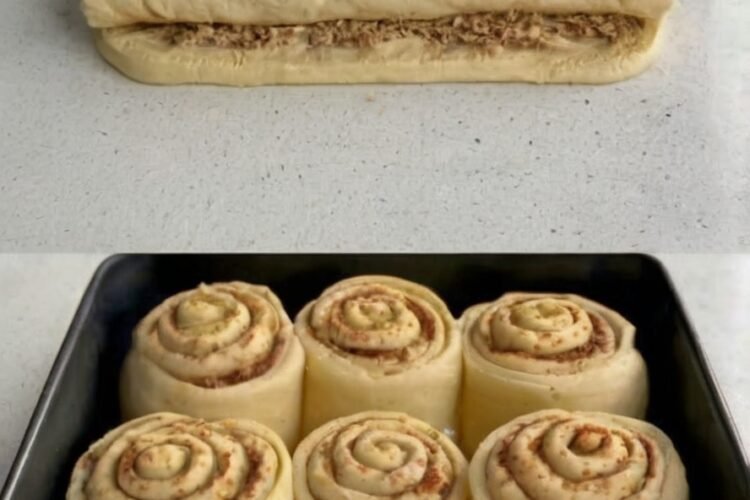
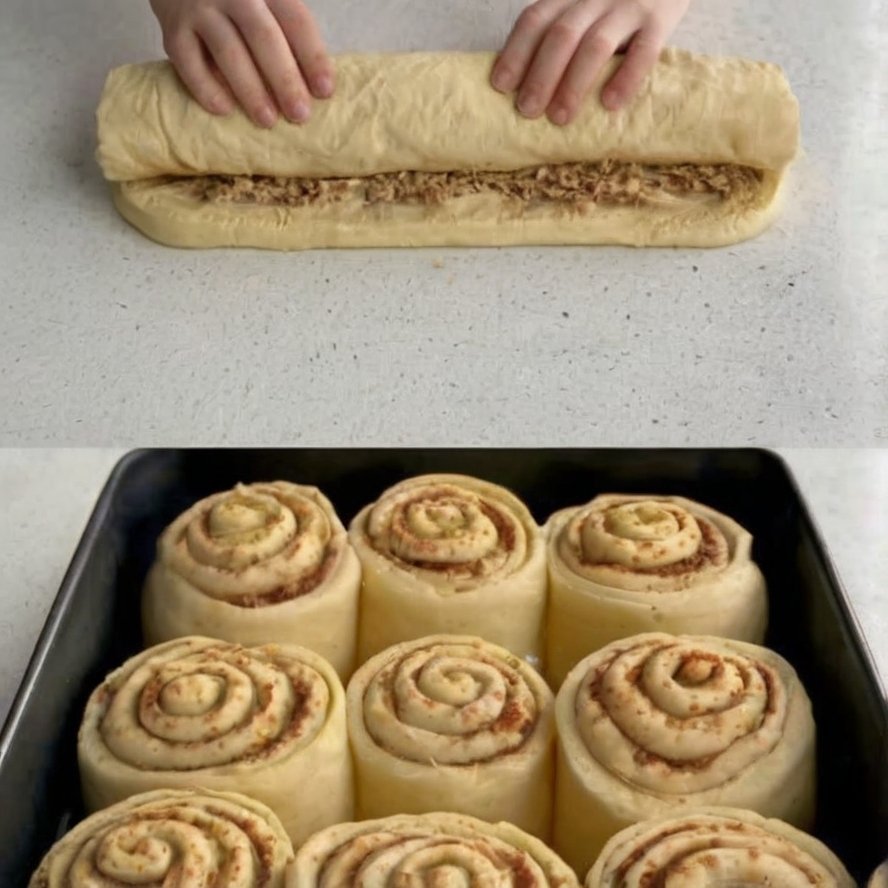
Spread the filling evenly, leaving a ½-inch bare strip along one long edge. Starting from the opposite long edge, roll into a tight log and pinch the seam closed. Place seam-side down.
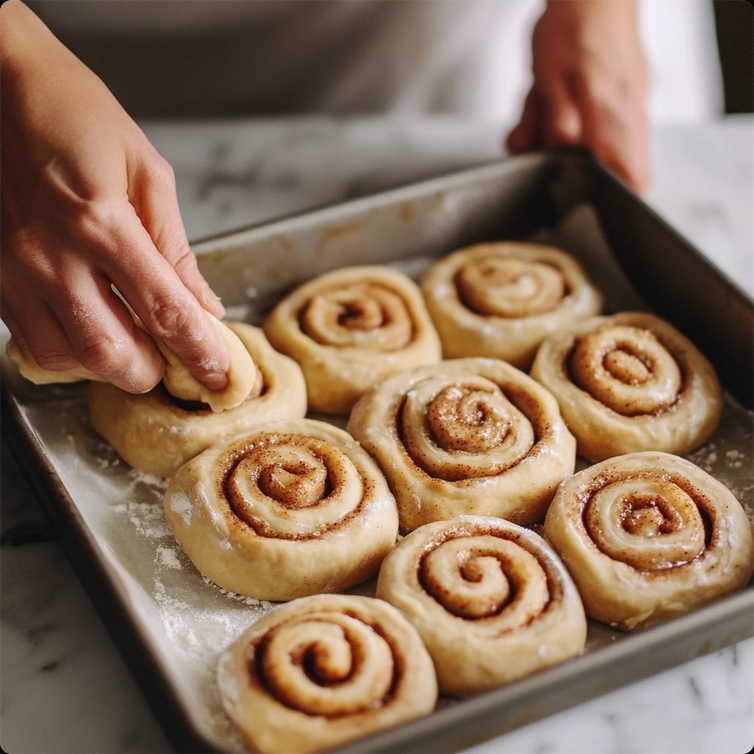
Cut into 9 pieces with a sharp knife or unflavored dental floss. Slide floss under the log, cross the ends over the top, and pull. Arrange the rolls in a greased pan with a little space between them. Cover and let rise 20 minutes, until puffy.
Bake at 350°F for about 20 minutes, until the tops are golden and the filling is bubbling at the edges.
While they bake, beat the softened cream cheese until smooth. Add powdered sugar, then milk a little at a time, until the frosting is smooth and spreadable.
Let the rolls cool 5 minutes. Spread the frosting over the warm rolls so it melts into the swirls without sliding off completely. Serve while they are still warm.
Expert Tips
Bloom the yeast first if you are unsure it is alive. Foam means go. No foam means start over.
Do not rush the rise. Cold kitchens take longer. Wait until the dough actually doubles.
The windowpane test is useful: stretch a small piece of dough. If it thins enough to let light through without tearing, the gluten is ready.
Dental floss keeps the swirls round. A knife can squash them.
Toast the walnuts. Raw walnuts taste flatter and a little bitter by comparison.
Common Mistakes to Avoid
Milk that is too hot kills the yeast, and the dough will never rise.
Under-kneading makes heavy rolls. Over-kneading makes the dough tight and hard to roll. If it fights you, rest it 15 minutes.
Skipping the second rise leaves the rolls dense.
Frosting rolls that are piping hot makes the icing puddle in the pan. Five minutes is the right wait.
Spreading filling all the way to every edge makes the log harder to seal and more likely to leak.
Ingredient Substitutions
Use oat or almond milk, dairy-free butter, and dairy-free cream cheese for a dairy-free version.
Replace the egg with a flax egg (1 tablespoon ground flaxseed plus 3 tablespoons water, rested 5 minutes). The dough will be a little denser.
Pecans or finely chopped almonds can replace walnuts. For nut-free rolls, leave them out or use oats.
Replace up to half the all-purpose flour with whole-wheat flour. All whole wheat makes the rolls heavy.
Brown sugar can replace white sugar in the dough or filling for a deeper caramel note.
Recipe Variations
Add ½ cup finely diced peeled apple to the filling for a fall version.
Sprinkle ½ cup mini chocolate chips over the filling before rolling.
Add ½ cup raisins after soaking them in warm water for 10 minutes.
Use maple sugar in the filling and a spoonful of maple syrup in the dough.
For overnight rolls, shape them, cover tightly, and refrigerate. In the morning, let them sit at room temperature about 30 minutes while the oven heats, then bake.
Make It Healthier
These are a treat, but you can trim them a little. Reduce the dough sugar by a couple of tablespoons. Use half whole-wheat flour. Swap some of the oil for applesauce. Neufchâtel cheese makes a lighter frosting. The walnuts still add useful crunch, fiber, and richness, so keeping them is worth it. Smaller rolls also help if you want the experience without a huge piece.
Meal Prep Tips
Bake on Sunday and refrigerate for easy weekday breakfasts. Warm a roll 20–30 seconds in the microwave. For the best texture, store frosting separately and spread it just before serving. After the first rise, the dough can be punched down, wrapped, and refrigerated up to 24 hours. Bring it toward room temperature before rolling.
Storage
Frosted rolls keep in an airtight container at room temperature for up to 3 days, or in the refrigerator up to a week if the kitchen is warm. Unfrosted rolls keep a little better because the frosting adds moisture.
Freezing
Cool baked rolls completely, wrap well, and freeze up to 3 months. Thaw in the refrigerator and warm before serving.
To freeze unbaked, place shaped rolls in a freezer-safe pan, wrap tightly, and freeze up to 2 months. Thaw overnight in the refrigerator, rise at room temperature until puffy, then bake. Add a few extra minutes if they still feel cold in the center.
Reheating
Microwave one roll for 20–30 seconds. For a pan of rolls, cover loosely with foil and warm at 300°F for 10–15 minutes. High heat dries them out and can scorch the frosting.
What to Serve With It
They are enough on their own. Fresh berries, sliced bananas, or a citrus salad add brightness. After a big dinner, a scoop of vanilla ice cream turns them into dessert. A simple green salad is only needed if you are serving them as part of a larger brunch spread.
Beverage Pairings
Medium-roast coffee is the natural match. Chai tea echoes the cinnamon. Cold milk is still the classic. Warm or cold apple cider works especially well with walnuts. In the evening, a small pour of bourbon sits nicely next to a warm roll.
Frequently Asked Questions
Can I use instant yeast?
Yes. Mix it with the flour and skip the blooming step. The rise may be a little faster.
What if the dough does not rise?
The yeast may be old, the milk too hot, or the room too cold. If there is no rise after 2 hours, start over with fresh yeast and lukewarm milk.
Can I use a stand mixer?
Yes. Use the dough hook on medium-low for 6–8 minutes, until the dough is smooth and pulls away from the bowl.
Why are my rolls dense?
Usually under-kneading or a short rise. Knead fully and wait until the dough doubles.
Can I use a bread machine for the dough?
Yes. Run the dough cycle, then roll, fill, and bake as written.
How do I know they are done?
The tops should be golden and the filling should bubble at the edges. An instant-read thermometer in the center should read about 190°F.
Can I leave out the walnuts?
Yes. The rolls will still be excellent, just less crunchy.
How do I keep the filling from leaking?
Leave a bare edge, roll snugly, and place the rolls seam-side down. A little leakage is normal and makes sticky edges.
Can I double the recipe?
Yes. Use two pans so the rolls have room to rise.
Why is my frosting too thick or thin?
Add milk by the teaspoon if it is stiff. Add powdered sugar by the tablespoon if it is runny.
Nutrition Information
Approximate per roll (based on 9 rolls):
Calories: 250
Total Fat: 12g
Saturated Fat: 5g
Cholesterol: 40mg
Sodium: 220mg
Total Carbohydrates: 32g
Dietary Fiber: 1g
Total Sugars: 16g
Protein: 5g
Values are estimates and vary with exact ingredients and how generously you frost. These are a homemade treat—enjoy them warm.
Final Thoughts
Store-bought cinnamon rolls can be convenient. They cannot give you the smell of dough rising on the counter or the moment the pan comes out and the whole house changes. These cinnamon-walnut rolls are soft, fragrant, and finished with a frosting that melts into every swirl. They are the kind of recipe that becomes Christmas morning, or lazy Sunday, or the thing someone asks you to bring again.
Make them because you have walnuts in the pantry and a free morning. Make them because you want the kitchen to smell like a bakery. And when people gather around the pan arguing over the piece with the most frosting, let them. That is the whole point.
Soft and Airy Cinnamon-Walnut Rolls with Cream Cheese Frosting
Ingredients
Equipment
Method
- Stir sugar and yeast with warm milk. Let stand 5 minutes until foamy. Add egg and oil.
- Mix in salt and flour. Knead 8–10 minutes until smooth and elastic. Cover and rise 1–2 hours, until doubled.
- Mix melted butter, sugar, cinnamon, and walnuts for the filling.
- Roll dough into a rectangle. Spread filling, leaving a border on one long edge. Roll into a log and cut into 9 pieces.
- Place in a greased pan, cover, and rise 20 minutes.
- Bake at 350°F for 20 minutes, until golden and bubbling.
- Beat cream cheese, powdered sugar, and milk until smooth.
- Frost the rolls after 5 minutes of cooling. Serve warm.
Notes
Dental floss gives the cleanest cuts.
Frost while the rolls are warm, not piping hot.
Shaped rolls can be refrigerated overnight and baked in the morning.