
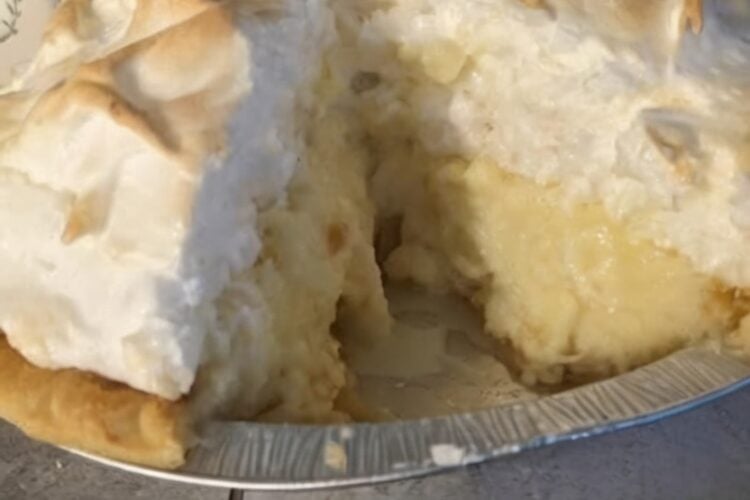
Old-Fashioned Coconut Cream Pie Recipe: Grandma's Easter Classic with Toasted Meringue Peaks
My grandmother never walked into Easter dinner empty-handed, and she never arrived without a coconut cream pie balanced carefully in both hands, still faintly warm from the drive. Before anybody reached for the ham or the mashed potatoes, someone would wander into the kitchen just to confirm it had survived the trip. That was the ritual. The pie was the reason people came, but nobody would say so out loud. The second it came out of the oven, vanilla, toasted coconut, and buttery pastry filled the entire house. The meringue puffed into golden peaks with browned tips, and underneath it the coconut custard settled slowly into something dense, glossy, and impossibly creamy. Years later, one bite of this old-fashioned coconut cream pie recipe takes me straight back to her kitchen table, complete with the chipped coffee cups and the radio playing something nobody was really listening to. This is the full-scratch version. The custard and the meringue are made from nothing but pantry staples in one saucepan, and the only shortcut in the whole recipe is the crust, which you can buy pre-baked in about ninety seconds or blind-bake yourself if you want a genuinely from-scratch pie. That custard is worth the effort on its own. Cooked with cornstarch rather than flour, it sets into something cleaner, glossier, and more translucent than a flour-thickened pudding, with a texture that stays creamy in the refrigerator instead of turning rubbery the next day. It is also an unusually forgiving holiday dessert. A whole nine-inch pie costs roughly $7.50 to $9.50 to make and cuts into eight slices, which works out to just under a dollar a slice against the five to seven dollars a bakery charges for a wedge. That makes it a strong candidate for Easter brunch, Thanksgiving, Christmas dessert, a Mother's Day table, a potluck, or an ordinary Sunday when you want dinner to feel like an occasion. Two things to know before you start. The meringue goes onto the filling while the filling is still hot, which sounds backwards and is exactly right: the heat sets the base of the meringue so it bonds to the custard and does not shrink away from the crust edge. And this meringue contains raw egg white, so bake it until the center reaches 160°F if you are serving anyone at higher risk from undercooked eggs.Why You Will Love This Old-Fashioned Coconut Cream Pie Recipe
- From-scratch coconut custard: sugar, cornstarch, salt, yolks, milk, and vanilla cooked in one saucepan into something glossy and silky. No pudding mix, no boxed filling.
- Cornstarch, not flour: a cleaner set that stays creamy in the fridge and turns slightly translucent when it cools, which is where a lot of coconut pies fall short.
- Toasted meringue peaks: ten seconds of swirling the back of a spoon produces the bakery-window finish that makes people assume you spent twice as long.
- One full cup of coconut: folded through the filling for body and flavor, with extra toasted flakes on top for crunch and fragrance.
- Genuinely holiday-flexible: equally at home at Easter, Thanksgiving, Christmas, Mother's Day, or a Sunday supper.
- Better after chilling overnight: the custard firms up and the flavors settle, which makes this a genuinely good make-ahead pie.
- Budget friendly: about $7.50 to $9.50 for the whole pie, or roughly $0.95 to $1.20 a slice.
- Eight generous servings from one 9-inch pie, which is the right math for a table that already ate turkey.
- Easy step-by-step method, with visual cues instead of relying on the clock.
- Easy to dress up or scale down, with chocolate, lime, and toasted-coconut variations and a mini-pie option.
Why This Old-Fashioned Coconut Cream Pie Recipe Works
The custard is a cornstarch-thickened egg custard, and the three parts do separate jobs. The cornstarch is the structure. Whisked into cold milk and sugar, its granules are suspended rather than clumped, and heat swells them and releases the molecules that turn a thin liquid into a glossy sauce. Unlike flour, cornstarch finishes clear and translucent, and it does not taste faintly of raw grain if the timing is a minute off. That is the whole reason this version tastes more like a restaurant pie. The egg yolks add richness and emulsify the milk into the starch, which is why the filling tastes creamy rather than merely sweet. The salt is a small, deliberate amount, and it does the work of rounding out the sugar rather than making the pie taste salty. Cook the mixture at a gentle bubble, not a rolling boil, and whisk constantly. Constant motion keeps the milk proteins from catching on the bottom, and a too-hot boil will break the custard into curds that will not come back together. The meringue is sugar and acid, in that order of importance. Egg white is mostly water and protein, and beating it alone traps air that collapses fast. Sugar dissolves into that water and binds to the proteins, which tightens the foam and slows the collapse, producing the stiff, glossy structure you want. Cream of tartar lowers the pH just enough to keep the network stable for the whole bake. The meringue must go onto the hot filling because the filling's heat sets the bottom of the foam into place, bonding it to the custard and to the crust at the edges. Spread it to the very edge of the shell, and that seal is what stops the topping from shrinking away from the sides after it bakes. Finally, order of assembly matters more than anything else. Pour the custard hot, top it immediately, and bake while the filling is still warm. A cold filling lets the meringue set on top of it rather than into it, and you end up with two separate layers that slide apart in slices. Baking immediately also means you are not fighting condensation, which is the real cause of a sticky, weeping top.Ingredient Breakdown
For the Coconut Custard Filling
3/4 cup granulated sugar. Sweetness in a cold custard reads as flatter than it does warm, so this amount is doing real work against the whole-cup serving temperature. Cutting to 1/2 cup is a legitimate reduced-sugar version and still tastes like a sweet holiday pie. 1/4 cup plus 2 tablespoons cornstarch. That is six tablespoons total, which sets a firm-but-creamy filling rather than a sliceable block. The cornstarch is whisked into the dry sugar and salt first, before any liquid, which is what keeps the filling smooth instead of lumpy. 1/8 teaspoon salt. Tiny, and not optional. Salt sharpens the sweetness and makes the vanilla read as vanilla instead of as sugar. 3 large egg yolks, lightly beaten. Yolks supply the fat and the emulsifying power that makes the filling taste creamy. Beat them just enough to break the yolks, and reserve the whites for the meringue. This recipe uses exactly three eggs all told. 3 cups whole milk. Whole milk is the single biggest lever on richness and on the pale-golden color. Two percent works and lowers the fat, and the pie will still be good. Skim will not work, because the filling loses the body that makes this a cream pie rather than a pudding. 1 tablespoon butter. Stirred in off the heat at the end, it adds a small round of richness, softens the texture, and keeps the filling from tasting purely starchy. 2 teaspoons pure vanilla extract. Off the heat, always. Vanilla is aromatically fragile, and boiling it flattens the sweetness into something dull. Two teaspoons is the right amount for three cups of milk. If you have ever bought vanilla paste, this is the recipe to spend it on. 1 cup sweetened shredded coconut. Folded in off the heat. Sweetened coconut is what makes this pie taste old-fashioned rather than modern, and it gives the filling a texture that keeps it from reading as plain pudding. Unsweetened works, and then you will want an extra tablespoon of sugar. 1 pre-baked 9-inch pie crust. Store-bought is the difference between this being a Saturday project and this being a Wednesday-night project. A shortcrust shell is crumbly and buttery rather than flaky, which is exactly the right texture underneath a soft custard. If you want a genuinely from-scratch pie, the crust method is in the substitutions section below.For the Toasted Meringue
3 egg whites, reserved from the yolks above. Let them sit out on the counter while you cook the filling. Room temperature whites whip higher, and a bowl with a trace of yolk or grease in it will not hold volume at all. 1/4 teaspoon cream of tartar. The acid that stabilizes the foam and keeps the meringue from weeping in the refrigerator. There is no real substitute and it costs almost nothing. 6 tablespoons granulated sugar, added one tablespoon at a time. Gradual addition is the single most important technique in the meringue, and it is where most people go wrong. Dumping it in at once creates coarse crystals that squeeze water out of the foam and leave you with syrup in the bowl. I would not go below 4 tablespoons, because below that the sugar can no longer hold the whites up. 1/2 teaspoon vanilla extract, folded in at the end of the beating. A half teaspoon is enough to round out the meringue without turning it into a vanilla cloud. Expected total cost runs about $2.00 to $3.50 for the pre-baked shell, $1.75 to $3.00 for a bag of sweetened coconut, roughly $1.10 to $1.30 for three cups of milk, under a dollar for eggs, and a few cents each for sugar, cornstarch, and butter, plus about forty cents for the vanilla. That puts the whole pie at roughly $7.50 to $9.50, or about $0.95 to $1.20 a slice across eight servings. A bakery wedge runs $5 to $7.Kitchen Equipment You Will Need
Standard equipment, nothing specialized. If you own a saucepan, a whisk, and an electric mixer, you are fully equipped.- A medium saucepan with a heavy, flat bottom, which distributes heat and resists scorching
- A whisk that fits the saucepan comfortably, because you will be whisking constantly for ten minutes
- An electric hand mixer or stand mixer with a whisk attachment for the meringue
- A 9-inch pie plate, glass or ceramic
- A separate mixing bowl for the egg whites, clean and completely dry
- A rubber spatula for folding and for smoothing the filling
- A cooling rack, so the bottom of the pie does not steam in its own juices
- Measuring cups and spoons, and a heatproof spatula if you own one
- A rimmed baking sheet for underneath, because sugar syrup will drip out of the shell
- An instant-read thermometer, recommended for confirming the meringue reaches 160°F
How to Make This Old-Fashioned Coconut Cream Pie Recipe
Step 1: Whisk the Dry Ingredients, Then the Yolks and Milk
In a medium saucepan, whisk together 3/4 cup of sugar, 1/4 cup plus 2 tablespoons of cornstarch, and 1/8 teaspoon of salt until evenly combined and no lumps remain. This dry blend is your insurance against a grainy filling. Whisk in the 3 lightly beaten egg yolks until smooth, then pour in the 3 cups of room-temperature milk a little at a time at first, whisking constantly, until the mixture is completely smooth and pourable with no dry pockets.Step 2: Cook the Custard at a Gentle Bubble
Set the saucepan over medium heat and whisk constantly for 8 to 10 minutes, until the mixture thickens and begins to bubble gently and slowly, more like a lazy simmer than a boil. Keep the whisk moving the whole time; resting it for even thirty seconds is how the milk catches on the bottom. The custard is ready when it coats the back of a spoon, leaves a clean channel when you drag a finger through it, and looks glossy rather than matte. Do not let it come to a full boil, because boiling breaks the egg proteins and you will get curds that never smooth out again.Step 3: Add the Butter, Vanilla, and Coconut Off the Heat
Take the saucepan off the heat. Stir in 1 tablespoon of butter and 2 teaspoons of vanilla, then fold in 1 cup of sweetened shredded coconut. Stir until the butter has fully melted and the coconut is evenly distributed. The coconut will make the mixture look a little loose right here, which is normal. It thickens considerably as it cools. Pour the hot filling into the cooled pre-baked shell and smooth the top. Work to the edges. This is the moment the clock is running, so have everything for the meringue ready before you pour.Step 4: Beat the Meringue
Beat the 3 room-temperature egg whites with 1/4 teaspoon of cream of tartar on medium-high until soft, foamy peaks form and no liquid white is pooling at the bottom of the bowl. Then add the 6 tablespoons of sugar one tablespoon at a time, beating for a full minute after each addition, until the meringue is stiff, glossy, and holds a sharp peak. Fold in 1/2 teaspoon of vanilla at the very end. Dull and stretchy means you under-beat it. Grainy and weeping means you added the sugar too fast.Step 5: Top the Hot Filling and Seal the Edges
Spoon the meringue onto the filling while the filling is still hot and spread it right out to the edges of the crust. That seal is what prevents shrinking and keeps the custard from weeping out. Then drag the back of a spoon through the meringue in a few long strokes to pull it up into peaks. Purely cosmetic, about ten seconds, and it is the reason this looks like a bakery window.Step 6: Bake Until the Meringue Is Golden
Bake at 350°F (175°C) for 12 to 15 minutes, until the meringue is set all over and the peaks are golden with lightly toasted tips. Put a rimmed baking sheet underneath your pie plate, because a little sugar syrup will drip out. If you are serving anyone at higher risk from undercooked eggs, including pregnant guests, young children, and older adults, check that the center of the meringue has reached 160°F with an instant-read thermometer. That may add a few minutes. It is worth the tradeoff.Step 7: Cool Completely, Then Chill for at Least 3 Hours
Let the pie cool on a rack to room temperature, then refrigerate for at least 3 hours before slicing. This is not negotiable if you want clean slices, because a warm custard will not hold an edge. Overnight is even better, and the filling does genuinely turn creamier. Loosely tent plastic wrap over the pie during the first hour of cooling to stop the meringue weeping into a sticky blanket, then cover it normally and refrigerate.Expert Tips
- Whisk constantly during the cook. Not intermittently. Thirty seconds of resting the whisk is enough to catch milk solids on the bottom of the pan.
- Never boil the custard. A gentle, slow bubble is the ceiling. A rolling boil is where curds come from, and they will not dissolve.
- Add the sugar, cornstarch, and salt together first. Blending the dry ingredients before the liquid is what keeps the filling perfectly smooth.
- Use whole milk for the richest custard and the palest, most golden color. Two percent is a workable leaner swap; skim is not.
- Top the pie while the filling is hot. The heat sets the base of the meringue and bonds it to the crust, which is what prevents shrinking.
- Add the meringue sugar one tablespoon at a time and beat a full minute after each. This is the difference between glossy and grainy.
- Room temperature whites whip higher. Set the yolks aside on the counter rather than refrigerating them.
- Chill overnight for the cleanest slices. Three hours is the minimum, and the extra hours are free.
- Slice with a knife dipped in warm water and wiped clean between cuts. A cold knife drags the meringue into strings.
- Toast extra coconut flakes for garnish. A tablespoon of golden toasted coconut on top right before serving is the cheapest way to make this look professional.
Common Mistakes to Avoid
- Yolk or grease in the egg whites. One drop of fat and the meringue will not hold volume. Use a clean, dry bowl and make sure no yolk made it across.
- Dumping the sugar in all at once. The foam turns grainy and you get syrup pooled in the bottom of the bowl.
- Under-whipping the meringue. Stiff and glossy is the target. If it flops over when you lift the beaters, keep going.
- Pouring the filling hot into a warm shell. The shell will melt through and leak. Cool it first.
- Letting the filling cool before topping it. The meringue sets on top instead of into the filling, and the two layers slide apart in slices.
- Leaving a gap between the meringue and the crust. That open channel is how the topping shrinks and how the custard weeps out.
- Boiling the custard. It splits into curds. Pull it the moment it thickens and bubbles gently.
- Slicing before 3 hours of chilling. You will get a delicious, shapeless puddle on the first plate.
- Skipping the baking sheet underneath. Sugar syrup drips out and caramelizes onto your oven rack.
- Covering the pie tightly while it is still warm. Trapped condensation is what turns a crisp meringue sticky.
Ingredient Substitutions
- Crust, truly from scratch: for a completely homemade pie, combine 1 1/4 cups all-purpose flour, 1/2 teaspoon salt, and 6 tablespoons cold cubed butter. Cut the butter into the flour until it resembles coarse crumbs, add 3 to 4 tablespoons ice water a spoonful at a time, and press it into a 9-inch pie plate. Chill 30 minutes, then blind bake at 375°F (190°C) for 15 to 20 minutes until the edges are lightly golden. Cool completely before filling. A graham cracker or shortbread shell is an even easier from-scratch-adjacent option and is naturally tender.
- Milk: 2 percent for a leaner pie. Do not use skim, which leaves the filling thin and the flavor flat.
- Coconut: unsweetened shredded coconut works in the filling, with an extra tablespoon of sugar to compensate. For a coconut-free, nut-free table, this becomes a classic vanilla cream pie with toasted almond or none at all.
- Sugar: for a reduced-sugar version, cut the filling sugar to 1/2 cup and the meringue sugar to 4 tablespoons, which is roughly a 25 percent reduction across the pie. Do not go below 4 tablespoons in the meringue, because that sugar is holding the foam up structurally.
- Vanilla: 1 teaspoon extract is fine, and 1 teaspoon of vanilla bean paste gives a visible fleck and a rounder flavor. Almond extract is a lovely change with coconut, though it makes this a different pie rather than the same one.
- Eggs: this recipe already runs on three eggs with nothing wasted, since the whites go into the meringue. There is no reason to substitute.
Recipe Variations
- Chocolate coconut cream pie: spread 4 ounces of melted dark or semisweet chocolate over the baked crust and let it set for 10 minutes before pouring in the filling. Chill the shell first so the chocolate firms up properly.
- Toasted coconut pie: finish the baked pie with a scattering of coconut flakes toasted on a sheet pan until golden, about 5 minutes at 350°F. This is the version my grandmother made, and the crunch is the whole point.
- Coconut whipped cream pie: replace the meringue with freshly whipped cream sweetened with 2 tablespoons of powdered sugar and 1/2 teaspoon of vanilla, and top with toasted coconut. Lower in sugar, and much softer in texture. Add the whipped cream only once the pie is fully cold.
- Tropical coconut pie: fold 1/2 cup of crushed, well-drained pineapple and the zest of one lime into the filling just before pouring. Drain the pineapple properly or the custard goes slack.
- Peanut butter coconut pie: stir 3 tablespoons of creamy peanut butter into the hot filling until smooth. A Southern answer to a question nobody was asking out loud.
- Rum coconut pie: stir 2 tablespoons of light rum or coconut rum into the filling off the heat. Traditional for a reason.
- Coffee-coconut pie: dissolve 1 teaspoon of instant coffee granules into the milk before you whisk it in. Coffee does not make the coconut taste like coffee; it just makes the vanilla and the coconut taste more like themselves.
- Individual mini pies: use mini shells and scale the custard and meringue down proportionally, about 3/4 cup filling per pie. Bake at 375°F (190°C) for 9 to 11 minutes, watching closely, because the sugar syrup in a smaller shell burns faster. These vanish at potlucks.
How to Make It Healthier (Honestly)
Let us start with the actual numbers, because they are the honest part. A slice of this pie runs roughly 350 calories with about 38 grams of sugar and 7 grams of saturated fat, and the sugar is mostly from the 3/4 cup of filling sugar, the meringue, and the sweetened coconut. This is a rich cream dessert built on whole milk, butter, a buttery shell, and a full cup of coconut. It is not a health food, and any recipe telling you otherwise is selling you something. It is also a pie you can eat a slice of without any angst, which is a different kind of useful. These are the levers that actually move the numbers, in descending order of how much they matter:- Cut the filling sugar to 1/2 cup. The single highest-impact change available. A cold custard needs more sugar than a warm one, so 1/2 cup plus 4 tablespoons in the meringue still reads as a properly sweet holiday pie. This is roughly a 25 percent reduction and the pie is still recognizably itself.
- Swap half the sweetened coconut for unsweetened. Keep the full cup for texture and fragrance, and mix 1/2 cup sweetened with 1/2 cup unsweetened. You keep the volume and the flavor profile, and you lose about half the sugar that came with it.
- Use 2% milk. You lose a little richness and a few grams of fat per slice, and the filling still sets and still tastes creamy.
- Skip the meringue for stabilized whipped cream sweetened with powdered sugar and a little vanilla, added only once the pie is completely cold. This is the lowest-sugar topping option, though the pie will be softer and will not keep for three days.
- Consider the crust honestly. A quarter pound of butter in a traditional shell is a meaningful amount of saturated fat across eight slices. A graham cracker or shortbread shell replaces most of that butter with a small amount of whole-grain flour, and honestly the graham version is the better pie.
- Make mini pies. Identical recipe, identical custard, but eight individual desserts instead of one large one, which makes portion control a matter of format rather than willpower.
- Pair it with protein. A slice after a protein-forward meal, or alongside coffee and something with protein, lands far more gently than the same slice on an empty stomach. That is just how blood sugar responds, not a moral judgment about pie.
- What will not help: going low-fat on the coconut or using a sugar substitute in the filling. Both produce a worse pie without meaningfully changing the nutrition, and the coconut is where a surprising amount of the saturated fat comes from anyway.
Meal Prep Tips
This is a genuinely good make-ahead dessert, and the reason is that the filling genuinely improves overnight. Cook the custard, cool it, and cover it in the refrigerator for up to 3 days. The day you are serving, whisk it briefly to smooth it back out, pour it into your shell, and make the meringue fresh and bake. The overnight rest also means the filling is fully set before you top it, so your slices will be noticeably cleaner at a holiday brunch where nobody has time to wait three hours. Do not try to make the meringue in advance. It deflates in the refrigerator within hours, and there is no way to bring it back. The good news is that it takes about five minutes, so it costs you almost nothing to do it fresh.Storage
Refrigerate loosely covered for up to 3 days, on the coldest shelf you have. Meringue softens as the pie sits, so the first slice is reliably the best one. Use a cake dome or a tented piece of plastic wrap rather than a plate pressed flat against the topping, which will flatten and gum it. The custard itself holds its texture well for the full three days, so if the meringue looks a bit softer than it did on day one, that is expected and not a sign of spoilage. Smell it before you eat it; if anything is off, trust your nose over any timeline.Freezing
A meringue-topped coconut cream pie is a poor candidate for freezing whole, and the conventional wisdom is right on this. The meringue goes soft and watery as it thaws, the custard can weep, and you will spend your thawing time wondering whether it is worth the effort. If you are feeding a crowd and want to get ahead, the better move is to freeze the pie without the meringue. Cool the custard-and-crust pie completely, wrap it tightly in plastic and foil, and freeze for up to 2 months. Thaw overnight in the refrigerator, then add a freshly made meringue and bake at 350°F for 12 to 15 minutes. It comes out looking and tasting like it was made that day.Reheating
This pie is best served thoroughly cold straight from the refrigerator, and reheating is only worth it for a pie that has been sitting for a few days. For that case, give a slice 20 to 30 seconds in the microwave and you get a soft custard with a barely-melted meringue, which is exactly how my grandmother served it more than once. For a crisp top, use the oven instead: 10 minutes at 325°F (165°C), which will re-set the custard to its original firm texture and re-crisp the meringue at the same time. Do not microwave a slice long enough for the custard to heat through, or you will lose the clean wedge and end up with a bowl of warm coconut pudding.What to Serve With It
Coconut cream pie is a complete dessert and does not need help, but a few things make it better. Fresh strawberries are the best-known pairing, because their acidity cuts the sugar and their color makes the whole plate look intentional. A raspberry sauce drizzled over each slice does the same job with more drama. A scoop of vanilla bean ice cream on a slightly warm slice is the classic move, because the contrast between cold cream and cool custard is the point of the dessert. Fresh whipped cream and a scattering of toasted coconut flakes dress it up without adding real work. For an Easter brunch, serve it alongside coffee, fresh orange slices, and something bitter on the table, like lightly dressed greens or an herb salad, because this pie is too sweet to be the only flavor in the room. For a potluck, put out the pie, the coffee, the fruit, and a bowl of something salty, and let people build it themselves.Beverage Pairings
- Black coffee: the only correct answer to an 11 AM Easter brunch, and the bitterness cuts the sugar better than anything else on the table.
- Espresso or a cortado: when the pie is all sweetness and texture, the coffee's acidity gives your palate somewhere to go.
- Chai latte: the cinnamon and ginger pick up the coconut and the vanilla in a way that is hard to explain and easy to taste.
- Cold brew with a splash of half-and-half: the dairy echoes the custard and the cold temperature echoes the pie.
- Late-harvest Riesling or a Muscat: a sweet aromatic white with tropical fruit notes is nearly a flavor description of toasted coconut. Unconventional, and almost always noticed.
- Sweet tea or iced coffee: for an ordinary Tuesday. Not sophisticated, and exactly right.
Frequently Asked Questions
Why is my coconut custard runny?
Almost always because it was not cooked long enough. Cook the mixture until it bubbles gently and slowly and thick enough to coat the back of a spoon, leaving a clean channel when you drag a finger through it. A second possibility is that the filling sat too long before slicing; it needs at least 3 hours in the refrigerator, and overnight is better. A third is that you poured it into a shell that was still warm, which melted the butter and leaked the custard underneath. Check the bottom of the pie plate, and that will tell you which one happened.Why is my meringue shrinking away from the crust?
Because it did not seal. Spread the meringue all the way to the edge of the shell and onto the crust, with no gap, and put it onto the filling while the filling is still hot. The heat sets the bottom of the foam and bonds it to both the custard and the shell. The other cause is under-whipping: if the meringue is soft and stretchy rather than stiff and glossy, it will shrink no matter what you do. Beat it until it holds a sharp peak that stands straight up.Can I use unsweetened coconut?
Yes, and you will need to adjust. Use 1 cup unsweetened shredded coconut in the filling and add an extra tablespoon of sugar to compensate, because sweetened coconut carries roughly 50 grams of sugar per cup and that sweetness is a real part of the old-fashioned flavor profile. I would still toast a few sweetened flakes for the top if you can, because the contrast between the sweetened topping and the unsweetened filling is the best version.Why should the meringue touch the crust?
Two reasons, both practical. The meringue seals the custard in, so moisture cannot escape and cause the filling to weep or the topping to shrink. And it gives you a defined, neat edge on every slice instead of a ragged one. Go all the way to the shell, gently press the meringue down against the crust at the perimeter, and you will get a clean border after baking.Can I make it the day before?
Yes, and this is the best way to make it for a holiday. Cook the custard, cool it, and cover it in the refrigerator for up to 3 days. On the day you serve, whisk it smooth, pour it into the shell, and make the meringue fresh right before baking. The filling genuinely does turn creamier overnight, and the overnight rest means it is fully set, which produces much cleaner slices at a brunch where nobody wants to wait.Can I make this old-fashioned coconut cream pie recipe gluten-free?
Yes, and this version adapts well because the custard is thickened with cornstarch rather than flour, so the filling is already gluten-free as written. Use a certified gluten-free pre-baked crust or a gluten-free graham cracker shell, and you are done. Just read the label on the shell carefully, because most stock pre-baked pie crusts are manufactured in a facility that also handles wheat, which matters for someone with celiac disease rather than for someone who simply prefers to avoid gluten.Can I reduce the sugar in this recipe?
Yes. Cut the filling sugar from 3/4 cup to 1/2 cup and the meringue sugar from 6 tablespoons to 4 tablespoons, and you have cut roughly a quarter of the sugar in the pie while keeping it recognizably sweet. Going below 4 tablespoons in the meringue is the one limit not to cross, because that sugar is doing the structural work of holding the whites up, and a collapsed meringue is not a lower-sugar pie, it is a broken one. For blood-sugar-conscious or diabetic-friendly eating, these swaps plus a smaller slice alongside protein is a reasonable way to include it, and you should confirm the details for your own plan with your healthcare provider.Why is this recipe made with cornstarch instead of flour?
Cornstarch thickens into a clear, glossy set that stays creamy in the refrigerator, and it does not taste grainy if the cooking is even a minute off. Flour thickens into something more opaque and matte, with a texture closer to a pudding, and it needs longer cooking to lose its raw taste. For a pie that should taste like a bakery, cornstarch is the better choice, and it is why this filling stays smooth after three days in the fridge instead of turning rubbery.Can I freeze this coconut cream pie?
Not whole with the meringue on it, because the topping goes soft and watery as it thaws. The better approach for a crowd is to freeze the custard-and-crust pie without the meringue for up to 2 months, thaw it overnight in the refrigerator, then top it with a fresh meringue and bake as directed. The meringue takes five minutes, so this is a small price for having a pie that looks and tastes like it was made that morning.Is it safe to serve this pie to pregnant guests or young children?
The custard is fully cooked, but the meringue contains raw egg white. Bake until the center of the meringue reaches 160°F, using a clean instant-read thermometer rather than guessing, for anyone at higher risk from undercooked eggs, which includes pregnant guests, young children, and older adults. That may push the bake a few minutes past the 12 to 15 minute window. Alternatively, skip the meringue, dust the cooled custard with toasted coconut, and skip the worry entirely. The pie is just as good that way.How much does this coconut cream pie recipe cost?
About $7.50 to $9.50 for the whole nine-inch pie, which works out to roughly $0.95 to $1.20 a slice and yields 8 slices. The shell is the most expensive line item, and a graham cracker crust drops the total noticeably. A bakery wedge runs $5 to $7, so a homemade slice costs about a fifth of the bakery price. Sale-priced coconut and a store-brand crust can bring the whole pie under $7.Nutrition Information
Estimated per slice, 1 of 8, using a standard butter pre-baked crust, whole milk, and sweetened shredded coconut:| Nutrient | Amount |
|---|---|
| Calories | ~350 kcal |
| Protein | 6 g |
| Total Fat | ~13 g |
| Saturated Fat | ~7 g |
| Carbohydrates | ~46 g |
| Fiber | 1 g |
| Sugar | ~38 g |
| Sodium | ~150 mg |
Final Thoughts
My grandmother did not measure this pie, and I suspect she did not really have a recipe. She had a saucepan, a crust she could buy in a hurry, a bowl she whipped while the filling cooled, and about forty people she was happy to wait for. That is the whole architecture of the thing. The rest is detail. An old-fashioned coconut cream pie is the kind of dessert that holds a table together across more than one generation. A glossy, vanilla-rich coconut custard, a buttery crust, and a golden meringue with browned tips is elegant enough for a holiday and comforting enough for an ordinary Sunday afternoon. It is genuinely from-scratch cooking in the parts that matter, the custard and the meringue, and it costs less than a dollar a slice to put on the table. Every slice delivers real coconut flavor, light vanilla sweetness, and that nostalgic bakery texture that makes a recipe feel like an heirloom. I hope your peaks brown at the tips, that somebody carries the pie through the door with both hands the way she did, and that no one waits as long as they should before cutting in. If you make it, I would love to hear what you served alongside, whether it was strawberries, raspberry sauce, coffee, or nothing at all, because it did not need any of it. From my kitchen to yours, glossy, golden, and gone before the second cup of coffee.Old-Fashioned Coconut Cream Pie Recipe (Printable Card)
Old-Fashioned Coconut Cream Pie Recipe
Cornstarch Custard • Toasted Meringue • 3 Eggs Total • Holiday Favorite
Coconut Custard Filling
Toasted Meringue
Instructions
- Whisk together the sugar, cornstarch, and salt. Whisk in the egg yolks, then the milk slowly at first, until completely smooth.
- Cook over medium heat, whisking constantly, for 8–10 minutes until thick, glossy, and bubbling gently. Never let it boil.
- Off the heat, stir in the butter, vanilla, and 1 cup coconut until the butter melts completely. Pour into the cooled crust and smooth the top.
- Beat the egg whites and cream of tartar to soft foamy peaks. Add the 6 tbsp sugar one tbsp at a time, beating a full minute after each, until stiff and glossy. Fold in 1/2 tsp vanilla.
- Spread the meringue over the hot filling, right out to the crust edges to seal. Swirl into peaks with the back of a spoon.
- Bake at 350°F for 12–15 minutes until set and golden with lightly toasted tips. Put a rimmed baking sheet underneath.
- Cool to room temperature, loosely tented, then refrigerate at least 3 hours. Overnight is better.
Estimated Nutrition (per slice, 1 of 8)
~350Calories
6 gProtein
~13 gTotal Fat
~7 gSaturated Fat
~46 gCarbs
1 gFiber
~38 gSugar
~150 mgSodium
~$1.05Cost / slice
Cost notes: pre-baked 9-inch shell $2.00–$3.50, sweetened coconut $1.75–$3.00, whole milk $1.10–$1.30, 3 eggs under $1.00, sugar and cornstarch under $0.40, butter and vanilla about $0.80 — roughly $7.50–$9.50 for the whole pie, or about $0.95–$1.20 a slice for 8 slices. A bakery wedge runs $5–$7. A graham cracker shell and sale coconut bring the total under $7.
The three rules that matter: whisk constantly and never boil the custard; add the meringue sugar one tablespoon at a time; top the pie while the filling is still hot and press the meringue to the crust edges so it seals and does not shrink.
Custard doneness: it should coat the back of a spoon, look glossy, and leave a clean channel when you drag a finger through it. A full boil breaks the egg proteins into curds that will not smooth out.
Gluten-free: the custard is gluten-free as written because it uses cornstarch, not flour. Use a certified gluten-free pre-baked shell or a gluten-free graham cracker crust. Most stock pre-baked shells are made in a facility that also handles wheat, which matters for celiac disease.
Egg safety: the custard is fully cooked but the meringue contains raw egg white. Bake until the center of the meringue reaches 160°F for anyone at higher risk from undercooked eggs, including pregnant guests, young children, and older adults. Skipping the meringue and using toasted coconut is a safe alternative.
Freezing: do not freeze a whole meringue-topped pie; the topping turns soft and watery. Freeze the custard-and-crust pie for up to 2 months, thaw overnight in the refrigerator, then add a fresh meringue and bake as directed.
Honest disclosure: this is a high-sugar dessert. About 38 g of sugar and 7 g of saturated fat per slice, from the filling sugar, the meringue, the full cup of sweetened coconut, the whole milk, and the butter crust. Coconut is a larger saturated-fat contributor than most people expect. Estimates only; brands, crust choice, and slice thickness all move these numbers.
Printing just this recipe card. If the button does not respond, use your browser’s own print command and select the card only.