
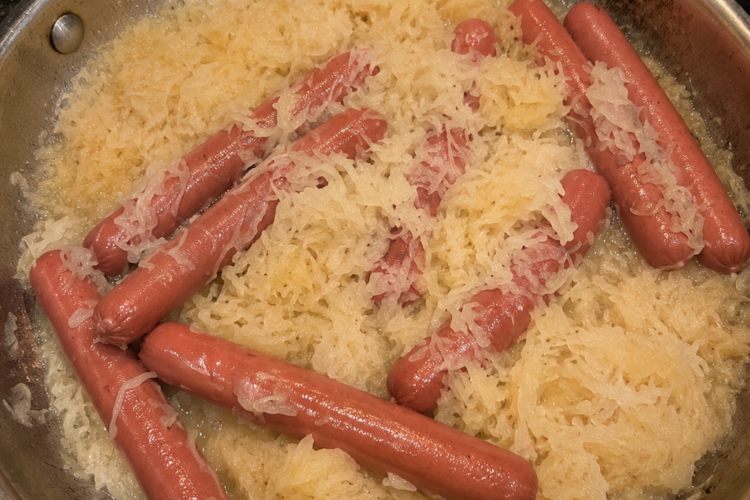
One-Pan Hot Dogs and Sauerkraut: The Sunday Football Dinner That Still Tastes Like Home
My dad made this every single Sunday during football season. The smell would start early—butter melting, sauerkraut softening, hot dogs plumping up in the pan—and by the time kickoff arrived the whole house smelled like pure comfort. It was never fancy. It never tried to be. It was just hot dogs nestled into tangy sauerkraut, simmered together until everything turned soft, savory, and deeply satisfying. We would eat it straight from the skillet with mustard and crusty bread, eyes half on the game and half on the pan.
I made it last night the same way he did. My husband walked in, saw the skillet on the stove, and grabbed a fork before I could even reach for plates. That is the power of this simple meal. The sauerkraut gets buttery and lightly caramelized at the edges. The hot dogs plump and soak up all that tangy, savory flavor. It is the kind of dinner that feels like you are getting away with something—minimal effort, maximum comfort, and a taste that lands exactly like home.
This is not restaurant food. It is the food of Sunday afternoons, of stadium blankets and second helpings, of meals that ask almost nothing of you and still deliver everything you need.
Why You'll Love This Recipe
This one-pan hot dogs and sauerkraut dinner is the definition of low-effort, high-reward cooking. It uses a short list of inexpensive ingredients, requires almost no prep, and comes together in about twenty minutes. The flavors are bold and nostalgic—tangy sauerkraut, buttery richness, juicy hot dogs—and the method is forgiving enough for the most tired weeknight.
It is perfect for football Sundays, casual family dinners, or the nights when you want something satisfying without a long ingredient list or complicated steps. Leftovers reheat well. The whole meal happens in one skillet. And because it tastes like something that has been made the same way for decades, it carries a quiet sense of tradition even if you are making it for the first time. Once you try the combination of caramelized sauerkraut and plump hot dogs, you will understand why it has stayed on so many tables for so long.
Why This Recipe Works
The technique is simple but effective. Melting butter in the skillet and letting the drained sauerkraut cook for a few minutes softens its sharp edges and begins to caramelize the strands, creating deeper flavor and a more tender texture. Nestling the hot dogs directly into the sauerkraut allows them to heat gently while absorbing the tangy, buttery juices. A short covered simmer finishes the hot dogs and lets the flavors meld without drying anything out.
Caraway seeds (if used) add that classic deli-style aromatic note that pairs so naturally with cabbage and pork. A splash of beer or broth is optional but contributes a little extra richness and moisture. Black pepper at the end brightens everything. The result is a cohesive, savory skillet meal that tastes far more developed than the short cooking time suggests. No separate boiling of hot dogs, no multiple pans, no complicated sauce—just one skillet and good timing.
Ingredient Breakdown
Hot dogs are the protein center. One standard package (about 8) is perfect for a family meal. Choose your favorite brand—beef, pork, or a mix. Good-quality hot dogs make a noticeable difference in flavor and texture.
Sauerkraut provides the tangy, savory backbone. About 2 cups (one jar or bag), drained, is the right amount. Look for sauerkraut that tastes bright and clean rather than overly sour or mushy. Draining prevents the skillet from becoming watery.
Butter adds richness and helps the sauerkraut caramelize. Two tablespoons are enough to coat the pan and flavor the entire dish. Use real butter for the best taste.
Caraway seeds are optional but highly recommended for classic deli flavor. One teaspoon gives a subtle anise-like note that complements the cabbage and hot dogs beautifully.
Black pepper seasons the finished dish. Freshly ground is ideal.
Beer or chicken broth (optional) adds a little moisture and depth. A splash is all you need. Water works in a pinch.
Kitchen Equipment
You need one large skillet with a lid, a spatula or wooden spoon, and a knife for any optional garnishes. That is the entire list. One pan means almost no cleanup.
Step-by-Step Instructions
Melt 2 tablespoons butter in a large skillet over medium heat. Swirl to coat the bottom of the pan.
Add the drained sauerkraut and spread it into an even layer. Cook for about 5 minutes, stirring occasionally, until the sauerkraut softens and begins to pick up a little golden color at the edges. This step takes away some of the raw sharpness and builds flavor.
Nestle the hot dogs into the sauerkraut, spacing them evenly so they sit down into the cabbage. Sprinkle with 1 teaspoon caraway seeds if using, and add a splash of beer or chicken broth if desired.
Cover the skillet and reduce the heat slightly to maintain a gentle simmer. Cook for 10–12 minutes, stirring once or twice and turning the hot dogs as needed, until the hot dogs are heated through and plump and the sauerkraut is tender and lightly caramelized in places.
Remove the lid, taste, and season with black pepper. If the mixture looks dry, add another small splash of broth or water and stir.
Serve straight from the skillet while everything is hot and juicy.
Expert Tips
Drain the sauerkraut well so the skillet does not become watery. A quick press in a colander or salad spinner helps.
Do not rush the first 5 minutes of cooking the sauerkraut. That short sauté is what gives it depth and removes excess sharpness.
Keep the heat at medium to medium-low once the hot dogs go in. A gentle simmer heats them through without splitting the casings or drying them out.
If you like softer sauerkraut, cook it a few minutes longer before adding the hot dogs.
A well-seasoned cast-iron skillet gives especially good caramelization on the edges of the sauerkraut.
Taste before adding salt. Most hot dogs and sauerkraut already contain plenty of sodium; black pepper is usually all you need.
Common Mistakes to Avoid
Skipping the drain step leaves too much liquid in the pan and produces a watery result instead of a cohesive, flavorful mixture.
Cooking the hot dogs over high heat can cause the casings to split and the meat to dry out. Gentle heat is better.
Stirring too aggressively can break the hot dogs apart. Turn them carefully with tongs or a spatula.
Adding salt too early or without tasting can make the dish overly salty. Season at the end and with a light hand.
Serving it after it has sat too long lets the hot dogs cool and firm up. This meal is best eaten hot from the skillet.
Ingredient Substitutions
Kielbasa or smoked sausage can replace the hot dogs for a heartier version. Slice it into pieces or leave the links whole.
Fresh cabbage, thinly sliced and cooked longer with a splash of vinegar, can stand in for sauerkraut if needed, though the flavor will be different.
Olive oil or bacon fat can replace the butter. Bacon fat adds extra smoky depth.
Fennel seeds can replace caraway seeds for a similar but slightly sweeter aromatic note.
Apple cider or a splash of white wine can stand in for beer or broth.
Turkey or chicken hot dogs work if you prefer a lighter option.
Recipe Variations
Add sliced onions to the pan with the sauerkraut and cook until softened for extra sweetness.
Stir in a spoonful of whole-grain or Dijon mustard during the last few minutes for built-in tang.
Top each serving with shredded Swiss cheese and let it melt for a Reuben-inspired skillet.
Serve the mixture over mashed potatoes or buttered egg noodles for a more substantial meal.
Add a diced apple with the sauerkraut for a subtle sweet-tart contrast that pairs beautifully with the pork.
Make it spicy with a pinch of red pepper flakes or a few dashes of hot sauce.
Make It Healthier
Choose lower-sodium sauerkraut and reduced-sodium hot dogs to control salt. Use a modest amount of butter or replace half of it with olive oil. Load the plate with extra vegetables on the side—steamed green beans, roasted carrots, or a simple salad—so the skillet becomes part of a balanced meal. Turkey hot dogs reduce fat while still delivering the classic experience. The dish is already relatively simple and portion-friendly when served with vegetables and a modest amount of bread or potatoes.
Meal Prep Tips
This meal is best made fresh, but you can cook the sauerkraut ahead and refrigerate it for a day or two. When ready to eat, reheat the sauerkraut in the skillet, add the hot dogs, and finish as directed. Leftovers reheat well and can be packed for lunch. The entire dish comes together so quickly that full advance preparation is rarely necessary, but having the sauerkraut drained and ready makes the process even faster.
Storage
Cool leftovers completely, then store them in an airtight container in the refrigerator for up to 3 days. The flavors continue to meld, and the dish reheats nicely. Keep any bread or side dishes separate so they do not become soggy.
Freezing
Hot dogs and sauerkraut can be frozen, though the texture of the sauerkraut softens further upon thawing. Cool completely, portion into freezer-safe containers, and freeze for up to 2 months. Thaw overnight in the refrigerator and reheat gently on the stovetop with a splash of broth or water. For best quality, enjoy this dish fresh or from the refrigerator rather than the freezer.
Reheating
Reheat leftovers in a skillet over medium-low heat with a splash of water or broth to loosen the mixture and prevent drying. Stir occasionally until hot. Individual portions can be microwaved in 30-second intervals, stirring between each, until heated through. A fresh grind of black pepper and a dab of mustard revive the flavors beautifully.
What to Serve With It
Crusty bread or soft pretzel rolls are perfect for soaking up the juices. Strong mustard (Dijon, whole-grain, or spicy brown) is almost mandatory. Mashed potatoes turn the skillet into a full comfort meal. A simple green salad or steamed vegetables balance the richness. For a classic deli-style plate, add pickles and a side of potato salad. The dish is hearty enough that sides can stay simple and supporting.
Beverage Pairings
Cold beer is the natural partner—a lager, pilsner, or German-style beer complements the sauerkraut and hot dogs perfectly. Apple cider (hard or soft) echoes the European roots of the dish. Iced tea or sparkling water with lemon keeps things refreshing. For wine drinkers, a dry Riesling or Grüner Veltliner handles the tang and richness well. The meal is casual and savory, so any cold, crisp drink works.
Frequently Asked Questions
Do I need to boil the hot dogs first? No. They heat through gently in the covered skillet and stay juicier this way.
Can I use fresh cabbage instead of sauerkraut? Yes, but the flavor will be milder. Slice it thin, add a splash of vinegar or lemon juice, and cook longer until tender.
Is the caraway necessary? No, but it adds authentic deli-style flavor. Omit it if you prefer or do not have it on hand.
Can I make this in a slow cooker? Yes. Combine everything and cook on low for 2–3 hours or high for 1–1½ hours until the hot dogs are hot and the sauerkraut is tender.
How do I keep the hot dogs from splitting? Use gentle heat and avoid boiling aggressively. A steady simmer is ideal.
Can I double the recipe? Yes. Use a larger skillet or Dutch oven and extend the cooking time slightly so everything heats evenly.
What kind of sauerkraut is best? A good-quality refrigerated sauerkraut usually has better texture and flavor than canned, but both work. Drain well either way.
Can I add potatoes? Yes. Par-boil cubed potatoes and add them with the sauerkraut, or serve the finished dish over mashed potatoes.
Is this gluten-free? Most hot dogs and sauerkraut are gluten-free, but always check labels. Serve with gluten-free bread if needed.
How many people does this serve? Four as a main dish with sides, or two very hungry people with leftovers.
Nutrition Information
Approximate nutrition per serving (based on 4 servings): Calories: 320 Total Fat: 26g Saturated Fat: 11g Cholesterol: 55mg Sodium: 980mg Total Carbohydrates: 8g Dietary Fiber: 3g Total Sugars: 3g Protein: 12g
Values are estimates and will vary with specific brands of hot dogs and sauerkraut. This is a satisfying, protein-forward meal; balance it with vegetables and modest portions of bread or potatoes.
Final Thoughts
Some of the best dinners are the ones that never tried to impress anyone. This one-pan hot dogs and sauerkraut is exactly that kind of food—simple, savory, and deeply comforting. It carries the smell of football Sundays and the feeling of a meal that asks very little while giving a lot. Every time I make it I think of my dad at the stove, the game on in the background, and the way the whole house would fill with that buttery, tangy aroma. Now the same skillet dinner shows up in my own kitchen, and it still disappears just as fast. Keep a package of hot dogs and a jar of sauerkraut on hand. The next time you want something easy that tastes like home, you will already know what to do.
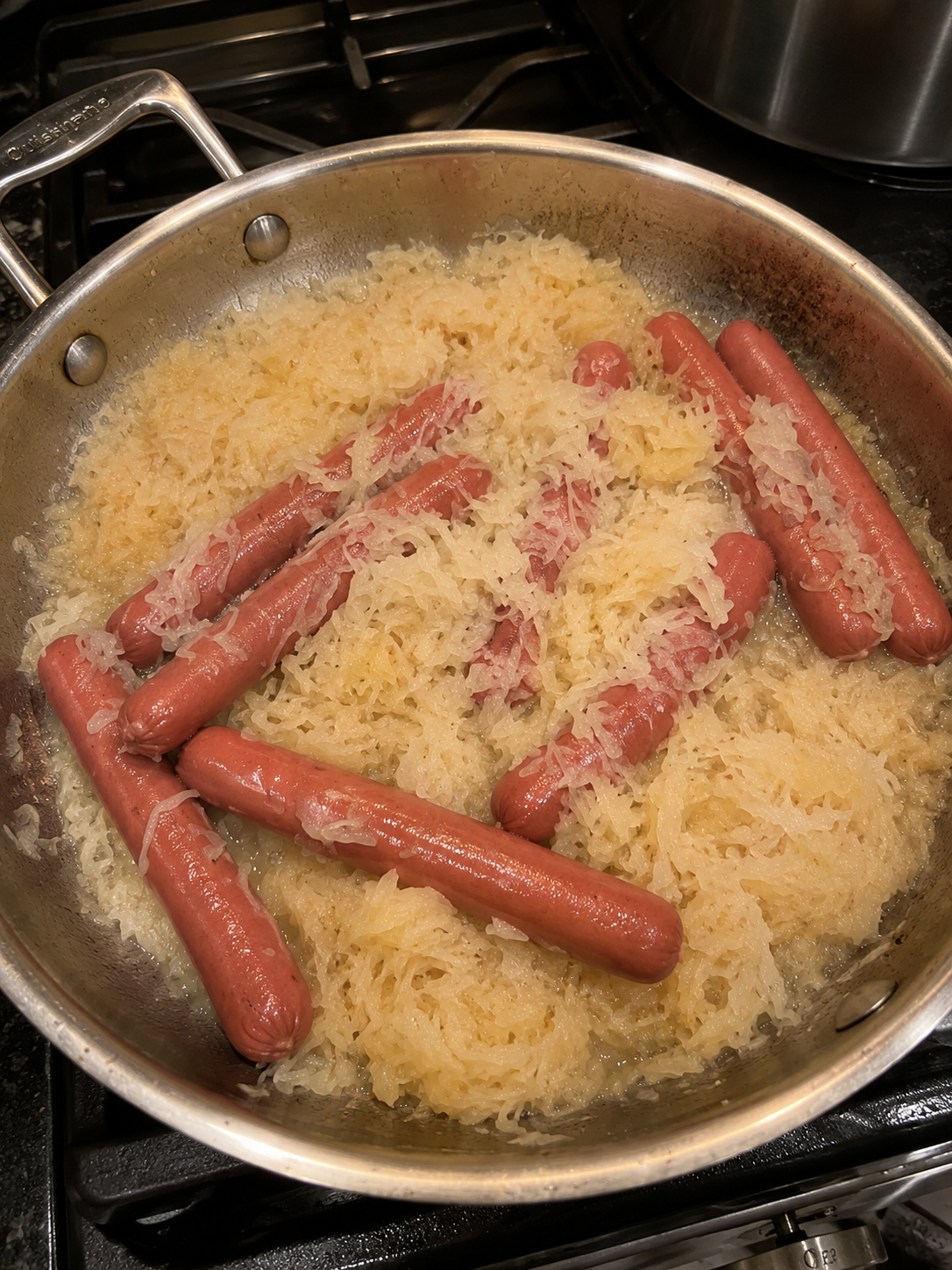
One-Pan Hot Dogs and Sauerkraut
Ingredients
Equipment
Method
- Melt butter in a large skillet over medium heat.
- Add drained sauerkraut and cook 5 minutes, stirring occasionally, until softened and lightly colored.
- Nestle hot dogs into the sauerkraut. Add caraway seeds and a splash of beer or broth if using.
- Cover and simmer 10–12 minutes, stirring once or twice, until hot dogs are heated through and sauerkraut is tender.
- Season with black pepper to taste.
- Serve hot from the skillet with mustard, crusty bread, or mashed potatoes.
Notes
Gentle heat keeps hot dogs plump and juicy.
Leftovers keep 3 days in the refrigerator.
Excellent with strong mustard and crusty bread.
Nutrition: Serving Size: about 2 hot dogs with sauerkraut Calories: 320 Fat: 26g Carbohydrates: 8g Protein: 12g
Category: Main Dish Method: One-Pan / Skillet Cuisine: American / German-American