Ingredients
Equipment
Method
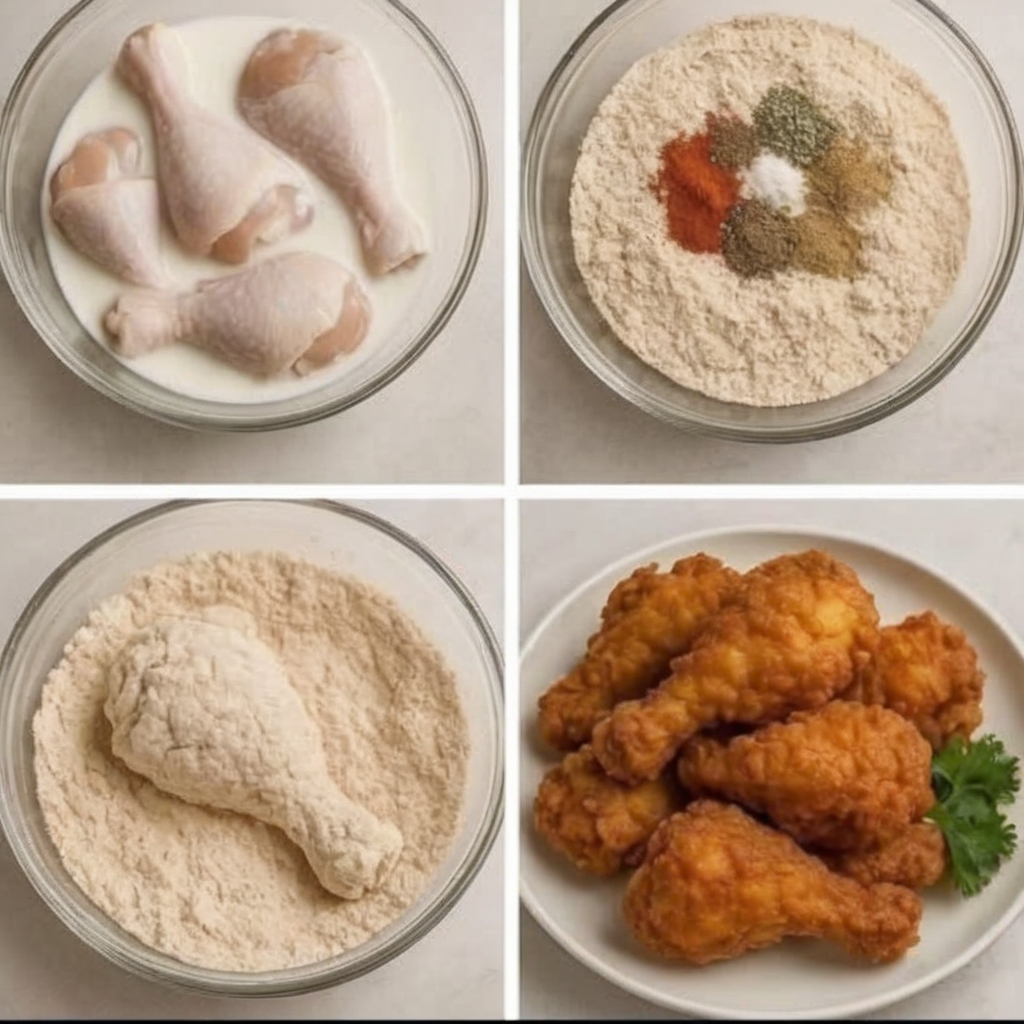
- In small bowl, whisk together all spices: paprika, garlic salt, black pepper, white pepper, basil, thyme, oregano, ginger, dry mustard, and celery salt until evenly combined. This blend is flavor foundation.
- Pat chicken pieces completely dry with paper towels—helps coating stick. Sprinkle about 2 tablespoons spice blend directly onto chicken pieces, rubbing into all surfaces. Let seasoned chicken sit room temp 20-30 minutes, or refrigerate up to 2 hours. Allows seasonings to penetrate meat.
- In large bowl, whisk together flour, baking powder, and remaining spice blend. In medium bowl, whisk together buttermilk and eggs until well combined. Set up workspace: seasoned chicken, buttermilk mixture, seasoned flour mixture, and wire rack for coated pieces.
- Key technique—double-dredge: Dip chicken piece into buttermilk mixture, completely coated. Let excess drip off. Dredge in seasoned flour, pressing firmly to coat all surfaces. Shake off excess. Dip back into buttermilk mixture second time. Dredge in flour mixture again, pressing firmly to create thick, craggy coating. Place on wire rack. Repeat with all chicken pieces.
- Let coated chicken rest on rack 10-15 minutes. Crucial step—allows coating to hydrate and adhere better, preventing falling off during frying.
- In large, heavy pot or Dutch oven, heat about 2-3 inches oil to 325°F (163°C). Use thermometer to monitor—this temperature crucial. Too hot and outside burns before inside cooks; too cool and coating gets soggy instead of crispy.
- Working in batches to avoid crowding (drops oil temperature), carefully lower chicken pieces into hot oil using tongs. Don't crowd pot—leave space between pieces. Fry 12-18 minutes depending on size, turning occasionally for even browning. Dark meat (thighs, legs) takes longer than white meat (breasts). Chicken done when deep golden brown and reaches internal temp 165°F (74°C) when insert thermometer into thickest part without touching bone.
- Remove fried chicken to wire rack set over baking sheet (not paper towels—makes bottom soggy). Let oil temp return to 325°F before adding next batch. Let finished chicken rest 5 minutes before serving—allows juices to redistribute and coating to set to maximum crispiness.
Notes
Use bone-in, skin-on chicken—bones add flavor and skin gets incredibly crispy.
Don't skip double-dredge—creates extra-crunchy coating with all those craggy bits.
Maintain oil temp—use thermometer and adjust heat as needed to stay at 325°F.
Don't crowd pot—frying too many pieces at once drops oil temp and makes soggy chicken.
White pepper important—adds heat without dark specks and creates signature flavor.
Let coating rest—10-15 minutes makes difference between coating that sticks and coating that falls off.
Oven-baked option: Preheat oven to 400°F. Line baking sheet with foil and place wire rack on top. Spray rack with cooking spray. Follow all coating steps (double-dredging still key). Place coated chicken on rack, not touching. Spray tops lightly with cooking spray. Bake 45-55 minutes, flipping halfway, until golden brown and internal temp 165°F. Texture won't be quite as crispy as fried but still delicious and much easier.
Make it spicy: Add 1-2 teaspoons cayenne to flour mixture.
Nashville hot: Toss fried chicken in mixture of hot sauce and frying oil.
Buttermilk brine: Soak chicken in buttermilk with hot sauce overnight for extra tenderness.
Gluten-free: Use GF all-purpose flour blend.
Add more herbs: Mix in fresh chopped parsley or chives to flour mixture.
Lemon pepper: Add 2 tablespoons lemon pepper seasoning to flour mixture.
Chicken tenders: Use tenderloins and reduce frying to 6-8 minutes.
Air fryer: Cook at 375°F for 25-30 minutes, flipping halfway.
Boneless chicken: Can but bone-in stays juicier and has better flavor. If boneless, reduce frying to 8-10 minutes.
Coating falling off: Didn't let rest after coating, oil temp wrong, or didn't press flour firmly enough during dredging.
Burning outside but raw inside: Oil too hot. Maintain 325°F—use thermometer.
Reuse frying oil: Yes, strain through fine-mesh sieve, store airtight, and reuse 2-3 times for frying.
Black vs white pepper: White pepper milder and adds heat without visible black specks. Using both creates layered flavor.
Have to use buttermilk: Regular milk works but buttermilk adds tang and helps tenderize. Make "buttermilk" by adding 1 tablespoon vinegar to 1 cup milk and sit 5 minutes.
Know when done: Use meat thermometer—165°F in thickest part without touching bone is safe and done.
Store leftovers airtight in fridge up to 4 days. Coating softens in storage but can be re-crisped.
Freeze cooked chicken in freezer bags up to 2 months. Thaw overnight in fridge.
Reheat at 375°F for 15-20 minutes to restore crispiness. Don't microwave—makes coating soggy.
Serve: Hot or room temp (fried chicken great cold too). Perfect for picnics, potlucks, or Sunday dinner.
Pairs with: Coleslaw, mashed potatoes and gravy, mac and cheese, biscuits, corn on the cob, potato salad, collard greens, watermelon.
Don't skip double-dredge—creates extra-crunchy coating with all those craggy bits.
Maintain oil temp—use thermometer and adjust heat as needed to stay at 325°F.
Don't crowd pot—frying too many pieces at once drops oil temp and makes soggy chicken.
White pepper important—adds heat without dark specks and creates signature flavor.
Let coating rest—10-15 minutes makes difference between coating that sticks and coating that falls off.
Oven-baked option: Preheat oven to 400°F. Line baking sheet with foil and place wire rack on top. Spray rack with cooking spray. Follow all coating steps (double-dredging still key). Place coated chicken on rack, not touching. Spray tops lightly with cooking spray. Bake 45-55 minutes, flipping halfway, until golden brown and internal temp 165°F. Texture won't be quite as crispy as fried but still delicious and much easier.
Make it spicy: Add 1-2 teaspoons cayenne to flour mixture.
Nashville hot: Toss fried chicken in mixture of hot sauce and frying oil.
Buttermilk brine: Soak chicken in buttermilk with hot sauce overnight for extra tenderness.
Gluten-free: Use GF all-purpose flour blend.
Add more herbs: Mix in fresh chopped parsley or chives to flour mixture.
Lemon pepper: Add 2 tablespoons lemon pepper seasoning to flour mixture.
Chicken tenders: Use tenderloins and reduce frying to 6-8 minutes.
Air fryer: Cook at 375°F for 25-30 minutes, flipping halfway.
Boneless chicken: Can but bone-in stays juicier and has better flavor. If boneless, reduce frying to 8-10 minutes.
Coating falling off: Didn't let rest after coating, oil temp wrong, or didn't press flour firmly enough during dredging.
Burning outside but raw inside: Oil too hot. Maintain 325°F—use thermometer.
Reuse frying oil: Yes, strain through fine-mesh sieve, store airtight, and reuse 2-3 times for frying.
Black vs white pepper: White pepper milder and adds heat without visible black specks. Using both creates layered flavor.
Have to use buttermilk: Regular milk works but buttermilk adds tang and helps tenderize. Make "buttermilk" by adding 1 tablespoon vinegar to 1 cup milk and sit 5 minutes.
Know when done: Use meat thermometer—165°F in thickest part without touching bone is safe and done.
Store leftovers airtight in fridge up to 4 days. Coating softens in storage but can be re-crisped.
Freeze cooked chicken in freezer bags up to 2 months. Thaw overnight in fridge.
Reheat at 375°F for 15-20 minutes to restore crispiness. Don't microwave—makes coating soggy.
Serve: Hot or room temp (fried chicken great cold too). Perfect for picnics, potlucks, or Sunday dinner.
Pairs with: Coleslaw, mashed potatoes and gravy, mac and cheese, biscuits, corn on the cob, potato salad, collard greens, watermelon.