Ingredients
Equipment
Method
- Pour melted butter into 9x13-inch baking dish and swirl to coat entire bottom evenly. Creates slightly caramelized bottom layer.
- Open both cans refrigerated orange rolls. Using sharp knife, cut each roll into quarters—chunky pieces, not tiny bits. Spread quartered pieces evenly across bottom of buttered baking dish in relatively even layer. Don't worry about perfect arrangement—expand and fill gaps as bake.
- In medium bowl, whisk together eggs, heavy cream, brown sugar, vanilla extract, orange zest, and fresh orange juice until completely smooth and well combined. Brown sugar should be dissolved and mixture cohesive with no streaks of egg white. This custard transforms ordinary canned rolls.
- Pour custard mixture evenly over all orange roll pieces, using spoon or hands to gently press down on rolls to make sure all getting coated and soaking up liquid. Every piece should have custard contact. Rolls float a bit initially—fine.
- Cover baking dish tightly with foil and refrigerate at least 8 hours or up to 12 hours. Crucial overnight soak—allows rolls to absorb custard fully, creating soft, tender, almost bread-pudding-like texture. Can skip in pinch and bake immediately but texture won't be as magical.
- When ready to bake, preheat oven to 375°F (190°C). Remove foil from baking dish and place uncovered dish in oven. Bake 30-35 minutes until rolls cooked through, custard set, and tops lightly golden brown. Center should still be soft and slightly gooey—don't want dry. If top browning too quickly but center not set, loosely tent with foil last 10 minutes.
- Remove from oven and cool about 10 minutes. Brief cooling allows custard to set just enough so not molten hot when ice, and prevents icing from completely melting when pour on.
- While casserole cools, make icing. In small bowl, whisk together powdered sugar, vanilla extract, orange zest, and 3 tablespoons fresh orange juice. Whisk in melted butter until completely smooth. Check consistency—should be thick but pourable. If too thick, add another tablespoon orange juice. If too thin, add more powdered sugar.
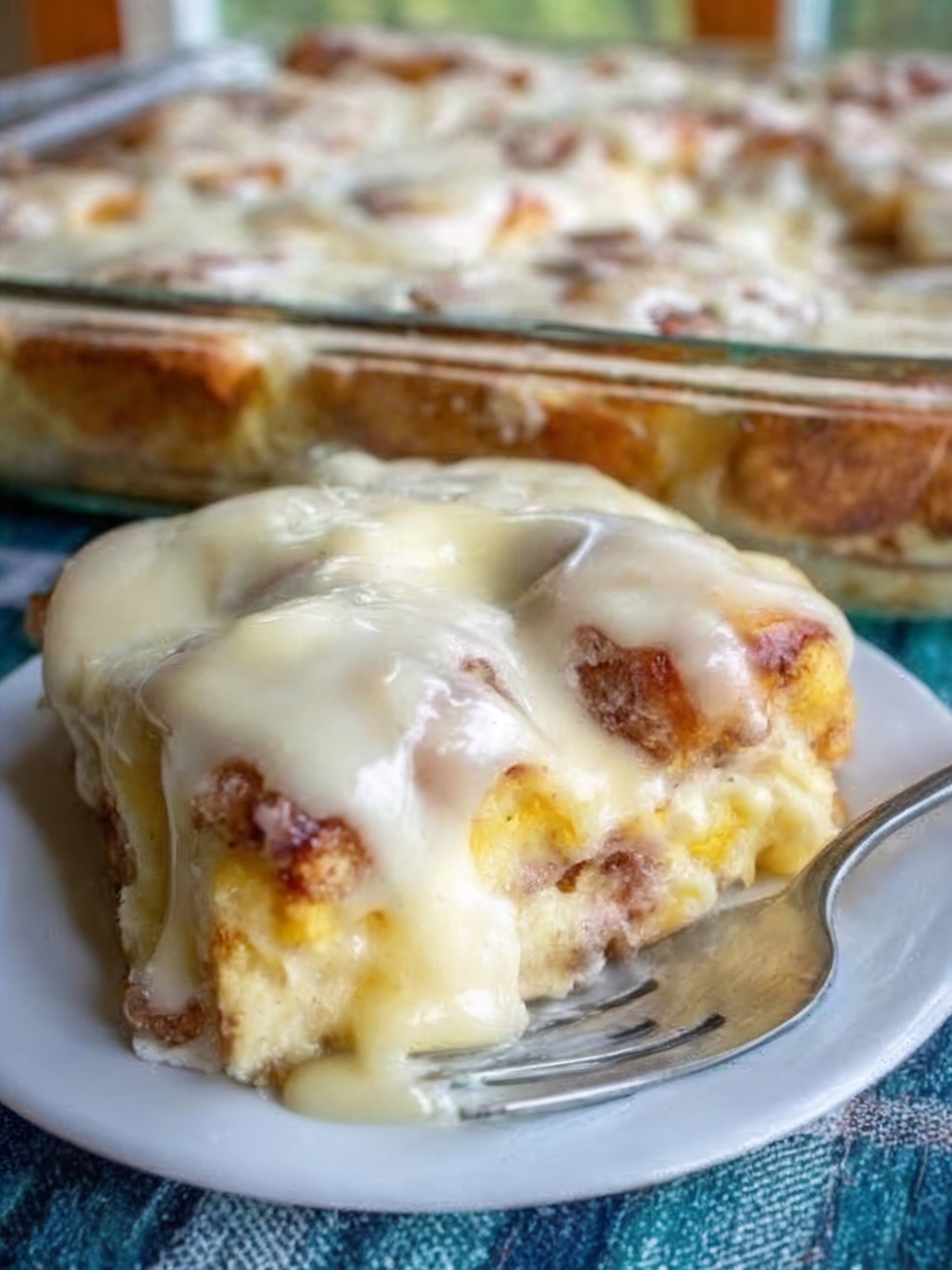
- Pour orange icing generously over entire warm casserole, letting drizzle down into all crevices. Icing will be absorbed slightly by warm rolls, creating pockets of sweet citrus throughout. Serve immediately while warm, scooping generous portions with golden top and soft, custardy center.
Notes
Use fresh orange juice and zest—bottled juice doesn't have same bright, fresh flavor.
Don't overbake—slightly soft, gooey centers what you want. Overbaking makes dry instead of custardy.
Let it cool before icing—if too hot, icing completely melts and disappears.
Make own icing—packets that come with rolls fine in pinch but homemade so much better.
Press rolls into custard—make sure every piece coated for even soaking.
Serve warm—at absolute best when warm from oven with icing just starting to set.
Add nuts: Sprinkle ½ cup chopped pecans or walnuts over rolls before adding custard.
Make it spicy: Add ¼ teaspoon cinnamon or pinch cardamom to custard mixture.
Add cream cheese: Dot small pieces throughout rolls before adding custard for extra richness.
Cinnamon rolls: Substitute orange rolls with cinnamon rolls, omit orange zest and juice for classic version.
Make it boozy: Add 2 tablespoons Grand Marnier or orange liqueur to custard.
Top with berries: Serve with fresh raspberries or strawberries for fruity contrast.
Individual portions: Use muffin tins instead of 9x13 for individual servings.
Add coconut: Sprinkle shredded coconut over top before baking for tropical flavor.
Bake right away without refrigerating: Can but lose incredible soft, custardy texture. Overnight soak makes this special. If rushed, soak at least 30 minutes before baking.
Casserole soggy: Used too much custard, didn't bake long enough, or covered while baking. Always bake uncovered and ensure center set.
Milk instead of cream: Can but texture less rich. Heavy cream creates luxurious, custardy texture.
Have to make homemade icing: No, can use icing packets from rolls but homemade tastes significantly better with fresh orange.
Double recipe: Yes! Use larger baking dish or two 9x13 pans. Baking time stays same.
Top browning too fast: Loosely tent with foil last 10 minutes to prevent over-browning while center finishes.
Homemade orange rolls: Yes but defeats convenience purpose. If using homemade, adjust baking time as needed.
Cover leftovers and store in fridge up to 3 days. Texture softens further but still delicious.
Don't freeze—custard texture becomes watery and unappetizing after freezing and thawing.
Reheat portions in microwave 30-45 seconds or reheat whole dish covered at 325°F for 15-20 minutes.
Make ahead: Entire point of recipe is make-ahead convenience! Assemble completely night before, refrigerate, bake in morning.
Serve: Scoop warm portions onto plates with plenty of orange icing. Rich and sweet, perfect as brunch centerpiece.
Pairs with: Crispy bacon or sausage links, fresh fruit salad, scrambled eggs, coffee, fresh orange juice, or mimosas for special occasions.
Don't overbake—slightly soft, gooey centers what you want. Overbaking makes dry instead of custardy.
Let it cool before icing—if too hot, icing completely melts and disappears.
Make own icing—packets that come with rolls fine in pinch but homemade so much better.
Press rolls into custard—make sure every piece coated for even soaking.
Serve warm—at absolute best when warm from oven with icing just starting to set.
Add nuts: Sprinkle ½ cup chopped pecans or walnuts over rolls before adding custard.
Make it spicy: Add ¼ teaspoon cinnamon or pinch cardamom to custard mixture.
Add cream cheese: Dot small pieces throughout rolls before adding custard for extra richness.
Cinnamon rolls: Substitute orange rolls with cinnamon rolls, omit orange zest and juice for classic version.
Make it boozy: Add 2 tablespoons Grand Marnier or orange liqueur to custard.
Top with berries: Serve with fresh raspberries or strawberries for fruity contrast.
Individual portions: Use muffin tins instead of 9x13 for individual servings.
Add coconut: Sprinkle shredded coconut over top before baking for tropical flavor.
Bake right away without refrigerating: Can but lose incredible soft, custardy texture. Overnight soak makes this special. If rushed, soak at least 30 minutes before baking.
Casserole soggy: Used too much custard, didn't bake long enough, or covered while baking. Always bake uncovered and ensure center set.
Milk instead of cream: Can but texture less rich. Heavy cream creates luxurious, custardy texture.
Have to make homemade icing: No, can use icing packets from rolls but homemade tastes significantly better with fresh orange.
Double recipe: Yes! Use larger baking dish or two 9x13 pans. Baking time stays same.
Top browning too fast: Loosely tent with foil last 10 minutes to prevent over-browning while center finishes.
Homemade orange rolls: Yes but defeats convenience purpose. If using homemade, adjust baking time as needed.
Cover leftovers and store in fridge up to 3 days. Texture softens further but still delicious.
Don't freeze—custard texture becomes watery and unappetizing after freezing and thawing.
Reheat portions in microwave 30-45 seconds or reheat whole dish covered at 325°F for 15-20 minutes.
Make ahead: Entire point of recipe is make-ahead convenience! Assemble completely night before, refrigerate, bake in morning.
Serve: Scoop warm portions onto plates with plenty of orange icing. Rich and sweet, perfect as brunch centerpiece.
Pairs with: Crispy bacon or sausage links, fresh fruit salad, scrambled eggs, coffee, fresh orange juice, or mimosas for special occasions.