
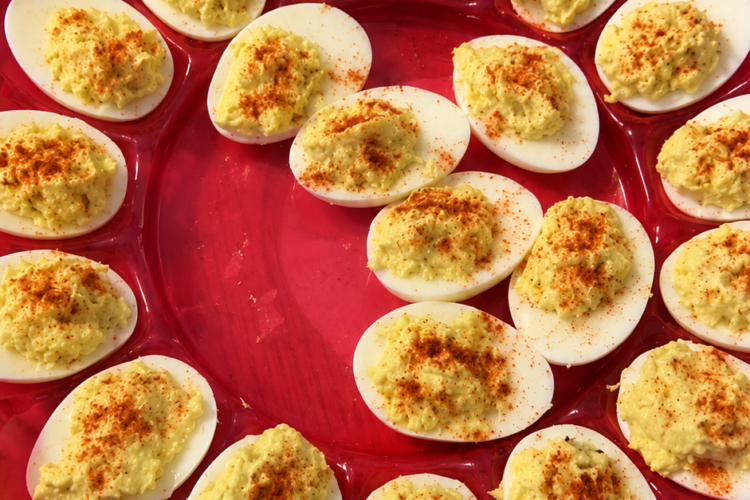
Classic Deviled Eggs – The Family Gathering Appetizer That Always Disappears First
There are certain dishes that never need an introduction at a family gathering. You simply set the platter down and step back because you already know what will happen. My aunt used to guard her deviled eggs like they were gold. She would make two full trays, cover them carefully, and still find that half had vanished by the time everyone sat down to eat. Someone was always sneaking back into the kitchen with a napkin, pretending they were just getting a glass of water. The truth was obvious. Those creamy, tangy, paprika-dusted halves were impossible to resist.
I can still picture the first bite. The egg white is cool and tender. Then you hit the filling—smooth, rich, just sharp enough from the mustard and vinegar, with a quiet creaminess from the mayonnaise that makes everything feel complete. The light dusting of paprika on top adds a gentle smokiness and that classic look that says these were made with care. They disappear so fast because almost no one can stop at just one. Last week my husband ate six before I finished plating the rest of the meal. No shame whatsoever. I have started making them for our Sunday dinners, and now he asks for them constantly.
These classic deviled eggs are the opposite of complicated. Twelve eggs, a handful of pantry staples, and a little patience while they chill. Yet the result tastes like every potluck, every holiday table, every casual family get-together where the appetizer platter empties before the main course is even served. They are cool, creamy, tangy, and somehow both nostalgic and completely satisfying. Once you master the simple method—especially the ice bath that makes peeling almost effortless—you will understand why my aunt never showed up without them.
Why You’ll Love This Recipe
You will love these classic deviled eggs because they deliver maximum flavor and nostalgia with almost no fuss. The ingredients are ordinary. The technique is straightforward. The payoff is a platter of creamy, tangy, perfectly seasoned halves that look as good as they taste. They require no special equipment beyond a pot and a bowl, and they can be made several hours ahead so you are free when guests arrive.
You will love how reliable they are. Follow the boiling and ice-bath method and the shells slip off cleanly. Mash the yolks thoroughly and the filling turns silky instead of grainy. A modest amount of mayonnaise, mustard, and vinegar keeps the flavor balanced rather than heavy or sharp. The paprika on top is more than garnish—it adds a subtle smoky note that ties everything together.
You will love the way they disappear. These are the appetizers that cause people to hover near the plate. They work for holiday spreads, casual Sunday dinners, picnics, potlucks, and weeknight cravings alike. Leftovers (if any remain) keep well for a day or two. They feel special without demanding hours of work.
Most of all, you will love that they taste like home. This is the version that shows up when someone you love is coming over and you want the table to feel welcoming before anyone even sits down. In a world of elaborate appetizers, a perfectly made classic deviled egg still holds its own.
Why This Recipe Works
The reliability of classic deviled eggs rests on a few simple but important techniques. Starting the eggs in cold water and bringing them to a boil together heats them gradually, which helps prevent cracking and produces more evenly cooked yolks. Removing the pot from the heat and letting the eggs sit covered for twelve minutes carries them through to a fully set yolk without the rubbery whites that come from prolonged boiling. The immediate ice bath stops the cooking and causes the egg white to contract slightly away from the shell, making peeling dramatically easier.
Mashing the yolks while they are still slightly warm helps them break down into a smoother paste. Mayonnaise provides fat and emulsification so the filling stays creamy. Yellow mustard contributes both flavor and a little acidity that brightens the richness. A small amount of white vinegar sharpens the taste further and helps the filling stay stable. Salt and pepper season the mixture so it does not taste flat. The final dusting of paprika is more than visual—it adds a gentle earthy, slightly smoky note that has become part of the classic profile.
Chilling the finished eggs for at least thirty minutes allows the flavors to meld and the filling to firm slightly so it holds its shape. The result is a cool, creamy, well-balanced bite that feels both familiar and carefully made.
Ingredient Breakdown
Large Eggs (12) Eggs are the entire foundation of the dish. Large eggs give a good ratio of white to yolk and are the size most recipes assume. Fresh eggs are harder to peel; eggs that are a week or so old usually slip out of their shells more cleanly after the ice bath. Eggs provide high-quality complete protein, healthy fats, and a range of vitamins and minerals including choline. Store them in the refrigerator and use by the date on the carton.
Mayonnaise (⅓ cup) Mayonnaise supplies the creamy richness and helps emulsify the filling into a smooth, pipeable or spoonable texture. A good-quality real mayonnaise gives the best flavor. From a nutrition standpoint it contributes fat that carries flavor and helps the filling feel satisfying. Store opened mayonnaise in the refrigerator.
Yellow Mustard (1½ teaspoons) Yellow mustard adds the classic tang and a mild sharpness that cuts through the richness of the yolks and mayonnaise. It also contributes a little color. The amount is modest so the mustard supports rather than dominates.
White Vinegar (1 teaspoon) A small splash of white vinegar brightens the filling and balances the fat. It is one of the quiet ingredients that keeps the flavor lively instead of heavy. Apple cider vinegar can be used in a pinch, though the taste will be slightly different.
Salt and Black Pepper (to taste) Salt is essential for bringing out the flavor of the yolks. Black pepper adds a gentle aromatic warmth. Season gradually and taste as you go; the filling should taste balanced on its own before it goes into the whites.
Paprika (for garnish) Paprika is the traditional finishing touch. It adds color, a mild sweetness, and a subtle smoky or earthy note depending on the type. Sweet paprika is classic; smoked paprika gives a deeper flavor. A light, even dusting is all you need.
Kitchen Equipment
You will need a large pot for boiling the eggs, a bowl for the ice bath, a slotted spoon or tongs for transferring the eggs, a sharp knife for halving, a medium bowl for the filling, a fork for mashing, a spoon or piping bag for filling the whites, and a serving platter. A small fine-mesh sieve can be useful if you want an ultra-smooth filling, but a fork works perfectly well. That is the complete list. No special tools required.
Step-by-Step Instructions
Place the twelve large eggs in a single layer in a large pot. Cover them with cold water by about one inch. Set the pot over high heat and bring the water to a full rolling boil. You will see large bubbles breaking the surface vigorously.
Once the water reaches a rolling boil, turn off the heat, cover the pot with a tight-fitting lid, and let the eggs sit undisturbed for exactly twelve minutes. This gentle residual-heat method cooks the yolks through without making the whites tough.
While the eggs sit, prepare a large bowl of ice water. When the twelve minutes are up, transfer the eggs immediately into the ice bath using a slotted spoon. Let them cool completely, about ten to fifteen minutes. The rapid cooling stops the cooking and makes the shells much easier to remove.
Peel the eggs gently under cool running water. Start by cracking the shell all over, then peel from the wider end where the air pocket usually sits. The water helps the shell slip away. Pat the peeled eggs dry with a clean towel.
Slice each egg in half lengthwise with a sharp knife. Gently scoop the yolks into a medium bowl. Arrange the empty white halves on your serving platter, cut side up.
Mash the yolks thoroughly with a fork until no large lumps remain. Add the mayonnaise, yellow mustard, white vinegar, and a pinch of salt and black pepper. Mix until the filling is completely smooth and creamy. Taste and adjust the seasoning—more salt, a touch more mustard, or a few extra drops of vinegar if needed. The filling should taste bright and balanced on its own.
Spoon or pipe the filling back into the egg white halves. A simple spoon works beautifully; a piping bag fitted with a star tip makes them look a little more polished if you feel like it. Do not worry about perfection. These taste wonderful either way.
Dust the tops lightly with paprika. Cover the platter and refrigerate for at least thirty minutes so the flavors can settle and the filling can firm slightly. Serve chilled.
Expert Tips
- Use eggs that are at least a few days old. Very fresh eggs are harder to peel cleanly.
- Start the eggs in cold water so they heat gradually and are less likely to crack.
- Time the twelve-minute sit precisely once the water reaches a rolling boil.
- Move the eggs into the ice bath immediately. This is the single biggest factor in easy peeling.
- Peel under cool running water. The water helps separate the membrane from the white.
- Mash the yolks while they are still slightly warm for the smoothest texture.
- Taste the filling before filling the whites. Adjust salt, mustard, or vinegar until it tastes right to you.
- Fill the whites generously but not so full that the mixture spills over the edges.
- Dust the paprika from a height for an even, light coating rather than heavy clumps.
- Chill the finished eggs before serving. The flavor improves and the filling sets nicely.
- If you want ultra-smooth filling, press the mashed yolks through a small sieve before adding the other ingredients.
- Keep the filled eggs covered in the refrigerator so the whites do not dry out.
- For the cleanest halves, wipe your knife between cuts.
- Make a double batch if you are feeding a crowd. They always go faster than you expect.
Common Mistakes to Avoid
- Boiling the eggs hard for the entire cooking time. This often produces a green ring around the yolk and rubbery whites.
- Skipping the ice bath. Warm eggs are much harder to peel and the yolks can continue cooking.
- Peeling the eggs while they are still warm. The whites tear more easily.
- Leaving large lumps in the yolk mixture. The filling should be smooth and creamy.
- Using too much mayonnaise. The filling becomes heavy and can taste greasy.
- Under-seasoning. Bland filling is the most common disappointment with deviled eggs.
- Adding the paprika too early and then refrigerating uncovered. The color can bleed or the spice can taste dusty.
- Overfilling the whites so the mixture spills and looks messy on the platter.
- Serving the eggs warm. They are meant to be chilled; the texture and flavor are better cold.
- Using salad dressing instead of real mayonnaise. The flavor and texture suffer.
- Crowding the pot so the eggs crack against each other while boiling.
- Storing the finished eggs uncovered. The whites dry out and the filling can form a skin.
- Cutting the eggs with a dull knife. The whites compress and look ragged.
- Forgetting to taste and adjust the filling. Recipes are starting points; your palate is the final guide.
Ingredient Substitutions
Mayonnaise can be replaced with Greek yogurt or a mix of yogurt and mayonnaise for a lighter filling. The flavor will be tangier and the texture slightly less rich.
Yellow mustard can be swapped for Dijon mustard for a more sophisticated, sharper flavor, or for spicy brown mustard if you prefer a little heat.
White vinegar can be replaced with apple cider vinegar or a few drops of lemon juice. Each brings a slightly different brightness.
Paprika can be replaced with smoked paprika for deeper flavor, or with a light sprinkle of everything bagel seasoning or finely chopped chives for a different look and taste.
If you need a dairy-free or egg-free version, this particular recipe is built around eggs, so alternatives become a different dish entirely. For a lighter option, simply reduce the mayonnaise slightly and increase the mustard and vinegar for balance.
Recipe Variations
- Classic Southern – Add a teaspoon of sweet pickle relish to the filling for gentle sweetness and texture.
- Bacon and Cheddar – Fold in crumbled cooked bacon and a little shredded sharp cheddar.
- Avocado Deviled Eggs – Replace half the mayonnaise with mashed ripe avocado and add a squeeze of lime.
- Spicy Sriracha – Stir a teaspoon or two of sriracha into the filling and garnish with a thin slice of jalapeño.
- Dill and Capers – Add chopped fresh dill and a few minced capers for a bright, briny version.
- Everything Bagel – Mix a little everything-bagel seasoning into the filling and sprinkle more on top.
- Smoked Salmon – Fold in finely chopped smoked salmon and a bit of fresh dill; garnish with extra salmon.
- Curry Deviled Eggs – Add ½ to 1 teaspoon mild curry powder to the filling for warm, aromatic notes.
- Horseradish – Stir in a teaspoon of prepared horseradish for a sharp, wake-up flavor.
- Greek-Inspired – Use a mix of mayonnaise and Greek yogurt, add crumbled feta, and garnish with oregano.
- Chipotle – Blend a little chipotle in adobo into the filling for smoky heat.
- Pickled Jalapeño – Add finely minced pickled jalapeños and a splash of the pickling liquid.
- Truffle – Add a few drops of truffle oil to the filling for a special-occasion version.
Make It Healthier
These are a classic appetizer and should still taste like one. A few practical adjustments can lighten them. Replace half or all of the mayonnaise with plain Greek yogurt for more protein and less fat. Use an extra teaspoon of mustard and vinegar to keep the flavor bright. Serve smaller halves or set out a generous platter of raw vegetables alongside so people can balance their plates. Choose pasture-raised eggs if they are available and within budget. Enjoy two or three thoughtfully rather than hovering for a sixth. These small shifts keep the familiar pleasure while making the eggs easier to fit into a balanced spread.
Meal Prep Guide
Deviled eggs are excellent for advance preparation. Boil and peel the eggs up to two days ahead and store them covered in the refrigerator. Make the filling a day ahead and keep it in an airtight container. Assemble the eggs the morning of your gathering or even a few hours before serving. The flavors actually improve with a little time in the refrigerator. For larger gatherings, prepare a double batch of filling and keep extra egg-white halves ready so you can refill the platter as it empties. This approach keeps the stress low and the platter looking abundant.
Storage
Store filled deviled eggs in a single layer in an airtight container in the refrigerator for up to two days. Place a piece of plastic wrap directly against the filling if you want to prevent a slight skin from forming. Unfilled boiled egg whites and the yolk mixture can be stored separately for up to three days. Always keep them cold and discard any that have been left at room temperature for more than two hours, especially in warm weather.
Freezing
Freezing is not recommended. The egg whites become rubbery and watery when thawed, and the filling can separate. Deviled eggs are best made fresh or within a couple of days of serving.
Reheating
These are served chilled, so traditional reheating does not apply. If the eggs have been refrigerated for several hours and you prefer them a little less cold, let them sit at room temperature for ten to fifteen minutes before serving. Do not warm them in the microwave or oven; the texture of both the white and the filling will suffer.
What to Serve With It
Classic deviled eggs sit happily on almost any appetizer table. They pair well with crisp raw vegetables, olives, cheese and crackers, or a simple charcuterie board. At a picnic they travel well alongside fried chicken or sandwiches. For a holiday spread they complement glazed ham, roasted turkey, or a big green salad. On a casual Sunday they need nothing more than good company and perhaps a bowl of potato chips. Leftover halves make a protein-rich snack the next day with a piece of fruit or a few raw vegetables.
Beverage Pairings
Cold beer—especially a light lager or pilsner—cuts through the richness of the filling. Sparkling water with lemon or lime refreshes the palate. Iced tea, sweet or unsweetened, is a classic potluck partner. A crisp white wine such as Sauvignon Blanc or a dry rosé works beautifully for adult gatherings. For a non-alcoholic option that still feels special, try a sparkling lemonade or a simple ginger ale. Coffee after the meal provides a pleasant bitter contrast if the eggs are part of a larger brunch.
Frequently Asked Questions
How do I make the eggs easier to peel? Use eggs that are not super fresh, start them in cold water, and transfer them immediately to an ice bath after the twelve-minute sit. Peel under cool running water.
Why is there a green ring around the yolk? The eggs were likely overcooked. Stick to the twelve-minute residual-heat method and the ice bath to avoid it.
Can I make them ahead of time? Yes. Assemble them up to a day in advance and keep them covered in the refrigerator. The flavor actually improves.
How long do deviled eggs last in the refrigerator? Filled eggs are best within two days. Keep them cold and discard any left out longer than two hours.
Can I use Miracle Whip instead of mayonnaise? You can, but the flavor will be sweeter and tangier. Real mayonnaise gives a more classic result.
Why is my filling grainy? The yolks were not mashed thoroughly enough. Mash until completely smooth before adding the other ingredients.
Can I pipe the filling? Absolutely. A piping bag with a star tip makes them look especially nice for parties.
How many eggs should I plan per person? Two to three halves per person is a good starting point for an appetizer, but people often eat more.
Can I double the recipe? Yes. Use a larger pot or cook the eggs in batches so they are not crowded.
What can I do with extra filling? Spread it on crackers, toast, or celery sticks, or use it as a sandwich filling.
Is the vinegar necessary? It brightens the flavor, but you can reduce or omit it if you prefer a milder taste. Taste and adjust.
Can I use different mustard? Dijon, whole-grain, or spicy brown mustard all work and will change the flavor profile slightly.
How do I keep the whites from sliding on the platter? Slice a very thin piece off the bottom of each white half so they sit flat.
Why did my eggs crack while boiling? They may have been crowded or the temperature rose too quickly. Give them room and start in cold water.
Can I freeze leftover deviled eggs? Freezing is not recommended. The texture suffers significantly.
Nutrition Information
Estimated nutrition per half egg (based on 24 halves): approximately 60–70 calories, 5 g fat, 0.5 g carbohydrates, 3–4 g protein. Values vary depending on the exact amount of mayonnaise and any additions. These figures are estimates only and are not a substitute for professional nutritional advice. Enjoy these classic deviled eggs as part of a varied and balanced way of eating.
Final Thoughts
Every time I set out a platter of these classic deviled eggs I think of my aunt hovering near her trays, half laughing and half serious as she tried to keep them safe until dinner. She never minded the sneaking, really. She just knew how good they were and how quickly they would vanish. That is the quiet power of a well-made deviled egg. It needs no explanation and almost no decoration beyond a dusting of paprika. It simply tastes like care, like gatherings, like the kind of food that brings people back to the kitchen for just one more.
I hope you make a batch soon. I hope the shells slip off easily and the filling turns out silky and bright. And I hope, when you finally set the platter down and watch the first few disappear, you feel the same small satisfaction these eggs have always brought to my family table. If you try them, I would love to know how many vanished before the main course was served. From my kitchen to yours—creamy, tangy, and meant to be shared.
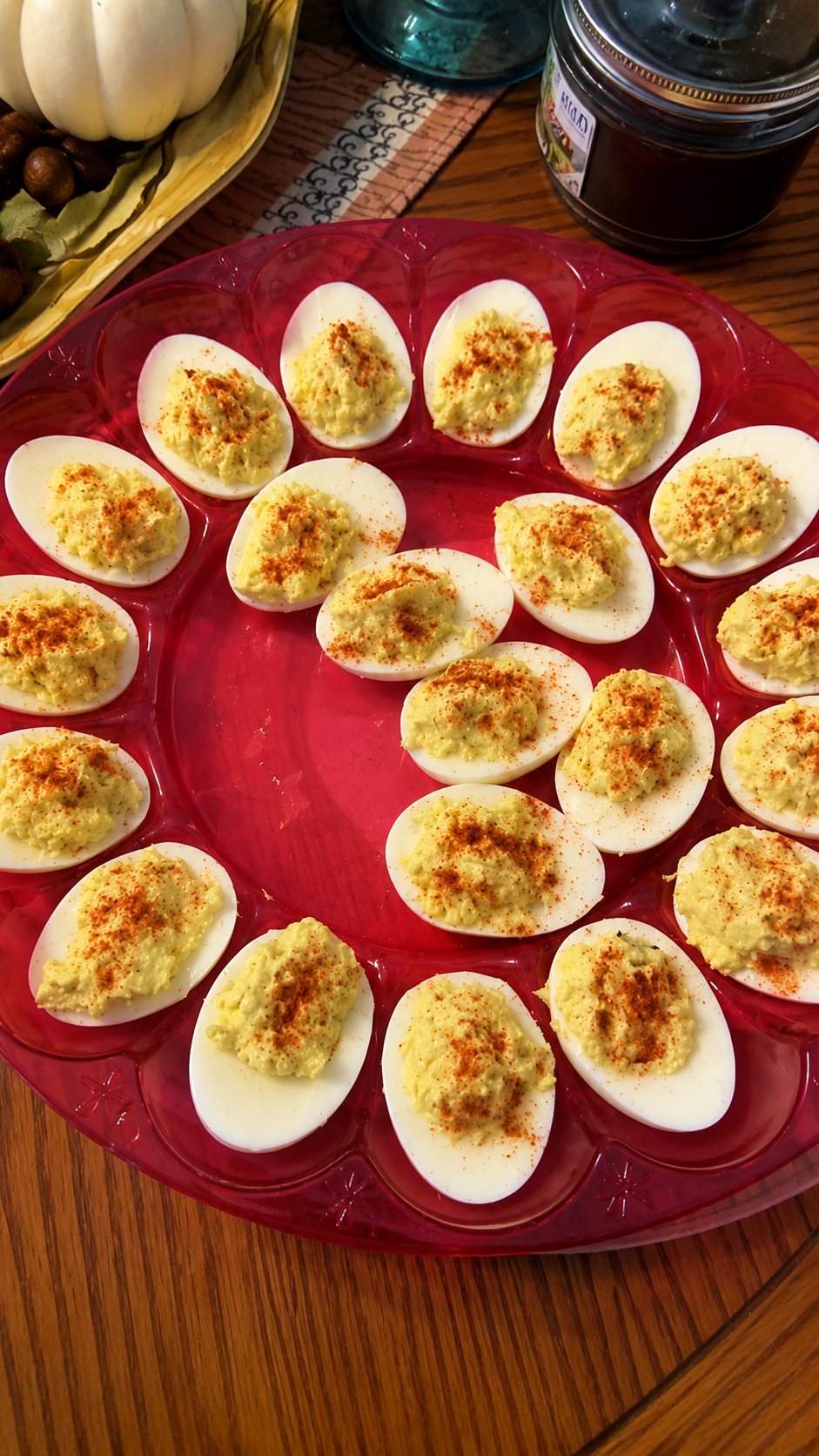
lassic creamy, tangy deviled eggs
Ingredients
Equipment
Method
- Place eggs in a large pot and cover with cold water by 1 inch. Bring to a rolling boil.
- Remove from heat, cover, and let sit 12 minutes.
- Transfer eggs to an ice bath and cool completely.
- Peel under cool water, slice in half lengthwise, and scoop yolks into a bowl.
- Mash yolks until smooth. Mix in mayonnaise, mustard, vinegar, salt, and pepper until creamy.
- Spoon or pipe filling into egg white halves.
- Dust with paprika. Chill at least 30 minutes before serving.
Notes