
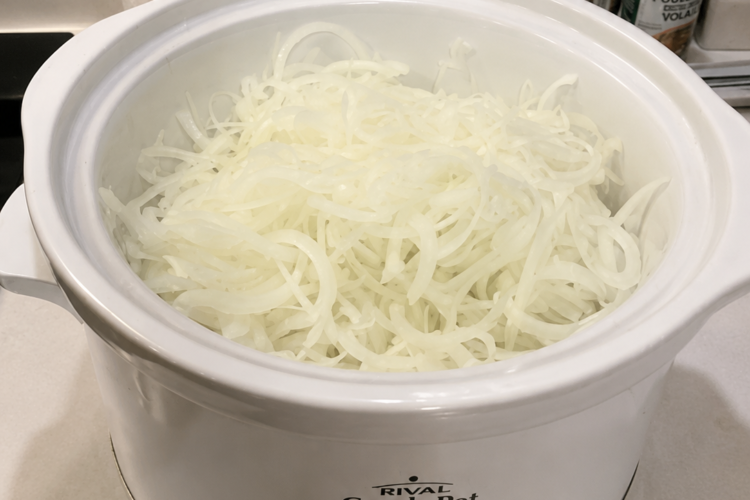
I used to believe French onion soup was one of those dishes that belonged only in restaurants with white tablecloths and waiters who pronounced “soupe” correctly. The kind of thing that required standing over a stove for hours, stirring onions until your arm ached, and somehow still never matching the deep, sweet, savory bowls I ordered when eating out. Then one ordinary night I sliced three pounds of yellow onions, tossed them into the crockpot with melted butter, put the lid on, and went to bed.
I woke up to the most incredible smell that has ever filled my kitchen. It was rich, sweet, savory, and unmistakably the scent of onions that had been slowly transforming for hours. The whole house smelled like a tiny French bistro at opening time. My husband came downstairs half-asleep and asked what I was cooking at seven in the morning. I wasn’t cooking anything. The crockpot had done the work while we slept. Those onions had turned into a deep golden, meltingly soft, intensely flavored base that tasted like pure comfort. All that remained was to add broth, a splash of wine, herbs, and finish the bowls under the broiler with toasted bread and a blanket of Gruyère.
This is, without exaggeration, the laziest way I know to make something that tastes this impressive. The overnight method removes the only truly tedious part of classic French onion soup—the long, careful caramelization on the stovetop—and replaces it with a set-it-and-forget-it approach that still delivers the same deep flavor. The result is a rich, sweet-savory soup with golden, melt-in-your-mouth onions, a savory broth, and that iconic cheesy toast on top. It feels special enough for company and easy enough for a quiet weeknight when you remember to start it the evening before.
Why You’ll Love This Recipe
You will love this slow-cooker French onion soup because it removes the intimidation factor without sacrificing the soul of the dish. The onions caramelize themselves overnight. You wake up to a house that already smells like dinner is underway. The actual hands-on time the next day is minimal—transfer, simmer, toast, broil—and the finished bowls look and taste like they came from a restaurant.
You will love the flavor. Slow-cooked onions develop a profound sweetness and depth that quick methods cannot match. The beef broth and white wine build a savory backbone. Fresh thyme and bay leaves add quiet aromatic notes. The final topping of crusty bread and melted Gruyère turns each bowl into pure comfort.
You will love the flexibility. Start the onions before bed and finish the soup the next evening, or let the caramelized onions wait in the refrigerator for a day if needed. The recipe scales easily. Leftovers reheat beautifully. And the process is forgiving enough for cooks who have never made French onion soup before.
Most of all, you will love the way it makes ordinary days feel a little more special. This is the soup that turns a regular weeknight into something that feels cared for. It is the one that makes people linger over the table a little longer. In a world of complicated recipes, an overnight method that delivers this much comfort is worth keeping close.
Why This Recipe Works
The heart of great French onion soup is properly caramelized onions, and the slow cooker achieves this through gentle, prolonged heat. Over ten to twelve hours on low, the onions release their moisture, their natural sugars concentrate, and the Maillard reaction proceeds slowly and evenly. The result is deep golden color and complex sweetness without the risk of scorching that can happen on the stovetop. Melted butter coats every slice, carrying flavor and encouraging even browning.
Once the onions are caramelized, transferring them to a pot with beef broth and white wine allows the flavors to meld quickly. The wine contributes acidity and aroma that brighten the richness of the onions and broth. Thyme and bay leaves infuse gentle herbal notes during the short simmer. Seasoning at the end ensures the salt level is balanced after the liquid has reduced slightly.
Toasting the bread before it goes into the bowls keeps it from turning immediately soggy. A generous layer of Gruyère melts and browns under the broiler, creating the classic bubbly, golden crust that stretches with every spoonful. Serving in oven-safe bowls is what makes the final step possible and gives the soup its signature presentation.
These principles—slow caramelization, balanced liquid, proper finishing—are why a method that feels almost hands-off still produces a bowl that tastes deeply considered.
Ingredient Breakdown
Yellow Onions (3 pounds, thinly sliced) Yellow onions are ideal for caramelizing. They have a good balance of sweetness and sulfur compounds that transform into rich, complex flavor over long cooking. Three pounds look like a mountain when raw but cook down dramatically. Onions provide fiber and beneficial plant compounds. Choose firm onions with dry skins. Slice them thinly and evenly so they cook at the same rate.
Butter (4 ounces, melted) Butter coats the onions and encourages even caramelization while adding richness. Melted butter distributes more easily in the crockpot than solid pieces. It contributes flavor and helps the onions brown rather than steam. Use real butter for the best taste.
Beef Broth (4 cups) Beef broth forms the savory backbone of the soup. A good-quality broth or stock makes a noticeable difference. Homemade is wonderful if you have it; otherwise choose a low-sodium version so you control the salt. Broth adds protein and depth.
Dry White Wine (1 cup) Wine adds acidity and aromatic complexity that keep the soup from tasting flat or overly sweet. A dry white such as Sauvignon Blanc or Pinot Grigio works well. If you prefer not to use wine, additional broth is an acceptable substitute, though the flavor will be slightly less bright.
Fresh Thyme (2 teaspoons) Fresh thyme contributes earthy, slightly floral notes that are classic in French onion soup. Dried thyme can be used in a pinch (use about half the amount). Thyme is one of the aromatic anchors of the dish.
Bay Leaves (2) Bay leaves add subtle depth during the simmer. Remove them before serving. They are a quiet but traditional part of the flavor profile.
Salt and Black Pepper Season at the end so you can taste and adjust after the soup has reduced. Proper seasoning is what makes all the other flavors come alive.
Crusty French Bread Thick slices of baguette or similar crusty bread provide the necessary texture contrast. Toasting them first helps them stand up to the broth a little longer.
Gruyère Cheese (shredded) Gruyère is the traditional choice for its excellent melting quality and nutty, slightly sweet flavor. It browns beautifully under the broiler. A mix of Gruyère and a little Swiss or Comté also works. Cheese contributes calcium and protein and is essential for the classic finish.
Kitchen Equipment
You will need a large slow cooker (6-quart or larger is ideal for three pounds of onions), a large pot or Dutch oven for the final simmer, a sharp knife and cutting board for slicing onions, a ladle, oven-safe soup bowls, a baking sheet for toasting the bread, and a broiler. A mandoline can speed up the onion slicing if you are comfortable using one, but a sharp knife works perfectly well. That is the essential list.
Step-by-Step Instructions
The night before, peel and thinly slice the three pounds of yellow onions. This is the most time-consuming part of the entire recipe, but it is straightforward. Place the sliced onions in the crockpot. Pour the melted butter over them and toss gently until every slice is coated.
Cover the crockpot and cook on LOW for 10 to 12 hours. Overnight is perfect. When you wake up, the onions will have cooked down dramatically, turned a deep golden brown, and filled the kitchen with an extraordinary aroma. Give them a stir; they should be meltingly soft and richly caramelized.
The next day, transfer the caramelized onions and all their juices to a large pot or Dutch oven. Add the beef broth, white wine, fresh thyme, and bay leaves. Bring the mixture to a simmer over medium heat, then reduce to low and let it cook for 20 to 30 minutes so the flavors can meld. Taste and season generously with salt and black pepper. Remove the bay leaves.
While the soup simmers, toast thick slices of French bread until they are crisp and lightly golden. You can do this in a toaster, under the broiler, or in a dry skillet.
When ready to serve, preheat the broiler. Ladle the hot soup into oven-safe bowls. Place a slice or two of toasted bread on top of each bowl and pile the shredded Gruyère generously over the bread. Set the bowls on a baking sheet and broil for 3 to 4 minutes, watching closely, until the cheese is melted, bubbling, and spotted with gold.
Carefully remove the bowls—they will be extremely hot—and let them cool for a minute or two before serving. The cheese will still be molten, and the first spoonful that breaks through the crust is pure comfort.
Expert Tips
- Slice the onions as evenly as possible so they caramelize at the same rate.
- Do not skip the butter. It helps the onions brown and adds essential richness.
- Twelve hours on low produces the deepest flavor, but ten is acceptable if you are short on time.
- Stir the onions once or twice during the long cook if you are awake; it is not strictly necessary.
- Use a good-quality beef broth. The soup is only as good as its base.
- Taste and season at the end. The long cooking concentrates flavors, so salt needs can vary.
- Toast the bread until truly crisp. Softer bread collapses faster in the soup.
- Be generous with the Gruyère. The cheesy crust is part of the pleasure.
- Watch the broiler closely. Cheese can go from perfect to burned in under a minute.
- Let the bowls rest a minute after broiling so no one burns their mouth.
- If the caramelized onions seem very dry, add a splash of broth when transferring them to the pot.
- For deeper flavor, deglaze the crockpot with a little wine or broth and add those browned bits to the soup.
- Use oven-safe bowls that can handle the broiler. Regular ceramic can crack.
- Make a double batch of the caramelized onions and freeze half for a future quick soup.
Common Mistakes to Avoid
- Crowding the crockpot with more onions than it can hold. They need room to cook down properly.
- Using sweet onions only. Yellow onions give the best balance; pure sweet onions can become too sweet.
- Cooking on high instead of low. High heat can scorch the onions rather than caramelize them gently.
- Skipping the wine without replacing its acidity. The soup can taste flat.
- Under-seasoning. Taste carefully after simmering and adjust salt and pepper.
- Using pre-shredded cheese that contains anti-caking agents. It may not melt as smoothly.
- Placing the bowls too close to the broiler element. The cheese can burn before the center melts.
- Serving immediately after broiling without a brief rest. The cheese and soup are dangerously hot.
- Using soft sandwich bread instead of crusty French bread. It turns to mush too quickly.
- Adding the thyme and bay leaves too early in the crockpot. Their flavor can become muted over twelve hours; adding them during the final simmer is better.
- Not toasting the bread. Untoasted bread disintegrates almost immediately.
- Choosing bowls that are not broiler-safe. This is a safety and practicality issue.
- Rushing the final simmer. Twenty minutes allows the flavors to come together.
- Forgetting to remove the bay leaves before serving.
Ingredient Substitutions
Yellow onions can be replaced with a mix of yellow and sweet onions. Avoid using only red onions; the color and flavor are less traditional.
Butter can be replaced with olive oil or a combination of oil and butter for a slightly different flavor profile.
Beef broth can be replaced with chicken broth or a rich vegetable broth for a lighter or vegetarian version. The flavor will change accordingly.
White wine can be replaced with additional broth plus a teaspoon of white wine vinegar or lemon juice for acidity.
Fresh thyme can be replaced with ¾ teaspoon dried thyme.
Gruyère can be replaced with Swiss, Comté, or a mix of mozzarella and Parmesan in a pinch, though Gruyère is ideal.
French bread can be replaced with any sturdy, crusty bread such as sourdough or ciabatta.
Recipe Variations
- Classic Stovetop Version – Caramelize the onions in a heavy pot over medium-low heat for 45–60 minutes instead of using the crockpot.
- Vegetarian French Onion Soup – Use a deep vegetable broth and add a splash of soy sauce or miso for umami.
- Apple Cider Version – Replace the white wine with dry apple cider for a subtle fruity note.
- Cognac or Brandy Finish – Add a tablespoon of cognac or brandy to the pot during the final simmer for extra depth.
- Three-Onion Soup – Use a mix of yellow, sweet, and shallots for more complex flavor.
- Cheese Variation – Try a mix of Gruyère and sharp white cheddar or add a little Parmesan.
- Individual Crocks – Prepare the soup and finish each portion in its own small oven-safe crock for classic presentation.
- Garlic Bread Topping – Rub the toasted bread with a cut garlic clove before adding the cheese.
- Mushroom French Onion – Add sautéed mushrooms to the pot with the caramelized onions for extra earthiness.
- Spicy Kick – Stir in a pinch of cayenne or a few red pepper flakes during the final simmer.
- Herb-Forward – Add a sprig of fresh rosemary along with the thyme.
- Overnight Plus Day-Ahead – Caramelize the onions overnight, refrigerate them, and finish the soup the following evening.
- Air-Fryer Cheese Toast – Toast the cheese-topped bread in an air fryer if you prefer not to use the broiler.
Make It Healthier
This soup is already based on a large volume of onions, which is a positive starting point. To lighten it further, reduce the butter to 2–3 ounces and use a light coating of olive oil if needed. Choose a low-sodium broth and season carefully at the end. Use a modest amount of cheese rather than a heavy blanket, or choose a strongly flavored cheese so a little goes further. Serve the soup with a larger portion of the onion-rich broth and a smaller piece of bread. Pair it with a simple green salad to balance the richness. Enjoy it as a comforting meal rather than an everyday staple. These adjustments keep the essential character while making the bowl a bit lighter.
Meal Prep Guide
The caramelized onions are the perfect make-ahead element. Cook them overnight, cool, and refrigerate for up to three days or freeze for up to three months. When you are ready for soup, proceed with the broth and finishing steps. The complete soup (without the bread and cheese) also keeps well in the refrigerator for three to four days and can be frozen. Toast the bread and broil the cheese just before serving so the texture stays ideal. This method turns a special-feeling soup into something realistic for busy weeks.
Storage
Store leftover soup (without bread and cheese) in an airtight container in the refrigerator for up to four days. Keep any leftover toasted bread separate so it does not become soggy. Reheat the soup gently on the stovetop or in the microwave, then assemble fresh bowls with bread and cheese when ready to eat. Always cool the soup before refrigerating.
Freezing
The soup base freezes very well. Cool completely, portion into freezer-safe containers, and freeze for up to three months. Thaw overnight in the refrigerator and reheat gently. The caramelized onions alone also freeze beautifully and give you a head start on future batches. Do not freeze the assembled bowls with bread and cheese; the texture suffers.
Reheating
Stovetop: Reheat the soup base gently over medium-low heat, stirring occasionally, until hot. Assemble with fresh toast and cheese and broil as directed.
Microwave: Heat individual portions of the soup base in a microwave-safe bowl until steaming, then top and broil if desired.
Avoid boiling the soup hard during reheating so the onions stay tender and the broth does not reduce too far. Always finish with freshly toasted bread and melted cheese for the best experience.
What to Serve With It
French onion soup is hearty enough to be a meal on its own, especially with the bread and cheese. A simple green salad with a bright vinaigrette is the classic partner and cuts the richness perfectly. Roasted vegetables or a small plate of charcuterie and cornichons also work well. For a larger spread, serve smaller bowls as a starter before a simple roast chicken or steak. Leftover soup makes a satisfying lunch with nothing more than a side of fruit or raw vegetables.
Beverage Pairings
A glass of the same dry white wine used in the soup is a natural pairing. A light red such as Pinot Noir or Beaujolais also complements the caramelized onions and cheese. Sparkling water with lemon refreshes the palate. Cold apple cider echoes the sweetness of the onions in a pleasant way. For a non-alcoholic option, a rich black tea or a simple herbal infusion works nicely. The goal is a drink that either matches the cozy richness or provides a clean contrast.
Frequently Asked Questions
Can I cook the onions on high instead of low? It is possible but not ideal. High heat can cause scorching rather than even caramelization. Low and slow is best.
Do I have to use wine? No. Replace it with additional broth and a teaspoon of vinegar or lemon juice for brightness.
What if I do not have oven-safe bowls? Toast the bread with cheese on a baking sheet until melted, then float the cheesy toast on top of the soup in regular bowls.
Can I use sweet onions? A mix is fine, but all sweet onions can make the soup overly sweet. Yellow onions are preferred.
How do I prevent the cheese from burning under the broiler? Watch closely and keep the bowls several inches from the element. Three to four minutes is usually enough.
Can I make this vegetarian? Yes. Use a robust vegetable broth and consider adding a splash of soy sauce or miso for depth.
Why are my onions not browning in the crockpot? They may need more time, or the crockpot runs cool. Stir once and continue cooking until deeply golden.
How many people does this serve? About four to six generous main-course servings, depending on bowl size.
Can I use pre-sliced onions? Yes if they are fresh and evenly sliced, but whole onions you slice yourself usually taste better.
Is Gruyère required? It is traditional and ideal, but Swiss cheese or a good melting cheese blend can substitute.
Can I caramelize the onions ahead and freeze them? Absolutely. They freeze well for up to three months and make future batches very quick.
How do I reheat leftovers without losing texture? Reheat the soup base gently, then add freshly toasted bread and cheese under the broiler.
What bread works best? A sturdy baguette or country loaf that can hold up to the broth for a few minutes.
Can I add garlic? Yes. Add a few minced cloves during the last hour of onion cooking or during the final simmer.
Why is my soup too sweet? The onions may have caramelized very fully, or the broth was mild. Balance with a splash of vinegar or extra black pepper.
Nutrition Information
Estimated nutrition per serving (based on 6 servings, including bread and cheese): approximately 380–450 calories, 22–28 g fat, 30–35 g carbohydrates, 15–18 g protein. Values vary depending on exact broth, bread, cheese quantity, and portion size. These figures are estimates only and are not a substitute for professional nutritional advice. Enjoy this soup as a comforting meal within a varied and balanced way of eating.
Final Thoughts
Every time I lift the lid of the crockpot in the morning and breathe in that deep, sweet, savory aroma, I am reminded how little effort this soup actually requires and how much comfort it returns. What used to feel like a restaurant-only project is now something I can start before bed and finish almost without thinking the next day. The onions do the hard work. The broiler provides the drama. And the finished bowl—golden cheese, crusty bread, rich onion-filled broth—delivers exactly the kind of warmth that makes a regular evening feel cared for.
I hope you try this method the next time you want something that tastes impressive without demanding your entire afternoon. I hope the house fills with that incredible smell while you sleep, and I hope the first spoonful that breaks through the cheesy crust makes you pause the way it still makes me pause. If you make it, I would love to know whether you managed to wait until the next day or found yourself sneaking tastes of those caramelized onions straight from the crockpot. From my kitchen to yours—slow, golden, and deeply comforting.
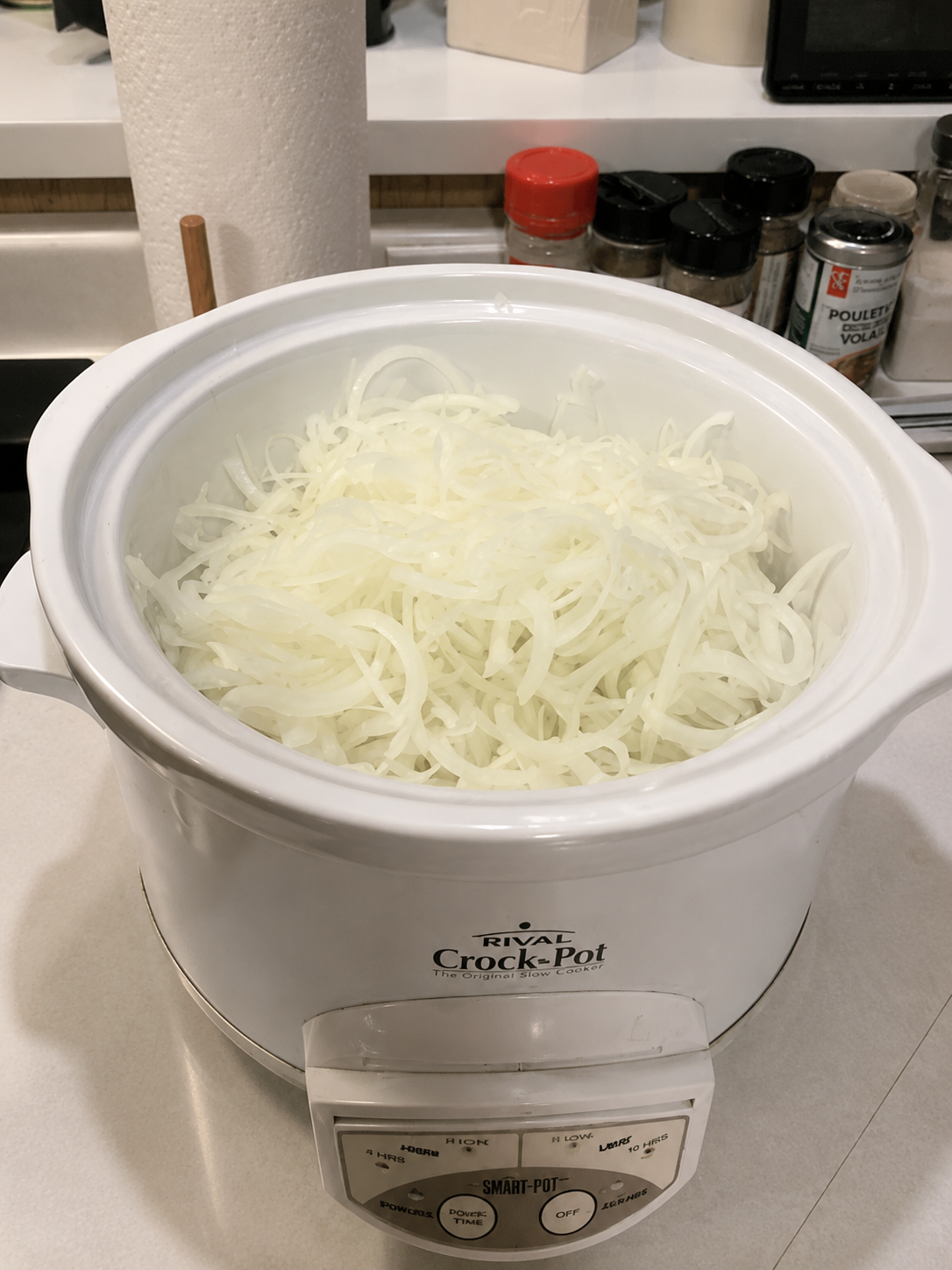
Deeply caramelized onions
Ingredients
Equipment
Method
- Place sliced onions in the crockpot. Pour melted butter over them and toss to coat.
- Cover and cook on LOW for 10–12 hours until deeply golden and caramelized.
- Transfer onions to a large pot. Add broth, wine, thyme, and bay leaves. Simmer 20–30 minutes. Season with salt and pepper. Remove bay leaves.
- Toast thick slices of French bread until crisp.
- Ladle soup into oven-safe bowls. Top with toasted bread and a generous amount of shredded Gruyère.
- Broil 3–4 minutes until cheese is melted, bubbling, and golden. Rest 1–2 minutes before serving.
Notes