
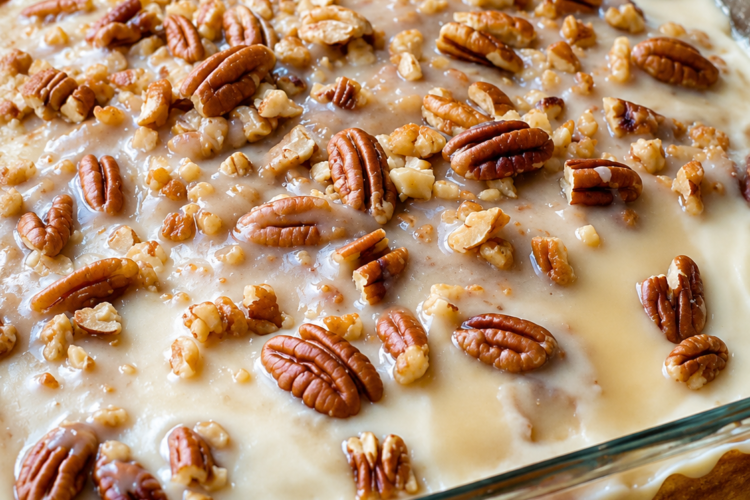
Pecan Praline Cake – The Incredibly Moist Southern-Style Cake That Starts with a Box and Ends with Pure Magic
There are cakes that look impressive and then there are cakes that make people stop mid-bite and say, “Wait… what is in this?” This pecan praline cake belongs firmly in the second category. The first time I made it I was skeptical. Adding an entire container of coconut pecan frosting straight into the cake batter felt wrong. But the batter came together smoothly, the cake baked up golden and fragrant, and when I poured the warm butter-and-condensed-milk pecan topping over the still-warm cake, the kitchen smelled like a candy shop and a bakery at the same time.
I sliced into it while it was still slightly warm. The crumb was impossibly moist and tender, studded with finely chopped pecans, and carrying a deep, buttery, caramel-coconut flavor from the frosting that had baked right into the cake. The topping soaked in just enough to create a glossy, praline-like finish with plenty of crunchy pecans on top. My family ate it standing at the counter before it ever reached a plate. Someone asked for the recipe before they finished their second piece.
This is not a fussy layer cake. It is a simple 9×13 sheet cake that starts with a boxed mix and ends up tasting like something far more elaborate. The frosting-in-the-batter method is the quiet secret that keeps it exceptionally moist and gives it that distinctive praline character. The optional-but-highly-recommended topping pushes it firmly into celebration territory. It is the kind of cake you take to potlucks, serve on holidays, or make on a regular weekend when you want the house to smell like something special.
Why You’ll Love This Recipe
You will love this pecan praline cake because it delivers bakery-level moisture and flavor with almost no effort. The boxed cake mix and ready-made frosting do most of the work, yet the finished cake tastes homemade and distinctive. The texture is soft, rich, and consistently moist for days. The pecan pieces give every bite a little crunch, and the warm topping soaks in to create a glossy, candy-like finish that feels indulgent.
You will love how reliable it is. The method is straightforward. The ingredients are easy to find. It bakes in a single pan and needs no fancy frosting technique. It travels well, slices cleanly once cooled, and keeps beautifully. It is equally at home on a holiday table or as a weeknight treat when you want something sweet without a long project.
You will love the reaction it gets. People are surprised by how moist it is and how much praline flavor comes through. The combination of coconut-pecan frosting baked into the cake plus the condensed-milk pecan topping creates a flavor that is hard to stop eating. It is the kind of cake that disappears faster than you expect and leaves people asking for the recipe.
Most of all, you will love that it turns simple pantry staples into something that feels special. This is comfort baking at its best—easy, generous, and deeply satisfying.
Why This Recipe Works
The unusual step of mixing an entire container of coconut pecan frosting into the cake batter is what sets this cake apart. The frosting contributes additional fat, sugar, and emulsifiers that keep the crumb exceptionally moist and tender. As the cake bakes, the frosting melts and distributes throughout the batter, adding richness and a subtle coconut-pecan flavor that ordinary cake mix alone cannot achieve. The extra fat also helps the cake stay soft for days.
The boxed yellow cake mix provides a reliable structure and leavening base. Adding oil, water, and eggs follows the usual pattern but the frosting changes the fat-to-flour ratio in a way that produces a denser, more luxurious crumb without becoming heavy. Finely chopped pecans folded into the batter give little pockets of crunch and reinforce the praline theme.
The topping is a simple cooked mixture of butter and sweetened condensed milk that creates a sticky, caramel-like sauce. Stirring in chopped pecans turns it into a quick praline topping. Pouring it over the warm cake allows some of the sauce to soak into the top layer while the rest sits as a glossy, nutty coating. The contrast of the soft, moist cake and the sweet, crunchy topping is what makes each slice feel complete.
These elements—frosting baked into the batter for moisture and flavor, pecans for texture, and a warm condensed-milk topping—work together to create a cake that tastes far more complex than the short ingredient list suggests.
Ingredient Breakdown
Yellow Cake Mix (1 box) The cake mix supplies flour, sugar, leavening, and flavor in a convenient, consistent form. Yellow cake mix pairs especially well with the buttery, nutty praline notes. Use a standard 15.25-ounce box.
Coconut Pecan Frosting (1 container) This is the secret ingredient. The ready-made frosting adds fat, sugar, coconut, and pecans that bake into the cake and keep it extraordinarily moist while contributing signature flavor. Do not skip or substitute if you want the characteristic result.
Oil (⅔ cup) Oil keeps the cake tender and moist. A neutral oil such as vegetable or canola works best so it does not compete with the other flavors.
Water (1 cup) Water hydrates the mix and creates steam for lift. Use room-temperature water for even mixing.
Large Eggs (4) Eggs provide structure, richness, and emulsification. Four eggs give the cake good body to support the added frosting and pecans. Room-temperature eggs incorporate more smoothly.
Pecans (½ cup finely chopped for the batter + 1 cup chopped for the topping) Pecans are essential for flavor and texture. Finely chopping the portion that goes into the batter distributes them evenly. The larger pieces in the topping provide crunch and visual appeal. Toast them lightly if you want even deeper flavor.
Butter (2 tablespoons, unsalted) Butter adds richness to the topping and helps create a smooth sauce with the condensed milk.
Sweetened Condensed Milk (14-ounce can) Sweetened condensed milk forms the sticky, caramel-like base of the topping when heated with butter. It is what gives the topping its signature praline character.
Kitchen Equipment
A 9×13-inch baking dish, a large mixing bowl, a hand mixer or stand mixer (or a sturdy whisk and spatula), measuring cups and spoons, a small saucepan for the topping, a rubber spatula, and a wire rack or heat-safe surface for cooling are all you need. Greasing the pan well is important for clean release. That is the complete list.
Step-by-Step Instructions
Preheat the oven to 350°F (or the temperature directed on the cake mix box if different). Generously grease a 9×13-inch baking dish, making sure to coat the bottom and sides well.
In a large mixing bowl, combine the yellow cake mix, the entire container of coconut pecan frosting, the oil, water, and eggs. Beat with a hand mixer or stand mixer on medium speed until the batter is smooth and well combined, about 1 to 2 minutes. Scrape the bowl as needed. The batter will be thicker and richer than a standard cake-mix batter because of the frosting.
Fold in the ½ cup of finely chopped pecans until they are evenly distributed.
Pour the batter into the prepared pan and spread it into an even layer with a spatula.
Bake for 40 minutes, or until the top is golden, the edges pull slightly away from the pan, and a toothpick inserted in the center comes out with a few moist crumbs (not wet batter). The cake will smell richly of butter, coconut, and toasted pecans.
While the cake is still warm, prepare the topping. In a small saucepan over medium heat, combine the butter and the full can of sweetened condensed milk. Stir until the butter is completely melted and the mixture is smooth and hot, about 3 to 4 minutes. Do not let it boil hard.
Remove the pan from the heat and stir in the 1 cup of chopped pecans.
Pour the warm topping evenly over the warm cake, spreading it gently so the pecans are distributed. Some of the sauce will soak into the cake while the rest forms a glossy, sticky layer on top.
Let the cake cool for at least 20 to 30 minutes before slicing so the topping can set slightly. Serve warm or at room temperature.
Expert Tips
- Grease the pan thoroughly; this cake is moist and can stick if the pan is under-greased.
- Use room-temperature eggs for smoother incorporation.
- Beat the batter just until smooth; over-mixing is unnecessary with a cake mix.
- Finely chop the pecans for the batter so they distribute evenly without sinking heavily.
- Check the cake a few minutes early; ovens vary and the extra moisture from the frosting can affect timing.
- Pour the topping over the cake while both are still warm so the sauce soaks in properly.
- Toast the pecans for the topping in a dry skillet for a few minutes if you want deeper flavor.
- Let the cake rest after adding the topping so the sauce sets and slicing is cleaner.
- For cleaner slices, use a sharp knife wiped between cuts.
- The cake tastes even better the next day once the flavors have settled.
- If the topping seems too thick, warm it a little longer or add a teaspoon of milk.
- Store leftovers covered so the cake stays moist and the topping does not dry out.
- For a stronger praline note, add a pinch of salt to the topping.
- Double the topping if you like an extra-generous layer of sauce and pecans.
Common Mistakes to Avoid
- Skipping the frosting in the batter. That is the key to the cake’s signature moisture and flavor.
- Under-greasing the pan. The cake can stick and tear when you try to remove slices.
- Over-baking. The extra moisture can mask doneness; rely on the toothpick test rather than time alone.
- Adding the topping to a completely cooled cake. It will sit on top instead of soaking in.
- Boiling the condensed-milk mixture hard. It can scorch or become grainy.
- Using pre-chopped pecans that are stale. Fresh pecans make a noticeable difference.
- Slicing the cake immediately after adding the topping. The sauce needs a few minutes to settle.
- Substituting regular frosting for the coconut pecan variety. The flavor profile will change significantly.
- Forgetting to fold in the pecans. They are essential for texture.
- Using a dark metal pan without checking early. It can cause the edges to over-brown.
- Storing the cake uncovered. The topping can dry and the cake can lose moisture.
- Replacing the oil with butter without adjusting. The texture may become denser.
- Measuring the water incorrectly. Too little liquid can make the batter too thick.
- Serving the cake ice-cold from the refrigerator without letting it come toward room temperature. The texture and flavor are best when not refrigerator-cold.
Ingredient Substitutions
Yellow cake mix can be replaced with butter recipe cake mix or white cake mix if needed; the color and flavor will shift slightly.
Coconut pecan frosting is the signature ingredient; if unavailable, a homemade coconut-pecan frosting can be used, but the texture and sweetness level may require slight adjustment.
Neutral oil can be replaced with melted butter for a richer flavor, though the crumb may be slightly different.
Pecans can be replaced with walnuts in a pinch, but the classic praline character comes from pecans.
Sweetened condensed milk has no perfect substitute for the topping; evaporated milk plus sugar will not produce the same sticky texture.
Butter in the topping can be replaced with margarine, but real butter gives better flavor.
Recipe Variations
- Chocolate Pecan Praline Cake – Use chocolate cake mix and keep the coconut pecan frosting and topping for a German-chocolate-inspired version.
- Bourbon Pecan Praline – Add 1–2 tablespoons of bourbon to the topping after removing it from the heat.
- Salted Praline Cake – Sprinkle a light pinch of flaky sea salt over the topping while it is still warm.
- Coconut-Heavy Version – Add ½ cup shredded sweetened coconut to the batter along with the pecans.
- Mini Bundt or Cupcake Version – Bake in well-greased mini Bundt pans or cupcake tins and reduce the time; drizzle the topping over each.
- Spice Praline Cake – Add 1 teaspoon cinnamon and a pinch of nutmeg to the batter for warm spice notes.
- Extra-Nutty Cake – Increase the pecans in both the batter and the topping.
- Cream Cheese Swirl – Dollop small amounts of sweetened cream cheese into the batter before baking for a tangy contrast.
- Brown Butter Topping – Brown the butter before adding the condensed milk for deeper flavor.
- Gluten-Free Adaptation – Use a gluten-free yellow cake mix and confirm the frosting is gluten-free.
- Sheet-Cake Party Version – Bake in a larger pan for a thinner cake and slightly shorter bake time; perfect for feeding a crowd.
- Toasted Coconut Finish – Sprinkle toasted coconut over the topping along with the pecans.
- Caramel Drizzle – Add a light drizzle of store-bought or homemade caramel over the finished topping for extra shine and flavor.
Make It Healthier
This is a rich, celebratory cake and should be enjoyed as such. For a slightly lighter approach, reduce the topping by half or serve smaller slices. You can replace a portion of the oil with unsweetened applesauce (start with half oil and half applesauce) for lower fat, accepting a modest change in texture. Use a cake mix with no artificial colors if that matters to you. Pair a modest slice with fresh berries or a dollop of plain yogurt to balance the plate. The goal is to keep the pleasure of the cake while practicing reasonable portions.
Meal Prep Guide
This cake is ideal for making ahead. Bake it the day before you need it; the moisture and flavor improve as it sits. The topping can be made while the cake bakes and poured on while both are warm, or warmed again gently and added later. The finished cake keeps well, so it is perfect for holidays, potlucks, or weekend baking that supplies dessert for several days. Slice only what you need and keep the rest covered to maintain freshness.
Storage
Cover the cooled cake tightly with plastic wrap or foil, or store it in an airtight container at room temperature for up to three days. For longer storage, refrigerate for up to five days; bring slices toward room temperature before serving for the best texture. The topping will firm in the refrigerator and soften again as it warms.
Freezing
Wrap the cooled, topped cake tightly in plastic wrap and then foil, or freeze individual slices. It keeps well for up to three months. Thaw overnight in the refrigerator or for several hours at room temperature. The texture remains moist and the topping holds up well after freezing.
Reheating
This cake is excellent at room temperature. If you prefer it slightly warm, microwave a single slice for 10–15 seconds or warm larger portions in a 300°F oven for 8–10 minutes. Avoid overheating or the topping can become overly sticky and the cake can dry. A brief warm-up restores that fresh-from-the-oven feeling.
What to Serve With It
A simple scoop of vanilla ice cream is perfect with a warm slice. Lightly sweetened whipped cream or a dollop of crème fraîche provides a cool, creamy contrast. Fresh berries—especially blackberries or raspberries—add brightness. A cup of strong coffee or black tea balances the sweetness. For a holiday table the cake stands proudly on its own with nothing more than a fork.
Beverage Pairings
Hot coffee or espresso cuts the richness beautifully. Black tea or a lightly sweetened iced tea also works well. Cold milk is classic and comforting. For a special occasion, a small glass of bourbon or a dessert wine such as a late-harvest Riesling complements the pecan and caramel notes. Sparkling water with a squeeze of lemon refreshes the palate between bites. Choose a drink that either contrasts the sweetness or leans into the cozy, nutty character of the cake.
Frequently Asked Questions
Do I really add the whole container of frosting to the batter? Yes. That is the key step that makes the cake exceptionally moist and flavorful.
Can I use a different flavor of frosting? Coconut pecan is traditional for this style. Other frostings will work but will change the character of the cake.
Why is my cake sticking to the pan? The pan may not have been greased thoroughly enough. This is a moist cake, so be generous with the grease or use parchment.
Can I make this without the topping? Yes. The cake is delicious on its own, but the topping adds a special praline finish.
How do I know when the cake is done? A toothpick inserted in the center should come out with a few moist crumbs. The top will be golden and the edges will pull slightly from the pan.
Can I use a different pan size? A 9×13 is ideal. Smaller pans will require longer baking; larger pans will need less time and produce a thinner cake.
Does the cake need to be refrigerated? It keeps at room temperature for a few days if well covered. Refrigerate for longer storage.
Can I toast the pecans first? Yes. Lightly toasting them deepens the flavor and is highly recommended for the topping.
Is this the same as a dump cake? No. The frosting is mixed into the batter rather than layered on top, and the texture is that of a proper cake.
Can I reduce the sugar? The sweetness comes largely from the mix, frosting, and condensed milk. Reducing any of these will change both texture and flavor significantly.
How long does the cake stay moist? Several days when properly covered, thanks to the frosting in the batter.
Can I add coconut to the batter? Yes. An extra ½ cup of shredded coconut reinforces the coconut-pecan theme.
What if I do not have sweetened condensed milk? There is no ideal substitute for the topping’s texture. The cake itself is still excellent without the topping.
Can I make cupcakes instead? Yes. Fill liners about two-thirds full and bake for 18–22 minutes; add a spoonful of topping to each while warm.
Why did my topping turn out grainy? The condensed-milk mixture may have been boiled too hard. Heat it gently just until the butter melts and the mixture is smooth.
Nutrition Information
Estimated nutrition per serving (based on 15 servings): approximately 380–450 calories, 20–24 g fat, 48–55 g carbohydrates, 4–5 g protein. Values vary depending on the specific brands of cake mix and frosting used and the exact portion size. These figures are estimates only and are not a substitute for professional nutritional advice. Enjoy this cake as an occasional special treat within a varied and balanced way of eating.
Final Thoughts
This pecan praline cake has a way of surprising people. It looks like a simple sheet cake, yet the first bite reveals how moist, rich, and full of praline flavor it is. I love that it starts with everyday ingredients and a method that feels almost too easy, then turns into something that tastes like you spent far more time and skill than you actually did. It is the cake I make when I want the house to smell wonderful, when I need something reliable for a gathering, or when I simply want a generous, comforting dessert that makes everyone happy.
I hope you try it soon. I hope the batter comes together smoothly, the cake bakes up golden, and the warm topping soaks in just right. And I hope the first slice makes someone at your table ask for the recipe the same way it happened in my kitchen. If you make it, I would love to know how quickly it disappeared. From my kitchen to yours—moist, nutty, and made for sharing.
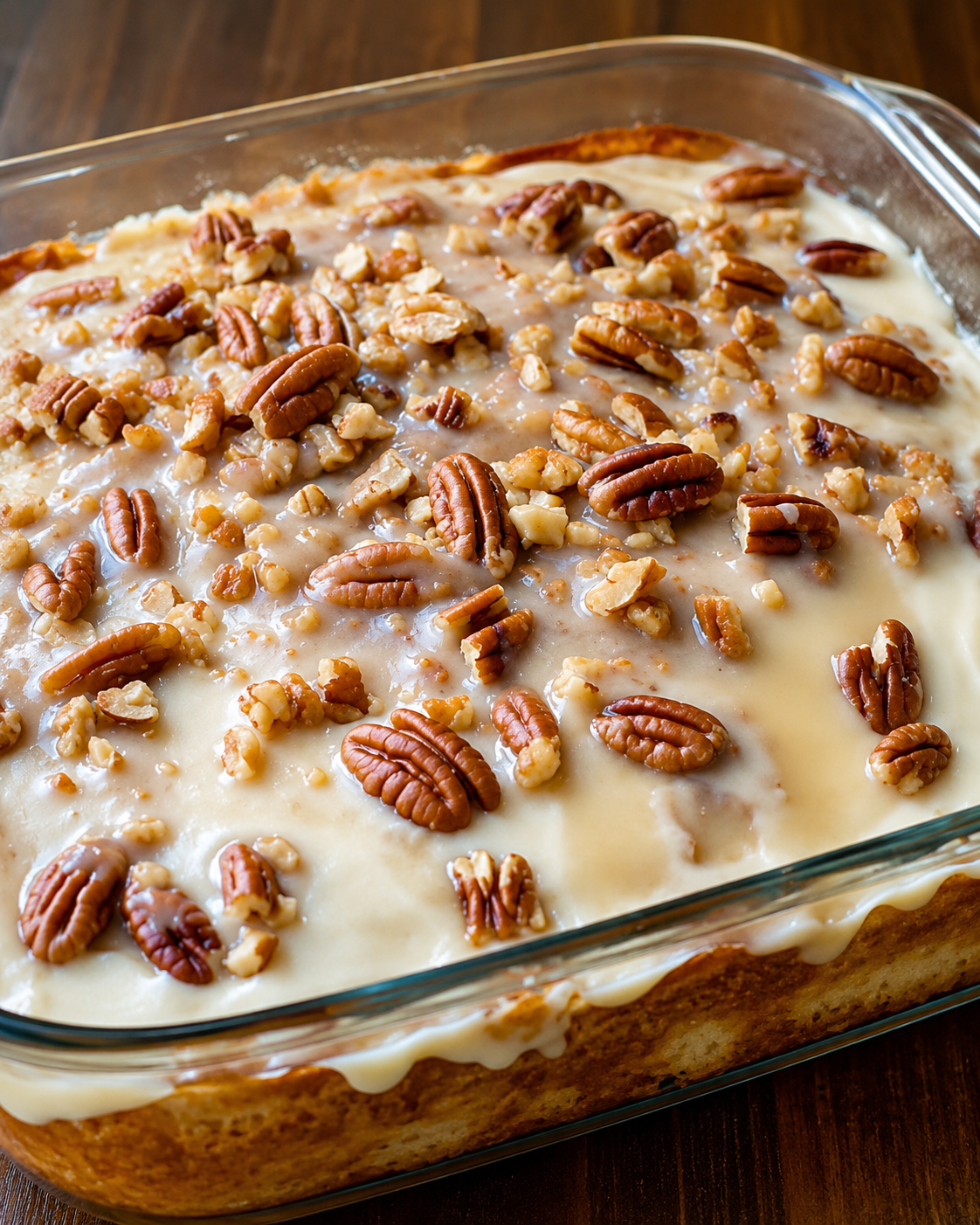
Pecan Praline Cake
Ingredients
Equipment
Method
- Preheat oven to 350°F. Grease a 9×13-inch baking dish well.
- In a large bowl, beat cake mix, frosting, oil, water, and eggs until smooth. Fold in ½ cup finely chopped pecans.
- Spread batter into the prepared pan. Bake 40 minutes or until a toothpick shows moist crumbs.
- While the cake is warm, melt butter with sweetened condensed milk in a saucepan over medium heat until smooth. Stir in 1 cup chopped pecans.
- Pour the warm topping over the warm cake and spread evenly.
- Cool at least 20–30 minutes before slicing. Serve warm or at room temperature.
Notes