
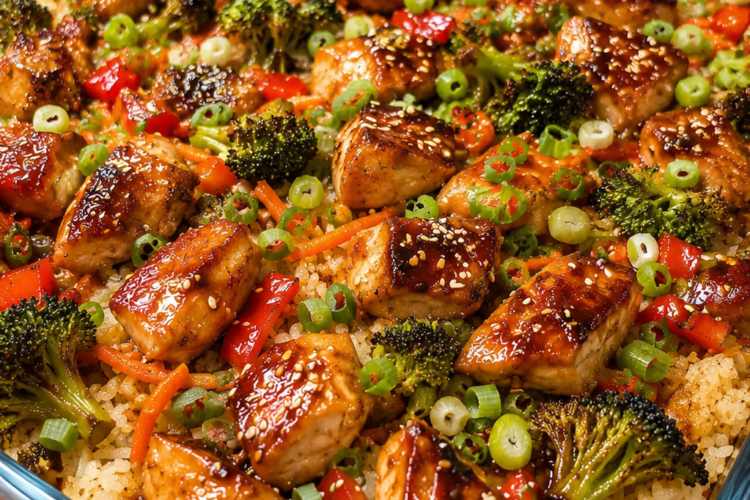
– The Easy One-Dish Weeknight Dinner That Tastes Better Than Takeout
There are nights when the idea of cooking separate components—rice in one pot, chicken in another, vegetables somewhere else, sauce on the side—feels like more than the day can handle. On those nights I reach for recipes that ask almost nothing of me beyond assembling what I already have and letting the oven finish the work. This teriyaki chicken casserole is exactly that kind of meal. It started as a way to use leftover cooked chicken and a container of rice, and it quickly became one of the most requested weeknight dinners in our house.
The first time I pulled it from the oven the kitchen smelled like a good takeout order—sweet, savory, garlicky, with the warm note of ginger—yet everything had come together in one baking dish. Tender pieces of chicken, fluffy rice, bright broccoli, red bell pepper, and carrots all coated in a glossy homemade teriyaki sauce that is perfectly balanced between sweet and savory. The top turns slightly golden and bubbly while the inside stays moist and flavorful. My family cleaned their plates without a single complaint about “too many vegetables,” which is how I know a recipe has earned permanent status.
This casserole is the opposite of complicated. You use cooked chicken and cooked rice, so the active time is mostly chopping and stirring. The sauce comes together in minutes on the stovetop. Everything goes into a 9x13 pan, gets covered, and bakes until hot and fragrant. It is ideal for busy evenings, for using up leftovers, and for those days when you want something that feels a little special without requiring a long list of steps. Once you taste the way the homemade teriyaki clings to every grain of rice and piece of chicken, you will understand why this dish has become a regular part of our rotation.
Why You’ll Love This Recipe
You will love this teriyaki chicken casserole because it delivers big flavor with minimal effort. It is a true one-dish meal—protein, starch, and vegetables all in the same pan. The homemade teriyaki sauce is quick to make and tastes brighter and cleaner than most bottled versions. The combination of sweet honey, savory soy, tangy rice vinegar, sesame oil, garlic, and ginger creates that classic balance that makes everyone reach for seconds.
You will love how practical it is. Leftover chicken and rice work beautifully. The vegetables can be prepped ahead. The whole casserole can be assembled earlier in the day and baked when you are ready. It reheats well for lunch the next day and travels nicely if you need to take dinner somewhere.
You will love the texture and color. The rice stays distinct rather than turning mushy. The broccoli and peppers keep a little bite. The carrots add sweetness and color. The sauce thickens just enough to coat everything without making the dish heavy. A final sprinkle of green onions and sesame seeds makes it look finished and fresh.
Most of all, you will love that it feels like a complete, comforting meal that still has brightness and balance. It is the kind of dinner that satisfies the craving for takeout while letting you control the ingredients and the sodium. In a week of rushed evenings, that kind of reliable, flavorful casserole is worth keeping close.
Why This Recipe Works
The success of this casserole rests on a few simple principles. Using already-cooked chicken and rice means the oven’s job is simply to heat everything through and let the flavors meld rather than to cook proteins and grains from scratch. This keeps the texture of the rice intact and prevents the chicken from drying out.
The homemade teriyaki sauce begins with a classic balance of salty (soy sauce), sweet (honey or brown sugar), acidic (rice vinegar), and aromatic (garlic, ginger, sesame oil). Bringing these ingredients to a simmer allows the flavors to bloom. The cornstarch slurry, added at the end, gelatinizes and thickens the sauce so it coats the rice and chicken instead of pooling at the bottom of the dish. A properly thickened sauce is what gives the casserole its glossy, cohesive quality.
Baking covered for the first twenty minutes traps steam and ensures even heating without drying the top. Removing the foil for the final minutes allows a little surface evaporation and light browning, which improves both flavor and appearance. The residual heat continues to finish the vegetables so they are tender yet still bright.
These small techniques—pre-cooked base ingredients, a balanced and thickened sauce, and a two-stage bake—produce a casserole that tastes intentional rather than thrown together.
Ingredient Breakdown
Cooked Chicken Breast (2 cups, diced or shredded) Cooked chicken provides lean protein and makes the casserole quick to assemble. Leftover roasted, poached, or rotisserie chicken all work well. Chicken breast keeps the dish lighter; thigh meat can be used for richer flavor. Chicken supplies high-quality protein that supports fullness and muscle maintenance. Dice or shred it into bite-sized pieces so every spoonful has a good distribution.
Cooked White Rice (3 cups, jasmine or long-grain) Rice is the hearty base that absorbs the teriyaki sauce. Jasmine rice adds a subtle fragrance; any long-grain white rice works. Day-old or chilled rice holds its shape better than freshly cooked rice and prevents the casserole from becoming gummy. Rice provides energy-supporting carbohydrates. Use rice that has cooled so the grains stay separate.
Broccoli Florets (1½ cups) Broccoli adds color, texture, and nutrition. It softens in the oven while still retaining a pleasant bite. Broccoli contributes fiber, vitamin C, and various beneficial plant compounds. Cut the florets into similar sizes so they cook evenly.
Red Bell Pepper (1, diced) Red bell pepper brings sweetness, color, and a slight crunch. It brightens both the flavor and the appearance of the finished dish. Bell peppers are rich in vitamin C and antioxidants. Dice it into small, even pieces.
Shredded Carrots (1 cup) Carrots add natural sweetness, color, and gentle texture. They soften nicely during baking and complement the savory-sweet sauce. Carrots provide beta-carotene and fiber. Pre-shredded carrots save time; whole carrots can be grated just as easily.
Green Onions (3, sliced and divided) Green onions contribute mild onion flavor and a fresh finish. Half go into the casserole for subtle savoriness; the rest are reserved for garnish so they stay bright and crisp. They add visual appeal and a light aromatic note.
Sesame Seeds (optional, for garnish) Sesame seeds provide a little nutty crunch and visual contrast. Toasted sesame seeds offer the best flavor. They are optional but make the finished dish look more complete.
Low-Sodium Soy Sauce (½ cup) Soy sauce is the savory foundation of the teriyaki. Low-sodium versions allow better control over the final saltiness. It contributes umami depth that makes the sauce taste rounded.
Honey or Brown Sugar (¼ cup) Honey or brown sugar balances the saltiness of the soy sauce and gives the sauce its characteristic gloss and mild sweetness. Honey adds a floral note; brown sugar contributes a slight molasses depth. Both work well.
Rice Vinegar (2 tablespoons) Rice vinegar provides bright acidity that keeps the sauce from tasting flat or overly sweet. It is milder than many other vinegars and traditional in teriyaki-style sauces.
Sesame Oil (1 tablespoon) Sesame oil adds rich, nutty aroma and flavor that is essential to the classic profile. A little goes a long way. Use toasted sesame oil for the fullest taste.
Garlic (2 cloves, minced) Fresh garlic supplies aromatic pungency that blooms when the sauce is heated. It is one of the key flavor builders.
Fresh Ginger (1 teaspoon, grated) Fresh ginger adds warm, slightly spicy brightness that distinguishes homemade teriyaki from many bottled versions. Grate it finely so it distributes evenly.
Cornstarch (1 tablespoon) + Water (2 tablespoons) Cornstarch is the thickener. Mixed with cold water into a slurry, it smooths into the hot sauce and creates the glossy, clingy consistency that coats the casserole ingredients.
Kitchen Equipment
You will need a 9x13-inch baking dish, a small saucepan for the sauce, a small bowl for the cornstarch slurry, a large mixing bowl, a whisk, a spatula or large spoon, measuring cups and spoons, a knife and cutting board, and aluminum foil. A microplane or fine grater is helpful for the ginger. That is the complete practical list.
Step-by-Step Instructions
Preheat the oven to 375°F. Lightly grease a 9x13-inch baking dish with non-stick spray or a thin film of oil so the casserole releases easily later.
In a small bowl, stir the cornstarch together with 2 tablespoons of cold water until the mixture is completely smooth and free of lumps. Set the slurry aside.
Place a small saucepan over medium heat. Add the low-sodium soy sauce, honey or brown sugar, rice vinegar, sesame oil, minced garlic, and grated ginger. Whisk to combine and bring the mixture to a gentle simmer. You will smell the garlic and ginger becoming fragrant as it heats.
Once the sauce is simmering, slowly whisk in the cornstarch slurry. Continue cooking and stirring for 2 to 3 minutes until the sauce thickens enough to coat the back of a spoon and turns glossy. Remove the pan from the heat and set it aside.
In a large mixing bowl, combine the cooked rice, diced or shredded cooked chicken, broccoli florets, diced red bell pepper, shredded carrots, and half of the sliced green onions. Pour about three-quarters of the thickened teriyaki sauce over the mixture. Gently fold everything together until the rice and chicken are evenly coated and the vegetables are distributed throughout.
Transfer the mixture to the prepared baking dish and spread it into an even layer. Drizzle the remaining teriyaki sauce evenly over the top.
Cover the dish tightly with aluminum foil. Bake for 20 minutes so the casserole heats through and the flavors meld in the trapped steam.
Remove the foil and return the dish to the oven for another 5 to 10 minutes, until the casserole is hot throughout, slightly golden on top, and bubbling around the edges.
Remove from the oven. Sprinkle with sesame seeds and the remaining sliced green onions. Let the casserole rest for a few minutes before serving so it sets slightly and is easier to portion. Serve warm.
Expert Tips
- Use day-old or chilled cooked rice for the best texture. Freshly cooked rice can become too soft.
- Cut the broccoli into small, even florets so they cook at the same rate as the other vegetables.
- Grate the ginger finely so it disperses evenly and does not leave large pieces.
- Whisk the cornstarch slurry thoroughly before adding it to prevent lumps in the sauce.
- Simmer the sauce only until it thickens; overcooking can make it too sticky.
- Reserve some sauce to drizzle on top for better coverage and appearance.
- Cover tightly with foil for the first bake so the casserole steams and heats evenly.
- Taste the finished sauce before assembling; adjust honey or soy if needed for balance.
- Let the casserole rest 5 minutes after baking for cleaner scoops.
- Toast the sesame seeds in a dry pan for deeper flavor before sprinkling.
- If using rotisserie chicken, remove the skin for a cleaner texture.
- Dice the chicken into uniform pieces so every bite has a good ratio of ingredients.
- For extra color, keep the red pepper pieces visible near the top when spreading the mixture.
- Double the sauce if you prefer a more heavily coated casserole.
Common Mistakes to Avoid
- Using freshly cooked, hot rice. It can turn the casserole gummy and soft.
- Adding the cornstarch directly to the hot sauce without making a slurry. Lumps will form.
- Overcooking the sauce after adding the slurry. It can become overly thick or gluey.
- Skipping the foil cover for the first part of baking. The top can dry out before the center is hot.
- Using high-sodium soy sauce without adjusting. The finished dish can taste too salty.
- Cutting the vegetables too large. They may remain underdone when the casserole is otherwise ready.
- Spreading the mixture unevenly in the pan. Some portions will be dry while others are saucy.
- Baking at a higher temperature to speed things up. The edges can over-brown before the center heats.
- Forgetting to reserve some green onions for garnish. The fresh finish is part of the appeal.
- Using cold chicken straight from the refrigerator without letting the casserole bake long enough. The center may stay cool.
- Stirring the sauce too aggressively after it thickens. It can break or become pasty.
- Omitting the rice vinegar. The sauce will lack brightness and taste flatter.
- Serving immediately without a brief rest. The casserole is very hot and soft right out of the oven.
- Storing leftovers without cooling first. Excess steam can make the rice overly soft.
Ingredient Substitutions
Cooked chicken breast can be replaced with cooked chicken thighs, leftover turkey, or even firm tofu for a different protein.
White rice can be replaced with brown rice (texture will be chewier) or cauliflower rice for a lower-carb version (reduce bake time slightly and expect more moisture).
Broccoli can be replaced with snap peas, green beans, or additional bell peppers.
Red bell pepper can be swapped for any color bell pepper or omitted if needed.
Honey can be replaced with maple syrup or brown sugar in equal amounts.
Low-sodium soy sauce can be replaced with coconut aminos for a soy-free option (flavor will be slightly sweeter).
Rice vinegar can be replaced with apple cider vinegar or a mild white vinegar in a pinch.
Fresh ginger can be replaced with ¼ teaspoon ground ginger, though fresh is preferable.
Sesame oil can be reduced or replaced with a neutral oil if necessary, but the flavor will change.
Recipe Variations
- Spicy Teriyaki Casserole – Add 1–2 teaspoons sriracha or a pinch of red pepper flakes to the sauce.
- Pineapple Teriyaki – Fold in ½ cup diced pineapple with the vegetables for sweet contrast.
- Vegetable-Loaded Version – Increase the broccoli, peppers, and carrots and reduce the rice slightly.
- Cashew Teriyaki Casserole – Sprinkle toasted cashews on top with the sesame seeds for crunch.
- Egg-Fried Rice Style – Stir in two scrambled eggs with the rice and chicken before baking.
- Quinoa Swap – Replace the rice with cooked quinoa for higher protein and a different texture.
- Beef Teriyaki Casserole – Use cooked, thinly sliced beef or leftover steak instead of chicken.
- Extra-Garlicky Version – Double the garlic and add a pinch of garlic powder to the sauce.
- Sheet-Pan Adaptation – Spread the mixture on a sheet pan for more surface browning and slightly less steaming.
- Cheese-Topped Variation – Sprinkle a light layer of shredded mozzarella or cheddar during the uncovered bake (non-traditional but popular with kids).
- Coconut-Ginger Twist – Replace half the water in the slurry with coconut milk for a richer sauce.
- Meal-Prep Individual Portions – Bake in ramekins or small oven-safe containers for ready-to-reheat lunches.
- Gluten-Free Version – Use certified gluten-free soy sauce or coconut aminos and confirm all other ingredients are gluten-free.
Make It Healthier
This casserole already includes lean protein and a generous amount of vegetables. To lighten it further, use brown rice or a mix of brown and white for more fiber. Increase the vegetable volume and slightly reduce the rice. Choose low-sodium soy sauce and reduce the honey by a tablespoon if you prefer less sweetness. Use skinless chicken breast and drain any excess liquid from the cooked chicken. Serve with an extra side of steamed vegetables or a simple cucumber salad. These adjustments keep the sweet-savory character while supporting a more balanced plate.
Meal Prep Guide
This casserole is excellent for meal prep. Assemble it up to a day ahead, cover, and refrigerate until ready to bake (add a few extra minutes of covered baking time if it is cold from the refrigerator). Leftovers portion well into individual containers for lunches. The sauce can be made several days in advance and stored in the refrigerator. Cooked chicken and rice can be prepared over the weekend so assembly takes only minutes on a busy night. The finished casserole keeps well and reheats nicely, making it a practical choice for planned weekly meals.
Storage
Cool the casserole completely, then cover tightly or transfer to airtight containers. Store in the refrigerator for up to four days. The rice will continue to absorb sauce as it sits, so the texture will be slightly softer the next day—still delicious. Always reheat thoroughly before serving.
Freezing
The assembled but unbaked casserole can be frozen. Wrap tightly and freeze for up to two months. Thaw overnight in the refrigerator before baking, adding extra covered time as needed. Baked leftovers also freeze reasonably well; portion them first for easier thawing. The texture of the rice softens after freezing, but the flavor remains good. Reheat from frozen or thawed until piping hot.
Reheating
Oven: Cover with foil and reheat at 350°F for 20–25 minutes until hot throughout. Remove the foil for the last few minutes if you want the top to re-crisp slightly.
Microwave: Heat individual portions on medium power, stirring halfway, until steaming hot. Add a splash of water if the rice seems dry.
Stovetop: Place a portion in a skillet with a spoonful of water, cover, and warm over medium-low heat, stirring occasionally.
Always ensure the center is hot before serving.
What to Serve With It
This casserole is a complete meal on its own. For a larger spread, add a simple side of steamed edamame, a cucumber salad with rice vinegar, or a bowl of miso soup. Fresh fruit such as pineapple or orange slices provides a refreshing contrast. If you want something green, a lightly dressed salad of mixed greens works well. Leftovers make an excellent lunch with nothing more than a few extra green onions on top.
Beverage Pairings
A cold glass of sparkling water with a slice of lemon or lime cleanses the palate between bites. Iced green tea or jasmine tea complements the ginger and sesame notes. For wine drinkers, a slightly off-dry Riesling or a light Pinot Gris pairs nicely with the sweet-savory sauce. A light lager or Japanese-style beer is also refreshing. Hot green tea works well if the casserole is part of a quieter evening meal. The goal is a drink that refreshes rather than competes with the teriyaki flavors.
Frequently Asked Questions
Can I use freshly cooked rice? Yes, but day-old or chilled rice holds its shape better and prevents the casserole from becoming too soft.
Can I use bottled teriyaki sauce? You can, but the homemade version tastes brighter and lets you control the sweetness and sodium. If using bottled, thicken it slightly with a cornstarch slurry if it seems thin.
How do I keep the broccoli from turning olive green? Cut it into small florets and avoid over-baking. The relatively short bake time helps it stay brighter.
Can I make this ahead? Yes. Assemble up to a day in advance, cover, and refrigerate. Add a few extra minutes of baking time if it goes into the oven cold.
Is this casserole freezer-friendly? Yes. Freeze before or after baking. Thaw overnight in the refrigerator for best results.
Can I use brown rice? Yes. The texture will be chewier and the bake time may need a few extra minutes.
What if I do not have rice vinegar? Apple cider vinegar or a mild white vinegar can substitute in a pinch. The flavor will be slightly different.
Can I add more vegetables? Absolutely. Snap peas, zucchini, or additional peppers all work well. Keep the total volume reasonable so the sauce still coats everything.
How spicy is this recipe? As written it is mild and family-friendly. Add sriracha or red pepper flakes if you want heat.
Can I use chicken thighs? Yes. Cooked, diced chicken thighs add richer flavor and stay very moist.
Why is my sauce not thickening? Make sure the slurry is fully mixed and that the sauce comes back to a simmer after it is added. Cornstarch needs heat to activate.
How many servings does this make? About six generous servings as a main dish.
Can I make it gluten-free? Yes. Use gluten-free soy sauce or coconut aminos and confirm all other ingredients are gluten-free.
What is the best way to reheat leftovers? The oven covered with foil preserves texture best. The microwave is fine for single portions.
Can I double the recipe? Yes. Use two 9x13 pans or one larger deep pan and extend the covered baking time slightly.
Nutrition Information
Estimated nutrition per serving (based on 6 servings): approximately 320–380 calories, 8–10 g fat, 40–45 g carbohydrates, 22–26 g protein, 3–4 g fiber. Values vary depending on the exact type of rice, chicken, and amount of sauce used. These figures are estimates only and are not a substitute for professional nutritional advice. This casserole provides a solid balance of protein, carbohydrates, and vegetables and can be part of a varied and balanced way of eating.
Final Thoughts
This teriyaki chicken casserole has become one of those quiet heroes in my weeknight rotation. It asks for very little active time, uses ingredients I often already have, and delivers a sweet-savory, colorful, satisfying meal that feels like more than the sum of its parts. I love that it turns leftover chicken and rice into something the whole family looks forward to, and I love the way the kitchen smells while it bakes—garlicky, gingery, and warmly inviting.
I hope you make it on a night when you want dinner to feel easy and still special. I hope the sauce thickens into a glossy coat and the vegetables stay bright. And I hope, when you scoop the first serving and see the mix of chicken, rice, and colorful vegetables, you feel the same small sense of relief and satisfaction that a good one-dish meal can bring. If you try it, I would love to know how quickly the pan emptied at your table. From my kitchen to yours—simple, flavorful, and made for busy evenings.
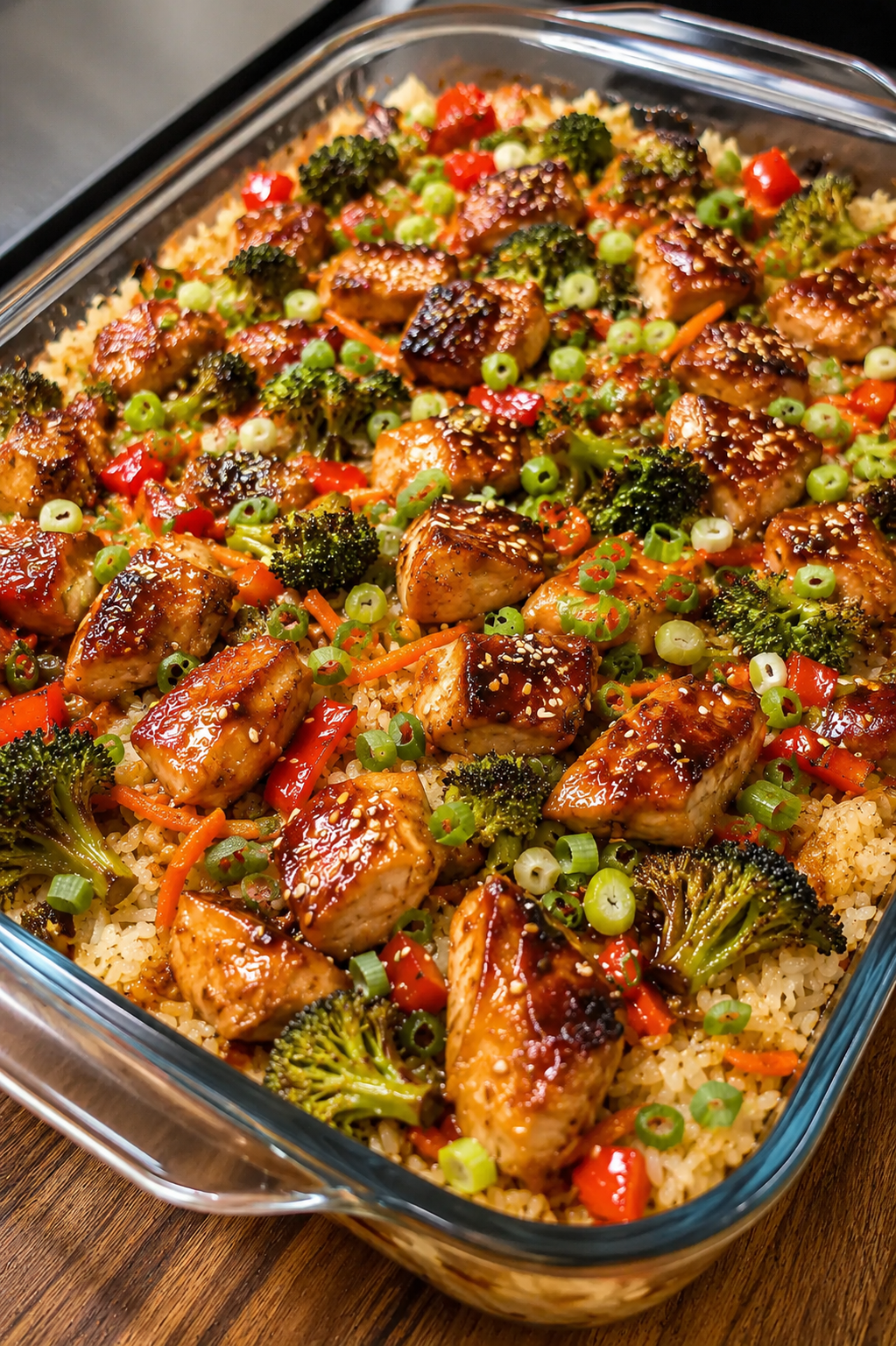
teriyaki chicken casserole
Ingredients
Equipment
Method
- Preheat oven to 375°F. Lightly grease a 9x13-inch baking dish.
- Mix cornstarch with 2 tablespoons water to make a slurry; set aside.
- In a small saucepan, combine soy sauce, honey, rice vinegar, sesame oil, garlic, and ginger. Simmer, then whisk in slurry and cook 2–3 minutes until thickened.
- In a large bowl, combine rice, chicken, broccoli, bell pepper, carrots, and half the green onions. Toss with ¾ of the sauce.
- Spread in the baking dish, drizzle remaining sauce on top, cover with foil, and bake 20 minutes.
- Uncover and bake 5–10 minutes more until hot and lightly golden.
- Garnish with sesame seeds and remaining green onions. Serve warm.