
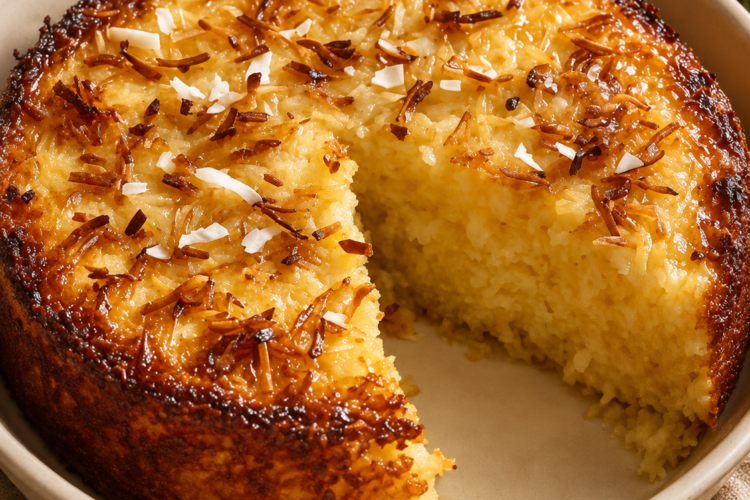
Impossible Coconut Pie – The Self-Crusting Custard Pie That Feels Like Magic
My mom used to make this every Easter, and I swear the smell alone could bring the whole neighborhood to our door. That sweet coconut toasting in the oven while the custard sets into something impossibly soft and custardy… it’s one of those desserts that feels fancy but comes together in about five minutes of actual work.
This pie literally forms its own golden crust as it bakes. You just dump everything into one bowl, pour it into a buttered pie dish, and let the oven do the magic. The top gets crispy and caramelized, the edges turn golden brown, and the inside stays creamy and tender. It’s like a coconut macaroon met a custard pie and they became best friends.
I made this last weekend and my husband ate three slices before dinner. No shame. One bowl, simple pantry ingredients, and a single pie dish deliver a dessert that tastes like you spent far more time than you did. Serve it warm with whipped cream or cold the next morning with coffee—both ways are dangerously good.
Why You’ll Love This Recipe
You will love this impossible coconut pie because it delivers rich, creamy, coconut-packed flavor with almost no effort. The batter is mixed in one bowl and poured into a buttered pie dish. As it bakes, it magically forms its own golden, slightly crisp crust while the center sets into a soft, custardy texture. Toasted coconut flavor fills the kitchen and the finished pie tastes like a cross between a coconut macaroon and a classic custard pie.
You will love how practical it is. There is no separate crust to make or roll. The ingredient list is short and affordable. It comes together in minutes and bakes while you do other things. Perfect for holidays, potlucks, Sunday dinners, or anytime you want a special dessert without the work.
You will love the texture contrast. The top and edges turn golden and lightly caramelized. The interior stays creamy, soft, and full of shredded coconut. Every slice holds together beautifully once cooled, yet still feels delicate and tender.
Most of all, you will love the reactions. This is the pie that makes people ask for the recipe after the first bite. It is the one that disappears while guests are still talking about how the crust formed itself. In a world of complicated desserts, impossible coconut pie this good is pure simple magic.
Why This Recipe Works
Eggs, milk, sugar, and a little flour create a classic custard base that sets gently in the oven. Melted butter adds richness and helps the edges and top brown. Sweetened shredded coconut distributes throughout the batter and toasts as the pie bakes, giving both flavor and texture. A small amount of flour helps the mixture thicken and supports the formation of a light, natural crust along the bottom and sides as the custard sets.
Baking in a well-buttered pie dish encourages browning and easy release. The moderate oven temperature (350°F) allows the custard to cook evenly without curdling while the top and edges caramelize. The pie is done when the top is deeply golden and the center is just set with a slight jiggle—it continues to firm as it cools. These simple science-backed techniques produce a self-crusting pie with a creamy interior and toasted-coconut flavor in one easy step.
Ingredient Breakdown
All-Purpose Flour (½ cup) A modest amount of flour helps thicken the custard and supports the formation of the natural crust.
Granulated Sugar (1½ cups) Sugar sweetens the pie and helps the top caramelize into a golden, glossy surface.
Large Eggs (4) Eggs provide structure and richness, allowing the custard to set properly.
Whole Milk (2 cups) Whole milk creates a creamy, tender custard. Lower-fat milk will work but yield a less rich result.
Vanilla Extract (1 teaspoon) Vanilla enhances the overall flavor and complements the coconut.
Melted Butter (¼ cup, cooled slightly) Butter adds richness and encourages the edges and top to brown beautifully.
Sweetened Shredded Coconut (1½ cups) Coconut is the star—it toasts during baking and gives the pie its signature flavor and texture.
Pinch of Salt Salt balances the sweetness and rounds out the flavors.
Kitchen Equipment
A 9-inch pie dish, a large mixing bowl, a whisk, and a spatula are the main tools. That is the complete practical list.
Step-by-Step Instructions
Preheat the oven to 350°F. Generously butter a 9-inch pie dish.
In a large mixing bowl, crack the eggs and whisk until smooth.
Add the sugar, flour, and salt. Whisk until the mixture is combined and free of lumps.
Pour in the milk, melted butter, and vanilla. Stir gently until the batter is silky and smooth.
Fold in the shredded coconut until it is evenly distributed.
Pour the mixture into the prepared pie dish and let it settle evenly.
Bake for 50–60 minutes, until the top is deeply golden and the center is just set with a slight jiggle.
Let the pie cool for at least 20 minutes before slicing. The texture improves as it cools.
Serve warm with whipped cream, or chill and serve cold the next day with coffee.
Expert Tips
- Butter the pie dish generously so the natural crust releases cleanly and browns well.
- Whisk the eggs first, then add the dry ingredients to avoid lumps.
- Cool the melted butter slightly so it does not scramble the eggs.
- Use sweetened shredded coconut for the classic flavor and texture.
- The center should still have a slight jiggle when you remove the pie—it will continue to set as it cools.
- Let the pie cool at least 20 minutes (longer is even better) for the cleanest slices.
- A glass or ceramic pie dish works beautifully and lets you see the browning.
- For deeper color, bake closer to the full 60 minutes, watching so the top does not get too dark.
- The pie tastes excellent both warm and chilled—try it both ways.
- A light dusting of powdered sugar or a dollop of whipped cream is a pretty finish.
- Leftovers keep well and are excellent cold the next morning.
- Do not overmix once the coconut is added; gentle folding is enough.
- Whole milk gives the richest, creamiest result.
- If the top is browning too quickly, tent loosely with foil for the remaining time.
Common Mistakes to Avoid
- Under-buttering the pie dish. The pie can stick and the crust may not brown as well.
- Adding hot melted butter directly to the eggs. It can scramble them—let it cool slightly.
- Overbaking until the center is completely firm and dry. Look for a slight jiggle.
- Slicing too soon. The custard needs time to set for clean slices.
- Using unsweetened coconut without adjusting expectations. The flavor and sweetness will be different.
- Skipping the salt. Even a pinch makes the flavors brighter.
- Expecting a traditional pastry crust. This pie forms its own light crust as it bakes.
- Using a dish that is not 9 inches. The baking time and texture will change.
- Opening the oven door frequently. Heat loss can affect even setting.
- Overmixing the batter after adding the coconut. Gentle folding is best.
- Serving it ice-cold straight from the refrigerator without a few minutes at room temperature if you prefer a softer texture.
- Using low-fat milk and expecting the same richness. Whole milk is preferred.
- Forgetting that the pie continues to firm as it cools. The slight jiggle is intentional.
- Storing it uncovered. Cover once cooled to keep the top from drying out.
Ingredient Substitutions
Whole milk can be replaced with 2% milk (less rich) or a full-fat plant-based milk for a dairy-free version (results will vary).
Sweetened shredded coconut can be replaced with unsweetened (the pie will be less sweet; you may want a little extra sugar).
All-purpose flour can be replaced with a 1:1 gluten-free baking blend if needed.
Butter can be replaced with a plant-based butter alternative or neutral oil.
Vanilla extract can be replaced with almond extract for a different flavor profile (use a little less).
Recipe Variations
- Toasted Coconut – Toast the shredded coconut lightly before adding it to the batter for deeper flavor.
- Chocolate Coconut – Add ¼ cup cocoa powder to the dry ingredients or sprinkle chocolate chips on top before baking.
- Lime Coconut – Add lime zest and a little lime juice for a bright, tropical twist.
- Almond Coconut – Add ½ teaspoon almond extract along with the vanilla.
- Pineapple Coconut – Fold in a small amount of well-drained crushed pineapple.
- Individual Custards – Bake in ramekins (reduce baking time) for personal servings.
- Whipped Cream Topping – Serve with sweetened whipped cream and a sprinkle of toasted coconut.
- Coconut Cream Pie Style – Chill the pie fully and top with whipped cream and toasted coconut.
- Maple Version – Replace a portion of the sugar with maple syrup for a different sweetness.
- Spiced Coconut – Add a pinch of cinnamon or cardamom to the batter.
- Make-Ahead – Bake the day before; the texture is excellent when chilled overnight.
- Mini Pies – Use small pie tins or a muffin tin (adjust time) for party portions.
- Gluten-Free – Use a gluten-free flour blend and confirm all other ingredients are gluten-free.
Make It Healthier
This pie is a sweet, rich dessert. To lighten it slightly, reduce the sugar modestly, use reduced-fat milk, or serve smaller slices. Pairing a modest piece with fresh fruit can balance the richness. Enjoy it as a special-occasion or holiday dessert rather than an everyday item. Homemade allows you to control the ingredients and avoid unnecessary additives.
Meal Prep Guide
This pie is ideal for making ahead. Bake it the day before you plan to serve—the texture firms up beautifully and the flavors settle. It keeps well in the refrigerator and is excellent cold or gently rewarmed. A full pie can be baked on the weekend and enjoyed for several days.
Storage
Cool the pie completely, then cover and refrigerate for up to four days. The texture remains creamy and the coconut flavor holds up well. Serve cold or let slices sit at room temperature for a few minutes if you prefer a softer texture.
Freezing
The pie can be frozen for up to two months, though the custard texture may change slightly after thawing. Cool completely, wrap tightly, and freeze. Thaw overnight in the refrigerator. Enjoy cold or gently rewarm slices. For best texture, this pie is ideally enjoyed fresh or from the refrigerator within a few days.
Reheating
This pie is excellent cold. If you prefer it warm, heat individual slices in the microwave for 15–25 seconds or in a low oven (300°F) for a few minutes until just warmed through. Avoid overheating, which can make the custard rubbery or cause separation.
What to Serve With It
Impossible coconut pie is perfect on its own. A dollop of whipped cream or a scoop of vanilla ice cream makes it extra special. It shines on a holiday dessert table, at potlucks, or as a simple Sunday dessert. Cold slices with coffee the next morning are a quiet luxury. Fresh berries on the side add a bright contrast to the rich coconut custard.
Beverage Pairings
Hot coffee or a latte balances the sweetness and complements the toasted coconut. Black tea or a coconut-friendly herbal tea also pairs well. Cold milk is simple and comforting. For a special occasion, a dessert wine or a light tropical cocktail can be lovely. Sparkling water with a squeeze of lime refreshes the palate. Choose a drink that either cuts the richness or enhances the coconut flavor.
Frequently Asked Questions
Why is it called “impossible” pie? Because it forms its own crust as it bakes—no separate crust required. The magic happens in the oven.
Can I use unsweetened coconut? Yes, but the pie will be less sweet. You may want to add a little extra sugar.
How do I know when it’s done? The top should be deeply golden and the center should be just set with a slight jiggle. It will firm up more as it cools.
Can I make it dairy-free? Use a full-fat plant-based milk and a plant-based butter alternative. Results will differ slightly in richness and browning.
Is this gluten-free? Only if you use a gluten-free flour blend and confirm all other ingredients are gluten-free.
Why did my pie turn out watery? It was likely underbaked. The center needs to be just set before removing from the oven, and the pie needs adequate cooling time.
Can I reduce the sugar? Yes, modestly. The texture and browning may change slightly.
How many does this serve? About 8 slices.
Can I make it ahead? Yes. It is excellent made the day before and served chilled.
How long do leftovers keep? Up to four days in the refrigerator.
Can I freeze it? Yes, though the custard texture may change slightly. Thaw in the refrigerator.
Do I need to blind-bake anything? No. Everything goes in the dish uncooked and the pie forms its own crust.
Why is the top so dark? A deeply golden top is desirable. If it is browning too quickly, tent with foil for the remaining bake time.
Can I add other flavors? Yes. Lime zest, almond extract, or a little chocolate are popular variations.
Should I serve it warm or cold? Both are delicious. Warm is soft and fragrant; cold is firmer and refreshing. Try both.
Nutrition Information
Estimated nutrition per slice (based on 8 slices): approximately 320–360 calories, 15–18 g fat, 42–46 g carbohydrates, 6–7 g protein. Values vary depending on exact ingredients. These figures are estimates only and are not a substitute for professional nutritional advice. This pie is a rich, sweet dessert best enjoyed in moderate portions as an occasional treat.
Final Thoughts
This impossible coconut pie has stayed in my family for years because it feels special yet asks so little of the cook. The way it forms its own golden crust, the creamy coconut-filled center, and the toasted aroma that fills the kitchen still feel a little bit magical every time. It is the kind of dessert that makes people pause after the first bite and then immediately ask how you made it.
I hope you bake this the next time you want something impressive without the effort. I hope the top turns deeply golden, the center sets into silky custard, and the pie disappears faster than you expect. If you try it, I would love to know whether you served it warm or chilled—and how many slices vanished before dinner was over. From my kitchen to yours—creamy, coconut-filled, and pure impossible magic.
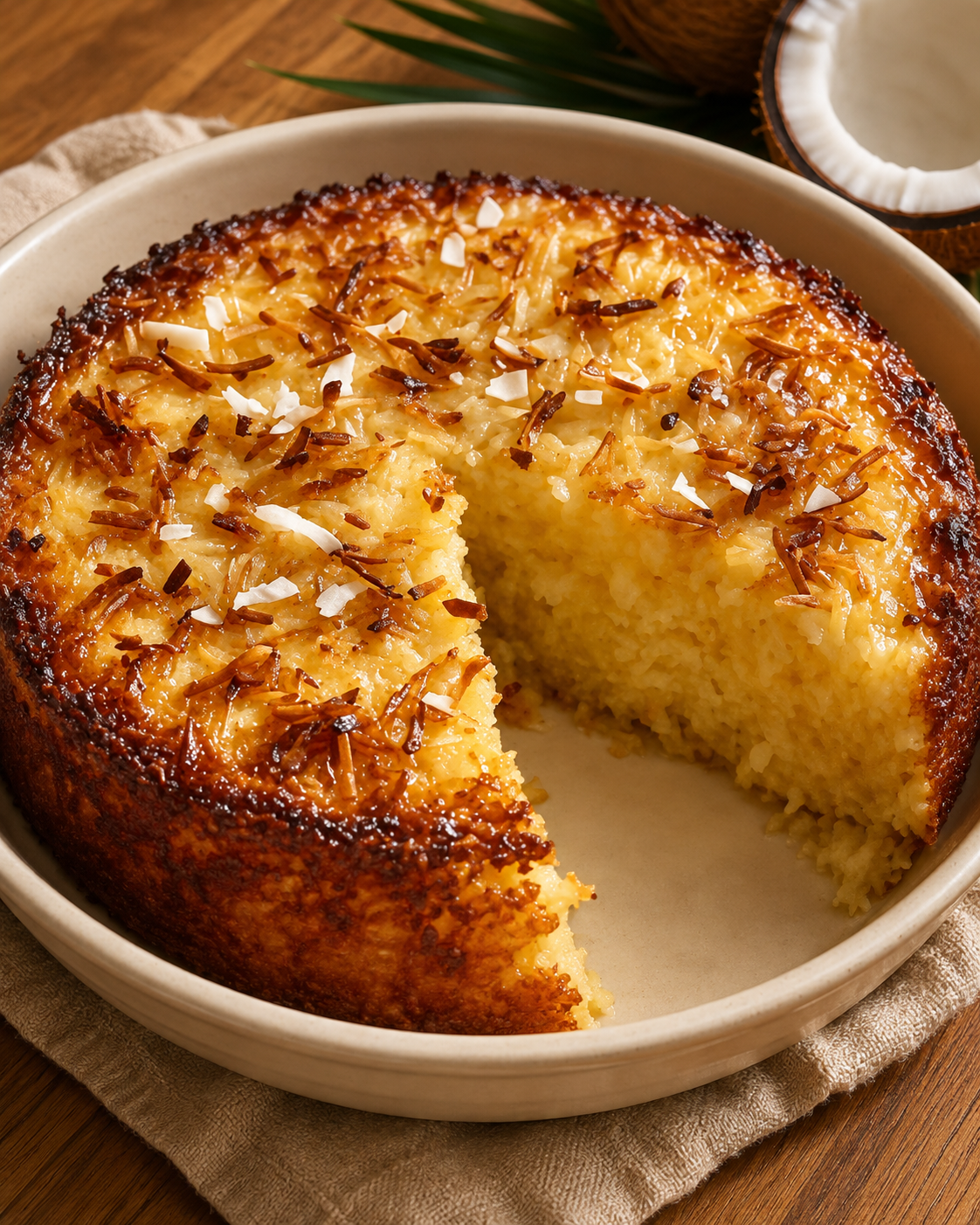
Impossible Coconut Pie
Ingredients
Equipment
Method
- Preheat oven to 350°F. Generously butter a 9-inch pie dish.
- Whisk eggs until smooth. Add sugar, flour, and salt; whisk until lump-free.
- Stir in milk, melted butter, and vanilla until silky. Fold in shredded coconut.
- Pour into the prepared pie dish.
- Bake 50–60 minutes until the top is deeply golden and the center is just set with a slight jiggle.
- Cool at least 20 minutes before slicing. Serve warm or chille
Notes