
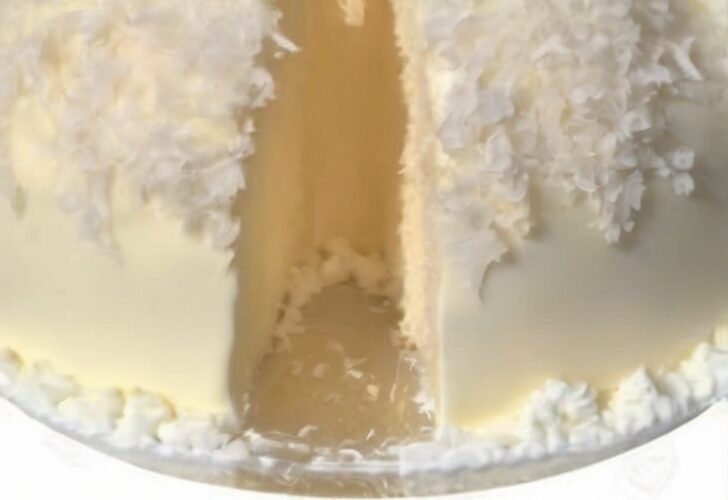
Catch A Husband Cake: Cloud-Soft Coconut Bundt Cake With Whipped Cream and Coconut
My grandmother used to warn us before family gatherings that this particular cake was dangerous to serve, because somebody always proposed by dessert. She said it the way people say weather, like it was simply a fact of the universe. I laughed at her every single time until I made it for a church potluck and three separate people asked me if I was single, and one of them asked me twice.
So the name is not wrong. This thing is cloud-soft, soaked through with sweetened condensed milk and three kinds of milk, and then buried under enough shredded coconut that a slice looks like a snowball with frosting on it. It is the cake that makes people go quiet for a second before they take another bite. That pause is the whole reputation right there.
I made it on a Sunday with nothing on the calendar, and the house smelled like vanilla and coconut for hours afterward. My neighbor knocked on the door because of the smell, which is what coconut does to a street. It is a blender batter, which means you dump it, pour it, bake it, then frost it and cover it in coconut. There is no creaming, no layering, and nothing difficult happening at any point.
I am not going to claim it will get you married. I will tell you it is the cake I have made more than any other in this house, that it travels well, that it gets better overnight, and that people genuinely ask for the recipe before they finish the slice.
Why You'll Love This Catch A Husband Cake
Because the crumb is genuinely cloud-soft, and I mean that in the literal sense of the word. Three milks in one batter means a crumb that stays tender three days later instead of drying out on the counter by Tuesday. Sweetened condensed milk, whole milk, and full-fat coconut milk all going into the same blender is unusual and it works.
Because the batter comes together in a blender in about two minutes. No creaming butter and sugar until pale, no alternating dry and wet additions, no worrying about overmixing. You put everything in, you blend, you pour, you bake. It is the most forgiving cake batter I know of.
Because it looks like you did work. A bundt pan does something to the shape that makes people assume effort, and then a full coat of whipped cream and shredded coconut on top finishes it. This is a cake that gets photographed at a potluck before anybody has taken a bite.
Because it serves a crowd without a second dessert. Fourteen generous slices from one 12-cup bundt, it holds on a table for two hours without weeping, and it slices cleanly when cold, which is not true of most frosted cakes. This is a potluck cake that behaves.
And because of the name, honestly. There is no dignified reason for a coconut cake to be called this, and that is the charm of it. It gets asked about at least once every time I bring it out, and I have never gotten tired of answering.
Why This Catch A Husband Cake Works
Blending the batter is not a gimmick. It produces an extremely fine, uniform crumb because there are no pockets of dry flour and no lumps of condensed milk, and that even texture is why the cake reads as cloud-soft rather than just moist. Hand-whisking works, but expect a slightly coarser crumb.
Three milks is the real design. Sweetened condensed milk brings sugar, fat, and protein that hydrate the flour and slow staling, which is why day-two cake still tastes like day-one cake. Whole milk thins that concentration out so the batter is pourable. Coconut milk adds fat and flavor and, critically, more fat means less gluten development, which means tender.
Baking powder, not baking soda, because there is no alkaline ingredient in this batter. One tablespoon gives a gentle rise and, more importantly, a fine crumb rather than a big open one. Overbaking is the real enemy here, since a 40 to 45 minute bake in a bundt pan runs hot at the top before the center catches up.
Greasing and then dusting with flour is what actually gets this cake out of a bundt pan. Bundt pans have that center tube and every ridge, and a moist milk-rich batter is sticky enough to fuse with dry metal. Butter in every crease, then a light flour dusting, then a tight paring plastic wrap layer to fill the seams. Then invert while warm, because the sugar in the batter caramelizes slightly against the pan as it cools and that is what releases.
Soft peaks, not stiff peaks. Heavy cream whipped to stiff peaks has already started separating into fat and water, and it goes grainy and weeps on contact with sugar. Soft peaks hold their shape enough to stay on the cake and spread without tearing it. Two tablespoons of powdered sugar is right for one cup of cream, more than that and it goes cloying, because the cake is already very sweet.
Pressing the coconut onto the whipped cream while the cream is still tacky is the detail that decides whether the coating sticks. Too soon and it slides off into the pan, too late and the coconut tears the frosting as you press it. Immediately after frosting is the window.
And the two-hour chill is not optional. It firms the whipped cream enough to slice cleanly, lets the coconut set as a shell, and pulls the three milks and the coconut flavor into one thing instead of leaving them arguing. Overnight is genuinely better.
Ingredient Breakdown
1 can sweetened condensed milk, 14 ounces. The sweetening, the richness, and the entire reason this cake stays soft for days. It is doing the job sugar would normally do, and doing it better because of the milk protein and fat it brings along. This is not a cake where you can cut the sugar back, and I will explain why further down.
1 can whole milk, measured with the empty condensed milk can. About 1 and 3/4 cups. Using the empty can as your measure is the whole trick, because it means one can of condensed and one can of milk and the ratio is right without a scale. It adds moisture and dilutes the condensed milk enough that the batter pours instead of sitting in globs.
1 can coconut milk, measured with the same can. Full-fat, and this is not a place to economize. Canned light coconut milk has most of the fat removed and you lose both the richness and the actual coconut flavor, which is the entire point of the cake. Full-fat coconut milk is about 20 calories per 100 grams of mostly fat, and that fat is what tenderizes the crumb.
1 cup all-purpose flour. Spooned and leveled. It is the only structural element in the batter, and this is not a cake to swap to cake flour or a gluten-free blend without expecting a different result. Spoon and level it, because scooping adds up to a quarter cup and this batter is already at the edge of being too rich to take more dry weight.
3 large eggs. Structure, emulsification, and about 15 calories each. Room temperature, so they blend smoothly into the condensed milk instead of breaking it into curds. They also contribute most of the roughly 5 grams of protein a slice.
1 tablespoon baking powder. Not baking soda, because there is nothing acidic in this batter to react with soda. The tablespoon is a full measure and it is correct. Double-acting baking powder gives you the rise and the fine texture in one, and it is why the cake comes out even rather than tunneled.
2 tablespoons melted butter. Flavor and mouthfeel, and it is the fat that ties the condensed milk and coconut milk together so they taste like one cake instead of three milks having a meeting. Neutral oil works and costs less, but you lose the flavor entirely.
1 cup heavy cream for the frosting. Whipped with 2 tablespoons of powdered sugar to soft peaks. This becomes the frosting and also the adhesive for the coconut. Heavy cream is needed for the fat content, because a lower-fat cream does not hold peaks without stabilizers.
2 tablespoons powdered sugar. Just enough to stabilize the cream and take the edge off the plain dairy flavor. This is a deliberately under-sweetened frosting because the cake and the coconut are both already very sweet. If it seems like too little, that is correct.
2 cups sweetened shredded coconut. About 6 ounces. The signature, both visually and in flavor. Sweetened is traditional here and it matters, because unsweetened leaves you with a cake that is sweet but a coating that is not, which reads as unfinished. Toasting half of it is the one upgrade I would always make.
Kitchen Equipment
A 12-cup bundt pan. This is not optional if you want this cake, because the batter is a full 3 and 3/4 cups and a smaller pan overflows. A 10-cup pan will work but reduce your bake time by five minutes or so, and check it early.
A blender. A countertop one is fine, this is not a hard job. A food processor also works and a hand whisk works too, just expect a slightly coarser crumb.
A hand mixer or stand mixer for the whipped cream. This one matters more than it looks, because a stand mixer holding the bowl cold gets you peaks faster and more reliably.
A rubber spatula, a cooling rack, a serrated knife for slicing through the coconut shell, and a cake stand or plate. Also a pastry brush and a fine-mesh strainer if you are dusting the pan with flour properly.
A can opener you trust, since the can-measure trick depends on getting a clean empty can.
Step-by-Step Instructions
Step 1: Prepare the pan and heat the oven. Preheat to 350°F. Very generously butter the entire bundt pan, working the butter into every ridge, the center tube, and both corners. Then dust with a little all-purpose flour, tapping out the excess. This two-step grease-and-flour is what gets a moist milk-rich cake out of a shaped pan.
Step 2: Blend the batter. Open the condensed milk and pour it into the blender. Use the empty can to measure the whole milk and pour that in, then use the same can for the coconut milk and add it. Add 1 cup all-purpose flour, 3 eggs, 1 tablespoon baking powder, and 2 tablespoons melted and cooled butter. Blend on high for 60 to 90 seconds, until the batter is completely smooth with no white streaks of flour.
Step 3: Pour and settle. Pour the batter into the prepared bundt pan and smooth the top. Tap the pan gently on your counter two or three times, which knocks out large air pockets that would otherwise bake into uneven tunnels.
Step 4: Bake. Bake for 40 to 45 minutes, until the top is golden and a toothpick inserted into the deepest part of the ring comes out clean or with a couple of moist crumbs. If using a dark bundt pan, check at 38 minutes, because a dark metal pan will brown the outside before the center sets.
Step 5: Cool, then unmold warm. Let the cake cool in the pan for about 10 minutes. Then run a thin knife around the edge, invert onto your serving plate, and lift the pan off while the cake is still warm. It should release cleanly and completely. If it resists, wait another 5 minutes rather than forcing it.
Step 6: Whip the cream. Put the heavy cream and 2 tablespoons of powdered sugar in a cold bowl and whip on medium-high until you get soft peaks. The peaks should hold their shape when you lift the beaters but the cream should still flop over when you turn the bowl. Stop there. Stiff, grainy peaks mean you went too far.
Step 7: Frost generously. Once the cake is completely cool, spread the whipped cream over the entire surface, top and all the ridges, using the back of the spoon to get into the bundt shapes. Do not frost a warm cake, the cream will slide straight off.
Step 8: Coat with coconut. Press the sweetened shredded coconut over the whipped cream, all the way around, working in sections and pressing gently but thoroughly so it sticks. Do it while the cream is still tacky. Cover the entire surface, because the generous layer is part of the identity of this cake.
Step 9: Chill before serving. Refrigerate for at least 2 hours, and overnight is better. This sets the cream so it slices cleanly, firms the coconut into a shell, and settles the flavors.
Step 10: Slice cold. Use a serrated knife, sawing gently to get through the coconut coating without pushing it off. Serve cold.
Expert Tips
Grease the bundt pan thoroughly and then dust it with flour. Butter alone is not enough for this batter, which is sticky and sugary and rich enough to essentially glue itself to metal. Butter, then flour, then a plastic wrap layer to fill the seams if the pan is older.
Full-fat canned coconut milk, always. Light coconut milk has the flavor stripped out along with the fat, and the fat is what keeps the crumb tender and what makes it taste like coconut at all.
Blend until fully smooth. Any visible white streak of flour means a pocket of dry flour baked into the cake, and that is a hole you find while eating rather than a problem you see while baking.
Measure the milk and the coconut milk with the empty condensed milk can. One can in, one can of each liquid, no math, and the ratios land exactly where they should.
Do not overbake. Pull it when the toothpick comes out clean. A minute or two of overbaking in a milk-rich cake is the difference between cloud-soft and a dense brick, and you cannot undo it.
Unmold while warm, not hot and not cold. Ten minutes is the sweet spot. The sugar in the batter has set into a thin glaze against the pan and releases as the temperature drops a little.
Whip to soft peaks only. Heavy cream goes from soft peaks to grainy and watery in about fifteen seconds past where you want it, so stop and check.
Press the coconut on right after frosting, while the cream is tacky. That window is a few minutes wide. Too early and it slides, too late and you tear the frosting.
Chill at least 2 hours, overnight is better. The cake genuinely improves, the slices come out clean, and this is the easiest dessert to make ahead on this entire site.
A serrated knife for cutting. A straight knife will drag and tear the coconut coating. A sharp knife sawed gently gets through it.
Toast half the coconut for deeper flavor. Spread it on a sheet pan, 350°F, about 5 minutes, watching constantly, and press the toasted half onto the top and the untoasted half around the sides.
Keep it refrigerated the whole time it is out. Whipped cream on a counter is the one food safety issue in this recipe, and two hours is the outside limit in a normal room.
Common Mistakes to Avoid
Under-greasing the bundt pan. The most common failure and the most annoying, because it means losing the shape. Be genuinely heavy-handed with the butter and follow it with flour.
Using light or carton coconut milk. Less fat and less flavor, and this cake is built on both. It will still bake but it will taste like a vanilla cake with a coconut hat on it.
Overbaking. The batter is milk-rich with condensed milk in it, so it goes from cloud-soft to dry cake faster than you expect. Start checking at 38 minutes.
Unmolding a completely cold cake. The sugar glaze that releases it only forms as it cools. If you wait all the way to room temperature you will be chiseling it out of the pan.
Over-whipping the cream. Past soft peaks the fat separates, the cream goes grainy, and it weeps water onto the cake within an hour. Stop at soft peaks.
Skipping the chill. Unchilled whipped cream slumps and the slices crumble. Two hours minimum and the cake cuts like a clean sheet cake.
Using unsweetened coconut without adjusting. It is not a straight swap. The cake is sweetened by condensed milk and the coating is expected to be sweet too, and unsweetened leaves a flavor gap you will notice. If you do use unsweetened, add 2 tablespoons of powdered sugar to the cream.
Frosting a warm cake. The whipped cream melts and slides off before you finish spreading it. Full cool-down first, no exceptions.
Pouring into a cold pan. A room-temperature pan gives more even baking. A refrigerated pan chills the outside of the batter before it sets.
Opening the oven door repeatedly. Every opening drops the temperature, and in a cake that needs 40 minutes at a steady 350 you can lose the rise and get a dense ring.
Skimping on the coconut. The blanket of coconut is the entire visual identity and a large share of the flavor. A thin scattering looks like an accident.
Leaving it at room temperature too long. Whipped cream, dairy, and a multi-hour gathering means you need the cake back in the refrigerator within two hours.
Expecting a light sponge. This is a dense, tender, milk-rich cake. It is not airy, and it is not trying to be. Expect a slice that holds together and feels substantial.
Ingredient Substitutions
2% milk for whole milk. Works fine. The cake will be a fraction less rich and you will not notice a real difference, because the condensed milk and coconut milk are doing most of the richness work anyway.
All whole milk for the coconut milk. Possible in a pinch, but then it is not a coconut cake anymore. If you do it, add 1/2 teaspoon coconut extract to the batter, because you are removing the flavor without removing the fat and the cake will taste flat and rich at the same time.
Unsweetened shredded coconut. You can, and you will get a less sweet cake, which some people prefer. Add 2 tablespoons of powdered sugar to the cream to compensate. The cake itself stays sweet because of the condensed milk, so you are only changing the coating.
Stabilized whipped topping for heavy cream. It holds for much longer and it will not weep, which is useful if the cake is sitting out at a party. The trade is a processed aftertaste and a less creamy texture. Fresh cream is worth it at home.
Neutral oil for the butter. Works and saves a little money. You lose the butter flavor, which is a real but small loss, since there is so much condensed milk in there.
Gluten-free blend. A 1-to-1 gluten-free baking flour will work here because this batter is already very moist and rich, which helps compensate for the lack of gluten structure. Expect a slightly more fragile cake and do not unmold it until it is fully cool, which goes against the advice above for a conventional cake.
Recipe Variations
Toasted Coconut. Toast all the shredded coconut before pressing it on, about 5 minutes at 350°F, and you get a deeper flavor, a browner color, and a more toasty aroma in the room. This is my default now and I would not go back.
Coconut-Lime. Add 1 teaspoon lime zest to the batter and a squeeze of fresh lime juice into the whipped cream. The citrus cuts the sweetness and it tastes like a resort.
Chocolate Drizzle. Finish the coconut-covered cake with a thin drizzle of melted dark chocolate, cooled to a pourable temperature so it sets as a shell rather than soaking in. Do this an hour before serving so it firms.
Pineapple Coconut. Serve slices with a spoonful of crushed pineapple or pineapple compote. The acid against all that sweetness is genuinely refreshing and it is a very Southern move.
Tres Leches Style. Poke holes all over the warm cake with a fork and drizzle a little extra coconut milk or condensed milk over it before it cools, then frost. This is the closest thing to a tres leches cake you can get and it is very good.
Cupcake Version. Bake in cupcake tins, about 18 to 22 minutes, and frost and coat each one individually. Good for a party, and be aware they dry out slightly faster than the whole cake.
Layer Cake. Bake in two 8-inch or 9-inch round pans and stack with whipped cream and coconut between the layers. Slightly less dramatic than a bundt but it slices better and serves more easily.
Almond Coconut. A few drops of almond extract in the batter, no more, for a subtle nutty note underneath the coconut.
Cream Cheese Whipped Cream. Beat 2 ounces of softened cream cheese into the whipped cream. It adds tang and, more usefully, stability, which means the cake holds up longer on a warm table.
Mini Bundts. Bake in mini bundt pans, roughly half the volume of the main pan, so about 20 to 24 minutes. Individual servings, easier to hand out, and they freeze well.
Festive Decoration. Tint the whipped cream with a few drops of food coloring for a birthday, or press half toasted and half untoasted coconut for a two-tone look.
Make It Healthier, Honestly
This is a cake made with a full can of sweetened condensed milk, a can of coconut milk, a cup of cream, and sweetened coconut. A slice is roughly 315 calories and 24 grams of carbohydrate. It is dessert and it is rich, and I am not going to dress it up as something else.
What is honest here is that a slice is a slice. A 14-slice cake is not bigger than a 10-slice cake, so cutting it thin is genuinely the single most effective thing you can do. That is not a health claim, it is just how cake works.
The realistic levers are small. Lighter whipped cream instead of heavy saves maybe 60 calories a slice but it weeps and it needs a stabilizer, and it is a worse frosting. Unsweetened coconut with extra powdered sugar in the cream saves real sugar without changing the character. Fresh berries on the side do more for the balance than anything you can change inside the cake.
Do not try to reduce the sweetened condensed milk. It is not just sweetener, it is the structure and the moisture and the reason the crumb stays soft for four days. Cutting it back gives you a dry cake that is also still sweet, because the sweetened coconut is doing half the sugar load anyway. This is one of those recipes where the sugar is load-bearing.
What will not work: sugar-free condensed milk, which does not have the milk solids and proteins that hydrate the flour, so you get a dry cake. Reduced-fat coconut milk, which takes out the tenderizing fat. And anything called a light dessert version of this, because there is not one and if somebody tells you otherwise they have not made it.
Meal Prep Guide
This is the best make-ahead cake on this site and I would not make it any other way for a gathering.
Bake and assemble it the day before you plan to serve it. It travels well kept cold, it holds its shape, and the flavor is genuinely better after a night in the refrigerator because the three milks and the coconut have had time to marry.
Do your baking, your whipping, and your coating the day before. Then refrigerate it covered, and take it out about 20 minutes before you leave so it is not icy on the drive.
Slice it just before serving. A frosted, coconut-coated cake that has been cut and sitting loses a little of its shell, and 30 seconds of your time before the guests arrive fixes that.
This is also the easiest thing to transport in this entire collection. It is one pan, it is one plate, it does not need to be kept level in the way a layered cake does, and it is unbothered by a 45-minute drive.
If you want to go further ahead, bake the unfrosted cake up to 2 months ahead and freeze it wrapped. Frost and coat on the day, which takes 15 minutes and gives you a fresh-tasting cake without any loss.
Storage
Covered in the refrigerator, this cake keeps for up to 4 days.
Cover it loosely, a cake dome or a large bowl over the plate, so the whipped cream does not pick up refrigerator smells and the coconut shell does not get soft.
Keep it refrigerated the entire time it is out at a gathering. Two hours maximum at room temperature, less in a warm room, because whipped cream and three kinds of milk in one cake is a dairy load.
For the best texture, let slices sit at room temperature for 10 to 15 minutes before eating. Straight from the fridge the cream is firm and the cake is cold, and 15 minutes gets you the version where the coconut shell still holds but everything inside is soft.
If the coconut coating starts to look slightly damp after a day, it is the cream underneath, and it is normal. It still tastes right.
Freezing
Freeze the unfrosted cake and frost later. This is the correct approach and it works up to 2 months.
Let the baked cake cool completely, wrap it tightly in two layers of plastic and a layer of foil, and freeze it. Thaw in the refrigerator overnight, not on the counter, then frost and coat it fresh.
Freezing the fully assembled cake is possible but the whipped cream texture will change and go slightly grainy, and the coconut coating can go soggy during the thaw. If you freeze it assembled, freeze it in slices on a tray first so they freeze fast, wrap the tray, and thaw in the refrigerator.
Do not refreeze a thawed cake. Once it has thawed, the crumb has changed and refreezing makes it weep and go dense.
Honestly, the freezer version is a backup plan. This cake is at its best made a day ahead and eaten cold the next day, and the coconut shell is part of what makes it.
Reheating
This cake is meant to be served cold or cool and it does not need reheating. That is not a limitation, that is the recipe.
If you prefer a slightly softer texture, let slices sit at room temperature for 10 to 20 minutes before eating. That is the whole technique and it is enough.
Do not microwave it. The whipped cream goes weepy and the coconut coating goes soft in about 30 seconds, and there is no fixing either afterward.
If you want to serve it warm, warm slices gently in a low oven for about 5 minutes at 300°F, but expect the coconut shell to soften and lose some of its texture. I would not bother.
What to Serve With Catch A Husband Cake
Nothing at all, honestly. This is a self-contained dessert and on a cake stand at the center of a table it is the whole presentation. It does not need a sauce, a garnish, or an accomplice.
Fresh berries on the side, if you want something bright. The acid against all that condensed milk is the most useful contrast you can add, and strawberries or raspberries work best.
A tropical fruit salad alongside, which leans into the coconut instead of fighting it. Pineapple, mango, and kiwi with a little lime.
A scoop of vanilla ice cream, which is genuinely decadent and genuinely good, and which nobody will stop you from doing at a birthday.
Coffee or tea, served alongside rather than on top. On a dessert table for a gathering this is what it drinks with.
Beverage Pairings
Hot coffee or a creamy latte, and the latte is the better answer here because the cream echoes the frosting and the coffee's bitterness is the only thing cutting 24 grams of sugar per slice.
Black tea, which is gentler and holds up if you are serving it after a heavy meal. Green tea also works and the slight bitterness is welcome.
Cold milk, which is the classic and the most comforting choice, especially if there are kids involved.
Sparkling wine for an occasion, which is dry and cold and cuts the sweetness cleanly. Avoid anything sweet, the cake supplies plenty.
A coconut-rum cocktail if you want to lean into it, which is a choice, not a recommendation, and it is a fun one for a party.
The rule for this one is simple: either cut the richness, like coffee and lime and sparkling wine, or complement the coconut, like milk. Do not add more sugar in any form.
Frequently Asked Questions
Why is it called Catch A Husband Cake? The name is traditional in some communities and it is entirely playful. It refers to the cake's reputation for being so good that it might inspire a proposal, or at minimum a substantial number of compliments. My grandmother said it would get you married and my neighbor's husband still brings it up at every barbecue. Take it as a nickname for a very good coconut cake.
Can I make this catch a husband cake without a blender? You can. Whisk the ingredients vigorously in a large bowl, or use a food processor. A blender gives the smoothest batter and therefore the finest crumb, but hand-whisking produces a cake that still tastes great, just slightly coarser.
Do I have to use a bundt pan? No. A 9x13-inch pan or two 8-inch or 9-inch round pans both work, and you will need to adjust the bake time, roughly 35 to 40 minutes in a 9x13 and about 28 to 32 minutes for rounds. A bundt gives the classic look and the even cooking.
Can I use light coconut milk? Yes, but the cake will be less rich and the coconut flavor noticeably milder. Full-fat canned coconut milk is what this recipe depends on, for the flavor and for the tender crumb.
How long does it need to chill? At least 2 hours. Overnight is better, for flavor and for the cleanest possible slices. This is the single most important step in the recipe.
Can I toast the coconut? Yes, and it is the single best upgrade. Spread it on a sheet pan at 350°F for about 5 minutes, watch it constantly because it burns in under a minute, and press the toasted half on top and the raw half around the sides.
Is the cake very sweet? It is. Sweetened condensed milk and sweetened shredded coconut together make a genuinely sweet cake, and I would not pretend otherwise. The whipped cream is deliberately only lightly sweetened to keep it from being cloying, and cutting the slices thin is the practical answer.
How many people does it serve? About 14 generous slices from a 12-cup bundt pan, so 12 to 16 depending on how boldly you cut it. It is a small gathering cake, not a party of thirty cake.
Can I make it ahead? Yes, and it is better. This is the ideal make-ahead dessert. Bake and assemble a day ahead, refrigerate covered, and take it out 20 minutes before serving. Slice right before you serve it.
How should I store leftovers? Covered and refrigerated for up to 4 days. Keep it cold the whole time it is out, and no more than about 2 hours at room temperature, because of the whipped cream and the milk load.
Can I freeze the cake? The unfrosted cake freezes well for up to 2 months, wrapped tightly, thawed in the refrigerator, then frosted fresh. The fully assembled cake can be frozen but the whipped cream goes slightly grainy and the coconut softens, so freeze it in slices if you have to.
Why did my cake stick to the pan? The pan was not greased thoroughly enough, or it was greased but not floured. Be genuinely generous with butter in every ridge and the center tube, then dust with flour and tap out the excess. Also make sure you are unmolding at about 10 minutes, while it is still warm.
Can I reduce the sugar? Not in this recipe, and I would not recommend trying. The sweetened condensed milk is doing structural work, not just sweetening, and it is what keeps the crumb soft for four days. Cutting it back gives you a dry cake that is still sweet, because the sweetened coconut carries a large share of the sugar load anyway.
What if I do not have heavy cream? A stabilized whipped topping works and it holds much longer, which is useful for a party. The trade is a processed aftertaste and a less creamy texture. If you can get cold heavy cream, use it.
Does this cake contain alcohol? No, it is completely non-alcoholic. There is nothing fermented or liqueur-based in it, which also makes it fine for anyone avoiding alcohol for religious reasons.
Nutrition Information
These are estimates. The yield assumption is 14 generous slices from a 12-cup bundt cake, fully frosted and coated. Every figure below is derived from ingredient weights for the whole cake, divided by 14.
Per slice: approximately 315 calories, about 5 grams of protein, 15 grams of total fat, 24 grams of carbohydrate, roughly 20 grams of net carbs, about 3 grams of fiber, and approximately 100 milligrams of sodium.
Where the calories come from: the sweetened condensed milk is the largest single contributor at roughly 84 calories a slice, then the full-fat coconut milk at about 57, then the whipped heavy cream at about 59, then the sweetened coconut at about 27. The flour and eggs together account for under 50.
Where the carbohydrate comes from: mostly the condensed milk and the sweetened shredded coconut. The flour contributes about 7 grams a slice and the coconut about 6. The fat is predominantly from the coconut milk and the cream, which is also why the crumb is tender rather than tight.
The 5 grams of protein comes almost entirely from the eggs, with a small amount from the condensed milk and flour. That is honest and it is low, and this is not a high-protein recipe no matter how you slice it.
These are estimates from ingredient weights, so they will vary significantly by brand. Canned coconut milk and condensed milk differ a lot between generic and name-brand, and the coconut you buy is either sweetened or not. Treat these as a guide, not a measurement.
Allergens: milk and dairy, which is the dominant allergen here with condensed milk, coconut milk, whole milk, butter, and heavy cream, plus egg and wheat and gluten from the flour. Coconut is technically a tree nut in some regulatory frameworks, which matters if you are avoiding tree nuts, and most canned coconut products carry a cross-contact warning for other tree nuts.
Food safety: the eggs are raw in the batter but fully cooked in a 40 to 45 minute bake, which is more than enough to cook them. The frosting is raw whipped cream, so keep the cake refrigerated at all times, do not leave it at room temperature for more than about 2 hours, refrigerate leftovers promptly and use inside 4 days, and discard it if it has sat out at a warm gathering for hours. Cold milk or cream that has been left out and then used to whip is the risk to be careful about.
This is not keto, not low-carb, not gluten-free, not high-protein, and not a health food. It is about 315 calories and 20 grams of net carbs per slice of a very sweet special-occasion cake, and it is one of the most requested things I have ever made.
Final Thoughts
I have now made this cake more times than any other recipe in this kitchen, and it started out as a joke I inherited from my grandmother. She would have been enormously pleased to know that it is the thing people ask me to bring, and she would have said that I was making far too many of them, and she would have been right.
What makes it work as a recipe is how little it asks of you. A blender, a can opener, and about 20 minutes of attention produces a cake that looks like it came from a bakery and tastes like coconut should. There is a reason it is on this site and not a complicated layer cake with four bowls and a stand mixer. Ease is a feature and I am not going to pretend otherwise.
The three-milk thing still gets me. Sweetened condensed, whole, and coconut, all measured with the same empty can, blended together and poured into a buttered bundt pan. That is the entire recipe and it is also, quietly, a good argument for cooking with what is already in the cupboard rather than buying a shopping list for one dessert.
So make it the day before. Chill it overnight, carry it cold, slice it in front of people, and let the name do the rest of the work for you.
And I do want to know. Did you serve it to somebody, or did you keep the whole thing in your own kitchen? There is no wrong answer and I have done both more than once.
Blend, Pour, Bake, Chill
Oven Baked Coconut Catch A Husband Cake
Canned condensed milk, whole milk, coconut milk, flour, and eggs blended into one batter, baked in a bundt, then topped with whipped cream and a full coat of shredded coconut. No frosting to mix, no layers to stack.
Ingredients
- 1 (14 oz) can sweetened condensed milk
- 1 can whole milk (measured with the empty condensed milk can, about 1-3/4 cups)
- 1 can full-fat coconut milk (measured with the same can)
- 1 cup all-purpose flour (spooned and leveled)
- 3 large eggs
- 1 tablespoon baking powder
- 2 tablespoons butter (melted and cooled)
- Butter and a little flour for the bundt pan
For the Whipped Cream and Coconut
- 1 cup heavy cream (cold)
- 2 tablespoons powdered sugar
- 2 cups sweetened shredded coconut (about 6 oz; toast half for deeper flavor)
Measure the milk and the coconut milk with the empty condensed milk can. One can in, one can of each liquid, and the ratios land where they should with no math.
Instructions
- Prepare the pan and heat the oven. Heat the oven to 350°F. Generously butter every ridge, the center tube, and both corners of a 12-cup bundt pan, then dust with a little flour and tap out the excess. Butter alone will not release a batter this sticky.
- Blend the batter. Put the condensed milk in a blender. Use the empty can to add the whole milk, then the same can for the coconut milk. Add the flour, eggs, baking powder, and cooled melted butter. Blend 60 to 90 seconds until completely smooth with no white streaks of flour.
- Pour and settle. Pour into the prepared pan and smooth the top. Tap the pan on the counter two or three times to knock out the air pockets that would bake into uneven tunnels.
- Bake 40 to 45 minutes. Bake until the top is golden and a toothpick in the deepest part of the ring comes out clean. If you are using a dark pan, start checking at 38 minutes, because dark metal browns the outside before the center sets.
- Cool, then unmold warm. Cool in the pan about 10 minutes. Run a thin knife around the edge, invert onto a serving plate, and lift the pan off while the cake is still warm. The sugar glaze that releases the cake forms as it cools slightly.
- Whip the cream to soft peaks. Beat the cold heavy cream with the powdered sugar on medium-high. The peaks should hold their shape when you lift the beaters, but the cream should still flop over when you turn the bowl. Stiff peaks mean the fat is separating.
- Frost generously. Once the cake is completely cool, spread the whipped cream over the top and into the bundt ridges with the back of the spoon. Frosting a warm cake makes the cream slide straight off.
- Coat with coconut. Press the shredded coconut over the cream all the way around, working in sections, while the cream is still tacky. That window is a few minutes wide. Cover the whole surface.
- Chill, then slice cold. Refrigerate at least 2 hours, and overnight is better. Cut with a serrated knife, sawing gently through the coconut coating, and serve cold.
Cook's Notes
Costs are estimates based on store-brand condensed and coconut milk, name-brand heavy cream, and sweetened shredded coconut. Brand and location will move the total. Assumes a 12-cup bundt yielding 14 generous slices.
- The single most important tip for a good catch a husband cake: butter the pan, then flour it. Both steps, every ridge and the center tube. This sticky milk-rich batter will glue itself to dry metal. Then unmold at about 10 minutes, while still warm, because the sugar in the batter sets into a thin glaze against the pan that releases as the temperature drops.
- Full-fat coconut milk, and do not shorten the bake. Light coconut milk has the flavor and the tenderizing fat stripped out, which is the whole reason the crumb is cloud-soft. Pull the cake at the toothpick-clean mark. Over two minutes turns it into a dense brick.
- Make it the day before. This is at its best after a night in the refrigerator, when the three milks and the coconut have married and the whipped cream has firmed enough to slice cleanly. The freezer version is a backup plan.
Nutrition (Labeled Estimates)
Approximate values for 1 of 14 slices from a 12-cup bundt, made with canned sweetened condensed milk, whole milk, full-fat coconut milk, all-purpose flour, 3 eggs, melted butter, whipped heavy cream, and sweetened shredded coconut. Estimates only; actual values vary by brand, particularly the canned milk and the coconut.
Sugar: approximately 21 g per serving, essentially all added. The sweetened condensed milk and the sweetened coconut carry nearly all of it, which is why the reduced-sugar notes and the portion guidance in the article matter. Contains milk and dairy, egg, wheat, and gluten. Coconut is treated as a tree nut in some regulatory frameworks and most canned coconut carries a cross-contact warning for other tree nuts. The frosting is raw whipped cream, so keep this cake refrigerated at all times, no more than about 2 hours at room temperature, and use within 4 days. Not gluten-free, not keto, not low-carb, and not a low-sugar dessert.