
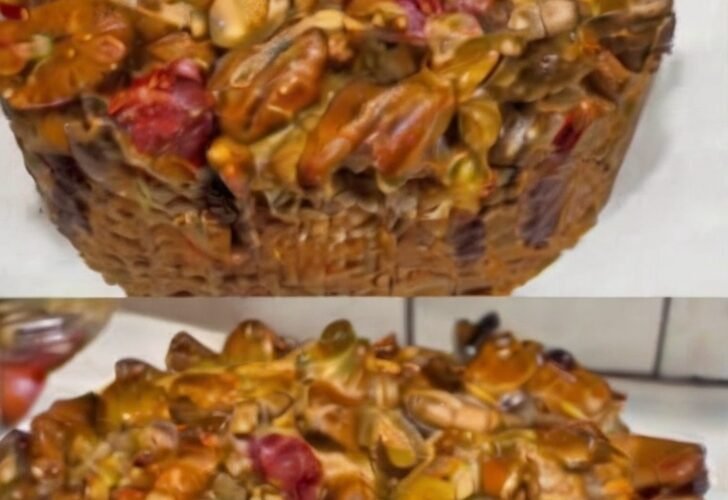
Real-Fruit Holiday Cake – Dark, Buttery, and Actually Delicious
I used to think I hated fruitcake until my husband’s cousin handed me this recipe with a knowing smile and said, “Just trust me.”
She was right. This isn’t that neon-green mystery brick nobody wants. This is dark, buttery, packed with actual fruit and nuts you’d actually eat on their own. Pecans. Sweet chewy apricots. Dates that melt into the batter. Plump cherries. No weird citron. No suspicious candied peel. Just real ingredients held together in this rich, almost fudgy cake that honestly tastes like the holidays should.
I baked one yesterday and the smell alone had my husband wandering into the kitchen three times asking when it would be cool enough to cut. It wasn’t. He tried anyway.
The top gets this gorgeous glossy, caramelized look from all the fruit and nuts pressed into the batter, and when you slice into it, it’s dense but not heavy—more like a really decadent blondie than a traditional cake. Every bite has texture. Crunch from the pecans. Chew from the dates. Sweetness from the apricots and cherries.
I’m already planning to make two more before the holidays because this one’s not lasting the week.
Why You’ll Love This Recipe
You will love this real-fruit holiday cake because it finally delivers the fruitcake experience people actually want. Softened butter and brown sugar create a rich, caramel-like base. Eggs and vanilla add structure and warmth. A modest amount of flour, baking powder, salt, and cinnamon keeps the crumb tender and lightly spiced. A generous mix of pecan halves, chopped dried apricots, dates, and cherries provides real texture and natural sweetness in every slice.
You will love how honest the ingredients are. No mystery candied peel. No neon fruit. Just pecans, apricots, dates, and cherries you would happily snack on by themselves.
You will love the texture. Dense and almost fudgy, closer to a blondie than a light layer cake, with a glossy, caramelized top and satisfying chew from the fruit.
Most of all, you will love the reactions. This is the cake that converts fruitcake skeptics. It is the one that disappears before the week is over and the one people ask you to make again for the holidays.
Why This Recipe Works
Creaming butter and brown sugar builds a rich, flavorful foundation. Adding eggs one at a time creates a stable emulsion. Tossing the fruit and nuts in a little flour prevents them from sinking and helps them stay evenly distributed. A lower oven temperature (300°F) allows the dense batter to bake through gently without drying out or burning the fruit on top. The long bake time develops deep color and concentrates the flavors. Cooling completely in the pan and resting overnight improves both texture and taste as the moisture redistributes. These techniques produce a moist, sliceable, genuinely delicious fruitcake.
Ingredient Breakdown
Unsalted Butter (1 cup, softened)
Provides richness and helps create the tender, almost fudgy crumb.
Brown Sugar (1 cup, packed)
Adds moisture and deep caramel notes.
Eggs (4 large)
Give structure and richness.
Vanilla Extract (1 tsp)
Rounds out the flavors.
All-Purpose Flour (2 cups + 2 tbsp for tossing)
Forms the base of the batter and coats the fruit and nuts.
Baking Powder (1 tsp)
Gives a gentle lift so the cake is dense but not heavy.
Salt (½ tsp)
Balances the sweetness.
Cinnamon (1 tsp)
Adds warm spice that complements the fruit and nuts.
Pecan Halves (2 cups)
Deliver crunch and buttery richness.
Dried Apricots (1 cup, chopped)
Contribute bright, chewy sweetness.
Pitted Dates (1 cup, chopped)
Melt into the batter and add natural caramel-like depth.
Candied or Dried Cherries (1 cup)
Provide pops of color and sweet-tart flavor.
Kitchen Equipment
An 8-inch round cake pan, parchment paper, mixing bowls, a hand or stand mixer (or sturdy spoon), and a spatula are the main tools.
Step-by-Step Instructions
Preheat the oven to 300°F. Grease an 8-inch round cake pan and line the bottom with parchment paper.
In a large bowl, toss the pecan halves, chopped apricots, chopped dates, and cherries with 2 tablespoons of flour until evenly coated. Set aside.
In another large bowl, cream the softened butter and packed brown sugar until light and fluffy.
Beat in the eggs one at a time, mixing well after each addition. Stir in the vanilla extract.
In a separate bowl, whisk together the 2 cups flour, baking powder, salt, and cinnamon.
Fold the dry ingredients into the butter mixture until just combined.
Gently fold in the floured fruit and nuts until evenly distributed.
Pour the batter into the prepared pan and press it down lightly. Arrange extra pecans and cherries on top if desired for a beautiful finish.
Bake for 1 hour 45 minutes to 2 hours, until a toothpick inserted in the center comes out mostly clean and the top is deeply golden and glossy.
Cool the cake completely in the pan. Remove, wrap tightly, and let it rest overnight if possible—the flavor and texture improve.
Expert Tips
- Soften the butter properly so it creams smoothly with the sugar.
- Toss the fruit and nuts thoroughly in flour so they stay suspended in the batter.
- Chop the apricots and dates into similar-sized pieces for even distribution.
- Use an 8-inch pan as written; a larger pan will produce a thinner cake that bakes faster.
- The low oven temperature is intentional—do not raise it or the outside will overbake before the center is done.
- Tent loosely with foil if the top browns too quickly during the long bake.
- A mostly clean toothpick is the goal; a few moist crumbs are fine.
- Cool completely before slicing so the cake sets properly.
- Wrapping and resting overnight deepens the flavor and improves the texture.
- Toast the pecans lightly beforehand for extra nuttiness if desired.
- Line the pan well; the sticky fruit can make unmolding difficult otherwise.
- This cake slices best with a sharp serrated knife.
- Double the recipe and bake in two pans if you plan to gift one.
- Store well-wrapped at room temperature; the dense texture keeps it moist for days.
Common Mistakes to Avoid
- Using cold butter. It will not cream properly.
- Skipping the flour toss on the fruit and nuts. They will sink.
- Overmixing after adding the flour. The cake can become tough.
- Raising the oven temperature to speed things up. The cake needs the long, gentle bake.
- Opening the oven door frequently. Heat loss extends the already long bake time.
- Underbaking. The center should be set; a wet middle will not firm up enough.
- Removing the cake from the pan while still warm. It can break.
- Slicing too soon. The texture improves after cooling and resting.
- Using old dried fruit that has become rock-hard. Soften it slightly if needed.
- Choosing a dark metal pan without checking early; it can brown faster.
- Forgetting parchment. The sticky batter and fruit can cling.
- Expecting a light, airy cake. This is intentionally dense and rich.
- Storing it uncovered. It will dry out.
- Assuming all fruitcakes taste the same. This version is deliberately free of bitter peel and artificial fruit.
Ingredient Substitutions
Pecans can be replaced with walnuts or a mix of both.
Dried apricots can be replaced with dried peaches or mango for a different fruit note.
Dates can be replaced with dried figs.
Candied cherries can be replaced with dried cherries or dried cranberries.
Brown sugar can be replaced with dark brown sugar for deeper molasses flavor.
Recipe Variations
- Chocolate Version – Add ½ cup chocolate chips along with the fruit and nuts.
- Orange – Add 1 tablespoon orange zest and replace vanilla with a bit of orange extract.
- Spiced – Increase cinnamon and add a pinch of nutmeg and allspice.
- Bourbon – Brush the cooled cake with a little bourbon or rum and wrap for a day or two.
- Mini Loaves – Divide the batter into small loaf pans and reduce bake time.
- Almond – Replace some of the pecans with sliced almonds.
- Extra Fruit – Increase the dried fruit slightly for an even denser result.
- Glazed – Brush the cooled top with warm apricot jam for shine.
- Nut-Free – Omit the pecans and increase the dried fruit (texture will change).
- Gift-Sized – Bake in disposable loaf pans for easy wrapping and gifting.
- Make-Ahead – Bake up to a week ahead; the flavor improves with time.
- Tropical – Use dried pineapple and mango in place of some of the apricots and cherries.
- Coffee – Add 1 teaspoon espresso powder to the dry ingredients for subtle depth.
Make It Healthier
This is a rich, celebratory cake. To lighten it slightly, reduce the sugar by a few tablespoons, use a mix of whole-wheat pastry flour and all-purpose, or serve thinner slices. The real dried fruit and nuts already provide better nutrition than traditional candied fruit versions.
Meal Prep Guide
The cake can be baked several days in advance. Wrap tightly once completely cool and store at room temperature. The flavor actually improves after a day or two of rest.
Storage
Wrap the cooled cake tightly in plastic wrap or foil and keep at room temperature for up to 1 week. For longer storage, refrigerate tightly wrapped for up to 2 weeks.
Freezing
Wrap the completely cooled cake (or individual slices) tightly in plastic wrap and then foil. Freeze for up to 3 months. Thaw overnight in the refrigerator or at room temperature still wrapped.
Reheating
This cake is excellent at room temperature. If you prefer it slightly warm, heat individual slices briefly in the microwave or a low oven. Do not overheat or the texture will suffer.
What to Serve With It
Serve thin slices on their own or with a dollop of lightly sweetened whipped cream. A cup of coffee or black tea pairs beautifully. For a holiday dessert plate, offer it alongside cheese and nuts. Keep accompaniments simple so the rich fruit-and-nut flavor remains the focus.
Beverage Pairings
Hot coffee or strong black tea complements the buttery, caramel notes. A glass of dessert wine, port, or a small pour of bourbon also works well for evening serving. For a non-alcoholic option, spiced apple cider is lovely. Choose a drink that either contrasts the richness or echoes the warm spices.
Frequently Asked Questions
Is this really different from traditional fruitcake?
Yes. It uses real dried fruit and nuts only—no bitter candied peel or artificial green and red bits.
Why the long, low bake?
The dense batter and high fruit content need gentle heat to cook through without burning the top or drying out.
Can I use a different pan?
An 8-inch round is ideal. A 9×5 loaf pan can work but will change the height and timing.
Does it really improve overnight?
Yes. The moisture redistributes and the flavors meld, making the texture even better.
Can I make it ahead for the holidays?
Absolutely. It keeps well and the flavor deepens, making it excellent for gifting or advance baking.
How do I know when it’s done?
A toothpick should come out mostly clean and the top should be deeply golden and set.
Can I reduce the sugar?
You can reduce it slightly, but the brown sugar contributes moisture and flavor; cutting too much will change the texture.
Is it supposed to be dense?
Yes. Think of it as a rich, fruit-studded blondie rather than a light sponge.
Can I add alcohol?
Yes. Brush the cooled cake with a little rum, brandy, or bourbon and wrap for a day or two.
How should I store it?
Tightly wrapped at room temperature for up to a week, or longer in the refrigerator or freezer.
Would you gift this or keep it?
Many people do both—bake two and keep one for home.
Can I use fresh fruit?
No. Dried fruit is essential for the proper texture and shelf life.
Why toss the fruit and nuts in flour?
It helps prevent them from sinking to the bottom of the cake.
What if the top browns too fast?
Tent loosely with foil for the remaining bake time.
Is this good for people who “hate fruitcake”?
This version has converted many skeptics because the ingredients are recognizable and the flavor is rich rather than medicinal.
Nutrition Information
Estimated nutrition per slice (based on 12 slices): approximately 420–480 calories, 22–26 g fat, 50–58 g carbohydrates, 5–7 g protein. Values vary depending on exact ingredients and slice size. These figures are estimates only and are not a substitute for professional nutritional advice. This is a rich, celebratory cake best enjoyed in moderate portions.
Final Thoughts
This real-fruit holiday cake is the fruitcake that finally makes sense—dark, buttery, packed with pecans, apricots, dates, and cherries, and completely free of the ingredients that made people hate the genre. Dense, almost fudgy, and deeply flavorful, it tastes like the holidays without the disappointment.
I hope you bake it the next time you want something special that still feels honest. I hope the kitchen fills with the smell of butter and toasting pecans, the top turns glossy and golden, and someone who “doesn’t like fruitcake” asks for a second slice. If you make it, I would love to know whether you wrapped it up as a gift or kept it on the counter for sneaking—and how long it actually lasted. From my kitchen to yours—rich, real, festive, and worth baking again.
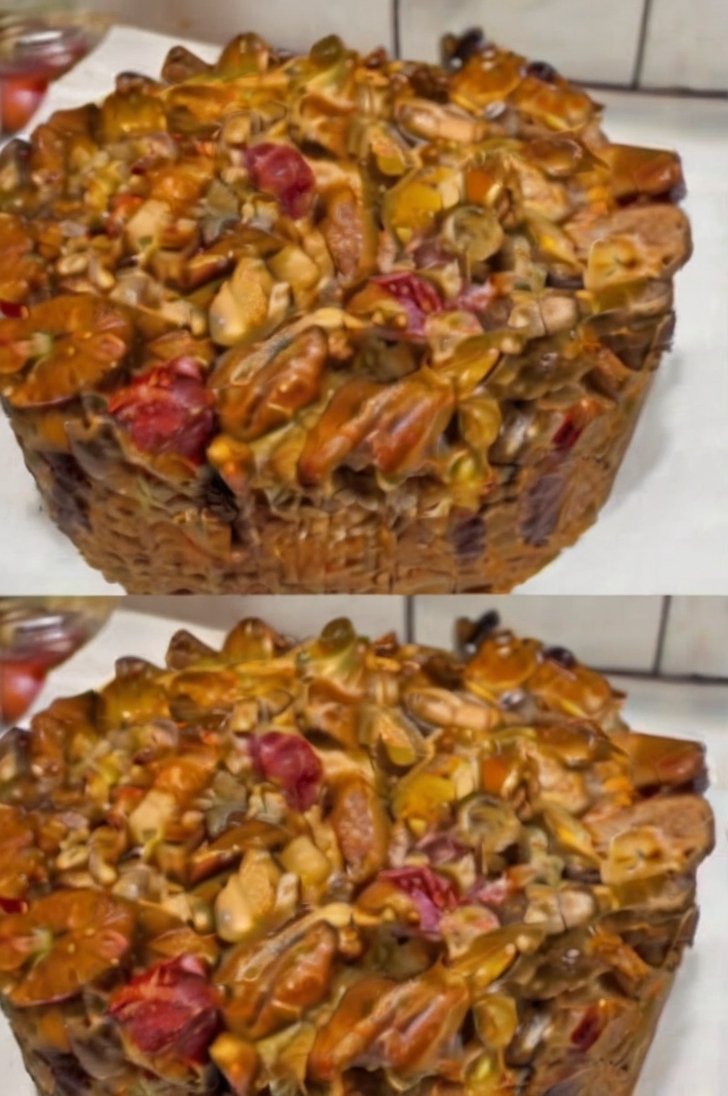
Real-Fruit Holiday Cake
Ingredients
Equipment
Method
- Preheat oven to 300°F. Grease and line an 8-inch round cake pan.
- Toss pecans, apricots, dates, and cherries with 2 tbsp flour; set aside.
- Cream butter and brown sugar until light and fluffy.
- Beat in eggs one at a time, then vanilla.
- Whisk flour, baking powder, salt, and cinnamon; fold into wet ingredients.
- Fold in the floured fruit and nuts.
- Spread batter in pan, press lightly, and decorate the top if desired.
- Bake 1 hour 45 minutes to 2 hours until a toothpick comes out mostly clean.
- Cool completely in the pan. Wrap and rest overnight for best flavor and texture.
Notes