
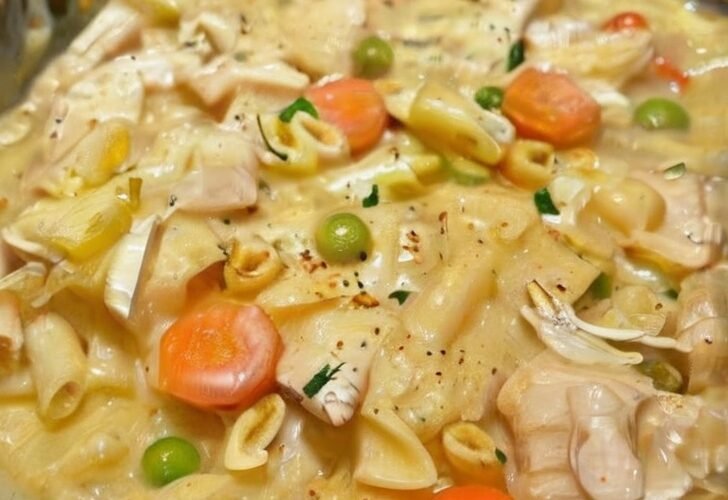
Chicken Pot Pie Noodle Skillet – Creamy, Cozy, and Ready in One Pan
There is something deeply comforting about the flavors of chicken pot pie—the creamy sauce, tender chicken, sweet peas and carrots, and that savory, herby aroma that fills the kitchen. This skillet version captures all of that warmth without the fuss of a pie crust or a long bake time. Instead, you get silky egg noodles coated in a rich, creamy sauce with cubes of chicken and bright vegetables, all coming together in one pan after the noodles are cooked.
I started making this on nights when I wanted pot-pie comfort but did not have the energy for rolling dough or waiting for a casserole to bake. The result is pure weeknight magic: buttery onions and garlic, a quick flour-thickened sauce made with broth and cream, Italian seasoning for that familiar savory note, and just enough vegetables to make it feel complete. The noodles soak up the sauce so every bite tastes like the best part of a classic pot pie.
It is the kind of dinner that feels like a hug after a long day. Simple ingredients, straightforward steps, and a skillet full of creamy, savory goodness that disappears fast.
Why You’ll Love This Recipe
You will love this chicken pot pie noodle skillet because it delivers the cozy flavors of traditional chicken pot pie in a faster, easier format. Egg noodles stand in for the crust, soaking up a creamy sauce made with butter, onion, garlic, Italian seasoning, peas and carrots, chicken broth, and heavy cream. Cubed cooked chicken makes it hearty and satisfying.
You will love how practical it is. Most of the cooking happens in one skillet after the noodles are boiled. It is ideal for busy weeknights, using up leftover chicken, or when you want comfort food without a long list of steps.
You will love the texture. The sauce clings to every noodle. The vegetables stay bright. The chicken stays tender. Everything comes together in a creamy, cohesive skillet that feels both familiar and fresh.
Most of all, you will love how quickly it comes together and how reliably it satisfies. It tastes like home, looks abundant in the pan, and leaves everyone at the table content.
Why This Recipe Works
Cooking the egg noodles al dente keeps them from becoming mushy once they join the sauce. Sautéing onion and garlic in butter builds a flavorful base. Italian seasoning adds the classic savory, slightly herby notes associated with pot pie. Thawed peas and carrots cook quickly and keep their color and sweetness. A short cook with flour creates a simple roux that thickens the sauce without lumps. Chicken broth provides savory depth while heavy cream adds richness and body. Simmering the sauce until it thickens ensures it coats the noodles properly. Adding already-cooked chicken at the end keeps it tender and prevents overcooking. Seasoning in layers (with the vegetables and again at the end) builds balanced flavor. These straightforward techniques produce a creamy, cohesive skillet dinner with minimal effort.
Ingredient Breakdown
Egg Noodles (10 ounces)
The hearty base that soaks up the creamy sauce. Cook them just until al dente.
Unsalted Butter (2 tablespoons)
Creates a rich foundation for sautéing the aromatics.
Sweet Onion (1, diced)
Adds gentle sweetness and depth as it softens.
Garlic (3 cloves, minced)
Brings savory aroma that defines the sauce.
Italian Seasoning (2 teaspoons)
Provides the familiar herby backbone of pot-pie flavor.
Frozen Peas and Carrots (1½ cups, thawed)
Classic pot-pie vegetables that add color, sweetness, and texture.
All-Purpose Flour (2 tablespoons)
Thickens the sauce into a creamy consistency.
Chicken Broth (1 cup)
Forms the savory liquid base of the sauce.
Heavy Cream (1 cup)
Adds richness and creates a velvety texture.
Cooked Chicken Breast (1½ cups, cut into small cubes)
Makes the dish hearty and protein-rich. Rotisserie or leftover chicken works perfectly.
Salt and Black Pepper
Essential seasoning to taste.
Kitchen Equipment
A large pot for the noodles, a large skillet, a wooden spoon or spatula, and measuring cups and spoons are the main tools needed.
Step-by-Step Instructions
Cook the egg noodles according to package directions until al dente. Drain and set aside.
In a large skillet, melt the butter over medium-high heat. Add the diced onion, minced garlic, Italian seasoning, thawed peas and carrots, and a pinch of salt and pepper. Cook for about 3 minutes, stirring occasionally, until the onion is soft and translucent and the vegetables are heated through.
Sprinkle the flour over the mixture and stir until it is fully combined and coats the vegetables.
Pour in the chicken broth and heavy cream. Bring the mixture to a boil, then reduce the heat to a simmer. Cook, stirring occasionally, until the sauce thickens, about 5 minutes.
Add the drained noodles and the cubed cooked chicken to the skillet. Stir gently until everything is coated in the creamy sauce. Taste and adjust with additional salt and pepper as needed.
Serve hot, straight from the skillet.
Expert Tips
- Cook the noodles just to al dente so they keep their texture once added to the sauce.
- Thaw the peas and carrots ahead of time (or run them under warm water) so they heat through quickly without cooling the sauce.
- Dice the onion relatively small so it softens in the short cook time.
- Stir the flour thoroughly so no dry pockets remain before adding the liquids.
- Add the broth and cream gradually while stirring to help the sauce stay smooth.
- Simmer the sauce until it coats the back of a spoon—it will continue to thicken slightly as it sits.
- Use already-cooked chicken (rotisserie is ideal) to keep the recipe fast and the meat tender.
- Season in layers: a little with the vegetables, then again at the end after tasting.
- If the sauce becomes thicker than you like, loosen it with a splash of extra broth or cream.
- A large, deep skillet makes stirring the noodles easier and reduces overflow risk.
- Freshly ground black pepper at the end brightens the finished dish.
- Leftover turkey works just as well as chicken in this recipe.
- For extra richness, stir in a small handful of grated Parmesan at the end.
- Serve immediately for the best creamy texture; the noodles continue to absorb sauce as it sits.
Common Mistakes to Avoid
- Overcooking the noodles so they become soft and break apart in the sauce.
- Adding frozen vegetables without thawing, which can lower the pan temperature and release excess water.
- Skipping the flour or not cooking it briefly with the vegetables, which can leave the sauce thin or pasty.
- Boiling the cream mixture hard for too long, which can cause it to reduce too much or separate.
- Adding the chicken too early and drying it out.
- Under-seasoning; creamy sauces need adequate salt to taste balanced.
- Using a skillet that is too small, making it difficult to stir in the noodles evenly.
- Forgetting to taste and adjust seasoning at the end.
- Letting the finished dish sit too long before serving so the noodles soak up all the sauce.
- Using cold chicken straight from the refrigerator without giving the sauce a moment to warm it through.
- Adding the flour without stirring it in thoroughly, leaving lumps.
- Cooking the onion and garlic on too high a heat so the garlic burns.
- Substituting milk for heavy cream without adjusting expectations—the sauce will be thinner and less rich.
- Crowding too many extra ingredients into the base recipe and losing the classic pot-pie balance.
Ingredient Substitutions
Egg noodles can be replaced with any short pasta shape (rotini, penne, or wide noodles) or even gluten-free pasta if needed.
Heavy cream can be swapped for half-and-half for a slightly lighter sauce (it will be a bit less rich).
Chicken broth can be replaced with vegetable broth if preferred.
Cooked chicken breast can be substituted with leftover turkey, rotisserie chicken, or even diced cooked chicken thighs.
Frozen peas and carrots can be replaced with a frozen mixed vegetable blend or fresh diced carrots and peas (adjust cook time as needed).
Italian seasoning can be replaced with a mix of dried thyme, rosemary, and a pinch of sage or oregano.
All-purpose flour can be swapped for a gluten-free 1:1 flour blend if required.
Unsalted butter can be replaced with salted butter (reduce added salt) or a neutral oil, though butter gives the best flavor.
Recipe Variations
- Cheesy – Stir in ½ to 1 cup shredded cheddar or Parmesan at the end.
- Mushroom – Sauté sliced mushrooms with the onion for extra savory depth.
- Herb-Forward – Add a little fresh thyme or parsley at the end for brightness.
- Garlic Lover’s – Increase the garlic or add a pinch of garlic powder.
- Bacon – Stir in cooked crumbled bacon with the chicken.
- Spicy – Add a pinch of red pepper flakes or a dash of hot sauce.
- Lemon – Finish with a squeeze of lemon juice and zest for lift.
- Biscuit Topping – Transfer to a baking dish, top with refrigerated biscuit dough, and bake until golden.
- Leftover Makeover – Use leftover pot roast or turkey in place of the chicken.
- Extra Vegetables – Add corn, green beans, or diced celery with the peas and carrots.
- Cream of Chicken Shortcut – Replace part of the broth and cream with a can of cream of chicken soup for an even faster version (adjust thickness as needed).
- One-Pot Pasta – Cook the noodles directly in extra broth in the skillet for true one-pan cooking (adjust liquid and timing).
- Lightened – Use half-and-half and a bit less butter, accepting a slightly less rich sauce.
- Pot Pie Casserole – Transfer the finished mixture to a baking dish, top with puff pastry or biscuits, and bake until golden.
Make It Healthier
Use half-and-half instead of heavy cream, reduce the butter slightly, and load the skillet with extra vegetables. Choose whole-wheat or higher-protein noodles if desired. Serve smaller portions alongside a large green salad or steamed vegetables. The dish is already packed with protein from the chicken; balancing the plate keeps it satisfying without feeling heavy.
Meal Prep Guide
Cook the chicken and chop the vegetables ahead of time. The entire skillet can be made a day in advance and reheated gently with a splash of broth or cream to loosen the sauce. Store components separately if you prefer the noodles to keep firmer texture when reheated.
Storage
Cool completely, then transfer to an airtight container. Refrigerate for up to 3–4 days. The sauce will thicken as it sits; loosen with a splash of broth or cream when reheating.
Freezing
This dish freezes reasonably well, though the creamy sauce and noodles may change texture slightly. Cool completely, portion into freezer-safe containers, and freeze for up to 2 months. Thaw overnight in the refrigerator before reheating gently.
Reheating
Stovetop: Reheat in a skillet over medium-low heat with a splash of chicken broth or cream, stirring gently until hot and creamy again.
Microwave: Heat individual portions in short intervals, stirring between each, and add a little liquid if needed.
Oven: Place in an oven-safe dish, cover, and warm at 325°F until heated through, adding a splash of liquid if the sauce looks dry.
What to Serve With It
This skillet is hearty enough to stand alone, but a simple green salad with vinaigrette, steamed broccoli, or roasted green beans pairs beautifully and adds freshness. Crusty bread or biscuits are excellent for soaking up any extra sauce. Keep sides light so the creamy noodles remain the focus. A sprinkle of fresh parsley or a grind of black pepper on top makes it look complete.
Beverage Pairings
Iced tea, sparkling water with lemon, or a crisp white wine such as Chardonnay or Pinot Grigio complements the creamy, savory flavors. A light-bodied red or a simple lemonade also works well. Choose a drink that feels clean and refreshing against the rich sauce.
Frequently Asked Questions
Can I use raw chicken?
It is best to use fully cooked chicken so the sauce does not have to simmer long enough to cook raw meat (which could over-reduce the cream). Dice and cook chicken separately if starting from raw.
Can I make this without heavy cream?
Yes. Half-and-half works for a lighter sauce. Milk will produce a thinner result and may need a touch more flour or a longer simmer.
What kind of noodles work best?
Classic egg noodles are ideal because they hold the creamy sauce well. Any medium pasta shape will work in a pinch.
Can I use leftover rotisserie chicken?
Absolutely—that is one of the best and fastest options.
How do I thicken the sauce more?
Simmer a few extra minutes, or mix a small additional amount of flour with a little cold broth and stir it in.
Can I add more vegetables?
Yes. Corn, green beans, celery, or mushrooms all work well. Keep the total volume reasonable so the sauce still coats everything.
Is this freezer-friendly?
Yes, with the note that creamy sauces and noodles can change texture slightly after freezing. Reheat gently with added liquid.
Can I make it ahead?
Yes. Reheat gently and loosen the sauce with a splash of broth or cream as needed.
What can I use instead of Italian seasoning?
A combination of dried thyme, oregano, and a pinch of rosemary or sage works well.
How many people does this serve?
Generously serves 4 as a main dish, or 6 with sides.
Can I make it gluten-free?
Use gluten-free noodles and a gluten-free flour blend for the roux.
Why is my sauce too thin?
It may need a longer simmer, or the flour was not fully incorporated. A brief additional simmer usually helps.
Can I top it with something crunchy?
Yes. Buttered breadcrumbs or crushed crackers toasted in a skillet and sprinkled on top add nice texture.
How do I keep the noodles from getting mushy?
Cook them only to al dente and add them at the end. Serve relatively soon after combining.
Can I double the recipe?
Yes. Use a very large skillet or a Dutch oven and adjust seasoning carefully.
Nutrition Information
Estimated nutrition per serving (based on 4 servings): approximately 520–620 calories, 28–35 g fat, 40–48 g carbohydrates, 28–34 g protein. Values vary depending on exact brands, the type of chicken, and precise portion sizes. These figures are estimates only and are not a substitute for professional nutritional advice. This is a rich, comforting main dish best enjoyed as part of a balanced meal.
Final Thoughts
Chicken pot pie noodle skillet brings all the creamy, savory comfort of classic pot pie into a faster, skillet-friendly format. Tender noodles, a rich herb-scented sauce, bright peas and carrots, and cubes of chicken come together in one satisfying pan. It is the kind of dinner that feels both nostalgic and practical—the sort of meal you turn to when you want something warm and reliable without a lot of extra work.
I hope you make it on a night when comfort is the goal. I hope the sauce turns velvety, the noodles soak it up perfectly, and someone at the table goes back for seconds. If you try it, I would love to know whether you kept it classic or added your own twist—and what you served on the side. From my kitchen to yours—creamy, cozy, and completely satisfying.
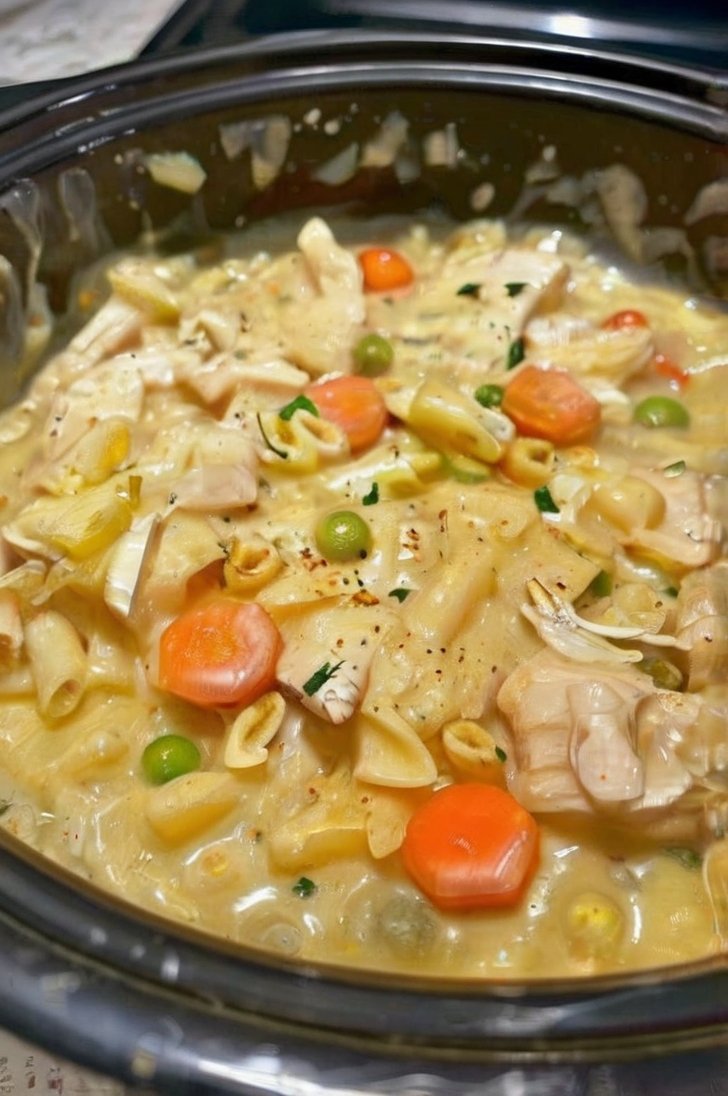
Chicken Pot Pie Noodle Skillet
Ingredients
Equipment
Method
- Cook noodles al dente according to package directions; drain.
- In a large skillet, melt butter over medium-high heat. Add onion, garlic, Italian seasoning, peas and carrots; season with salt and pepper. Cook about 3 minutes until softened.
- Stir in flour until combined.
- Pour in chicken broth and heavy cream. Bring to a boil, then reduce to a simmer and cook, stirring occasionally, until thickened, about 5 minutes.
- Add drained noodles and chicken. Stir to coat, adjust seasoning, and serve hot.
Notes