
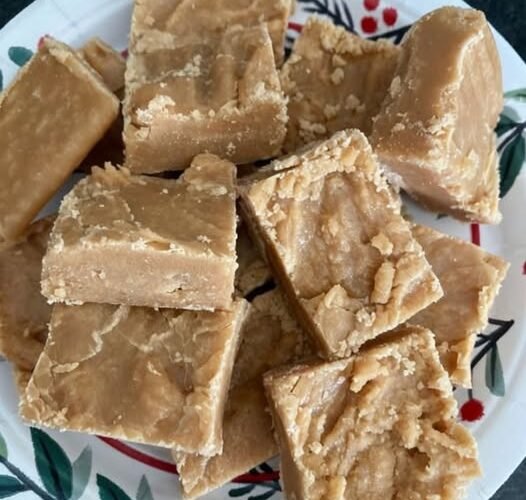
Traditional Scottish Tablet
My wife's cousin flew in from Scotland last winter, and within an hour of landing, she was in our kitchen melting butter and sugar like it was the most natural thing in the world. She made this tablet — proper Scottish tablet, not fudge, she kept correcting me — and I've been thinking about it ever since.
It's got this crumbly, melt-on-your-tongue texture that's nothing like American fudge. Richer. More buttery. Almost grainy in the best possible way, like brown sugar that decided to become candy. She told me her gran used to make massive batches for Christmas, and now I understand why people guard these recipes like family secrets.
I finally made it myself last weekend. The smell alone — butter and sugar caramelizing together — had my neighbor knocking on the door asking what was happening in there. Took about 20 minutes of stirring, but watching it turn from liquid to this glossy, golden mixture was weirdly satisfying. When it set and I cut into those first squares, I got it. This is the kind of thing you make once and suddenly you're the person people ask to bring it to every gathering.
Why You'll Love This Recipe
You will love Scottish tablet because it delivers a unique crumbly, melt-in-your-mouth texture that is completely different from American fudge.
You will love the deep buttery, caramelized sugar flavor that comes from patient stirring and the right soft-ball stage.
You will love how a short list of pantry ingredients turns into something that feels special and old-fashioned.
Most of all, you will love the moment you break the first square and understand why this candy is guarded like a family secret.
Why This Recipe Works
Granulated sugar and milk dissolve together with butter to create a rich base. Sweetened condensed milk adds concentrated sweetness and helps the mixture reach the proper consistency. Cooking to soft-ball stage (around 240°F) ensures the tablet sets with the classic firm-yet-crumbly texture. Vigorous beating after cooking encourages crystallization, which gives tablet its signature grainy, melt-on-the-tongue quality instead of a smooth fudge texture. Vanilla rounds out the flavor. Cooling and scoring at the right time produce clean squares. The result is authentic Scottish tablet — buttery, crumbly, and deeply satisfying.
Ingredient Breakdown
- 4 cups granulated sugar: The foundation of the candy; dissolves and caramelizes into the classic flavor.
- 1 cup whole milk: Helps dissolve the sugar and adds richness.
- 1/2 cup (1 stick) unsalted butter: Provides the signature buttery taste and smooth mouthfeel.
- 1 can (14 oz) sweetened condensed milk: Adds concentrated sweetness and helps achieve the proper set.
- 1 teaspoon vanilla extract: Rounds out the flavor with warm aroma.
Kitchen Equipment
A large heavy-bottomed pot (important for even heating), a wooden spoon, a candy thermometer (helpful but not required), parchment paper, and a 9x9-inch pan.
Step-by-Step Instructions
- Line a 9x9-inch baking pan with parchment paper and set aside.
- In a large, heavy-bottomed pot, combine the sugar, milk, and butter over medium heat. Stir gently until the sugar dissolves completely and the butter melts.
- Add the sweetened condensed milk and stir to combine. Bring the mixture to a gentle boil.
- Reduce the heat to medium-low and simmer, stirring constantly, for 15–20 minutes. The mixture will thicken and turn a deeper golden color. It should reach soft-ball stage (around 240°F on a candy thermometer).
- Remove from heat and stir in the vanilla extract.
- Beat the mixture vigorously with a wooden spoon for 3–5 minutes until it thickens, lightens slightly, and begins to lose its glossy shine. This step creates the classic crumbly texture.
- Pour immediately into the prepared pan and smooth the top. Let it cool at room temperature for about 10 minutes, then score into squares with a knife.
- Allow to set completely (about 2 hours) before breaking into pieces along the scored lines.
Expert Tips
- Use a heavy-bottomed pot to prevent scorching.
- Stir constantly once the mixture is boiling — this is not a walk-away recipe.
- A candy thermometer takes the guesswork out of soft-ball stage (240°F).
- If you don't have a thermometer, drop a little mixture into cold water; it should form a soft, pliable ball.
- Beating after cooking is essential for the crumbly tablet texture — don't skip it.
- The mixture will thicken and look less glossy as you beat; that's the sign it's ready.
- Pour quickly once it reaches the right consistency — it sets fast.
- Score while still warm for clean lines.
- Let it cool completely before breaking apart.
- Whole milk gives the best richness.
- Real butter matters for authentic flavor.
- Work carefully — the mixture is extremely hot.
- A silicone spatula can help scrape the pot, but a wooden spoon is traditional for beating.
- Double the recipe only if you have a very large pot and strong arms.
Common Mistakes to Avoid
- Using a thin pot that allows the mixture to scorch.
- Walking away while it cooks — constant stirring is required.
- Undercooking so the tablet stays too soft.
- Overcooking past soft-ball stage and ending up with hard candy.
- Skipping the beating step and getting smooth fudge instead of crumbly tablet.
- Not beating long enough for proper crystallization.
- Pouring too slowly and having the mixture set in the pot.
- Trying to cut before it has fully set.
- Using low-fat milk and losing richness.
- Adding the vanilla too early so the flavor cooks off.
- Scoring too late when the surface has already hardened.
- Making it on a very humid day without extra setting time.
- Using a small pot that boils over.
- Expecting the texture of American fudge — tablet is meant to be crumbly and grainy.
Ingredient Substitutions
- Whole milk can be replaced with 2% in a pinch, though the result will be slightly less rich.
- Unsalted butter can be replaced with salted (omit any additional salt).
- Vanilla extract can be replaced with a splash of whisky for a traditional Scottish variation.
Recipe Variations
- Classic – Keep the recipe exactly as written.
- Vanilla Bean – Use the seeds of a vanilla bean for deeper flavor.
- Whisky – Stir in 1 tablespoon Scotch whisky with the vanilla.
- Nutty – Add finely chopped toasted walnuts or pecans after beating.
- Chocolate – Drizzle melted chocolate over the set tablet.
- Sea Salt – Sprinkle flaky sea salt on top while still warm.
- Coconut – Stir in a little desiccated coconut after beating.
- Coffee – Add 1 teaspoon instant espresso powder with the vanilla.
- Gift Squares – Cut into neat small squares and wrap individually.
- Brown Sugar – Replace a portion of the white sugar with light brown sugar for deeper caramel notes.
- Condensed Milk Only – Some traditional versions rely more heavily on condensed milk; this version balances both.
- Mini Batch – Halve the recipe for a smaller pan.
- Holiday Spiced – Add a pinch of cinnamon or nutmeg.
- Double Vanilla – Increase the vanilla for stronger aroma.
Make It Healthier
Tablet is pure candy. Enjoy small squares and savor them slowly. There isn't a truly light version that keeps the traditional texture and flavor, so portion control is the best approach.
Meal Prep Guide
Tablet keeps very well and is excellent made several days ahead for gifting or gatherings. Store in an airtight container once fully set.
Storage
Store in an airtight container at room temperature for up to 2 weeks. Keep layers separated with parchment if stacking.
Freezing
Wrap well and freeze for up to 2 months. Thaw at room temperature. Texture remains good.
Reheating
Not applicable — tablet is served at room temperature.
What to Serve With It
A cup of strong tea or coffee is traditional. It also pairs nicely with a glass of cold milk or as part of a holiday cookie and candy tray.
Beverage Pairings
Black tea, coffee, cold milk, or a small glass of Scotch. The rich sweetness balances especially well with something hot and slightly bitter.
Frequently Asked Questions
What is the difference between tablet and fudge?
Tablet is deliberately crystallized so it has a crumbly, grainy, melt-in-the-mouth texture. American fudge is usually smoother and creamier.
Do I really need to stir constantly?
Yes — this prevents scorching and helps the mixture cook evenly.
How do I know it's reached soft-ball stage without a thermometer?
Drop a small amount into cold water. It should form a soft ball that flattens when pressed.
Why is beating so important?
Beating encourages crystallization, which creates the classic crumbly tablet texture.
Can I use a stand mixer to beat it?
Some people do, but traditional tablet is beaten by hand with a wooden spoon. Be careful — the mixture is very hot.
Would you make this for a gift tin or just keep the whole batch for yourself?
Both are excellent options. It keeps well and makes a memorable gift, but it's also hard to share once you've tasted it.
Why did my tablet turn out grainy in a bad way?
It may have been over-beaten or cooked too far. Aim for the moment it thickens and loses gloss.
Can I make it without condensed milk?
Traditional recipes vary, but condensed milk helps with flavor and texture in this version.
How long does it take to set?
About 2 hours at room temperature, longer in humid conditions.
Is a candy thermometer necessary?
Helpful but not required if you use the cold-water test.
Can I double the recipe?
Only if you have a very large, heavy pot and are prepared for serious stirring.
Why is my tablet too soft?
It likely needed more cooking time to reach soft-ball stage.
Why is it too hard?
It was probably cooked past the soft-ball stage.
How should I cut it?
Score while warm, then break along the lines once fully set.
Does it need to be refrigerated?
No — store at cool room temperature in an airtight container.
Nutrition Information
Approximate values will vary based on exact ingredients and square size. Scottish tablet is high in sugar and contains fat from the butter and condensed milk. Values are estimates only and should not be considered professional nutritional advice.
Per Square (makes 24):
- Calories: 225 kcal
- Carbohydrates: 41g
- Protein: 2g
- Fat: 5g
- Saturated Fat: 3g
- Cholesterol: 15mg
- Sodium: 55mg
- Fiber: 0g
- Sugar: 38g
Final Thoughts
Scottish tablet is one of those candies that feels like a secret worth keeping. Crumbly, buttery, deeply caramelized, and completely different from ordinary fudge, it is the kind of treat that makes people ask for the recipe the moment they taste it.
I hope you make a batch the next time you want something special that doesn't require complicated techniques. I hope the mixture turns golden and glossy, the beating transforms it into proper tablet, and the first square melts on your tongue exactly the way it should. If you try it, I'd love to know whether you gifted it or kept it all for yourself. From my kitchen to yours — traditional, buttery, and absolutely worth the stirring.
Recipe
Traditional Scottish Tablet
Crumbly, buttery, melt-on-the-tongue candy made from sugar, butter, and condensed milk — proper Scottish tablet, not fudge.- 4 cups granulated sugar
- 1 cup whole milk
- 1/2 cup (1 stick) unsalted butter
- 1 can (14 oz) sweetened condensed milk
- 1 tsp vanilla extract
- Line a 9x9-inch pan with parchment paper.
- Combine sugar, milk, and butter in a heavy pot over medium heat; stir until sugar dissolves and butter melts.
- Add condensed milk and bring to a gentle boil.
- Simmer on medium-low, stirring constantly, 15-20 minutes until it thickens and reaches soft-ball stage (240°F).
- Remove from heat and stir in vanilla.
- Beat vigorously with a wooden spoon 3-5 minutes until thickened and less glossy.
- Pour into the pan immediately and smooth; score into squares after about 10 minutes.
- Let set completely (about 2 hours) before breaking along the lines.