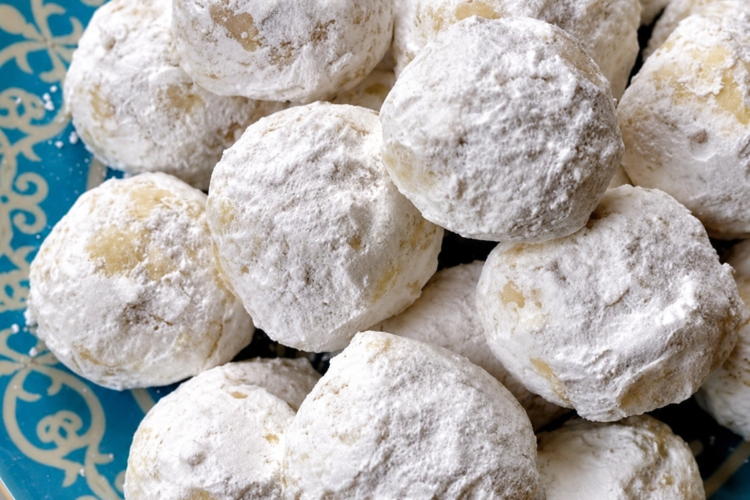
Pecan Snowball Cookies: The Buttery Christmas Cookies That Melt in Your Mouth
My grandma used to keep a tin of these hidden in her pantry every December, and somehow we always knew exactly where to find them. She'd pretend to be annoyed when we'd sneak one before dinner, but I'd catch her smiling. These buttery, melt-in-your-mouth pecan snowball cookies taste like every cozy Christmas memory rolled into one, and they're so ridiculously easy I make them year-round now whenever I need that kind of comfort.
Why These Pecan Snowball Cookies Belong On Your Christmas Cookie Tray
There's something about that first bite. The powdered sugar coats your fingers, the cookie just dissolves on your tongue, and suddenly you're seven years old again, sitting at a kitchen table covered in flour. I made a batch last week on a random Tuesday because I was craving that feeling, and my husband ate six before I could even get them onto a plate.
What makes pecan snowball cookies so beloved isn't a complicated ingredient list. It's six things, most of them probably already in your pantry, and about forty minutes from start to the moment they're cooling on the counter. No mixer required if your butter is soft enough. No chill time. No decorating project. Just warm spice, toasted nuts, and a snowdrift of powdered sugar that makes them look far more festive than the effort required.
They're also the cookie that behaves best in a crowd. These bake up sturdy enough to travel, sturdy enough to stack on a platter, and they hold their shape for days, which means you can bake them on Christmas Eve and still have a beautiful tray on Christmas morning. If you want a cookie that looks like you spent an afternoon on it but actually takes half an hour, this is the one.
Why They Work: The Science Behind the Melt
Two things create the signature melt-in-your-mouth texture, and both come down to fat and restraint.
First, butter. Real butter at room temperature, whipped until pale and fluffy, is the entire engine of this dough. It provides fat that melts on contact with the tongue, which is why these cookies have no bouncy or chewy center. There's no egg, no leavener, and no chemical structure holding the interior together. What you get instead is a crumb so tender it barely needs chewing.
Second, restraint. The dough is mixed only until the flour disappears. Overmixing develops gluten, and gluten is the exact opposite of what you want here. A tender, short cookie needs an underdeveloped network, so the less you work the butter and flour together, the more fragile and snowlike the result. This is also why the dough shouldn't be rolled thin or rerolled after a miss. Scoop, don't knead.
The powdered sugar isn't just decoration. Its fine, absorbent texture behaves almost like a very light coating of shortening, which keeps the cookies tender and adds a faint sweetness that never quite crystallizes the way granulated sugar does.
Ingredient Breakdown
The 1 Cup of Butter
This is the whole recipe. Use unsalted butter so you control the salt yourself, and use real butter rather than a butter-flavored shortening. Shortening melts more completely and produces a greasy, waxy coating that will not brown and will not taste like the holiday cookie you remember. European-style butter with higher fat content makes a richer cookie and works beautifully, just note the flavor leans a little tangy.
One and a Half Cups of Powdered Sugar, Divided
Half a cup goes into the dough for a fine, soft sweetness with no graininess. The other cup is your coating. If your bagged powdered sugar is lumpy, run it through a fine mesh sieve first, and if it's been sitting in a humid kitchen, sift it and let it sit uncovered for an hour so it dries out. Damp powdered sugar clumps, and clumps mean patchy rolling.
The Chopped Pecans or Walnuts
Toasting them first is worth the extra four minutes. A dry skillet over medium heat, stirring constantly until they smell sweet and darken by a shade, changes the nuts from merely pleasant to genuinely nutty. Cool them completely before folding them into the dough or they'll melt the butter and make the mixture greasy. Walnuts work beautifully and are more traditional in Mexican-style versions, but pecans are sweeter and more buttery, which suits this dough.
The Vanilla
One teaspoon is right. A tablespoon sounds better and will flatten the cookies, because it has no alcohol left in it to help the dough hold. Use real vanilla rather than imitation; this is one of only six ingredients and it's very easy to taste the difference.
The flour and salt are mercifully simple. All-purpose flour gives the tender crumb, and the quarter teaspoon of salt is not optional, because it sharpens the sweetness of the powdered sugar and keeps the butter from tasting flat. Use unsalted flour if you want full control.
Equipment You Need
You need a mixing bowl, a measuring cup and spoons, a baking sheet lined with parchment or a silicone mat, a wire cooling rack, and a small shallow bowl for rolling. An electric mixer makes the butter work much easier, but a sturdy wooden spoon and about four extra minutes of arm work do the same job. A cookie scoop makes uniform one-inch balls, which matters more for looks than for baking, since these are a small and forgiving cookie. A second baking sheet lets you bake four dozen without waiting on a crowded first pan.
Instructions: Step-by-Step Pecan Snowball Cookies
First, preheat your oven to 350°F and line two baking sheets with parchment. Set your second sheet nearby, because you'll want both in play.
Put the butter in the bowl and beat it on medium speed for about two minutes, until it's pale, soft, and noticeably lighter in color. This is the step that builds structure. Scrape the bowl once halfway through, because butter collects at the edges and leaves you with lumpy pockets of cold fat.
Add the half cup of powdered sugar and beat again until it's fully incorporated and the mixture looks like soft clouds. Scrape down the bowl, add the vanilla, and beat just until you can smell it.
Now add the flour and salt. Mix with the lowest speed, or by hand with a spoon, just until no dry flour is visible. Stop there. Scrape the bottom and sides, check for a pocket or two of white flour, and fold those in. The dough will look slightly shaggy and that's exactly right.
Fold in the cooled toasted nuts. Again, only until evenly distributed. The dough is now ready to shape.
Using a small scoop or your palm, roll the dough into balls about one inch wide. A golf ball is roughly the right size. Set them about two inches apart on the prepared sheet, and if you've made a batch that needs a second pan, use it. The cookies will spread slightly during baking, and crowding traps steam and produces pale, soft bottoms that never quite crisp.
Bake for 12 to 15 minutes, until the bottoms are just barely golden. The tops should stay pale. This is not a mistake, and it's the single most common reason a batch of snowball cookies goes wrong, so resist the urge to bake them brown. They're done when the bottoms show a hint of color and the centers still look slightly underdone. They'll set as they cool.
Let them sit on the pan for about five minutes, just long enough that they'll keep their shape when you move them. This is too short to cool completely and too long to risk a broken cookie. Transfer to a wire rack.
While they're still barely warm, roll each cookie generously in powdered sugar. The warmth is what makes the sugar adhere. Tap off the excess and set them back on the rack.
Once they've cooled completely, give them a second roll in powdered sugar for that thick, snowy, crackled finish. This final layer is the whole look of the cookie, and it needs a fully cool surface to stick. Plan on about fifteen minutes for cooling and rolling, which is why the total time is a little longer than the bake.
Expert Tips From My Kitchen
Soften the butter properly, but stop before you think you've gone too far. It should dent when you press a finger into it and mash without resistance, but it should not be shiny or leaking anywhere in the bowl. Room temperature, soft, and still holding its shape is the target. Too cold and the sugar won't disperse; too soft and the cookies spread into thin discs and slide onto the pan.
Toast your nuts, cool them completely, and chop them fine. Big pieces create little pockets where the dough puffs up and the cookie can crack apart. A quick pulse in a food processor gets you a consistent fine chop faster than a knife.
Shake off the extra sugar. A heavy pile of powdered sugar in the crevices will turn the cookies soft within hours and can make them gummy at the bottom where they rested on the rack. Roll, then tap firmly, then roll again only if needed.
For the cleanest finish, sift the powdered sugar over the cookies with a fine mesh strainer after the final roll. It costs ten seconds and it makes them look store-bought in the very best way.
Mistakes That Ruin Snowball Cookies
The most common failure is browning them. Brown edges mean a dry, crumbly cookie that doesn't melt, and they're almost always a sign the oven runs hot or the tray was too close to the element. If your cookies darken before twelve minutes, add a second sheet beneath yours as a heat shield.
The second mistake is overmixing. Once the flour is gone, stop. A stand mixer on medium speed for a full two minutes after the flour goes in will give you a cookie that snaps instead of dissolving.
The third is rolling them while they're hot. Fresh-from-the-oven cookies are fragile, and the sugar won't stick properly anyway. Five minutes, then the first roll, then a full cool for the second.
The fourth is crowding the pan. Two inches apart, two sheets, and patience between batches. This is a fast cookie, but only if you give it room.
Substitutions That Work
Swap pecans for walnuts for a more traditional profile, or use a combination of both. Walnuts bring a slightly bitter edge that balances the sweetness, and many families consider them the correct choice for this cookie.
Omit the nuts entirely for a nut-free version. The cookies are still excellent, and the dough is easier to handle, so this is also the version to make if you're serving a large group. Do not swap in a different nut at the same weight without expecting to adjust the sugar, because pistachios and almonds are both noticeably less sweet than pecans.
For a gluten-free version, substitute a cup-for-cup gluten-free baking flour that contains xanthan gum, and add an extra minute to the bake time. Expect a slightly more crumbly cookie that holds its shape less reliably, so let the dough rest ten minutes before shaping if it feels fragile.
Coconut oil can replace the butter entirely for a dairy-free cookie, but make it a straight swap with no half measures. Cool solid coconut oil, or the dough will be greasy, and be aware it browns faster, so pull the cookies a minute early.
Variations Worth Trying
Add half a teaspoon of ground nutmeg to the dough for a warmer, slightly spiced version that tastes right at Christmas. Freshly grated orange zest, about one tablespoon, brightens the whole cookie and pairs well with the orange drinks on your table.
For a chocolate version, replace a quarter cup of the flour with cocoa powder and add a tablespoon of espresso powder. Keep the butter quantity the same and the cookies will stay tender, because cocoa is noticeably more absorbent than flour.
Dip half the cooled cookies in melted dark chocolate and set them on parchment until firm. It adds ten minutes and makes them look like you bought them from a very good bakery.
How To Make Them Slightly Healthier
This recipe is a small, butter-forward cookie with about five and a half grams of net carbs per cookie, so it is not a low-carb or keto bake, and it isn't meant to be one. If you want to nudge it without ruining the texture, replace up to one-quarter of the powdered sugar in the dough with a granulated sugar substitute that is safe to bake, such as allulose. Allulose is the best choice here because it behaves like sugar and doesn't need to be avoided for keto purposes, though you should still count its carbs honestly.
Using a whole wheat pastry flour for half the flour adds fiber and a nuttier flavor with a very small texture cost. Just keep the total flour at two and a quarter cups, or the dough will be too stiff to roll.
There is no meaningful way to reduce the butter, and I'd stop anyone who suggests it. The butter is the recipe. What you can do is make the cookies smaller to spread the saturated fat across more servings, which is the honest version of portion control.
Meal Prep and Make-Ahead
This is an excellent make-ahead cookie, and the dough is even more forgiving than the finished product. Shape the dough into balls, arrange them on a parchment-lined tray, and freeze until solid, about an hour. Transfer the frozen balls to an airtight bag or container and keep them frozen for up to two months.
When you're ready to bake, pull as many balls as you need directly onto a chilled baking sheet, spacing them two inches apart, and bake from frozen. Add two to three minutes to the bake time, since the dough is cold. There's no need to let them come to room temperature, which is exactly why this cookie wins the holiday rush.
You can also make the dough a full day ahead and refrigerate it in an airtight container. Let it soften on the counter for about fifteen minutes before rolling, because cold dough fights you and warm dough melts, and this butter is very sensitive to both.
Storage
Store these in an airtight container at room temperature, where they'll stay fresh for about five to seven days. Separate layers with parchment if you're stacking them, because the powdered sugar is soft and the cookies will press into each other otherwise.
Don't refrigerate them. Refrigerated butter loses its fragrance and the cookies go firm and dull, and the whole point of this recipe is the tender, room-temperature melt. If your kitchen is very warm, move the container to a cool cupboard away from the stove rather than into the fridge.
Plain cookie jars are fine, but a cookie canister or a sealed tub works better if your kitchen runs humid, because a tight seal keeps the powdered sugar from absorbing moisture and turning clumpy on the surface.
Freezing and Thawing
These freeze very well baked. Cool them completely, including the final sugar coating, and store them in a single layer or with parchment between layers in a freezer-safe container for up to two months.
Thaw them on the counter for twenty to thirty minutes rather than in the fridge, so they come back to room temperature before you eat them. They soften slightly after thawing, which for this cookie is a feature, not a flaw.
You can also freeze the unbaked dough balls, as described above, and bake from frozen. For most holiday mornings I'd do both: keep a bag of dough balls in the freezer and bake them fresh while coffee is brewing, then let the batch cool while everyone opens their gifts.
Reheating
These are best served at room temperature, so reheating is really about the cookies you've frozen or the ones that have gone a little firm in the fridge.
For a warm cookie, put five or six on a baking sheet and warm them at 300°F for five minutes. They'll taste faintly like the day they were baked, and the butter will soften just enough to feel luxurious without going greasy.
For a single cookie, ten seconds in the microwave is enough. Go carefully, because these heat unevenly and the center can get very hot while the powdered sugar coating stays cool. Let it sit for a minute before biting into it.
If a reheated cookie has lost some of its sugar coating, dust it again while it's still warm and let it dry for a few minutes. That one extra step will make it look freshly rolled.
Serve With
The classic pairing is a mug of black coffee or a dark roast, because the bitterness cuts the sweetness and makes each cookie taste like a proper afternoon snack. For a Christmas table, these sit beautifully next to a chocolate peppermint bark, a tin of gingersnaps, and a bowl of candied citrus.
They also make a lovely breakfast cookie with a glass of cold milk, which is exactly how most of them got eaten in my grandmother's kitchen, standing up, at seven in the morning.
For a dessert plate, set two or three alongside a scoop of vanilla ice cream and a drizzle of salted caramel. The warm cookie against cold ice cream is a very good reason to make a double batch.
Beverage Pairings
Coffee is the honest answer, and a dark roast or a French press is where this cookie is happiest. If you want something more celebratory, a spiced chai with plenty of cinnamon and ginger echoes the vanilla and the toasted nuts without competing with them.
For a holiday table, eggnog is a surprisingly good match, and the richness of the dairy mirrors the richness of the butter. Warm cider with a cinnamon stick, a slice of orange, and a star anise is the winter warmer version, and it makes these cookies feel like an entire occasion rather than a snack.
A dry red wine is unusual but not wrong, particularly against a pecan-heavy version, since the tannin handles the butter and the fruit echoes the nuts. For a non-alcoholic option, a vanilla bean iced coffee with a good deal of milk does the same work as the espresso.
Frequently Asked Questions
What are pecan snowball cookies?
Pecan snowball cookies are a buttery, melt-in-your-mouth shortbread-style cookie coated in powdered sugar, traditionally served at Christmas. The name comes from the way they look on the tray, like small snowballs dusted after a snowfall. They're related to Mexican wedding cookies and Russian tea cakes, and the version with pecans is the most common American holiday adaptation.
How many cookies does this recipe make?
This recipe makes about 48 pecan snowball cookies, or four dozen, using a one-inch ball. If you roll them slightly smaller you'll get closer to five dozen, and if you're generous with the size you'll land nearer three dozen. Four dozen is the right number for a holiday tray or a package, and it's the size that bakes evenly on two sheets.
Can I make pecan snowball cookies without nuts?
Yes, and the cookies are still excellent. Simply leave the nuts out. The dough is a little easier to roll without them, and you'll get a purer vanilla and butter flavor. Just keep an eye on the bake time, since a nut-free cookie browns a touch faster.
How do I get a thick, crackled powdered sugar coating?
Roll the cookies twice, and make sure the second roll happens when they're completely cool. The first roll goes on while they're barely warm so the sugar sticks, and the second goes on after full cooling so it builds a thick, crackled shell. Tap off the excess each time, sift if you want the smoothest finish, and let the cookies sit undisturbed so the coating sets.
Why are my snowball cookies flat and spreading?
Almost always because the butter was too soft when you mixed the dough, or because the dough was overworked. If the butter was shiny or leaking in the bowl, it was melted. If you used a stand mixer on medium speed for a couple of minutes after adding the flour, you developed gluten. Chilling the dough for fifteen minutes before rolling will help, but fixing the butter and the mixing speed is the real solution.
Can I freeze pecan snowball cookies?
Yes, both the baked cookies and the unbaked dough balls freeze well. Store baked cookies in an airtight container for up to two months and thaw on the counter for twenty to thirty minutes. Freeze shaped dough balls on a tray until solid, then bag them, and bake from frozen with two to three extra minutes.
Are pecan snowball cookies gluten-free?
Not as written, because they use all-purpose flour and contain gluten. You can make them gluten-free by swapping in a one-to-one gluten-free baking flour that includes xanthan gum, and adding a minute to the bake time. Use a flour labeled gluten-free and keep the total flour at two and a quarter cups, or the dough will be too stiff to shape.
Can I make pecan snowball cookies ahead for Christmas?
That's what they're best at. The dough keeps in the refrigerator for a day, and the shaped dough balls freeze for two months. On Christmas Eve, pull what you need from the freezer and bake straight from frozen while the coffee brews. The cookies also keep for a full week, so baking a day or two ahead is perfectly safe.
Nutrition Facts
Per cookie, based on the pecan version: approximately 72 calories, 0.8 grams protein, 5.1 grams fat, 2.5 grams saturated fat, 5.8 grams carbohydrates, 0.3 grams fiber, 1.3 grams sugar, and 15 milligrams sodium. A full dozen comes to roughly 865 calories. Without the nuts, you're looking at about 60 calories and 0.6 grams protein per cookie, at around $4.20 for the batch.
These figures are estimates calculated from ingredient weights and will vary with the brands you use, particularly the butter and the nut butter content. The final powdered sugar coating adds roughly one additional gram of sugar per cookie depending on how heavily you roll them, which is not reflected above. This is an indulgent holiday cookie and not a low-carb, keto, or diabetic-friendly recipe, and the nutrition is presented honestly so you can decide how it fits your day.
Final Thoughts
These keep beautifully in an airtight container for about a week, though they've never lasted that long in my house. They're the kind of cookie that gets checked before dinner and somehow keeps disappearing from the pan while it cools. That's not a criticism of my family, it's just the honest truth about a cookie this good.
Saving this one for the next time you need a little kitchen magic, or honestly, just because it's Wednesday and you deserve something sweet. If you do make them for Christmas, make a double batch. The second batch is for the person who sneaks one before dinner while the first is still cooling.
Who else grew up with these? Tell me in the comments whether your family made them with pecans or walnuts, because I've always been curious about the ones that skipped the nuts.
Pecan Snowball Cookies (Printable Recipe Card)
Classic Christmas Cookie · 6 Ingredients
Ingredients
- 1 cup butter, softened to room temperature
- 1/2 cup powdered sugar, plus about 1 cup more for rolling
- 1 teaspoon pure vanilla extract
- 2 1/4 cups all-purpose flour
- 1/4 teaspoon fine salt
- 3/4 cup pecans or walnuts, finely chopped and toasted (optional)
Instructions
- Preheat oven to 350°F. Line two baking sheets with parchment.
- Beat the butter 2 minutes until pale and fluffy, scraping the bowl once.
- Add the 1/2 cup powdered sugar and the vanilla; beat until smooth.
- Add flour and salt. Mix only until no dry flour remains, then fold in the cooled toasted nuts.
- Roll into 1-inch balls, spaced 2 inches apart on the sheets.
- Bake 12–15 minutes, until bottoms are just barely golden. Tops stay pale.
- Cool on the pan 5 minutes, then roll in powdered sugar while barely warm.
- Once completely cool, roll again in powdered sugar for a thick snowy finish.
Estimated cost: about $6.50 for the batch, or roughly $0.14 per cookie (about $0.27 per two).
Nut-free: about $4.20 total, or roughly $0.09 per cookie.
Allergens: wheat, milk, tree nuts. Omit the nuts for a nut-free version. Not a gluten-free recipe as written; a 1:1 gluten-free flour with xanthan gum works with one extra minute of baking.
Nutrition is an estimate calculated from ingredient weights and varies by brand. The final powdered sugar coating adds roughly 1g sugar per cookie. Not a low-carb or keto recipe: about 5.5g net carbs per cookie.