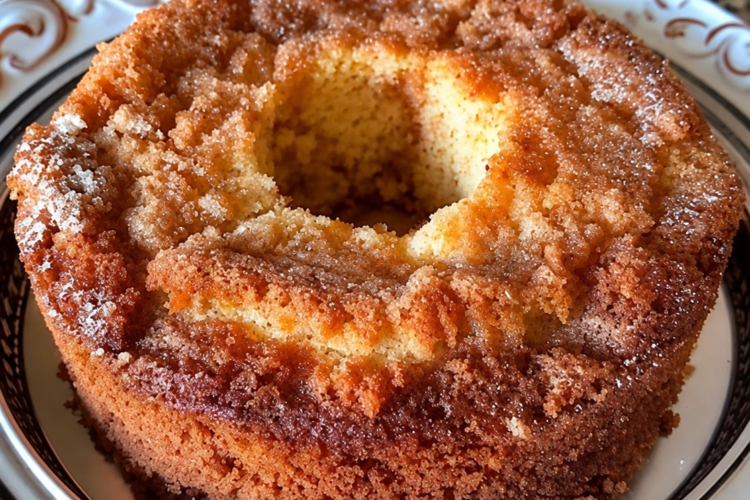
Crack Cake Recipe: Cinnamon Sugar Bundt Cake With a Crackly Top and a Ridiculously Moist Middle
I haven't made a cake this dangerous in years. My sister brought this to Sunday dinner last month, and I watched my brother-in-law go back for thirds. He's the kind of guy who never finishes dessert. When I asked her what was in it, she just smiled and said, "You'll see." She wasn't kidding. I made it the following weekend, and my husband and I stood at the counter with forks, taking "just one more bite" until we realized we'd eaten half of it before it had even cooled completely.
There is something about that crunchy cinnamon-sugar crust that forms on top. It is almost caramelized, like the edges of a snickerdoodle cookie, but underneath it is this impossibly moist, buttery cake that leaves your fork clean. That combination is the whole reason this cake has a name that makes people laugh when they say it out loud, and the name is accurate. It is called Crack Cake for a reason, and I am giving you fair warning.
What I like most is how little it asks of you. A box of yellow cake mix, a box of instant pudding, eggs, oil, water, and sugar. One bowl, one bundt pan, and about50 minutes in the oven. This is the cake I make when I want something that tastes like a holiday bake without actually doing a holiday bake, and it is the cake I have started hiding a slice of in the back of the fridge behind the leftovers, because if it is not hidden, it is gone by morning.
I am going to say the thing nobody says about this recipe, which is that it is spectacularly sweet. Roughly 48 grams of sugar in a single slice, most of it added, and that is before you add anything on top. I am not going to pretend this is a health food or dress it up as one, because it is not one and the people who are telling you otherwise have not made it. It is a very sweet cake that tastes like a very sweet cake should, and that is a completely fine thing for it to be.
Why You'll Love This Crack Cake Recipe
Because the topping does something genuinely surprising. Sugar and cinnamon sprinkled over the top during the bake form a thin shell that crunches, and then it keeps crunching as the cake cools, and it is still there the next day. That is a real technical trick and it costs you about a minute of effort at the end of the bake.
Because the middle is unbelievably moist, and that is not an accident either. Oil instead of butter, plus the pudding mix, plus the sugar in the batter, means the crumb stays tender for days. This is not a cake that dries out on the counter by Tuesday.
Because it is one bowl and one pan. There is no frosting to mix, no layers to stack, no decorating. The whole thing is about ten minutes of work and the oven handles the rest.
Because it looks like you made an effort. A bundt pan with a crackled cinnamon top looks like a bakery cake, and you did it in fifty minutes on a Wednesday.
Because it feeds ten without doubling the work. One 12-cup bundt, ten generous slices, and it is the dessert for a dinner party where you do not want to be in the kitchen.
Because it travels and it freezes, which matters if you are taking it somewhere. A crack cake does not need frosting to survive a two-hour drive, and that is worth more than it sounds like it is.
And because the name gets people curious. It is the most memorable name in the dessert world, and it does half the work of getting people to try a slice who would never have made a plain bundt cake.
Why This Crack Cake Recipe Works
Nothing in this recipe is complicated, but four things are doing all the work, and each of them fails in a visible way when it goes wrong.
First, the oil is the moisture. There is no butter in this batter and that is deliberate. Butter goes solid when it is cold, which means you have to cream it, and creamed cake batter traps air and bakes into a lighter, tighter crumb. Oil stays liquid all the way to the oven and coats the flour proteins evenly, which produces a crumb with no large air pockets and a texture that stays moist for days. That is the entire reason this cake is so tender, and it is also why the cake mix is not being treated like a shortcut here, it is being treated as a base.
Second, the pudding mix is not there for flavor. Instant vanilla pudding powder is dry pudding mix, not the prepared kind. The dry powder is mostly cornstarch with sugar, and that cornstarch is doing what pudding does in a from-scratch cake: it keeps the crumb moist and tender for longer than flour alone would. This is the second reason a slice at day three still tastes good. If you use prepared pudding, or use the powder in a cooked pudding, you lose that and the cake is noticeably drier by day two.
Third, the cinnamon-sugar layer goes in the middle, not the top. Half the batter, then the cinnamon sugar, then the rest of the batter on top. That middle layer is what gives you a distinct band of darker, spiced cake running through the center, and it is why this is not just a plain cake with sugar on it. Sprinkling the cinnamon sugar on the surface before baking would give you a flavored top and a plain middle.
Fourth, the topping goes on AFTER the bake, in the pan, while it is hot. This is the step that makes the actual crack. Sugar and cinnamon sprinkled onto a cake that has already come out of the oven melt into a thin caramelized glaze that hardens as it cools, and that is the crunchy shell. Sprinkled on before the bake, the sugar would just dissolve into the batter and never form a shell. This is the one part of the recipe where the order genuinely matters and where people most often improvise badly.
One note on the bake. The center cinnamon-sugar layer means the middle of this cake is denser than a plain cake, so it takes slightly longer to bake through than the box would suggest. If a toothpick comes out with wet crumbs at 45 minutes, give it five more. Coming out with a couple of moist crumbs is right. Coming out wet is not.
Ingredient Breakdown
1 box yellow cake mix. About 15.25 ounces. This is the structure of the cake. Yellow rather than white or butter, because yellow has more fat and sugar in it and the fat is what makes the crumb tender. Any brand works and the store brand is fine here, because there is nowhere to hide a mediocre cake mix in a recipe where the cake mix is the whole point.
1 box instant vanilla pudding mix, 3.4 ounces. This must be the DRY powder. Not the prepared pudding, not a sugar-free pudding mix, and not a pudding you cooked. The dry powder is starch and sugar, and the starch is what holds moisture in the crumb long after the bake is done. It also sweetens the cake, which is why there is only1/2 cup of added sugar in the batter.
4 large eggs. Room temperature, so they blend smoothly into the oil and water without curdling into little scrambled bits in the batter. They provide the protein structure that the cake mix does not supply on its own, and about 6 grams of the roughly 4 grams of protein per slice, which is not much but it is not nothing.
3/4 cup vegetable oil. About 12 tablespoons. This is the single most important ingredient in the recipe and it cannot be replaced with melted butter. An oil with a mild flavor is what you want, so a light olive oil or an avocado oil works and canola is the standard. Avoid olive oil that is peppery or assertive, because there is not enough sugar in this cake to hide it.
3/4 cup water. This brings the batter to the right consistency, which should be thick and pourable and will run slowly off a spoon. Too little water and the batter is stiff and the cake is dense. Too much and it spreads and the cake can be tight. Measure it.
1/2 cup granulated sugar. In the batter. The cake mix and the pudding mix both already contain sugar, so this is a modest addition rather than the bulk of the sweetness. It is there for the crumb and the browning, not for sweetening.
2 teaspoons ground cinnamon. For the layer inside the cake. Regular ground cinnamon, not a cinnamon blend, and not cinnamon sugar, because the cinnamon sugar will not disperse evenly through the batter and will leave gritty pockets.
1/2 cup granulated sugar plus 1 tablespoon cinnamon, for the topping. This is the crack. Mixed and sprinkled onto the hot cake right out of the oven, it melts into a glaze that hardens into a shell as it cools. This is not a garnish and it is not optional, and it is the reason this cake has the name it has.
Kitchen Equipment
A 12-cup bundt pan. This is what gives the cake its shape and the ridges that hold the extra crack sugar. A 10-cup pan works and the cake will be slightly denser and bake a bit faster, so start checking at 40 minutes. An angel food pan also works and gives a taller, lighter cake, but the character is different and I would not call it the same recipe.
Two mixing bowls. One large for the batter, one small for the cinnamon-sugar layer and another for the topping.
A hand mixer or a whisk. A whisk genuinely works here because there is no butter to cream, which is one of the genuine pleasures of this recipe. It takes about a minute.
A fine-mesh strainer or a flour shaker for dusting the pan properly, and a pastry brush for working butter into every ridge of the bundt pan.
A cooling rack, and a large plate or cake stand for turning the cake out onto.
A toothpick, and a long serrated knife for cutting, because a cake with a sugar shell needs a sawing motion rather than a pressing one.
Airtight containers or a cake carrier if you are transporting it, since the crack shell is fragile until it has fully set.
Step-by-Step Instructions
Step 1: Prepare the pan and heat the oven. Heat the oven to 350°F. Very generously butter the bundt pan, working into every ridge, the center tube, and both corners. Then dust it with flour and tap out the excess. With a3/4 cup of oil in the batter, sticking is a real risk, and this is the step that decides whether you get a clean cake or half of it stuck in the pan.
Step 2: Mix the cinnamon-sugar layer. In a small bowl, stir together 1/2 cup granulated sugar and 2 teaspoons ground cinnamon until the color is even and there are no streaks. Set it aside. This goes in the middle of the batter, not on top.
Step 3: Mix the batter. In a large bowl, combine the yellow cake mix, the dry pudding mix, 4 eggs, 3/4 cup oil, and 3/4 cup water. Mix on medium speed for about a minute, until everything is completely smooth and the batter is thick and glossy. Scrape the bottom and the sides once, because dry mix sticks and the first twenty seconds can look fine while there is still powder at the bottom.
Step 4: Pour the first half. Pour half the batter into the prepared pan and spread it into an even layer all the way to the edges and down into the ridges.
Step 5: Add the cinnamon sugar. Sprinkle the entire cinnamon-sugar mixture evenly over the batter, shaking the bowl as you go so it distributes rather than landing in one spot. Cover the whole surface.
Step 6: Add the rest of the batter. Pour the remaining batter on top and spread it gently and evenly. Do not stir it into the cinnamon sugar. Smooth the top so it bakes evenly, and if you have a wet spot, spread it out rather than adding more batter to it.
Step 7: Bake 45 to 50 minutes. Bake until deeply golden on top and a toothpick inserted into the thickest part of the ring comes out clean or with a couple of moist crumbs. Start checking at 45 minutes. The dense cinnamon layer in the middle means this can need the full 50, and a wet toothpick at 45 is common and fine to bake out.
Step 8: Mix the crack topping. While the cake is still in the pan and hot, combine 1/2 cup granulated sugar with 1 tablespoon cinnamon and stir it together.
Step 9: Sprinkle generously. Sprinkle the topping mixture evenly over the entire top of the cake while it is still hot in the pan. The sugar will start melting almost immediately. Be generous, and get it into the ridges around the outside because that is where it collects and forms the thickest, crunchiest shell.
Step 10: Rest in the pan, then turn out. Let the cake sit in the pan about 10 minutes. Run a thin knife around the edge and invert onto a plate or cake stand. Lift the pan off carefully, because the crack shell is fragile while it is still warm.
Step 11: Cool if you have the willpower. The crack sets and hardens as the cake cools, and it is fully crunchy after about an hour at room temperature. Warm, the topping is more of a glaze and the cake is best eaten with a fork standing over the counter, which is what we do.
Expert Tips
Butter the bundt pan and then flour it. Both steps, every ridge and the center tube. With this much oil in the batter, a dry pan is a cake that tears in half when you try to turn it out.
Use dry pudding powder, not prepared pudding. This is the most common substitution mistake and it costs you the moist crumb that lasts for days. If your Pudding powder says prepared or refrigerated, put it back.
Add the topping AFTER the bake, in the pan, while it is hot. This is the whole trick. Sugar sprinkled on before the bake dissolves into the batter and never forms a shell. Sugar sprinkled on a hot finished cake melts into a glaze and then hardens into the crack.
Be generous with the topping. Half a cup of sugar and a tablespoon of cinnamon over the whole top is not a light sprinkle. Get it into the outer ridges, because that is where it pools and where the thickest, crunchiest pieces form.
Start checking at 45 minutes and do not trust the box time. The cinnamon-sugar layer makes the center denser than a plain cake, and50 minutes is frequently the right answer.
Get the middle layer even. Shake the bowl when you sprinkle the cinnamon sugar into the cake, and spread the batter above it evenly. An uneven layer gives you one very dark band and one place that is just plain cake.
Use room temperature eggs. Cold eggs blended into oil and water will sometimes form small scrambled pockets in the batter, and those become holes.
Mix the batter for a full minute and scrape the bowl. Dry cake mix hides at the bottom and sides, and a pocket of unmixed powder bakes into a raw spot.
Turn it out while it is warm, not hot and not cold. Ten minutes in the pan is where the crack shell is set enough to survive being inverted.
Let the crack set fully before transporting it. An hour at room temperature. Move it too early and the shell chips, and the chips are the best part.
Use a serrated knife and saw gently. The crack shell resists a straight knife and will drag and pull rather than cutting cleanly.
Do not frost it. Every recipe like this wants somebody to frost a crack cake, and it is the wrong instinct. The crack shell is the topping, and frosting it either dissolves the shell or turns it to paste.
Common Mistakes to Avoid
Using prepared or cooked pudding. You lose the cornstarch that keeps the crumb moist and you get a cake that dries out by day two. Dry powder only.
Adding the topping sugar before the bake. This is the big one. It dissolves into the batter and you get a flavored top instead of a crack shell. The topping goes on in the pan after the bake.
Under-greasing the bundt pan. With3/4 cup of oil in this batter, sticking is likely. Butter every ridge, then flour, then tap out the excess.
Pulling it at 45 minutes. The middle is denser because of the cinnamon layer, so the center can still be underdone when the top looks done. A couple of moist crumbs is fine; wet batter is not.
Stirring the cinnamon sugar into the batter. That destroys the band through the middle of the cake, which is half of what makes this cake different from a plain bundt.
Using butter instead of oil. Butter goes solid, which means creaming, which means a completely different cake that is tighter and drier and needs a different method. The oil is not a shortcut here, it is the mechanism.
Using cake flour or a bread mix. Either will make it dense and gummy in a bad way. Plain all-purpose cake mix is what the structure depends on.
Not letting the crack set. Cutting or moving the cake while the topping is still glossy and warm will take the shell off in sheets. An hour at room temperature.
Frosting it. It dissolves the crack or turns it to paste. Do not.
Using a candy thermometer out of habit. This is a cake, not a candy. There is no target temperature. A toothpick and the color of the top are your only two signals.
Serving it straight from the pan without turning it out. You will get half the cake and a pan of crumbs, because you cannot cut a clean slice in a bundt pan.
Cutting it with a straight knife. The crack shell will tear and drag. Serrated, sawing gently.
Scaling this up in one bundt pan. If you want two, use a second pan. Doubling the batter in one pan gives you a raw center, because the middle layer of cinnamon sugar makes an already dense cake even denser.
Ingredient Substitutions
White or buttery cake mix. Both work and you lose a little of the richness. White cake mix is the closest, butter flavor cake is the sweetest and works well with the cinnamon.
Chocolate or devil's food cake mix. Works and gives you a chocolate cinnamon cake that is very rich. Bake3 to 5 minutes less, because chocolate cake mix is usually denser.
Brown sugar for part of the topping. This is actually an upgrade. Half brown sugar and half white in the crack topping gives it a deeper, more caramelized crunch. Use less than you think, because brown sugar is not as sweet as it looks.
Coconut sugar in the topping. Works and it is not a healthy swap, despite what the packaging says. It is still sugar and it caramelizes slightly less.
Apple butter or pumpkin in the batter. A third cup of either, replacing part of the water, gives you a spiced cake with more moisture. This is a genuine improvement and it moves the recipe toward a seasonal version.
Gluten-free cake mix. Works reasonably well here, which is unusual. The oil and the pudding both add moisture and help compensate for the missing gluten structure. Use a 1-to-1 gluten-free baking mix and check the pudding powder label, because many contain wheat. Do not call it gluten-free unless every component checks out.
Greek yogurt for part of the water. Replace 1/4 cup of the water with plain Greek yogurt. It adds moisture and a little tang that plays well against the cinnamon.
Coconut oil for the vegetable oil. Works and gives a coconut note that is odd but not bad with cinnamon. It is solid below 76°F, so you need to melt it and measure it as a liquid, and the flavor carries more than it does with neutral oil.
Maple syrup for the topping sugar. Adds moisture and will not form quite the same hard shell. It makes a softer glaze rather than a crack. Good, but not the same dish.
Making it from scratch. You can, and it is a different recipe. You would need a real cake recipe with the pudding powder and the layering, and the reason to make this one is that it is one bowl.
Recipe Variations
Pumpkin crack cake. Add 1/2 cup of pumpkin puree and reduce the water by a third of a cup. Add 1/2 teaspoon of pumpkin pie spice to the batter. This is the version I make in October.
Apple cinnamon crack cake. Fold 1 cup of finely diced apple into the batter and add 1/2 teaspoon of nutmeg along with the cinnamon. Chopped fine so there are no big wet chunks.
Chocolate chip crack cake. Stir 3/4 cup of chocolate chips into the batter. About 60 percent of them sink and stay melted and fudgy in the middle layer, which is the best part.
Salted caramel crack cake. Drizzle caramel sauce over the cake after it has cooled completely, not while it is warm, and add flaky salt. The crack shell underneath keeps it from sliding off.
Coffee crack cake. Add 2 tablespoons of strong espresso powder, dissolved in a couple of the tablespoons of water, to the batter. It does not taste like coffee, it just makes the cinnamon read louder.
Lemon crack cake. Add the zest of one lemon to the batter and the juice of half a lemon to the topping. This is unexpected and genuinely good, and it is the direction to take if you have already made the plain version too many times.
Brown butter crack cake. Brown1/2 cup of the butter, cool it, and use it in place of 1/2 cup of the oil. A real upgrade and it changes the crack flavor, because the nuttiness carries into the topping.
Cake mix from scratch. Two cups all-purpose flour, 2 teaspoons baking powder, 1/2 teaspoon salt, 1 cup sugar, and 3/4 cup oil, plus the pudding powder. This works and it saves you from cake mix entirely. It is more work and it is not the recipe this post is about.
Cupcakes. Same batter, about 18 to 20 minutes in a cupcake tin at 350°F. Apply the crack topping while hot, so it melts in the same way. Bake in batches because a full pan cools unevenly.
Sheet cake version. Bake in a 9x13 at 350°F for 30 to 35 minutes. The larger surface area gives you far more crack, and it serves16 instead of 10, which is the version I make for a party.
Crumble topping. Instead of the crack topping, use a streusel of flour, butter, brown sugar, and cinnamon scattered over the top before the bake. Different from this recipe and more like a coffee cake, but it is what people ask for when they say they want it crunchier.
Make It Healthier, Honestly
I am going to be straight here, because this recipe has a real health-halo problem and I would rather say it plainly than let the article imply something it should not.
A single slice is roughly 460 calories, about 27 grams of fat, and 62 grams of carbohydrate, of which roughly 48 grams is sugar. Almost all of that sugar is added, and most of it comes from the cake mix and the pudding powder before you add a single grain of your own sugar. There is no version of this recipe that is not a dessert in the dessert sense, and the fiber content is about 1 gram a slice, which is negligible.
The realistic levers, and honestly, there are not many:
Cut the slices thinner. This is the only lever that matters and it is worth repeating because it is the only one. Ten slices from a bundt pan is a generous slice. Twelve or fourteen thinner slices changes the math more than any ingredient swap, and this is exactly the same point as the coconut cake.
Use a sugar-free or no-sugar-added pudding mix and reduce your own sugar to a quarter cup. This works and it cuts a meaningful amount of added sugar. It is not sugar-free, because the cake mix still has sugar in it, and you should check the cake mix label because many now have no-sugar-added versions.
Swap half the oil for applesauce. A quarter cup of applesauce replaces 4 tablespoons of oil, saves about 130 calories a slice, and adds moisture so the cake stays tender. This is the single biggest available change and it genuinely works.
Use a whole wheat or whole spelt cake mix. More fiber, and a nuttier, less sweet cake. It works and it is a real improvement on the nutritional side, at the cost of a slightly heavier crumb.
Use a yogurt-based frosting rather than buttercream if you are frosting it at all. Do not frost it, but if you must.
What will not work: sugar-free cake mix. The artificial sweeteners do not caramelize and do not brown, so you lose the deep golden top and the crack shell does not form properly. Cake mix is not a good candidate for a sugar swap. Substituting skim milk for the water, which does nothing useful. And anything claiming this is a health food. It is a cake with a cup of sugar in it and 48 grams of sugar per slice, and that is fine, but it should be called what it is.
So the honest ceiling: this is a sweet, rich, one-bowl cake that happens to be made mostly from a box, and the nutrition numbers reflect that. If you want a genuinely lighter cinnamon cake, that is a different recipe and I would rather write that one properly than pretend this one fills the gap.
Meal Prep Guide
This is a good make-ahead cake, and the crack shell actually behaves well in advance, which surprises people.
Bake it the day before, let it cool completely, and cover it. It is one of the few frosted-looking cakes that does not need frosting to travel, and it holds on a table for hours without weeping because there is no frosting at all.
The crack shell sets firm as it cools and stays crunchy for several days. This is genuinely better on day two, when the cake has absorbed the topping's moisture and the contrast between the crunchy top and the moist crumb is at its most pronounced.
Store it under a cake dome or a large bowl, not wrapped, because wrapping traps moisture against the crack shell and softens it into a sticky layer.
If you are traveling with it, let it cool completely, set it in a cake carrier, and do not put it in the fridge for the trip. Refrigerating a cake that is merely cool is unnecessary and it makes the crack shell weep condensation when it comes back to room temperature.
This is a good holiday bake, in the sense that it can be made two days ahead and brought out without anyone needing to do anything to it.
To make two, use two pans and bake them one at a time if your oven is small. Do not double the batter in a single bundt pan, because the middle cinnamon layer makes an already dense cake bake unevenly and you will end up with a raw center.
Storage
Covered at room temperature, this cake keeps well for 4 days, and the crumb stays moist the entire time.
Keep it under a cake dome, a large bowl, or a cake carrier. Do not wrap it in plastic or foil, because the crack shell needs to stay dry and any trapped moisture turns it sticky within a day.
It does not need refrigeration for four days. This is a cake with no cream in it, and putting it in the fridge dries the crumb slightly and makes the shell lose its crunch for no benefit. Refrigerate it only if your kitchen is genuinely hot or you are keeping it longer than a few days.
The crack shell softens slightly in a very humid kitchen, which is a real thing in some climates and there is not much you can do about it. It re-crisps in a300°F oven for 5 minutes if it bothers you.
If you do refrigerate it, take it out about 20 minutes before serving so it is not cold and hard, and do not cover it while it comes to room temperature.
Do not place it near anything strongly scented in the fridge, if you have refrigerated it. Cake picks up odors and the crack shell makes that more noticeable, not less.
Hold back a slice in the back of the fridge behind something nobody opens, if you want to be honest about what you are about to do. This is not advice. It is a description of how this cake gets eaten in my house.
Freezing
Yes, and this freezes well for two very different reasons that are worth knowing separately.
Freezing the baked cake, unwrapped. Cool it completely, then wrap it tightly in two layers of plastic and a layer of foil and freeze for up to 3 months. Do not wrap while it is warm, because the condensation softens the crack shell.
Thaw it in the refrigerator overnight, still wrapped. The crumb actually improves in the freezer because the moisture redistributes, and the crack shell softens slightly during the freeze. Let it come to room temperature before you unwrap it, and let the shell dry for 20 minutes, and it will crisp back up.
To refresh a thawed cake, 5 minutes in a 300°F oven brings the crack shell back fully. This is the fastest way to serve a frozen crack cake that tastes like it was made today.
Freezing the unbaked batter. This also works. Mix the batter, put it in a greased pan, and freeze. Thaw in the refrigerator overnight, let the pan come to room temperature, and bake with 5 to 10 extra minutes. The cake mix and the pudding powder make this one of the more freeze-tolerant batters, and it is genuinely convenient for a holiday morning.
Freezing the cake in slices. Best option if you are only taking one or two servings. Wrap each slice individually in plastic, then put them in a freezer bag. They will keep for 3 months and you can pull out one without thawing the whole cake.
Do not refreeze a thawed cake, particularly if it has sat at room temperature. Once the crack shell has softened and re-crisped once, a second freeze ruins it.
Reheating
This is one of the few cakes where reheating is not really needed and where most people do not want to reheat it. Cold crack cake is the target, not an accident.
Straight from the counter, at room temperature, with the crack fully set, is how it should be eaten. That is the state your sister brought to Sunday dinner and the state that made your brother-in-law go back for thirds.
If you want it warmer, 5 minutes in a 350°F oven warms the cake without ruining it, and the crack shell will soften slightly and re-set in about 10 minutes once it comes out. Do not let it get hot, because heated sugar in the topping goes sticky rather than crisp.
Do not microwave it. The oil in the crumb makes it heat unevenly and the crack shell turns rubbery within20 seconds. This is not a microwave cake.
If it is coming out of the freezer, the oven is the right tool. 300°F for 10 to 12 minutes from room temperature, or straight from the fridge to a 300°F oven for about 20 minutes, and the shell will come back to fully crunchy.
You can also let slices sit at room temperature for 20 minutes after cutting, which brings them from fridge-cold to the correct temperature without touching the shell at all.
Whatever you do, do not cover it while reheating. Trapped steam softens the crack.
What to Serve With Crack Cake
This cake is sweet and rich on its own, so almost everything next to it should be cold, tart, or savory rather than sweet.
Cold vanilla ice cream, which melts into the warm cake and cuts the sugar. This is the most common pairing and the most reliable.
Whipped cream, which adds volume and a little richness without adding sugar. Piped on individual slices so the shell stays intact.
Fresh berries, especially raspberries. The acid is the single most useful contrast here, and a few tart berries on a slice of crack cake changes it more than anything else you could add.
A cup of black coffee, which is the pairing that makes the sugar taste like it is supposed to. The bitterness is doing the work.
Fresh apple slices or a light fruit salad on the side, which is the same logic and costs about a dollar.
Caramel sauce or salted caramel drizzled over a slice, added at the table after the cake has cooled completely so it sets rather than runs.
Cinnamon crème fraîche or a small scoop of tangy yogurt, which is a nice middle ground between whipped cream and ice cream.
Nothing at all, on a cake stand, with a coffee pot nearby. This is a cake that is entirely capable of being the whole event and showing up to dinner looking like the centerpiece.
Beverage Pairings
Hot black coffee, which is the correct answer to a cake this sweet and needs no elaboration.
A latte or cappuccino, which is better than plain coffee because the milk cuts the sugar a little, and the caffeine is doing real work after a heavy meal.
Cold milk, for children and for anyone who thinks a glass of milk makes cake taste more like a treat.
Cold brew or iced coffee, which is genuinely good with a cold slice of this.
Hot cider in the fall, which is seasonal and costs nothing to make.
Spiced tea or chai, which picks up the cinnamon and does not add sugar if you leave the sweetener out.
For adults, a small pour of bourbon or rum over a slice while it is still slightly warm, which is a real thing people do and it is very good.
Dry sparkling wine or a light red, if you are serving this with dinner rather than as dessert. Avoid anything sweet, because the cake already covers that ground completely.
The rule for this one: bitter, cold, or creamy. Nothing sweet. The cake has it.
Frequently Asked Questions
Why is it called crack cake? Because of the topping. Sugar and cinnamon sprinkled onto the hot cake right out of the oven melt into a thin caramelized glaze that hardens as it cools, forming a crunchy shell with cracks and fissures across the surface. It is descriptive rather than marketing, and the shell is genuinely crunchy rather than just sweet.
Can I use prepared pudding instead of the dry mix? Do not. You need the dry pudding powder because the cornstarch in it is what keeps the crumb moist for days. Prepared or cooked pudding loses that and the cake is noticeably drier by day two. Make sure the box says instant pudding mix.
Do I have to add the topping after baking? Yes, and this is the one part of the recipe where order genuinely matters. Sprinkle the sugar and cinnamon onto the cake while it is still hot in the pan, right out of the oven. Sprinkled on before the bake, the sugar dissolves into the batter and you get a flavored top instead of the crack shell.
Why is my cake sticking to the pan? Under-greasing, which is the most common problem with this recipe because of how much oil is in the batter. Butter every ridge and the center tube generously, then dust with flour and tap out the excess. Let it cool the full 10 minutes in the pan before turning out, because it releases far better warm than hot.
Can I make crack cake in a 9x13 pan? Yes, and it is the version I make for a party. Bake at 350°F for 30 to 35 minutes rather than 45 to 50, and you get much more surface area, which means much more crack. It serves about 16.
Can I make this crack cake ahead? Yes, and it is better the next day. It keeps covered at room temperature for 4 days, and the contrast between the crunchy shell and the moist crumb is stronger on day two. Do not refrigerate it, and do not wrap it, because trapped moisture softens the shell.
Can I freeze a crack cake? Yes, for up to 3 months. Cool it completely, wrap tightly in plastic and foil, and thaw in the refrigerator overnight. Let it come to room temperature unwrapped so the shell can dry and crisp back up, or refresh it at 300°F for 5 minutes. Freezing the unbaked batter also works.
How much cake mix do I need to substitute for pudding? You do not need to substitute anything. The dry pudding powder is a separate ingredient from the cake mix and you need both. It is about 1/2 cup of additional dry mix, which is what adds the moisture retention and the extra sweetness.
Can I make it gluten-free? You can, and this recipe converts better than most cakes because the oil and the pudding powder both add moisture and compensate for the missing gluten structure. Use a 1-to-1 gluten-free baking mix and check the pudding powder and cake mix labels, because some contain wheat. Only call it gluten-free if every component checks out.
Why is my crack not crunchy? Usually three things. You added the topping before baking instead of after, you used too little of it, or you cut the cake while the shell was still warm and glossy. It needs to be generous, added in the pan after the bake, and left to set for at least an hour.
Can I use brown sugar in the topping? Yes, and it is an upgrade. Half brown and half white gives a deeper, more caramelized crunch. Use slightly less than you think, because brown sugar reads sweeter than it is and caramelizes faster.
Nutrition Information
These are estimates. The yield assumption is 10 generous slices from a 12-cup bundt cake, including the entire crack topping. Every figure below is derived from ingredient weights for the whole cake, divided by 10. This is a recipe where the total is dominated by the boxed ingredients, so brand variation is wider than for most cakes on this site.
Per slice: approximately 460 calories, about 3.8 grams of protein, 27 grams of total fat, 62 grams of carbohydrate, roughly 48 grams of sugar, about 1 gram of fiber, and approximately 460 milligrams of sodium.
Where the calories come from: the 3/4 cup of vegetable oil is the single largest contributor at roughly 150 calories a slice, which is about a third of the total. The cake mix itself contributes about 165, the pudding powder about 36, the added sugar in the batter about 39, the crack topping about 39, and the eggs about 29.
Where the sugar comes from: mostly from the cake mix and the pudding powder, not from anything you added. The two boxes supply roughly 34 grams of the 48 grams per slice. Your own 1/2 cup of batter sugar plus 1/2 cup of topping sugar accounts for about 20 grams. This is worth stating plainly because it means the recipe's sugar content is baked into the ingredients and cannot be adjusted by changing your own quantities alone.
The 27 grams of fat is almost entirely vegetable oil, and the saturated fat portion is roughly 3 grams, which is low compared with most cakes because there is no butter. That is the one genuine nutritional advantage of this recipe over a from-scratch version, and it is offset by the fact that the oil is 3/4 cup regardless.
These are estimates from ingredient weights, so they will vary by brand. Store-brand cake mix differs from name-brand by 10 to 15 percent on calories and considerably more on sugar, and oil varies by 10 percent depending on what is in the pantry. Treat these as a guide, not a measurement.
Allergens: wheat and gluten, which is dominant and comes from the cake mix and the pudding powder, plus egg. Many yellow cake mixes contain nonfat dry milk powder, so check the label, and if it does, milk is also a declared allergen. If you need this dairy-free, use a cake mix that does not include milk solids, which is harder to find than it used to be.
Food safety: the eggs are raw in the batter but fully cooked in a 45 to 50 minute bake, which is more than enough. This is a low-risk recipe because it contains no cream, no raw dairy, and no perishable filling. It can sit at room temperature for a full day without any concern, which is unusual for a frosted-looking dessert and is why it travels well. Store covered at room temperature and use within 4 days, or freeze for up to 3 months. If you add ice cream or whipped cream when you serve it, keep that portion refrigerated and do not let it sit out for more than 2 hours.
This is not keto, not low-carb, not low-fat, not gluten-free as written, and not a health food. It is about 460 calories, 62 grams of carbohydrate, and 48 grams of sugar per slice, most of that sugar coming from the cake mix and pudding powder rather than from anything you measured yourself.
Final Thoughts
I am going to say the uncomfortable thing, which is that this cake is more about the boxes than the technique and that is exactly why I love it.
There is no from-scratch version of a crack cake that is meaningfully better than this one. I have made both. The scratch version takes longer, gives you less control over the moisture, and produces a crumb that is good but not better. What you are eating here is cake mix and pudding powder doing the thing they were engineered to do, which is make a decent cake quickly, and the cinnamon sugar layer is the only real technique involved and it takes about four minutes.
My sister would tell you the same thing and she would say it more directly than I am going to. She brought this to Sunday dinner, watched her husband go back for thirds, and declined to explain what was in it. That is not coyness, that is a woman who has been making the same five-ingredient cake for thirty years and does not need to defend it to anybody.
What I do want to say is that the crack shell is worth understanding rather than just making. Sugar sprinkled on a cake before the bake dissolves. Sugar sprinkled on a hot cake after the bake melts into a glaze, and then that glaze hardens as it cools, and you get a shell that crunches. That is a real physical thing and you are doing it with a tablespoon of cinnamon and half a cup of sugar. It is the most economical piece of kitchen science in this article.
So make it, cut it thin rather than thick, and serve it at room temperature with coffee. Then hide a slice, because you already know what is going to happen at 10pm and we both understand why.
And for the record: fork, no plate, standing up. Every time. I have seen what happens when people wait for a slice and a plate and it is a crime against a cake like this.
Pour, Layer, Crack
Crack Cake Recipe
Yellow cake mix and dry vanilla pudding baked with a cinnamon sugar layer through the middle, then topped with more cinnamon sugar while hot so it melts into a crunchy shell as it cools. One bowl, one pan.
For the Cake
- 1 box yellow cake mix (15.25 oz)
- 1 box instant vanilla pudding mix (3.4 oz, dry powder, not prepared)
- 4 large eggs (room temperature)
- 3/4 cup vegetable oil (about 12 tbsp; do not use butter)
- 3/4 cup water
- 1/2 cup granulated sugar
- 2 teaspoons ground cinnamon
For the Cinnamon Sugar Layer
- 1/2 cup granulated sugar
- 2 teaspoons ground cinnamon
For the Crack Topping
- 1/2 cup granulated sugar
- 1 tablespoon ground cinnamon
Add the crack topping AFTER the bake, in the pan, while it is hot. Sugar sprinkled on before baking dissolves into the batter. Sugar sprinkled on a hot finished cake melts into a glaze and hardens into the shell.
Instructions
- Prepare the pan and heat the oven. Heat the oven to 350°F. Very generously butter every ridge, the center tube, and both corners of a 12-cup bundt pan, then dust with flour and tap out the excess. With this much oil in the batter, under-greasing is how you lose half a cake.
- Mix the cinnamon-sugar layer. Stir together 1/2 cup sugar and 2 teaspoons cinnamon until evenly colored. This goes in the middle of the batter.
- Mix the batter. Combine the cake mix, dry pudding powder, 4 eggs, 3/4 cup oil, and 3/4 cup water. Mix on medium for a full minute until smooth and glossy, scraping the bottom and sides once.
- Pour the first half. Pour half the batter into the pan and spread it evenly to the edges and down into the ridges.
- Add the cinnamon sugar. Sprinkle the entire mixture evenly over the batter, shaking the bowl so it distributes. Cover the whole surface.
- Add the rest of the batter. Pour the remaining batter on top and smooth it gently. Do not stir it in. Smooth out any thin spots rather than adding batter to them.
- Bake 45 to 50 minutes. Bake until deeply golden and a toothpick in the thickest part of the ring comes out clean or with a couple of moist crumbs. Check at 45. The dense middle layer can need the full 50.
- Mix the crack topping while the cake bakes. Combine 1/2 cup sugar with 1 tablespoon cinnamon so it is ready the moment the cake comes out.
- Sprinkle in the pan, hot. Sprinkle the topping generously over the whole top of the cake while it is still in the pan and hot. Get it into the outer ridges, where it collects and forms the thickest shell.
- Rest and turn out. Let it sit in the pan 10 minutes, run a thin knife around the edge, and invert onto a plate. Lift the pan off gently, because the shell is fragile while warm.
- Let the crack set. Leave it at room temperature about an hour so the shell hardens fully. It is crunchy at that point and stays crunchy for days. Warm, it is a glaze, and warm is also when you eat it standing up over the sink with a fork.
Cook's Notes
Costs assume store-brand yellow cake mix and pudding, 4 large eggs, pantry oil, a cup of sugar, and cinnamon. Assumes 10 generous slices from a 12-cup bundt. Buying a fresh bottle of oil instead of using pantry stock adds roughly $4, which is why the number is as low as it is.
- Dry pudding powder only, never prepared. The cornstarch in the dry powder is the second reason this crumb stays moist for days alongside the oil. Prepared or cooked pudding loses it and the cake is drier by day two.
- The topping goes on after the bake, in the pan, while it is hot. This is the whole trick. Sugar on a cake before the bake dissolves into the batter. Sugar on a hot finished cake melts into a glaze, then hardens as it cools, and that is the crack.
- Do not frost it. The crack shell is the topping. Frosting dissolves it or turns it to paste, and you have thrown out the only interesting part of the cake.
Nutrition (Labeled Estimates)
Approximate values for 1 of 10 slices from a 12-cup bundt, made with yellow cake mix, a 3.4 oz box of dry instant vanilla pudding, 4 eggs, 3/4 cup vegetable oil, 3/4 cup water, 1 cup total granulated sugar, and 2 tablespoons cinnamon across the layer and topping. Estimates only; store-brand cake mix differs from name-brand by 10 to 15 percent on calories and more on sugar.
Sugar: approximately 48 g per slice, and about 34 g of that comes from the cake mix and pudding powder rather than from anything you measured yourself. That means the sugar content cannot be adjusted by changing your own quantities alone. Contains wheat and gluten, plus egg. Many yellow cake mixes contain nonfat dry milk powder, so check the label; if it does, milk is also a declared allergen. Eggs are raw in the batter but fully cooked in a 45 to 50 minute bake. This is a low-risk recipe with no cream and no raw dairy filling, so it can sit at room temperature for a full day safely. Keep it covered, use within 4 days, or freeze up to 3 months. Not keto, not low-carb, not low-fat, not gluten-free as written, and not a health food. Saturated fat is roughly 3 g per slice, which is low for a cake, because there is no butter in the batter.