
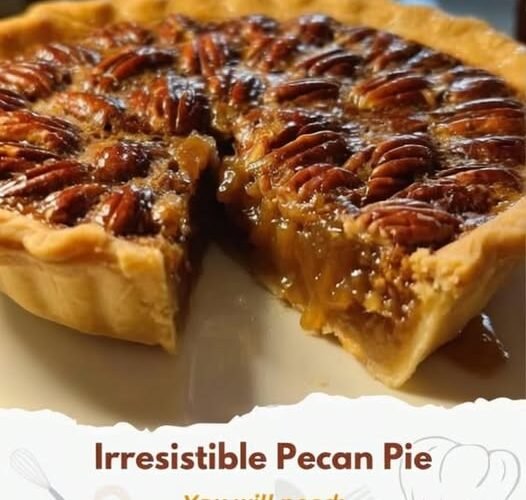
Classic Southern Pecan Pie: The One That Finally Sets Properly Every Time
I have made a lot of pies that did not work, and almost all of them failed the same way. The edges set. The middle stayed liquid. You cut into it and watch a puddle of corn syrup run off the knife onto the counter, and you spend the next forty minutes trying to serve it in a way that does not look like a decision was made. Southern pecan pie is where I learned that lesson. My grandmother made one every Thanksgiving, and I could not tell you a single measurement she used, because she did not measure. She poured until it looked right and she pulled it out on feel and it worked for forty years in the same kitchen with the same brand of corn syrup. When I tried to reproduce it with modern measuring cups and a timer, it ran like syrup every single time. Usually because I was baking it in twenty minutes less than I should have. This is the version I make now, and it has not given me a liquid middle yet. It is deep, it is glossy, and it is dense in the way pecan pie is supposed to be dense rather than the way a pudding is supposed to be dense. The pecans go down first in neat concentric circles because I am the kind of person who arranges them, and the filling settles around them and holds them in place while it bakes, and the whole thing comes out looking like a jewelry case rather than a dessert. Three things fixed it and all three are boring. Bake it longer than the recipe tells you. Weigh the corn syrup. Pre-bake the crust. That is it. Ninety minutes instead of fifty, a kitchen scale, and eight minutes with the crust under pie weights. I am aware this is not the romantic version of holiday baking, and I am aware my grandmother would have found it hilarious.Why You’ll Love This Pecan Pie
It holds together. Not every slice, but it holds together. If you take it out of the oven at the right moment and give it the full two hours to cool, you can plate a slice that keeps its shape through dessert, through the second slice, and through the coffee refill. That is not true of most pecan pie and it is the whole reason this recipe is written the way it is. No corn starch, no flour, no thickener. The filling sets because the eggs set the syrup. There is nothing that makes it taste like pudding, which is the failure mode of almost every pecan pie sold in a box. It is make-ahead, genuinely. A pecan pie is better the next day. This is not a stretch, it is an actual improvement, because the filling firms up further as it cools and the flavors settle. Make it the day before Thanksgiving and you have removed the most stressful part of the day. Eight ingredients. And one of them is the pie crust, which you can buy. This is a from-scratch filling on a store-bought crust, which is the correct level of effort for a pie that is one of six dishes on a holiday table. The pecan layer survives the bake. This is where most pecan pies lose. Put the nuts on top and they scorch into little dark shards while the filling stays liquid. Put them on the bottom where they sit in the filling, get steamed gently, and stay tender and glossy. Arrange them however you want; the pattern is entirely cosmetic and nobody notices it. It is a pie that works at a party. One slice per person, made in advance, plated fast, no last-minute assembly. A holiday dessert that does not require you to be standing in a kitchen while people are arriving is worth more than one that tastes marginally better and has consumed your entire afternoon.Why This Pecan Pie Sets Correctly
The filling is a sugar-and-egg custard, and understanding why it fails will save you every time. First, it sets by temperature, not by volume. The eggs coagulate around 160 to 170 degrees, and when they do, they trap the syrup in a network of protein that becomes a soft gel. There is nothing else holding this together. No starch, no flour, no corn syrup doing a job other than being sugar. That means the pie has one job: get the filling to the right temperature in the middle, not just at the edge. The edge is always done first, always twenty minutes before the center, and every layer of the pan contributes to that gap. Second, corn syrup is mostly water, and it is nearly half of the filling. A cup of corn syrup is about 340 grams, of which something like 150 is water. Combined with a cup of packed brown sugar, that is around 440 grams of sugar and water with the eggs added. It is closer to a sauce than a batter, which is exactly why it bakes to that dense, spoon-coating, glossy texture rather than a sliceable pudding. It also means this pie is genuinely sweet, more like fudge than like custard, and it will not be for everybody. Third, water content is the variable that decides set versus runny. Too much water and the filling boils down thinner than it should. Too little and it sets hard. Three things move it: which corn syrup you use, whether you pack the brown sugar, and whether you overbake it. This is why brand variation matters so much on this recipe and why I have included weights. A no-sugar or sugar-free corn syrup is not a substitute here, because the sugar is the structure. It will not set. Do not try it. Fourth, the eggs need to be thoroughly incorporated, and that is a whisking job rather than a stirring job. Three eggs, one cup of corn syrup, one cup of brown sugar. If you dump the brown sugar in and stir with a spoon, you will have streaks of sugar that melt and burn and leave pockets of bitter caramel in the filling. Whisk it until it is uniform and no graininess remains at the bottom of the bowl. Fifth, the residual heat is doing a lot of the work. This is why the pie needs two hours and why cutting it warm is a mistake, even though cutting it warm is what everybody wants to do. The center of the pie is still cooking when you pull it out. It carries residual heat for over an hour. If you cut at forty minutes you get a center that is set on the outside and liquid in the middle and still hot enough to feel runny, and no amount of refrigeration at that point will fix it properly. Two hours is the minimum. Four is better, and overnight is better still.Ingredient Breakdown: What Each One Is Actually Doing
Pie crust, one unbaked 9-inch. Store-bought is the right call here and I will defend it. Making pie crust is a twenty-minute task that requires you to chill dough three separate times, and if you are making six holiday dishes you do not have that time. Buy a good all-butter 9-inch crust in the tin if your store has them; the ones on cardboard taste flakier because they are baked on a sheet with less direct heat. Let it warm in the box for fifteen minutes before you pre-bake, because a rock-cold crust shrinks instead of holding its shape. Corn syrup, 1 cup, about 340 g. The entire sweet and the entire body of the filling. Light or dark, your call, and it genuinely changes the pie. Dark is the more traditional Southern choice and it is a better choice: molasses and caramel notes, deeper color, and it tastes less one-dimensional. Light is sweeter and milder and is what most people picture when they think pecan pie. Use whichever and then use the same brand next year, because switching brands is the number one cause of a pie that does not set. Weigh it if you can. Golden syrup and the store-brand cheap syrups are frequently25 to 30% lighter in solids, and that is the difference between a slice and a puddle. Packed brown sugar, 1 cup, about 220 g. Molasses, and it deepens the color of the whole pie. Pack it with your thumb until the measuring cup is firm and slightly damp-looking. Loose brown sugar is roughly 20 grams lighter and the pie will set slightly softer as a result. Both light and dark brown sugar work; dark gives a deeper flavor, light is more molasses-forward and slightly more bitter, which I like. Large eggs, 3. The entire structure. Room temperature, because they whisk more smoothly into cold syrup and a smooth emulsion sets more evenly. Large eggs, not extra-large; extra-large adds about 15% more liquid protein and can push the filling toward custardy. Do not omit them and do not substitute anything for them. Melted butter, 3 tablespoons. Richness and a little fat to temper the syrup. Cool it to room temperature before adding it. Very hot butter against eggs and sugar will scramble them partially, and you will get small pale bits of cooked egg in your filling. Vanilla extract, 1 teaspoon. Balances the corn syrup. Pure, not imitation. Pinch of salt. Do not skip this and do not make it a real pinch. It is 1/4 teaspoon and it is what keeps the pie from tasting like straight sugar, because it makes the other flavors legible. This is the most underused ingredient in sweet baking. Pecan halves, 1.5 cups. About 5 to 6 ounces, and this is the only expensive line item. Halves, not chopped, because chopped nuts go soft and disappear into the filling while halves stay distinct and hold their shape. Arrange them in concentric circles on the bottom of the crust. They are partly decorative and mostly structural, and either way they are underneath the filling where the heat is gentle enough not to scorch them.Southern Pecan Pie
Classic Pecan Pie · Corn Syrup Filling · Makes10 Slices
Ingredients
Instructions
- 1Preheat the oven to 350°F. Let the pie crust sit in its box at room temperature for 15 minutes so it is not rock cold.
- 2Pre-bake the crust blind. Dock the bottom all over with a fork, line with parchment paper, fill with pie weights or dry beans, and bake 8 minutes. Remove the weights and parchment and bake 2 more minutes. Do not skip this — it is what prevents a soggy bottom.
- 3In a large bowl, whisk the corn syrup, packed brown sugar, and eggs together until completely smooth with no graininess at the bottom of the bowl. Whisk for a full minute.
- 4Stir in the melted butter, vanilla, and 1/4 teaspoon salt until the filling is uniform.
- 5Arrange the pecan halves in neat concentric circles on the bottom of the pre-baked crust. Nestle them in closely but do not stack them.
- 6Pour the filling gently over the pecans. It will settle around them and mostly cover them, which is correct.
- 7Bake 75 to 90 minutes at 350°F, until the edges are fully set and the center still has a slight jiggle when you nudge the pan. Do not pull it early.
- 8Cool on a wire rack for at least 2 hours before slicing. Four hours is better and overnight is best.
- 9Slice with a thin sharp knife dipped briefly in hot water and wiped clean between cuts. Serve as-is or with whipped cream.
Kitchen Notes & Cost Breakdown
- Estimated cost: about $34.00 total, or $3.40 per slice across 10 slices. Pecans are $15 of that; the pie crust is $4, corn syrup $4, brown sugar $1, eggs $1, butter $2, and vanilla about $1.
- Bake 75 to 90 minutes, not 50 to 60. A deep 9-inch pecan pie needs the time. Shortening this is the single most common reason for a pie with a runny center.
- Weigh the corn syrup. A cup is about 340 g. Cheap store-brand syrups can be 25 to 30% lighter in solids, which is the difference between a slice and a puddle. Use the same brand every time.
- Do not use sugar-free or no-sugar corn syrup. The sugar is the structure. Without it the filling will not set, no matter how long you bake.
- Pre-bake the crust. Eight minutes under pie weights, then 2 minutes uncovered. This is the whole soggy-bottom fix.
- Pecans go on the bottom, never the top. On top they scorch dark and bitter while the filling is still liquid. On the bottom they steam gently and stay tender.
- Cool a minimum of 2 hours. The center is still cooking when it leaves the oven. Cutting it warm gives you a set rim and a liquid middle.
- Keyword tip: “Why is my pecan pie runny” is the highest-traffic question in this niche and the answer is always some combination of bake time, brand, and cooling. Photograph the pie cut with a clean slice and a visible set edge — that image is the reassurance people are looking for.
- Keyword tip: Light versus dark corn syrup is the other big query. Answer it in the Ingredient Breakdown, which is done above. A side-by-side color photo of both pies is worth more than either recipe post.
Nutrition Facts (estimated, per slice)
480Calories
72 gCarbs
55 gSugars
22 gTotal Fat
5 gProtein
180 mgSodium
Estimate for 1 of 10 slices, including a store-bought all-butter crust. Fiber is approximately 3 g. Note that roughly half the calories come from sugar and corn syrup; this is a dessert and not a health food. Values vary by brand and by how much whipped cream you add.
Food Safety
- Bake to the time and texture specified rather than to a temperature, and do not cut the pie while the center is still warm.
- Refrigerate leftovers within 2 hours. This pie keeps 3 to 4 days refrigerated and improves on day two.
- Reheat individual slices at 300°F for 8 to 10 minutes. Do not reheat the whole pie, because the topping goes flat and the crust softens.
This pie contains about 2 cups of total sugar from corn syrup and brown sugar. It is not low-sugar, low-fat, keto, gluten-free as written, or diabetes-friendly. All nutrition figures are estimates. Nothing on this page is medical advice or a weight-loss claim — if you have specific dietary guidance from a clinician, follow that instead of a website.