
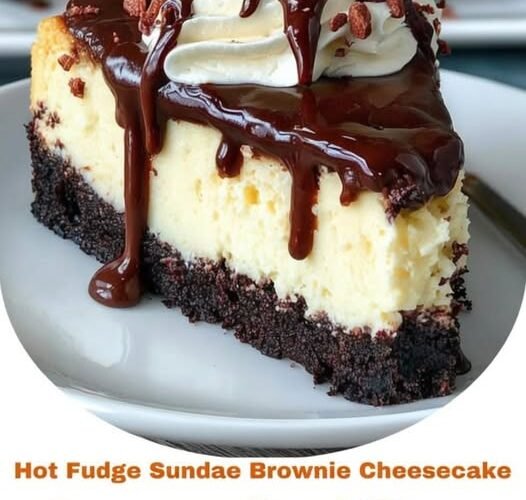
Brownie Cheesecake: The Fudgy, Creamy Showstopper With Hot Fudge Dripping Down the Sides
I made this brownie cheesecake for my sister's birthday last month, and she actually teared up when I carried it out. Not a polite "aw, thanks" — real tears, the kind that happen when someone is genuinely surprised. She said it looked like something from a fancy bakery case, and here is the honest truth she didn't know while she was crying: it's three things you already love stacked on top of each other. Fudgy brownie base, thick creamy cheesecake layer, whipped cream and hot fudge dripping down the sides. That's it. That's the whole illusion, and it works every single time. The reaction to this dessert is disproportionate to the effort involved, and I need you to know that before you start. A box of brownie mix handles the bottom. A five-ingredient cheesecake batter handles the middle. The top is decoration you assemble in the last five minutes before serving — whipped cream, warm fudge, a scatter of brownie bites or chocolate chunks. You are not tempering chocolate or making a mirror glaze. You are pressing a springform pan into service and letting a very ordinary oven do something that looks extraordinary, and nobody at the table will ever ask how hard it was. Nobody ever does. I watched four adults and two kids demolish half of it in about ten minutes. My brother-in-law came back with his fork three separate times claiming he was "just getting one more bite," which is the exact phrase people use when they've abandoned all pretense. The brownie layer stays dense and fudgy under the cheesecake, the cheesecake layer is creamy and barely sweet against the chocolate, and the hot fudge pushed over the top turns every slice into something with glossy, dripping edges. It's the kind of dessert that makes a birthday feel like an occasion even when it's just a Tuesday and the occasion is that you bought cream cheese. One honest note before the ingredients, because I'd rather you know going in: this is rich, and it is a celebration dessert. Roughly 530 calories a slice, about 40 grams of sugar, high in fat. That's what it's for. Cut it into twelve generous slices, or sixteen if you want it to stretch around a bigger crowd and feel slightly less like an event per bite. Either way, it earns its place at the birthday, the potluck, or the holiday table — and it costs about a dollar thirty a slice to look like you spent far more than you did. Let's make it.Why You'll Love This Brownie Cheesecake
- Three layers, one pan — brownie, cheesecake, and a five-minute fudge-and-cream finish that looks professional.
- The brownie base is a box mix. Nobody can tell, and you save an hour of measuring cocoa.
- Almost all the time is hands-off: 55 minutes in the oven, 4 hours (or overnight) in the fridge.
- Slices clean because you cut it cold with a hot knife — the technique does the work, not you.
- Roughly $15.50 for the whole thing — about $1.30 a slice for something that makes people teary-eyed.
- Makes 12 generous slices (or 16 smaller ones for a big crowd) and survives the potluck table just fine.
Why This Recipe Works
A brownie base and a cheesecake are two very different batters doing two very different things, and the reason they work stacked is that they set at different times. The brownie layer is dense, low-moisture, and mostly fat and sugar suspended in a little flour — it firms up early and stays put. The cheesecake layer above is a delicate egg-and-cream-cheese custard that sets on the late side. Because the brownie has already firmed by the time the cheesecake is still jiggling, the layers don't merge. You get a clean seam instead of a muddy swirl, and that seam is what makes the slice look like something with a recipe card behind it. The cheesecake layer itself is built on the standard ratio: cream cheese for body and tang, sugar for sweetness and tenderness, eggs for structure, and sour cream for a soft, slight tang that keeps the whole thing from tasting flat. Sour cream is doing quiet, important work here. It lowers the pH slightly and adds fat and moisture, both of which make the custard set more gently and taste richer, and it's the difference between a cheesecake layer that reads as "cream cheese frosting" and one that reads as "cheesecake." Beating the cream cheese until genuinely smooth before the eggs go in is what prevents lumps — once the eggs are in, the batter is a custard and any underestimated dry cream cheese stays as a surprise in the middle of a slice. Then there's the finishing move, which is pure illusion. Cold cheesecake plus warm hot fudge means the fudge stays glossy on top and turns into rivulets the moment you tilt it — the drips are the "fancy bakery" signal people's eyes respond to before they've tasted anything. Whipped cream under and around the fudge adds height and softness, and brownie bites give it texture and echo the base. It's assembling rather than baking, it takes five minutes, and it turns the same cake into a photo. That's why the sauce goes on right before serving and not a day ahead.Ingredient Breakdown
| Ingredient | What it does | Notes |
|---|---|---|
| 1 box brownie mix (18 oz) | The dense fudgy base layer | Use "fudgy" style, not "cakey." Or swap your favorite homemade batter. Most mixes contain wheat. |
| Eggs, oil, water (per box) | What the box calls for to make the batter | Make the batter exactly as the box directs — don't reduce the oil, that's the fudge. |
| 1/2 tsp espresso powder (optional) | Deepens the chocolate without tasting like coffee | You won't taste espresso. You'll taste "more chocolate." |
| 16 oz cream cheese, softened | The creamy middle layer's body and tang | Full-fat blocks, truly softened. Tub spread won't set the same. |
| 1/2 cup granulated sugar | Sweetens and tenderizes the cheesecake layer | Resist adding more — the brownie and fudge bring plenty. |
| 2 large eggs | Structure and set for the cheesecake layer | Room temperature eggs beat in smoother and crack less. |
| 1 tsp vanilla extract | Rounds out the tang of the cream cheese | No need to be precious about it. Imitation works. |
| 1/4 cup sour cream | Richness, slight tang, and a softer set | Don't skip. It's the ingredient that makes the layer read as cheesecake. |
| Whipped cream, hot fudge, brownie bites | The showstopper top | Add right before serving. Assemble = the whole finish. |
| Optional nuts, chips, cherry | Your signature on the top | Nuts add crunch, cherry adds gloss, chips add more chocolate. All welcome. |
Kitchen Equipment You Actually Need
- 9-inch springform pan — the release mechanism is what makes clean slices possible; this is the one piece worth owning.
- Parchment paper — for lining the bottom of the springform so the brownie layer lifts free.
- Stand mixer or hand mixer — beating 16 oz of cream cheese smooth by hand is genuinely hard work.
- Two bowls — one for the brownie batter, one for the cheesecake batter. Never share.
- Offset spatula or rubber spatula — for spreading the cheesecake batter without dragging the brownie up into it.
- Instant-read thermometer — the reliable way to know the center hit 160°F instead of guessing at a jiggle.
- Cooling rack — the cake needs to cool completely, in the pan, out of the oven's heat.
- Long, thin knife and hot water — for the clean-slice trick at the end. Non-negotiable for looks.
Step-by-Step Instructions
- Heat and prep the pan. Heat the oven to 325°F. Grease a 9-inch springform pan and line the bottom with parchment paper. Wrap the outside with foil if you plan a water bath.
- Mix the brownie batter. Prepare the brownie mix according to the package directions, adding the espresso powder if you're using it. Pour it into the prepared pan and spread it evenly. This is your base — no need to tamp or smooth past level.
- Beat the cheesecake base. In a separate bowl, beat the softened cream cheese and sugar until completely smooth and fluffy, about 2 minutes. Scrape the bowl down once so nothing dry stays at the bottom.
- Add the eggs one at a time. Beat in each egg fully before adding the next. Then mix in the vanilla and sour cream until just combined — stop right there. Overmixing whips in air, and air is what makes cheesecake crack.
- Pour over carefully. Gently pour the cheesecake batter over the brownie layer and spread it evenly with a spatula, light-handed, so you don't drag brownie batter up into the white. You want two distinct layers, not a marble.
- Bake 50–60 minutes. The cheesecake layer should be set at the edges with a slight wobble in the very center, and an instant-read thermometer inserted into the center should read at least 160°F. Start checking at 50 minutes; every oven differs.
- Cool slowly in the oven. Turn the oven off and crack the door. Leave the cake inside for 30 minutes — the gentle cooling is what prevents a cracked top. Then move it to the counter to cool completely.
- Chill at least 4 hours. Refrigerate, uncovered until fully cold then loosely covered, for at least 4 hours or overnight. Overnight is better in every way: flavor, texture, and sliceability.
- Finish and serve. Top with whipped cream, drizzle with warm hot fudge, and pile on the brownie bites or chocolate chunks. Run a knife around the edge, release the springform, and slice with a hot, clean knife.
One temperature matters: the cheesecake layer holds raw eggs, so it needs to reach 160°F at the center — a thermometer is the honest test, not the visual "slight jiggle" the recipe cues (those two things usually line up, but only one of them is a measurement). Cool-in-oven for 30 minutes is fine and won't hurt food safety. After it cools to room temperature, get it into the fridge within two hours, and keep it refrigerated thereafter.
Expert Tips
Everything room temperature. Cold cream cheese lumps, cold eggs shock the batter and encourage cracks, and cold sour cream breaks the emulsion. Set them out an hour before you start.
Stop mixing the moment it's combined. Air whipped into a cheesecake batter expands in the oven and then deflates as it cools, and that collapse is what opens cracks. Low speed, short time, done.
The slow oven cool is the crack insurance. Thirty minutes with the door cracked lets the custard come down in temperature gradually. If you pull it straight to the counter, the sudden change is the most common cause of a split top.
Chill overnight if you can. Four hours is the minimum for a clean set. Overnight is where the flavor deepens and the layers tighten into that bakery-slice texture. The wait is the recipe.
Don't decorate early. Whipped cream and hot fudge go on within thirty minutes of serving. Fudge applied the day before soaks in and the whipped cream weeps. Serve yourself the reveal.
The hot-knife trick. Dip a long thin knife in hot water, wipe it dry, and cut. Rinse and repeat between every single slice. Cold knives drag through both layers and smear them together.
Two passes per slice. Press the knife straight down to the bottom, lift out without sawing. If the slice resists, it needs more chill, not more force.
Common Mistakes
Overbaking for a firm center. The center should wobble slightly when it comes out — carryover heat finishes it. Pull at 160°F, not at "looks done," or you'll bake the edge dry and rubbery.
Cold cream cheese straight from the fridge. It beats into lumps no matter how long you run the mixer, and lumps bake into odd dense pockets. Soften it properly.
Overmixing after the eggs go in. This is the crack-maker. Once eggs are in, stir to combine and stop. Lumpy-looking batter that's actually smooth is the goal.
Pouring the cheesecake layer roughly. A hard pour or aggressive spreading drags brownie up into the white and you lose the clean two-layer look that makes it impressive.
Skipping the 30-minute oven rest. It feels optional. It is not. It's the single cheapest insurance against a cracked top.
Cutting it warm or half-chilled. A 2-hour chill gives you a soft, smeared slice. Four hours minimum, overnight for real.
Decorating the night before. The fudge and cream look best in the first half hour. Assemble the top just before the birthday song, not the evening before.
Not running a knife around the edge before releasing. The cheesecake sticks to the ring. A quick pass with a warm knife and it releases clean.
Ingredient Substitutions
| If you don't have… | Use… | Watch out for… |
|---|---|---|
| Box brownie mix | Your favorite homemade brownie recipe, enough for a 9-inch pan | Use a fudgy recipe, not cakey — the base needs to stay dense under the cheesecake. |
| Brownie mix (gluten-free) | Certified gluten-free brownie mix | The verified route to a gluten-free version. The cheesecake layer is naturally GF; check all labels. |
| Sour cream | Full-fat plain Greek yogurt | Very close swap. Slightly tangier and a touch leaner; the set is marginally firmer. |
| Cream cheese (16 oz) | Two 8-oz blocks — same thing | Don't substitute whipped tub cream cheese. It won't set and the layer turns to soup. |
| Whipped cream | Cool Whip-style topping or a homemade stabilized whipped cream | Homemade with a little gelatin or cornstarch holds its shape on a warm day far better. |
| Hot fudge sauce | Warm caramel, ganache, or chocolate syrup | Caramel is a great contrast; genuine ganache stays put better and looks glossier. |
| Mini brownie bites | Chocolate chunks, chopped candy, or crumbled leftover brownie | Anything chocolate works. Crunchy-topped candy is the most crowd-friendly. |
| 9-inch springform pan | A 9x13 baking dish (bars, not a round) | Cut the bake time to 35–45 minutes and check at 35. It's a different, easier format. |
Variations
- Turtle. Warm caramel instead of fudge, plus toasted pecans and a chocolate drizzle. This is the version that gets the loudest reaction at a fall gathering.
- Peanut butter. Fold 1/3 cup creamy peanut butter into the cheesecake batter and finish with melted peanut butter drizzled over the fudge. Rich beyond reason.
- Raspberry. A thin layer of seedless raspberry jam between the brownie and the cheesecake, plus fresh raspberries on top. The tartness cuts the richness beautifully.
- Cookies and cream. Fold crushed chocolate sandwich cookies into the cheesecake layer and pile a few on top of the whipped cream.
- Brownie cheesecake bars. Bake in a 9x13 as in the substitutions table — same idea, bar format, shorter bake, easier to transport. If you want the flatter, chill-and-slice version instead, there's a whole separate bar dessert pattern for that.
- Mini cheesecakes. Bake in a muffin tin lined with papers, 22–28 minutes, check at 22 for 160°F. More prep, more servings, and perfect for a shower tray.
- Mocha brownie cheesecake. Add 1 teaspoon espresso powder to the cheesecake layer in addition to the brownie layer. Coffee and chocolate, doubled.
Make It Healthier
I won't pretend this is a light dessert, because it isn't, and the numbers are in the panel below. What I'll give you are the levers that actually move the total without wrecking it. Cutting twelve slices into sixteen drops each serving to roughly 400 calories and 30 grams of sugar, and nobody at the table will complain about a slightly smaller piece of something this rich. That single change is the biggest honest win available. On the batter: reduced-fat cream cheese works in this layer without a texture problem — it's already carrying sour cream and eggs, so the difference is smaller than you'd expect. Using less whipped cream on top, or skipping it entirely in favor of a spoon of Greek yogurt whipped with a little vanilla, keeps the fudge-and-brownie look while trimming dairy fat and sugar. Cutting the hot fudge drizzle to two tablespoons per slice instead of a heavy pour saves real sugar, and the brownie layer can be made with the "less oil" version the box often offers without going dry. What I would not do is try to make this keto or sugar-free — the entire structure is brownie, sugar, and cream cheese, and swap-outs give you a different, worse dessert. This is the once-a-while showstopper, and it's honest about being exactly that.Meal Prep
This is a day-ahead dessert by design, which makes it one of the best things to bring to an event because the work is behind you before the event starts. Bake it the day before, cool it properly in the oven, and refrigerate overnight — the flavor and slicing improve, not just hold. The only thing you do the day of is release the springform and assemble the topping, which is five minutes while the coffee brews. If you're traveling with it, keep it in the springform pan (ring on) and pack the whipped cream, fudge, and brownie bites separately, in sealed containers, in a cooler. Assemble on site. That way the fudge doesn't soak in on the drive and the cream doesn't wilt in a warm car. Timing tip for a party: shut the fridge door on the fully chilled cake about twenty minutes before serving so it loses the deep-cold edge, then decorate and slice. Cold straight from the fridge is firmer than ideal in both texture and flavor.Storage
Store the undecorated cake, covered, in the refrigerator for 4 to 5 days. Keep it in its pan, or on a plate covered with a large inverted bowl so nothing presses on the top. The brownie layer actually improves on day two and three — it tightens and the flavors marry. Press plastic wrap against cut surfaces to keep slices from drying, and if the cake is partly eaten, slide a piece of parchment over the exposed cut. Once you've added whipped cream and hot fudge, the clock shortens: eat it within a day or two, and know that the leftovers will be softer. The fudge will have set into a firm layer and the cream will have relaxed — still delicious, just a different bite. And keep it refrigerated the whole time, without exception. This is a cheesecake, and it's a raw-egg custard that needs cold the moment it's cooled.Freezing
Yes, with one rule: freeze it undecorated. Cheesecake freezes beautifully, and so does the brownie base under it — slice the cake first, wrap each slice tightly in plastic then foil, and freeze up to 2 months. Individual slices thaw overnight in the fridge (or about 30 minutes on the counter for a faster rescue) and come out nearly as good as fresh. That's a genuinely great way to keep dessert on standby. What does not freeze well is the top: whipped cream separates and weeps, and hot fudge loses its gloss and turns grainy after a thaw. So freeze the cake naked, and whip and drizzle fresh when you're ready to serve. If you must freeze a fully decorated slice, expect the topping to be a compromise — the cake under it will still be excellent, which is the important part. Don't freeze the finished, assembled showpiece if you care about how it looks when it hits the table.Reheating
There's nothing to reheat here, and that's the point — cheesecake is served cold. Take a slice from the fridge and give it five to ten minutes on the counter before eating; the flavor opens up as it loses the fridge chill, and the texture gets creamier. That's the closest thing to a "reheating" instruction this dessert has. If you genuinely want it warm, a 10-second pass in the microwave will soften the brownie base and loosen the fudge, which some people love and some people find odd. I'd only do that to a naked slice, not a decorated one, because warm whipped cream is a mistake. And if you're serving to a crowd straight from the fridge and someone complains it's too cold, hand them a hot cup of coffee alongside — the contrast is arguably the best version of this dessert anyway.What to Serve With It
Honestly, this dessert needs very little next to it — the danger is overloading the plate. A few fresh raspberries or sliced strawberries provide a tart counterpoint that resets your palate between rich bites, and they make the thin edge of the slice look even prettier. A small scoop of vanilla ice cream on the side is the classic pairing and, on a warm slice, it melts into the fudge and becomes a sauce of its own. Beyond that, keep it simple: strong coffee, cold milk, or a tiny glass of something sweet is all it wants. If you're building a full dessert table for a birthday or holiday, put this as the centerpiece and keep the supporting cast light — fresh fruit, a plate of cookies, something tart or citrusy. Don't flank it with two other heavy cakes, because nothing else gets eaten. And if the party is a potluck where you're not the only dessert, cut it into sixteen instead of twelve. It still reads as the star of the table, and the smaller slice travels better on a crowded plate that also has a cookie on it.Beverage Pairings
For adults, coffee is the pairing that beats everything else — the bitterness slices through the cream cheese and fudge and resets you for the next bite. Espresso for a smaller glass and a bigger reset. If you're pouring wine, a ruby port is the textbook match for chocolate and cream, and a glass of bourbon or an aged rum neat works beautifully for the same reason. A small pour of milk for the kids — and, let's be honest, for the grown-ups at the holiday table who know it's the right call. What to avoid: heavily oaked whites or light crisp wines, which get flattened by the chocolate. Skip the dry sparkling, too — save it for a fresh-fruit dessert. Coffee, port, bourbon, milk. That's the short and correct list. If you're serving hot chocolate alongside, you've made a dessert that needs a nap afterward, and honestly, that might be exactly the birthday energy you're going for.Frequently Asked Questions
How do I know when the brownie cheesecake is done?
An instant-read thermometer inserted into the center of the cheesecake layer should read at least 160°F, and the edges should be set while the very center still wobbles slightly. Start checking at 50 minutes; most ovens land somewhere between 50 and 60. Trust the temperature over the wobble — that's the measurement that matters with a raw-egg custard, and pulling too early or too late both hurt the texture.Why did my cheesecake crack on top?
Three usual causes, in order of likelihood: overmixing whipped air into the batter, which expands and then collapses; cooling too fast, which is why the 30-minute cracked-door oven rest exists; and overbaking past the point the custard sets. Fix any of them and you'll likely fix the cracks. And if it does crack — cover it with whipped cream. This dessert comes with its own repair kit.Do I need a water bath for this recipe?
No. The slow oven cool and the dense brownie base underneath do the stabilizing work instead. A water bath gives the smoothest, most crack-free top possible, so if you want to use one, wrap the springform in two layers of heavy foil and set it in a roasting pan with an inch of hot water. But it's genuinely optional here, and the recipe is designed to work without it.Can I use a homemade brownie recipe instead of a box mix?
Yes — make enough of your favorite fudgy brownie batter to fill the bottom of a 9-inch springform pan, roughly a 9x9 or 8x8 batch worth, and proceed as written. Choose a fudgy recipe over a cakey one; the base needs to stay dense enough to hold up under the cheesecake layer. Homemade also means you can control the sugar, though I'd keep the base fully sweet since it's competing with a tart cheesecake layer.Can I make this brownie cheesecake ahead of time?
Absolutely, and it's the best way to do it. Bake it the day before, cool it in the oven, then refrigerate overnight. The flavor deepens and the layers tighten, making it much easier to slice cleanly. Add the whipped cream, hot fudge, and toppings within about half an hour of serving — those are the only parts that don't hold. Day-of work is then just the release and the reveal.How do I get clean slices?
Chill it thoroughly — overnight ideally — then use a long, thin knife dipped in hot water and wiped dry. Cut straight down with one steady press, then lift the knife out without sawing. Wipe and re-dip the knife between every single slice. The cold cake plus the hot knife is the entire secret; if a slice drags, the cake isn't cold enough yet, not that your knife is wrong.Can I freeze brownie cheesecake?
Yes, but freeze it undecorated. Slice, wrap each piece tightly in plastic and then foil, and freeze up to 2 months. Thaw overnight in the refrigerator. The brownie and cheesecake layers come back almost perfectly. Do not freeze the whipped cream and hot fudge topping — both break down and weep on thawing. Freeze the cake, decorate fresh.Can I make this in a 9x13 pan instead of a springform?
Yes — it becomes brownie cheesecake bars, which is a different, easier format. Bake at the same 325°F but check much earlier, around 35–45 minutes, and confirm 160°F in the center. Chill fully, then lift the whole slab out with the parchment overhang and cut squares with a hot knife. You lose the round shape and the drip, but you gain easy transport and even more servings.Nutrition Facts (Estimated)
| Per slice (1 of 12, fully decorated) | Amount |
|---|---|
| Calories | ~530 |
| Total Fat | ~33 g |
| Saturated Fat | ~20 g |
| Carbohydrates | ~45 g |
| Sugars | ~40 g |
| Protein | ~7 g |
| Sodium | ~300 mg |
Final Thoughts
My sister cried over a dessert made from a box of brownie mix, five minutes of cheesecake batter, and a jar of hot fudge, and I have thought about that a lot. This brownie cheesecake doesn't ask for technical skill. It asks for a springform pan, a slow oven cool, and the patience to refrigerate it overnight. Everything that makes it look like a bakery window is in the last five minutes: the whipped cream, the warm fudge leaning over the edges, the scatter of brownie bites catching the light. Three things you already love, stacked. That's the entire trick, and the reaction is always worth more than the effort. On the fudge question — heavy or balanced — my honest answer is that it depends on the crowd. For a birthday reveal with six people leaning in, go heavy: pour it warm, let it drip, and hand out forks before the fudge stops running. For a potluck where the plate is already crowded, drizzle lighter and let the layers do the talking. Either way, cut it cold, cut it with a hot knife, and don't decorate it until the moment it matters. Make it for the next birthday, the next potluck, or the next Tuesday that needs something unforgettable. Then watch the forks come back for one more bite.Brownie Cheesecake
Fudgy brownie base, creamy cheesecake layer, whipped cream and hot fudge dripping down the sidesIngredients
- Brownie Base
- Cheesecake Layer
- Topping
Directions
- Heat oven to 325°F. Grease a 9-inch springform pan and line the bottom with parchment paper.
- Prepare the brownie batter per package directions (add espresso powder if using). Pour into the pan and spread evenly.
- Beat the softened cream cheese and sugar until smooth and fluffy, about 2 minutes.
- Add the eggs one at a time, beating after each. Mix in the vanilla and sour cream until just combined — do not overmix.
- Gently pour the cheesecake batter over the brownie layer and spread evenly, careful not to mix the layers.
- Bake 50–60 minutes, until set at the edges with a slight center wobble and 160°F in the center.
- Turn off the oven, crack the door, and let it cool inside 30 minutes. Then cool completely on the counter.
- Refrigerate at least 4 hours, or overnight.
- Top with whipped cream, drizzle with warm hot fudge, and pile on brownie bites. Run a knife around the edge, release the springform, and slice with a hot, clean knife.
Cost: about $15.50 per cake — roughly $1.30 per slice at 12 slices ($0.97 at 16).
Tip: pull the cheesecake layer at 160°F in the center, not at "looks done" — carryover heat finishes it.
Tip: cool 30 minutes in the oven with the door cracked. It's the cheapest insurance against a cracked top.
Tip: decorate within 30 minutes of serving — fudge and whipped cream both suffer overnight.
Gluten-free: not as written. Use a certified GF brownie mix — the cheesecake layer is naturally gluten-free.
Nutrition (estimated per slice)
530Calories
7 gProtein
33 gFat
45 gCarbs
40 gSugar
300 mgSodium
Estimates only — not medical or dietary advice. Values vary by brownie mix, topping amounts, and slice size. This is a rich celebration dessert: ~530 cal and ~40 g sugar per 12-slice piece.