
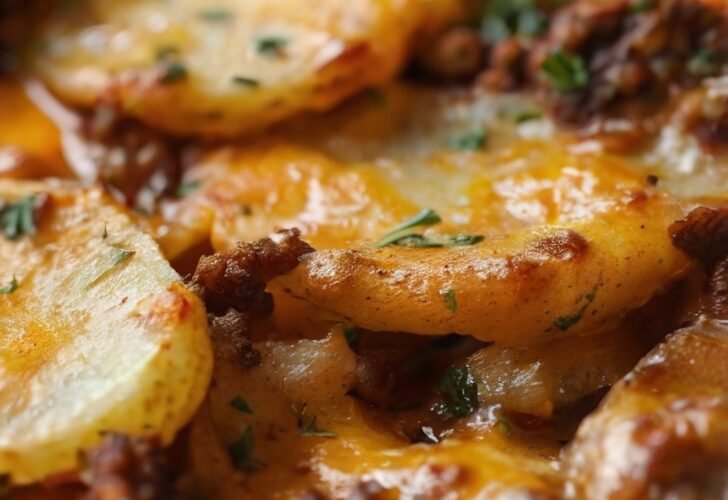
Hamburger Potato Casserole: The Cheesy, Hearty Family Dinner That Feels Like Home
Hamburger potato casserole is the weeknight dinner I make when the grocery budget is tight and the table is full. Ground beef, thinly sliced potatoes, onion, cheddar, and a can of cream of mushroom soup thinned with milk — layered in a 9x13, covered, baked until the potatoes go fork-tender, then finished with a final blanket of cheese that melts into a golden crust. It is not fancy. It was never trying to be. It is the kind of honest, filling, taste-like-home food that has kept families fed through every kind of week, and it costs about thirteen dollars and seventy-five cents to make six generous servings. What I love about this dish is how the layers build something better than their parts. The seasoned beef goes down first, then potatoes, then cheese, then the whole thing repeats. When the soup-and-milk mixture is poured over the top, it seeps down through the layers during the covered bake, seasoning every potato slice and turning into a creamy sauce that pulls the whole casserole into one cohesive, spoonable thing. The potatoes cook in beef drippings and cream of mushroom — that's the entire magic. They come out soft but not mushy, deeply savory, and tasting like they were made with far more effort than slicing potatoes and opening a can. And it's forgiving in the way real family cooking has to be. Toss in frozen peas or corn and nobody complains. Swap the cheddar for Gruyère and mozzarella and it becomes a different, slightly fancier casserole from the same method. The leftovers genuinely improve overnight as everything melds, which means making it on Sunday for Monday is a strategy, not a compromise. It also freezes beautifully, which is the difference between a dinner recipe and a dinner plan, and at two dollars and thirty cents a plate I can afford to double it and stash one away for a night I refuse to cook. One honest note before we start, because I'd rather you know going in than find it at the bottom of the page: canned cream of mushroom soup and two cups of cheddar put this around 700 mg of sodium per serving, and the panel below says so plainly. Using low-sodium soup and cutting the cheese back a little drops it substantially. This is a hearty, budget-friendly casserole built on 28 grams of protein a serving — comfort food doing exactly its job. Let's make it.Why You'll Love This Hamburger Potato Casserole
- Six hearty servings for about $13.75 — roughly $2.30 a plate for a beef dinner.
- One skillet and one 9x13. The layering is simple and the covered bake does the work.
- Thinly sliced potatoes soak up beef drippings and cream of mushroom, so every bite is seasoned all the way through.
- The two-layer build with a final cheese top gives you a molten, golden finish without any special technique.
- It's a genuinely flexible recipe — add vegetables, swap the cheese, change the soup, and it still works.
- Leftovers are better on day two, and the whole casserole freezes well for future dinners.
Why This Recipe Works
The central problem of any potato casserole is cooking the potato through without drying out the meat or burning the top. This recipe solves it with a covered first bake. Foil traps steam from the soup and milk, and that moist, gentle heat is what lets raw potato slices turn tender in an hour — the same principle as a braise. The liquid seeps down between the layers because you pour it over the top of finished layers, and gravity plus the gaps between potato slices does the rest. That's why the recipe asks you to pour slowly and let it "seep down," not just glug it on: even distribution is what makes every slice cook at the same rate. Why layer twice instead of mixing? Because layering keeps the potato slices in flat planes rather than a chaotic pile, which means the heat penetrates evenly and the slices don't pile into cold pockets. Two thinner layers of beef and potato cook faster and more uniformly than one thick one. And putting cheese in the middle layer and again on top does real work too: the middle cheese melts into the sauce, thickening it and adding richness between the layers, while the top cheese becomes the bubbly, browned crust that makes the dish look like something you spent all afternoon on. Then there's the final uncovered stretch. It evaporates excess surface moisture, lets the top cheese brown, and concentrates the sauce down from watery to creamy. If you skip it, you get a casserole that tastes good but runs on the plate. Twenty to thirty minutes uncovered is where the texture is finished, and you should judge doneness by the potato, not the clock — a fork should slide into the thickest slice with no resistance at all. That's the one test this entire recipe really hinges on.Ingredient Breakdown
| Ingredient | What it does | Notes |
|---|---|---|
| 1 1/2 lb ground beef | The savory base and the fat that bastes the potatoes | 80/20 is ideal here — the rendered fat seasons the potatoes below. 90/10 works, slightly less rich. |
| 4 large russet potatoes, thinly sliced | The hearty bulk and the starch that thickens the sauce | Slice about 1/8 inch. Russets hold up best; they're starchy and soften perfectly. |
| 1 medium onion, chopped | Sweetness and depth in the beef layer | Yellow or white. Cook until soft, not browned, so it doesn't turn bitter in the bake. |
| 2 cups shredded cheddar cheese | One cup inside for creaminess, one cup on top for the crust | Sharp cheddar for flavor that survives the bake. Freshly grated melts better. |
| 1 can (10.75 oz) cream of mushroom soup | The creamy sauce base that ties the layers together | Condensed, not ready-to-serve. Most contain wheat — see the GF note. |
| 3/4 cup milk | Thins the soup into a pourable sauce that steams the potatoes | Whole milk for richness. 2% works; skim makes it a little thin. |
| 1 tsp garlic powder + 1 tsp paprika | Seasoning that reads deeper than salt alone | Paprika also adds a warm color to the beef layer. |
| 2 tbsp olive oil | For greasing the dish and browning the beef | Any neutral oil works. Don't skip greasing even with a fatty beef. |
| Salt, pepper, fresh parsley | To taste, and a fresh green finish on top | Salt gently — the soup and cheese carry a lot already. |
Kitchen Equipment You Actually Need
- 12-inch skillet — for browning 1 1/2 pounds of beef with the onion without crowding it.
- 9x13-inch baking dish — the pan this recipe is built around; a deep 2.5-quart casserole works too.
- Aluminum foil — the covered first bake is what steams the potatoes tender.
- Sharp knife or a mandoline — thin, even potato slices are the single most important variable here.
- Small bowl and whisk — for combining the soup and milk until smooth.
- Instant-read thermometer — to confirm the beef mixture hits 160°F and there's no pink.
- Fork — the real doneness test for the potatoes. Simple and reliable.
Step-by-Step Instructions
- Heat and grease. Preheat the oven to 350°F and lightly grease a 9x13-inch baking dish with a bit of the olive oil.
- Brown the beef and onion. In a large skillet over medium heat, brown the ground beef with the chopped onion until the beef is no longer pink and the onions are soft. Drain the excess fat.
- Season the meat. Stir in the salt, pepper, garlic powder, and paprika, then spread half of the mixture evenly across the bottom of the prepared dish.
- Layer the potatoes and cheese. Arrange half the potato slices over the beef, then sprinkle on one cup of the cheddar. Repeat with the remaining beef, then the remaining potatoes.
- Whisk and pour the sauce. Whisk the condensed soup and milk together until smooth, then pour it evenly over the casserole, letting it seep down between the potato layers. You can tilt the dish gently to help it settle.
- Cover and bake 1 hour. Seal the dish with foil and bake at 350°F for 1 hour.
- Uncover, top, and bake 20–30 more minutes. Remove the foil, sprinkle the remaining cheese over the top, and bake uncovered until the cheese is bubbly and the potatoes are tender all the way through.
- Rest and serve. Let the casserole stand 10 minutes so the sauce sets, then garnish with fresh parsley and serve.
Doneness and leftovers, stated plainly. The beef must reach 160°F — since it's browned fully before baking, the real risk here is undercooked potatoes, so slice them thin and bake until a fork slides through the thickest slice with zero resistance. Then cool leftovers within two hours, refrigerate in an airtight container, and use within 3 to 4 days. Reheat covered so the casserole doesn't dry out.
Expert Tips
Slice the potatoes thin and even. One-eighth inch is the target. Uneven slices mean some potatoes are mush while others are still crunchy, and that's the most common complaint about this casserole. A mandoline makes it fast and consistent.
Don't skip the drain. Grease from the beef will make the whole dish oily if it stays in. Drain the skillet, but leave a thin film of fat on the potatoes' behalf — that's what seasons them.
Pour the sauce slowly. Pour it in a spiral over the top and give it a moment to seep down before adding more. You want it distributed through the layers, not pooled on the surface.
Keep the foil seal tight for the first hour. The potatoes need trapped steam to cook through. A loose cover means the bake is uneven and the edges dry out.
Judge doneness by the potato, not the timer. Oven temperatures vary and potato thickness varies more. A fork through the thickest slice is the honest test; add 10 minutes covered if it resists.
Rest the full 10 minutes. The sauce thickens as it sits and the layers firm up, so slices and scoops hold together instead of running. It also cools the center from molten to edible.
For extra crunch, add buttered breadcrumbs. Scatter a cup over the top with the final cheese and broil the last 2 minutes. It's a small change that makes the dish look and eat like a gratin.
Common Mistakes
Thick or uneven potato slices. The number one reason this casserole disappoints. Thin, consistent 1/8-inch slices are non-negotiable; a thick slice will stay firm no matter how long you bake.
Not draining the beef fat. Skip it and the casserole turns greasy and heavy. Drain, then let the reserved film on the potatoes do the flavor work.
Using less liquid than called for. The soup plus milk is what steams the potatoes. Skimping because it looks like a lot means firm potatoes at the end. Use the full 3/4 cup.
Skipping the covered hour. Going straight to uncovered baking dries the top and leaves the potatoes undercooked. The two-stage bake is the method, not a suggestion.
Piling on more cheese than the recipe calls for. More cheese sounds better but traps moisture and can leave an oily top layer. One cup inside, one cup on top is balanced.
Salting heavily before tasting the soup. Cream of mushroom and cheddar are already salty. Season the beef modestly and adjust at the table.
Serving immediately from the oven. It's lava-hot and the layers slide apart. The 10-minute rest is what turns it into clean, cohesive servings.
Cutting it cold the next day without reheating. The sauce sets to a firm solid in the fridge. Reheat covered with a splash of milk or water to bring it back to spoonable.
Ingredient Substitutions
| If you don't have… | Use… | Watch out for… |
|---|---|---|
| Cream of mushroom soup | Cream of celery, cream of chicken, or golden mushroom | Golden mushroom deepens the beef flavor; cream of celery is the mildest swap. All contain wheat typically. |
| Cream of mushroom soup (gluten-free) | GF-labeled condensed soup, or a homemade béchamel with cornstarch | Standard condensed cream soups usually contain wheat flour. That swap is the only basis for a GF version. |
| Russet potatoes | Yukon Gold (creamier) or red potatoes (firmer) | Yukon Golds may need 5–10 fewer minutes; red potatoes hold their shape a bit more. |
| Fresh sliced potatoes | Frozen hash browns or sliced frozen potatoes, thawed | Much faster and very forgiving — this is the shortcut version. Drain well before layering. |
| Cheddar | Gruyère, mozzarella, Colby, or a blend | Gruyère and mozzarella together is the "fancy" upgrade. Gruyère alone can be salty — taste first. |
| Ground beef | Ground turkey, or a half-beef half-turkey mix | Turkey is leaner and dries out — use 85/15 and check for 165°F on poultry. |
| Milk | Evaporated milk, half-and-half, or unsweetened oat milk | Half-and-half is richer; oat milk works for dairy-free but is less creamy. |
| Olive oil for greasing | Butter or cooking spray | Butter adds a little flavor to the bottom layer. Spray is fastest. |
Variations
- Veggie-loaded. Add a cup of frozen peas or corn to the beef layer, or a layer of sliced carrots. No changes to the bake — the vegetables cook through under the foil.
- Buttery crumb topping. A cup of breadcrumbs tossed with 2 tablespoons melted butter, scattered with the final cheese and broiled 2 minutes. Crunchy gratin territory.
- Cheesy-Gruyère twist. Swap the cheddar for a Gruyère-mozzarella blend. Deeper, nuttier, and it browns beautifully on top.
- Taco version. Season the beef with taco seasoning and add a drained can of diced tomatoes and green chiles; top with cheddar and a dollop of sour cream at serving.
- Beef and green bean casserole. Layer a can of green beans (drained) over the second potato layer and top with crispy fried onions before the final cheese.
- Breakfast-for-dinner hash brown version. Swap the sliced potatoes for thawed frozen hash browns and add bell peppers. Bake time drops to about 50 minutes covered, 15 uncovered.
Make It Healthier
The levers here are real and they add up. Switching to 90/10 ground beef cuts fat without hurting the casserole, since the soup and milk already provide the moisture that fat usually supplies. Low-sodium cream of mushroom soup plus cutting the cheese from two cups to one and a half is the single biggest sodium reduction available, and you keep plenty of melt for the top. Using a half-beef, half-turkey mix gets you leaner still, and adding a bag of frozen mixed vegetables to the beef layer adds fiber, bulk, and color for almost no cost or effort. Portion-wise, this is a filling dish at roughly 580 calories a serving, so the honest question is whether a sixth of the pan is the right plate for you or whether a smaller square with a salad is. Serving it over a bed of greens instead of with bread on the side is an easy way to keep the meal from becoming all starch. What I won't do is pretend cheddar and canned soup make a light recipe — they don't, and this is meant to be the hearty, affordable family dinner it has always been. The protein is a genuine 28 grams per serving. It's real food that fills people up, and that's worth something on a Wednesday.Meal Prep
This is an excellent make-ahead casserole, and there are two ways to do it. The first: fully assemble the dish with the raw potatoes, pour the sauce over, cover, and refrigerate up to 24 hours before baking — add about 10 minutes to the covered bake since it starts cold from the fridge. That's the version I use when I want to walk in from work and just slide a pan into the oven. The second: brown and season the beef the night before, refrigerate, and slice the potatoes into cold water (which keeps them from browning) so assembly takes fifteen minutes the next day. If you're doubling for a freezer session, assemble the whole casserole in a freezer-safe dish, wrap it tightly, and freeze unbaked — that's the better route than baking first and freezing, since raw potatoes hold up better than cooked ones. If you're batch-cooking for the week, the fully baked casserole portions out cleanly into containers with the sauce spooned over, and it reheats without complaint. The one thing I'd keep fresh: the parsley garnish, which is there for looks and a fresh bite more than anything else.Storage
Cool leftovers within two hours, then store in an airtight container in the refrigerator for 3 to 4 days. Keep the servings in their sauce rather than draining it — the creamy layer is what keeps the potatoes and beef from drying out as they sit. This is one of the rare dishes that genuinely improves overnight, because the seasoned soup continues soaking into the potato slices and the flavors meld into something rounder than they taste on night one. I usually plan for making this on Sunday specifically so I can have it Monday. The sauce will firm up in the fridge to almost a solid, which is normal. Stir a splash of milk or water in when you reheat and it returns to a spoonable gravy. Keep the casserole covered when storing, since exposed potato edges discolor and dry within a day. And once it's been through one reheat, it's worth finishing — a twice-reheated potato casserole is noticeably softer than one fresh from the oven, so get to it within a couple of days for the best texture.Freezing
Hamburger potato casserole freezes very well, which is one of its best qualities. Cool completely, portion into freezer containers with the sauce, and freeze up to 3 months. Thaw overnight in the refrigerator, then reheat covered at 350°F for 25–30 minutes with a splash of milk or water to loosen the sauce. Individual portions reheat in the microwave in about 2 minutes covered. The potatoes do soften a touch in freezing, so expect a slightly more tender result, but the flavor is right there. The best way to freeze this, though, is unbaked. Assemble the full casserole in a foil-lined freezer dish, wrap it tightly in two layers, and freeze up to 3 months — then bake from frozen, adding about 25–30 minutes to the covered stage and checking the potato tenderness by fork before uncovering. That approach keeps the potato texture closest to fresh. Either way, this is a recipe that rewards making two: one for tonight, one for the night you can't face cooking.Reheating
The oven is best for a full casserole: cover with foil and warm at 350°F for 25–30 minutes from the refrigerator, adding a splash of milk or water before it goes in so the sauce comes back to life. Remove the foil for the last 5 minutes if you want the cheese to bubble again. The cover is the important part — this casserole dries out fast when exposed to dry heat, and the milk is what keeps it spoonable. For a single serving, the microwave is fast and perfectly acceptable: cover the portion with a splash of milk, microwave 90 seconds, stir the sauce through, then another 30–60 seconds until hot. The stovetop also works if you reheat it in a covered skillet over medium-low, which gives you a little browning on the bottom layer as a bonus. What you should avoid is blasting it uncovered at high heat — the potatoes toughen at the edges and the sauce reduces to a greasy film. Gentle and covered, every time.What to Serve With Them
The casserole is the whole meal, so the sides are about balance and freshness. A crisp green salad with a sharp vinaigrette is the classic pairing and the right one — the acidity cuts the richness of the beef and cheese and keeps the plate from feeling heavy. Steamed or roasted colorful vegetables do the same with more substance: green beans with lemon, roasted broccoli, or a mixed medley all sit naturally next to it. Warm crusty bread or dinner rolls are the table's unofficial sauce sponge, and while they're optional, nobody in my house treats them that way. If you're stretching the meal for a bigger group, the salad-plus-bread formula is how this casserole feeds eight instead of six: bigger salads, more bread, and slightly smaller squares. That's the budget-dinner move, and it's exactly how this kind of heartland cooking has always worked. On a holiday table or a potluck spread, it holds its own next to other baked casseroles, and it travels well in the pan it was baked in, which makes it one of the easier things to bring.Beverage Pairings
Cold sweet tea is the natural pairing here, and I don't consider that a cop-out — the tannin and lemon cut the creamy sauce in a way a plain water can't. Cold milk is the other honest answer, especially alongside a cheesy, potatoey casserole, and there's a reason that combination has survived generations. For beer, a crisp lager or a simple amber ale works; the carbonation scrubs the palate and the malt matches the beef. If you're pouring wine on a Sunday, a medium-bodied red like a Zinfandel or a Syrah stands up to the cheddar and paprika without getting lost. What to avoid: delicate whites and anything very tannic, both of which get buried under cheese and beef. Non-alcoholic options that work: sparkling water with lime, unsweetened iced tea, or a lemonade if you want the acid kick. Kids will want milk and should get it. There's nothing refined happening at this dinner, and that's the charm — the right drink here is whatever cold thing is in the fridge and a second helping on the plate.Frequently Asked Questions
Why are my potatoes still firm after baking?
Three likely reasons: the slices were too thick, the covered bake wasn't sealed tightly enough to trap steam, or the potatoes needed more time. Slice to about 1/8 inch, press that foil down around the rim, and test with a fork through the thickest slice at the 1-hour mark. If it resists, add a splash of milk, re-cover, and bake another 10–15 minutes. Ovens and potato sizes vary enough that the timer is a guideline, not a guarantee.Can I use frozen hash browns instead of sliced potatoes?
Yes, and it's a great shortcut — thaw them fully and drain well before layering, or the excess water thins the sauce. Bake time drops noticeably, usually to about 50 minutes covered and 15–20 uncovered. The texture is more casserole-uniform and less like distinct potato slices, but the flavor is right there. This is the version I make when I'm short on time and the mandoline isn't happening.Can I make this casserole ahead of time?
Absolutely, and it's one of the best ways to use it. Fully assemble with raw potatoes and sauce, cover, and refrigerate up to 24 hours, then add about 10 minutes to the covered bake. Or brown and season the beef the night before and slice potatoes into cold water so assembly takes fifteen minutes the next day. Either approach works without any loss of quality, which makes this a genuinely practical weeknight recipe rather than a weekend project.Can I freeze hamburger potato casserole?
Yes, up to 3 months. Bake it first, cool it completely, portion with the sauce, and freeze in airtight containers; thaw overnight in the fridge and reheat covered with a splash of milk. Even better, assemble it unbaked and freeze it that way — raw potatoes hold up best, and baking from frozen just adds about 25–30 minutes to the covered stage. Freeze in the dish you plan to bake it in so you can go straight from freezer to oven.Is hamburger potato casserole gluten-free?
Not as written. Condensed cream of mushroom soup typically contains wheat flour as a thickener, which makes the standard version a gluten-containing dish. To make it gluten-free, use a gluten-free-labeled condensed soup or build your own sauce with cornstarch in place of the canned soup, and that swap is the only basis for calling it gluten-free. The beef, potatoes, cheese, milk, and spices are all naturally gluten-free — check labels to be sure.Can I use a different soup or cheese?
Yes to both. Cream of celery, cream of chicken, and golden mushroom soup all work — golden mushroom gives the deepest beefy flavor, cream of celery the mildest. For cheese, cheddar is the classic, but Gruyère and mozzarella together make a nuttier, more elegant version, and Colby is a good all-purpose swap. Just watch the salt: Gruyère and some cream soups are saltier than the standard combo, so taste the beef mixture before adding much salt.How do I know when the casserole is done?
The potato is the test. A fork should slide through the thickest slice with no resistance whatsoever, and the cheese on top should be bubbling and lightly browned. Since the beef is cooked through before it goes in the oven, the potato is what determines doneness. If the top browns before the potatoes are tender, cover it again with foil and keep going — protecting the top while the potatoes finish is exactly what the foil is for.What's the best way to reheat the leftovers?
Covered, with a splash of milk or water. In the oven at 350°F for 25–30 minutes for a larger portion, or about 2 minutes covered in the microwave for a single serving. The dairy in the sauce sets firm in the fridge, so the splash of liquid is what turns it back into a spoonable gravy. Uncovered high heat is the one method to avoid — it dries the potato edges and leaves the sauce greasy. Reheated gently, the leftovers are arguably better than day one.Nutrition Facts (Estimated)
| Per serving (1/6 of casserole) | Amount |
|---|---|
| Calories | ~580 |
| Total Fat | ~36 g |
| Saturated Fat | ~18 g |
| Carbohydrates | ~29 g |
| Sugars | ~5 g |
| Protein | ~28 g |
| Sodium | ~700 mg |
Final Thoughts
Hamburger potato casserole is what I reach for when I want the table fed, the budget respected, and the whole house to smell like dinner. Ground beef and onion browned and seasoned, thin potato slices, two layers of cheese, and a can of cream of mushroom soup thinned with milk poured over the top to seep into every slice. Cover it, bake it, uncover it, blanket it in cheese, and let it go golden. Fork-tender potatoes, a creamy seasoned sauce, and a cheesy top — six servings for about two dollars and thirty cents a plate. Make a double batch and freeze one unbaked — that's the real payoff of a casserole this forgiving. Add the peas or corn if you want vegetables built in, swap the cheddar for Gruyère if you're feeling fancy, and don't rush the ten-minute rest at the end, because that's what turns it into clean, spoonable servings instead of a slide. Then put it on the table with a sharp green salad and some bread, and watch it disappear. And one honest heads-up from me: this is the fourth ground-beef casserole in the collection, so the next time you send one my way, I'm going to ask you to pick a different protein — chicken, pork, or shrimp — so your category pages don't start competing with each other.Hamburger Potato Casserole
Layered beef, thin potatoes, cheddar, and creamy mushroom sauce — baked goldenIngredients
Directions
- Preheat oven to 350°F and lightly grease a 9x13-inch baking dish with olive oil.
- Brown the ground beef with the chopped onion in a large skillet over medium heat until no longer pink and the onions are soft. Drain the excess fat.
- Season with salt, pepper, garlic powder, and paprika. Spread half the beef mixture over the bottom of the dish.
- Layer half the potato slices over the beef, then sprinkle with 1 cup of cheddar. Repeat with the remaining beef and potatoes.
- Whisk the condensed soup and milk until smooth, then pour over the casserole so it seeps down between the layers.
- Cover with foil and bake 1 hour. Remove the foil, sprinkle the remaining cheese on top, and bake uncovered 20–30 minutes until bubbly and the potatoes are tender.
- Let stand 10 minutes, garnish with parsley, and serve.
Cost: about $13.75 per casserole — roughly $2.30 per serving.
Tip: slice the potatoes about 1/8 inch thick and even — uneven slices are why some stay firm.
Tip: judge doneness by the potato, not the timer. A fork should slide through the thickest slice with no resistance.
Sodium: about 700 mg per serving, mostly from the soup and cheese. Low-sodium soup plus 1 1/2 cups cheese cuts it.
Gluten-free: not as written. Use GF-labeled condensed soup — the standard cans contain wheat flour.
Nutrition (estimated per serving)
580Calories
28 gProtein
36 gFat
29 gCarbs
5 gSugar
700 mgSodium
Estimates only — not medical or dietary advice. Values vary by brand and beef leanness. Swap to low-sodium soup and less cheese to reduce sodium.