
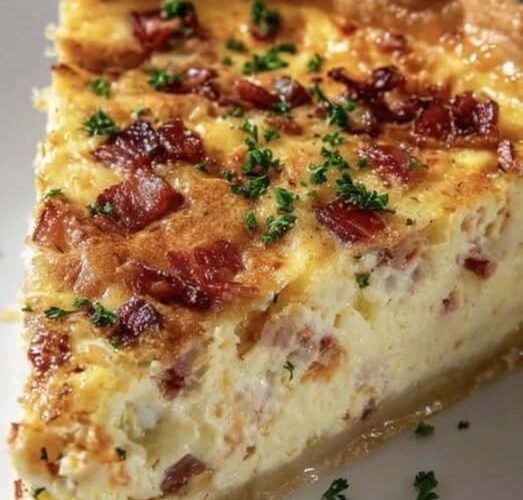
Bacon and Cheese Quiche: The Fancy-Feeling Brunch Dish That's Actually Foolproof
This bacon and cheese quiche is the recipe I make on the kind of Sunday morning when everyone is still half-asleep and I want the kitchen to do the waking up for me. Six eggs, a cup of cream, a pile of shredded cheese, and a handful of crispy crumbled bacon go into a pie crust, and forty minutes later you pull out something that looks like it came from a brunch restaurant. The filling sets soft and velvety, the crust goes golden and flaky, and the bacon scattered across the top gives it just the right salty crunch. It smells so good that my family has, on more than one occasion, come downstairs before anyone was really awake. What I love about quiche is that it walks the line between simple and special better than almost any breakfast dish. It's just eggs and cream and cheese, technically — but put it in a crust, let it puff and brown, and set it on the table, and everyone acts like you've been cooking for hours. It's the kind of recipe that feels like a treat without being heavy, rich and custardy but light enough that you can eat a slice and still want to go about your morning. And it's forgiving in a way that makes it a natural for entertaining, because it can be made ahead, served warm or at room temperature, and stretched to feed however many people show up. It's also quietly the most versatile thing in my brunch rotation. The base — eggs, cream, cheese, salt, pepper, and a whisper of nutmeg — is a blank canvas. Add bacon, or sausage, or sautéed onions and spinach, or a mix of Gruyère and cheddar. Use a store-bought crust when you're short on time, or a homemade one when you're feeling ambitious. It works for a lazy Sunday, it works for Easter and Christmas morning, it works for a bridal shower and a potluck, and it works at room temperature on a buffet table all morning long. The honest notes are simple. It's not a low-calorie dish — it's eggs, cream, and cheese, and that's the whole point — though a crustless version trims it back considerably. The standard recipe isn't gluten-free because of the crust, and it isn't vegetarian with the bacon, but both are easy to adjust. It does contain eggs, so the filling needs to be fully set and the leftovers refrigerated. Sodium runs around 480 milligrams a slice, mostly from the cheese, bacon, and crust. And at about a dollar forty-five a slice, it's a genuinely affordable way to feed a crowd something that feels like an occasion. Let's make it.Why You'll Love This Bacon and Cheese Quiche
- Looks and tastes like brunch-restaurant food with almost no technique required.
- A soft, velvety custard filling that's rich without being heavy.
- Crispy bacon on top for a salty, crunchy finish in every bite.
- A store-bought crust makes it genuinely quick; a homemade one makes it special.
- Makes 8 generous slices for about $1.45 each — real value for a brunch dish.
- Can be made ahead and served warm or at room temperature.
- Endlessly adaptable with vegetables, different cheeses, or a crustless version.
Why This Recipe Works
A quiche is really just a savory custard, and like all custards it lives or dies on the ratio of eggs to dairy. Too many eggs and it turns rubbery and dense; too much dairy and it won't set. This recipe lands on six eggs to one cup of heavy cream, which gives you a filling with enough structure to slice cleanly but enough fat to stay soft, silky, and almost spoonable. That's why heavy cream matters here and why half-and-half is the palest acceptable substitute — the fat is what makes a quiche taste luxurious instead of eggy, and it raises the temperature at which the custard sets, which helps it stay tender. The layering is doing quiet work too. Sprinkling half the cheese and bacon on the bottom before you pour in the eggs means those pieces are submerged and protected, so they melt into the custard and flavor it from the inside. The remaining cheese and bacon go on top, where they brown, crisp, and form that golden, salty crown. If you mixed everything together, the bacon would soften in the custard and the top would be plain. The two-part approach gives you the best of both textures — tender and melty below, crisp and browned on top. Then there's the bake, which is the one thing you actually have to watch. A quiche is done when the center is just set — it should look firm at the edges, barely jiggle in the very middle, and be golden on top. If you pull it too early, the center stays liquid and won't slice; if you bake it too long, the custard weeps water and turns rubbery. That narrow window is why the recipe tells you to bake until just set and then let it rest — the residual heat finishes the center, and the ten-minute rest is what lets the custard firm up enough to cut into clean, beautiful wedges.Ingredient Breakdown
| Ingredient | What it does | Notes |
|---|---|---|
| 1 pre-made pie crust | The flaky shell that holds the custard | Store-bought works perfectly. Homemade is a lovely upgrade. Should be an unbaked 9-inch crust. |
| 6 large eggs | The custard base; structure and richness | The backbone of the filling. Eggs must reach 160°F and set fully for safety. |
| 1 cup heavy cream | The fat that makes the custard silky and soft | Heavy cream is best; half-and-half is acceptable. Regular milk makes it thinner and less rich. |
| 1 1/2 cups shredded cheese | Flavor, creaminess, and that melty interior | Cheddar, Gruyère, or a mix. Sharp cheddar for punch; Gruyère for nutty depth. Adds sodium. |
| 6–8 strips bacon | The salty, smoky star and the crisp topping | Cook it crispy and crumble it. Reserve some for the top in the last 5 minutes. |
| Salt, pepper, nutmeg | Seasoning; the nutmeg adds warmth without tasting like dessert | Go light on salt — the cheese and bacon already bring a lot. Don't skip the nutmeg. |
| Fresh parsley | A fresh green garnish and a bright finish | Optional but nice for color and a little freshness against the rich custard. |
The one thing to get right: pull the quiche when the center is just barely set — firm at the edges, a slight jiggle in the middle. It finishes cooking as it rests for ten minutes. Overbaking is what makes a quiche watery and rubbery.
Kitchen Equipment You Actually Need
- 9-inch pie dish — the size this recipe is written for; a deep-dish plate will need more filling and time.
- Large bowl and whisk — for beating the eggs, cream, and seasonings smooth.
- Skillet — for cooking the bacon until crisp.
- Fork — to prick the crust before baking.
- Baking sheet — to set the pie dish on; it catches drips and helps the crust bake evenly.
- Instant-read thermometer (optional) — the custard should reach 160°F.
- Wire cooling rack — for the ten-minute rest before slicing.
Step-by-Step Instructions
- Preheat. Preheat the oven to 375°F.
- Fit the crust. Press the pie crust into a 9-inch pie dish and crimp the edges. Prick the bottom a few times with a fork.
- Whisk the custard. In a bowl, whisk the eggs, cream, salt, pepper, and nutmeg until smooth.
- Layer the filling. Sprinkle half the cheese and half the bacon into the crust.
- Add the custard and toppings. Pour the egg mixture over the top, then add the remaining cheese and most of the remaining bacon, saving a little bacon for the top.
- Bake. Bake 35–40 minutes, until the center is just set and the top is golden. Sprinkle the reserved bacon on top during the last 5 minutes.
- Rest and slice. Let it cool 10 minutes before slicing. Garnish with parsley if you like.
Egg doneness and leftovers, stated plainly. Because the filling is basically a baked egg custard, it needs to be fully set — the center just firm, no liquid slosh, ideally an internal temperature of 160°F. Then cool leftovers within two hours, cover, and refrigerate, using them within 3 to 4 days. Reheat gently, or eat slices cold or at room temperature. Don't leave a cooked egg quiche sitting out for hours at room temperature.
Expert Tips
Prevent a soggy bottom by preheating the baking sheet. Set the pie dish on a baking sheet that's already hot in the oven, or blind-bake the crust for a few minutes first. The extra bottom heat sets the crust before the custard soaks in.
An egg wash protects the crust. Brush the inside of the raw crust with a little beaten egg before filling — it forms a seal that keeps the custard from making the pastry wet.
Cook the bacon really crispy. Soft bacon turns flabby inside a custard. Crispy bacon holds its texture and gives you that salty crunch the quiche needs.
Whisk the eggs until just smooth, not frothy. Over-whisking whips air into the custard, which puffs in the oven and then deflates, leaving a cracked, uneven top. Combine it, don't aerate it.
Don't add salt without tasting your cheese. Gruyère and cheddar are salty, and bacon is very salty. The 1/4 teaspoon is a starting point; you may want less depending on your cheese.
Watch the center, not the clock. Ovens vary. Pull it when the middle is just set with a slight jiggle — that's the only doneness signal that matters.
Let it rest the full 10 minutes. The rest finishes the custard and firms it so you get clean slices instead of a runny center.
Blot wet vegetables before adding them. If you add spinach, mushrooms, or onions, cook and drain them first. Extra water is the most common reason a quiche turns out soupy.
Common Mistakes
Overbaking. The number one quiche problem. A custard baked past "just set" turns rubbery and can weep water. Pull it earlier than you think and let the rest do the rest.
Underbaking the center. The opposite risk — a sloshy, liquid center won't slice and isn't safely set. Look for barely-jiggling, not liquid, and the 160°F target.
Using low-fat dairy. Skim milk or fat-free half-and-half makes a thin, watery, less luxurious quiche. The fat in the cream is what makes the custard silky and helps it set gently.
Adding wet vegetables raw. Spinach, mushrooms, and onions release water as they cook, which turns the custard soupy. Sauté and drain them first.
Salting too aggressively. Between the cheese, the bacon, and the crust, this quiche is already seasoned. Add the 1/4 teaspoon and taste before going further.
Over-whisking the eggs. Too much air means a puffy top that cracks and collapses. Stir until smooth and stop.
Slicing immediately. Hot custard hasn't set. The ten-minute rest is what gives you clean, gorgeous wedges.
Not crisping the bacon. Flabby bacon in a soft custard is a texture letdown. Crisp it well and reserve some for the top.
Ingredient Substitutions
| If you don't have… | Use… | Watch out for… |
|---|---|---|
| Heavy cream | Half-and-half, or whole milk plus a little butter | Each step down in fat makes the custard a bit thinner and less rich. Heavy cream gives the silkiest result. |
| Bacon | Sausage, ham, or turkey bacon | Cook sausage and drain it; ham needs no cooking. Turkey bacon is leaner but less crisp. |
| Cheddar or Gruyère | Swiss, Monterey Jack, fontina, or a blend | Jack and fontina melt beautifully. Swiss is nutty like Gruyère. All add salt. |
| Pie crust (gluten-free) | A gluten-free pie crust, or go crustless | Both the crust and a GF-crust swap must be gluten-free. A crustless quiche is naturally GF since the filling has no wheat. |
| Bacon (vegetarian) | Omit the bacon and add sautéed mushrooms or extra cheese | You lose the smoky, salty crisp; compensate with a pinch of smoked paprika and a little extra salt. |
| Nutmeg | Just omit it | Fine to skip, but the pinch adds a subtle warmth that makes the custard taste fuller. |
| Fresh parsley | Chives, green onion tops, or fresh thyme | Any fresh herb works. It's a garnish, so use what you have. |
| Whole eggs | Nothing that works cleanly for a quiche | Eggs are the structure. Egg substitutes don't set the same, so don't swap them here. |
Variations
- Onion and bacon. Add a cup of caramelized onions under the custard — sweet, savory, and the classic upgrade.
- Spinach and Gruyère. Sauté and drain a bag of spinach, then layer it in with nutty Gruyère for a French bistro feel.
- Crustless (low-carb). Skip the crust, grease the dish well, and bake the custard alone. It's naturally gluten-free and much lower in carbs.
- Vegetarian garden quiche. Omit the bacon and use sautéed mushrooms, peppers, and onion with a jack-and-cheddar blend.
- Ham and Swiss. Swap the bacon for diced ham and use Swiss for a classic diner-style quiche.
- Sausage and pepper jack. Crumbled cooked sausage plus pepper jack cheese for a spicier, heartier version.
- Mini quiche. Portion the filling into a lined muffin tin with small crust rounds and reduce the bake to about 20–25 minutes — perfect for brunch buffets and lunchboxes.
Make It Healthier
The most effective way to lighten this quiche is to go crustless — removing the pastry shell cuts a meaningful amount of refined carbs, calories, and sodium in one move, and a crustless quiche is genuinely lower-carb and naturally gluten-free. From there, you can dial the cheese back a little and use a sharper cheese so less goes further, swap half the bacon for sautéed vegetables like spinach, onions, peppers, and mushrooms, and use half-and-half in place of some of the heavy cream for a slightly lighter custard. Portion is the other lever: this is a rich dish, and cutting it into ten or twelve slivers instead of eight keeps a serving modest while still feeling indulgent. Pair a slice with a big pile of dressed greens or a side of fruit, and you've got a balanced plate instead of an all-eggs-and-cheese one. What I won't do is pretend this is a light dish as written — it's a cream-and-cheese-and-bacon custard, and that richness is the entire point. But it's real, satisfying food with decent protein, eggs are nutrient-dense, and with a few smart swaps it fits comfortably into a normal week.Meal Prep
Quiche is one of the best make-ahead brunch dishes there is, which is exactly why it shines for holidays and gatherings. You can bake it a day in advance, cool it completely, cover it, and refrigerate it, then serve it warm or at room temperature the next morning. You can also assemble it ahead — fit the crust, layer the cheese and bacon, pour in the whisked custard, cover, and refrigerate up to overnight, then bake it fresh; add a few minutes to the bake since it starts cold. Either way, the only thing you add at the last minute is the reserved bacon garnish and the parsley. For feeding a crowd, making two quiches with different flavors is a smart move — say, this bacon-and-cheddar one and a vegetarian spinach version — so everyone finds something they like. Quiche also travels and holds beautifully on a brunch buffet because it's just as good at room temperature as warm, which means you're not chained to the stove timing everything the moment guests arrive. And the leftovers are excellent for grab-and-go breakfasts and lunches, so a Sunday quiche keeps paying off all week.Storage
Because quiche is an egg custard, it's perishable and needs refrigeration after serving. Cool leftovers within two hours, then store them in an airtight container in the refrigerator for 3 to 4 days. Press a layer of plastic wrap or parchment directly against the surface if you can, or wrap slices individually, so the custard doesn't dry out or absorb fridge odors. Slices actually hold up even better than a whole quiche, since you can wrap each one. Quiche is genuinely good cold or at room temperature, so leftovers are easy breakfasts and lunches with no reheating required. If you prefer it warm, reheat gently — covered in a 325°F oven for about 10–15 minutes, or 30–45 seconds in the microwave, which is quick but can make the crust a little soft. The custard may release a few beads of moisture as it sits; that's normal. Discard it if it develops an off smell or any visible spoilage, since it does contain eggs and dairy.Freezing
Quiche freezes well, which makes it a fantastic make-ahead for a busy season of brunches and holiday mornings. Let it cool completely, then either freeze individual slices wrapped tightly, or freeze the whole quiche in its dish, well covered in plastic wrap plus foil. It keeps for up to 2 to 3 months. Individually wrapped slices are the most convenient — you can pull out exactly what you need and reheat a single portion in minutes. To serve, thaw overnight in the refrigerator, then reheat covered at 325°F for about 15–20 minutes, or in the microwave for a single slice. The crust softens a touch after freezing and thawing — there's no way around that — but the custard filling holds its flavor and texture beautifully, so a handful of people honestly won't notice the difference. If you want the crust a little crisper, a few minutes uncovered in the oven at the end helps. A frozen quiche reheated on a holiday morning, with fresh coffee and fruit, is a genuinely easy way to look like you've been cooking all morning.Reheating and Serving Leftover Quiche
The loveliest thing about quiche is that it doesn't strictly need reheating at all — served cold or at cool room temperature, the custard is firm and sliceable and the flavors are clean and mild. Many people prefer it that way, and it's how it's most often served on a brunch buffet. If you do want it warm, the oven is the gentlest option: cover it loosely and warm at 325°F for 10–15 minutes, which heats the custard through without turning it rubbery or over-browning the top. The microwave works for a single slice in 30 to 45 seconds, though the crust will soften. However you serve it, a little freshness on the side is the move. A simple green salad, a pile of dressed arugula, a fruit salad, or roasted potatoes rounds it out for brunch or a light dinner. A quiche is rich, so the crisp, acidic company balances it. Serve it in generous wedges or slender slices depending on the appetite, and if you're assembling a brunch spread, cut it into smaller pieces so people can try more than one thing. Warm, room-temp, or cold, it's the rare dish that's equally good three ways.What to Serve With It
For brunch, quiche wants a spread around it. Fresh fruit — berries, melon, sliced citrus — brightens the plate and cuts the richness. A simple green salad with a light vinaigrette turns a slice of quiche into a proper light lunch or dinner and keeps the meal from being all custard and pastry. Roasted or pan-fried potatoes are the classic brunch companion, and warm crusty bread or a basket of pastries rounds out a table nicely. For a holiday morning, it pairs beautifully with fresh-squeezed juice and a pot of strong coffee. It's also flexible enough to anchor a whole meal. As a light dinner, serve it with a big salad and a glass of white wine. As part of a brunch buffet, set it alongside the sausage muffins, a fruit platter, and something sweet like a coffee cake or a simple cookie. And it makes a lovely addition to a shower or potluck spread because it holds up at room temperature and looks impressive on the table. Whatever it's next to, quiche is the dish that makes a morning feel a little more like an occasion.Beverage Pairings
Coffee is the essential brunch pairing, and a good strong cup cuts the richness of the custard and cheese. For something celebratory, a classic mimosa or a Bellini feels right and pairs beautifully with the salty bacon and creamy eggs; a Bloody Mary is the other iconic brunch match and its tomato-and-spice profile loves bacon. For a lighter, wine-based option, a dry sparkling wine or a crisp white like Sauvignon Blanc or an unoaked Chardonnay works well, especially if you're serving quiche for lunch or dinner rather than breakfast. What to avoid: heavy oaky whites and bold tannic reds, both of which overwhelm the delicate custard. Nonalcoholic options that shine include fresh-squeezed orange juice, an iced tea or an Arnold Palmer, sparkling water with lemon, or a good chai or latte. And for a holiday morning, there's nothing wrong with the simplest answer — hot coffee, a glass of cold juice, and a plate of quiche with people you love crowding the table.Frequently Asked Questions
How do I know when the bacon and cheese quiche is done?
The quiche is done when the edges are fully set and the center is just barely jiggling — not sloshing — and the top is golden. A knife inserted an inch from the edge should come out clean, though the very center can still look a touch soft because it finishes setting as it rests. If you want to be certain, the custard should reach 160°F. Then let it rest 10 minutes before slicing so it firms up.Why did my quiche turn out watery?
Watery quiche usually means one of three things: overbaking, which makes the custard weep; adding wet vegetables like raw spinach or mushrooms, which release water into the custard; or using low-fat dairy, which sets softer. The fixes are to pull it right at "just set," sauté and drain any vegetables well before adding them, and use heavy cream or half-and-half. Preheating the pie dish on a hot baking sheet or blind-baking the crust also helps keep the bottom from getting soggy.Can I make this quiche ahead of time?
Yes, two ways. You can fully bake it a day ahead, cool it, refrigerate it, and serve it warm or at room temperature. Or you can assemble it ahead — crust fitted, cheese and bacon layered, custard poured — cover and refrigerate overnight, then bake it fresh, adding a few minutes since it starts cold. Add the reserved bacon garnish and parsley right at the end either way. It's one of the best make-ahead brunch dishes there is.Can I use milk instead of cream?
You can, but it changes the texture. Heavy cream gives the richest, silkiest custard; half-and-half is the best next choice. Whole milk makes a noticeably thinner, less luxurious quiche, and skim milk or fat-free half-and-half is the weakest option and can also make it waterier. If you only have milk, use whole milk and consider adding an extra egg yolk for richness, but cream is what makes this quiche taste special.Is bacon and cheese quiche gluten-free?
Not as written, because a standard pie crust contains wheat. You have two gluten-free routes: use a gluten-free pie crust, or make it crustless, since the filling — eggs, cream, cheese, and bacon — contains no wheat and is naturally gluten-free. If you go crustless, grease the dish well and bake the custard alone, checking it slightly earlier. Check your bacon and cheese labels too, though most are naturally GF anyway.Can I add vegetables to this quiche?
Absolutely, and it's a great way to stretch it. Onions, spinach, mushrooms, peppers, and zucchini all work — but the key is to cook and drain them first, because raw watery vegetables will make the custard soggy. Onions can be caramelized, spinach squeezed dry, mushrooms and peppers sautéed until their moisture cooks off. Aim for about a cup of cooked, drained vegetables so you don't overwhelm the egg-to-dairy ratio.Should I blind-bake the crust first?
It's optional but helps prevent a soggy bottom, especially with a store-bought crust. You can blind-bake for about 8 to 10 minutes, or simply brush the inside of the raw crust with beaten egg to create a moisture barrier. Another easy trick is to preheat a baking sheet and set the quiche on it so the bottom gets extra direct heat. Any of these keeps the crust crisper under the custard; none is strictly required for the recipe to work.Can I freeze leftover quiche?
Yes, for up to 2 to 3 months. Cool it completely, then wrap individual slices tightly or cover the whole quiche in plastic wrap plus foil before freezing. Thaw overnight in the refrigerator and reheat covered at 325°F for 15–20 minutes, or microwave a single slice for about 45 seconds. The custard holds up well; the crust softens slightly after freezing, but it's an easy trade-off for having brunch ready in the freezer.Nutrition Facts (Estimated)
| Per slice (1/8 of quiche) | Amount |
|---|---|
| Calories | ~380 |
| Total Fat | ~31 g |
| Saturated Fat | ~15 g |
| Carbohydrates | ~15 g |
| Fiber | ~1 g |
| Sugars | ~2 g |
| Protein | ~14 g |
| Sodium | ~480 mg |
Final Thoughts
Bacon and cheese quiche is the brunch dish I count on when I want something that looks and tastes like an occasion but comes together without any fuss at all. Six eggs, a cup of cream, a pile of cheese, and crisp crumbled bacon in a pie crust — forty minutes in the oven and you have a golden, custardy, salty, deeply satisfying thing that makes the whole house smell like a Sunday worth waking up for. It's about a dollar forty-five a slice, it feeds a crowd, and it's just as happy on a holiday buffet as it is on a lazy morning with coffee. Make it once as written, bacon-forward and simple, and then make it yours: caramelized onions if you're feeling it, spinach and Gruyère for a bistro spin, ham and Swiss for a diner classic, or crustless if you want it lighter and lower-carb. Bake it ahead, freeze a spare, and remember that the entire secret is pulling it when the center is just barely set and letting it rest. Serve it warm with a green salad and a mimosa, or cold the next day straight from the fridge, and watch it vanish — my husband had two slices before I even sat down, and yours probably will too.Bacon and Cheese Quiche
A silky baked-egg custard with bacon and cheese in a flaky crust — brunch that feels fancy but isn'tIngredients
Directions
- Preheat the oven to 375°F. Press the crust into a 9-inch pie dish, crimp the edges, and prick the bottom with a fork.
- In a bowl, whisk the eggs, cream, salt, pepper, and nutmeg until smooth.
- Sprinkle half the cheese and half the bacon into the crust.
- Pour the egg mixture over the top, then add the remaining cheese and most of the remaining bacon, saving a little bacon for the top.
- Bake 35–40 minutes, until the center is just set and the top is golden. Sprinkle the reserved bacon on top during the last 5 minutes.
- Let it cool 10 minutes before slicing. Garnish with parsley if you like.
Cost: about $11.50 per quiche — roughly $1.45 per slice (8 slices).
Doneness: pull it when the edges are set and the center just barely jiggles — overbaking makes it watery and rubbery.
Cream matters: heavy cream (or half-and-half) gives the silky custard. Skim milk makes it thin and watery.
Egg safety: the custard must be fully set (about 160°F). Refrigerate leftovers and use within 3–4 days.
Gluten-free: not as written (crust is wheat). Use a GF crust or make it crustless — the filling is naturally GF.
Nutrition (estimated per slice)
380Calories
14 gProtein
31 gFat
15 gCarbs
2 gSugar
480 mgSodium
Estimates only — not medical or dietary advice. Based on 8 slices; a crustless version is lower in carbs, calories, and sodium. Values vary by crust, cheese, and bacon amount.