
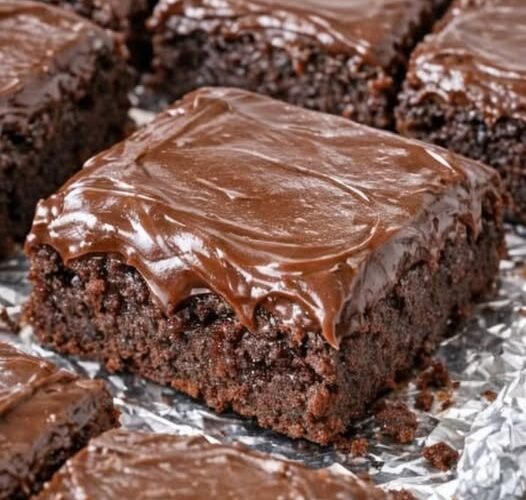
Cake Mix Brownies: The 4-Ingredient Fudgy Shortcut With the Easiest Chocolate Frosting
These cake mix brownies are the trick I reach for when I need chocolate, I need it now, and I do not want to think about it. A box of chocolate cake mix, two eggs, half a cup of oil, and a splash of water — that's the whole batter. Stir it into a thick, glossy dough that looks more like cookie dough than cake batter, press it into a pan, bake it just until the edges pull away, and then bury the pan in a soft chocolate frosting made from butter, cocoa, honey, powdered sugar, and a little milk. The result is dense and fudgy in the middle, crackly on top, and so rich that nobody guesses it started with a box. I started making these on a panicked Friday last fall when the pantry was nearly empty and my youngest had three friends coming over, and my sister's old shortcut saved the afternoon. Now it's the most requested thing in the house — my kids ask for them every single Friday after school, and I've brought them to potlucks, bake sales, and more late-night cravings than I'd like to admit. They disappear every time, usually before the frosting has even fully set. What I love is how little there is to get wrong. There's no mixer, no creaming butter and sugar, no melting chocolate, no beating to a ribbon stage. You stir four ingredients in one bowl, press the batter into a 9x13, and bake for under 25 minutes. The frosting is a five-minute bowl-and-spoon job that stays soft and glossy even the next day, which is honestly what makes these taste more like a from-scratch bakery brownie than a box-mix shortcut. The honest notes are short. This is a convenience dessert — it starts with a boxed mix, so it's not a "clean" from-scratch recipe and I won't pretend otherwise. It contains eggs, so don't eat the raw batter and do bake it fully set. It's not gluten-free as written, since cake mix is wheat-based, though a gluten-free cake mix swap works. And at about 35 cents a brownie, it's one of the cheapest chocolate fixes in the house. Make them once and they become a Friday habit. Let's make them.Why You'll Love These Cake Mix Brownies
- Just four ingredients for the batter — no mixer, no melting chocolate, no technique.
- Dense, fudgy centers with that crackly top that makes a brownie feel expensive.
- A soft chocolate frosting that stays glossy and spreadable even the next day.
- About 35 cents a brownie from a single boxed mix.
- From bowl to oven in ten minutes, and baked in under twenty-five.
- Foolproof and kid-friendly — a genuine Friday-after-school win.
- Endlessly customizable with mix-ins, different mix flavors, and a gluten-free upgrade.
Why This Recipe Works
The reason a boxed cake mix can turn into a brownie at all comes down to the fat-to-flour ratio. Cake mix is milled and blended to make a light, tender cake when you add water, oil, and eggs and whip air into it. This recipe does the opposite: it uses only a little water, no leavening help from beating, and it presses the batter down instead of fluffing it up. The result is a dense, low-air dough with a much higher fat-to-flour ratio than a cake, which is exactly what makes brownies chewy and fudgy rather than light and crumbly. The mix's own sugar and cocoa do the flavor work. The texture lives entirely in the bake time. Brownies have a narrow window between underbaked and cakey, and these are no different. Pull them too early and the center is raw; give them a few extra minutes and they turn into flat, dry chocolate cake. The signal is the edges: when the sides pull away slightly from the pan and the center looks just set — no wet shine, but still soft to the touch — they're done. The carryover heat does the rest as they cool in the pan, which is why resting them fully matters as much as the bake. Then the frosting finishes the illusion. Butter and cocoa give it a real chocolate backbone, honey keeps it soft and slightly glossy rather than gritty, and powdered sugar gives it body and that spreadable, bakery-style texture. Milk is added a spoonful at a time so you land on the exact consistency that swoops and holds its swirl. Spread over fully cooled brownies, it locks in moisture, deepens the chocolate flavor, and covers up any imperfect crackle on top — so the finished square looks and eats like something you spent far more time on.Ingredient Breakdown
| Ingredient | What it does | Notes |
|---|---|---|
| 1 box chocolate cake mix | Flour, sugar, cocoa, and leavener — the shortcut base | Any brand works. Devil's food or chocolate fudge mix gives the deepest flavor. |
| 2 large eggs | Binder and richness; the structure that sets the brownies | Bake fully since they contain raw egg. Room temp eggs blend more smoothly. |
| 1/2 cup vegetable oil | The fat that makes them fudgy and moist, not cakey | Any neutral oil. Don't swap for melted butter unless you keep the same amount of fat. |
| 2 tablespoons water | Barely loosens the dough so it presses evenly | Only a splash — the batter should be thick like cookie dough, not pourable. |
| 3 tbsp butter (softened) | The rich base of the frosting | Softened, not melted, so the frosting stays fluffy and holds its swirl. |
| 3 tbsp cocoa powder | The frosting's chocolate flavor | Natural or Dutch-process both work; Dutch gives a darker, smoother taste. |
| 1 tbsp honey | Keeps the frosting soft, glossy, and spreadable | The little trick that keeps it from drying out and crusting over. |
| 1 cup powdered sugar | Body, sweetness, and that bakery-frosting texture | Sift if lumpy. Add gradually for a smooth result. |
| 2–3 tbsp milk | Thins the frosting to a spreadable consistency | Add one spoonful at a time — a little goes a long way. |
| 1 tsp vanilla | Warmth that rounds the chocolate | Add it with the butter before the sugar. |
The one thing to get right: the batter should be thick — more like cookie dough than cake batter. If it's pourable, you've added too much water, and the brownies will bake up cakey instead of fudgy. Two tablespoons is all you need.
Kitchen Equipment You Actually Need
- 9x13-inch pan — the size this recipe is written for. Line it with foil for easy lifting and slicing.
- Large mixing bowl — everything for the batter goes in one bowl, no mixer required.
- Sturdy spoon or spatula — the batter is thick; a strong spoon does the job.
- Offset spatula (optional) — for spreading the thick batter and the frosting evenly.
- Medium bowl for frosting — plus a hand whisk or spoon.
- Wire cooling rack — for cooling (if you lift the brownies out) and set-up.
- Knife — a warm blade cuts frosted brownies cleanly.
Step-by-Step Instructions
- Preheat and prep. Preheat the oven to 350°F. Line a 9x13-inch pan with foil and lightly grease it.
- Mix the batter. In a large bowl, stir the cake mix, eggs, oil, and water until thick and glossy — it should look like cookie dough, not cake batter.
- Press into the pan. Scoop the thick batter into the pan and press it into an even layer with your hands or a spatula.
- Bake. Bake 18–22 minutes, until the edges pull away slightly and the center is just set. Don't overbake — you want fudgy, not cakey.
- Cool completely. Let the brownies cool fully in the pan.
- Make the frosting. Beat the softened butter, cocoa, honey, and vanilla together, then add the powdered sugar and slowly add milk until smooth and spreadable.
- Frost and slice. Spread the frosting over the cooled brownies in thick, swirly layers, let it set about 10 minutes, then slice into squares.
Eggs and leftovers, stated plainly. The batter contains raw eggs, so don't eat it raw and bake the brownies fully set — edges pulled away, center just firm, no wet shine. Cool leftovers within two hours, then store airtight. Because the frosting contains butter and milk, keep them at room temperature for about a day and refrigerate for longer storage, where they'll keep for up to a week; bring squares to room temperature before serving.
Expert Tips
Keep the batter thick. Two tablespoons of water is right. If it pours, you've gone too far and they'll bake up cakey. The texture should fight back a little when you stir it.
Press, don't pour. This batter doesn't spread on its own. Use your hands, the back of a spatula, or a piece of plastic wrap to press it flat and even.
Pull them early, not late. The line between fudgy and cakey is only a couple of minutes. Edges set, center just barely set, then out of the oven. They firm as they cool.
Cool fully before frosting. Frosting a warm brownie melts the butter and turns the frosting into a runny glaze. Patience here is the whole difference between a swirled top and a puddle.
Add milk to the frosting one spoonful at a time. Powdered sugar and cocoa absorb liquid unpredictably, and frosting is easy to over-thin but hard to thicken back up.
Whip the frosting a full minute. A good minute of beating makes it light, glossy, and airy instead of flat and dense.
Chill briefly for the cleanest cuts. Ten minutes in the fridge after frosting (or a warm knife) gives you sharp, bakery-clean squares.
Store with a layer between. Stacked frosted brownies stick; parchment between layers keeps them intact.
Common Mistakes
Adding too much water. The batter should be thick like cookie dough. Extra water makes it loose and the brownies bake up cakey instead of fudgy. Two tablespoons is plenty.
Overbaking. This is the number one way to ruin cake-mix brownies. A few extra minutes turns them into dry chocolate cake. Trust the edges-and-set signal, not the clock alone.
Frosting while warm. If the brownies are even slightly warm, the frosting melts and slides. Cool them completely first.
Thinning the frosting all at once. Adding all the milk up front often overshoots the consistency. Add it one spoonful at a time until it's spreadable.
Not lining the pan. Foil with a little grease means you can lift the whole slab out for tidy slicing and easy cleanup. Skip it and you're digging brownies out of the corners.
Spreading the batter unevenly. Thick, uneven batter bakes unevenly — thin edges burn while the middle stays raw. Press it flat.
Using the wrong pan size. This is calibrated for a 9x13. An 8x8 makes them much thicker and they need more time; a larger pan makes them thin and fast. Adjust the bake if you change the size.
Eating the raw batter. It smells incredible, but it contains raw eggs. Save it for the baked version.
Ingredient Substitutions
| If you don't have… | Use… | Watch out for… |
|---|---|---|
| Chocolate cake mix | Devil's food, chocolate fudge, or another flavor mix | Any brand works. Different flavors change the result — yellow cake mix makes blonde brownies, red velvet makes red ones. |
| Vegetable oil | Canola or another neutral oil | Keep the same amount of fat. Melted butter works but can make them slightly firmer and less fudgy. |
| Butter (frosting) | Margarine or a butter-flavored spread | Butter gives the best flavor. Margarine works but can be saltier and less rich. |
| Cocoa powder (frosting) | Dutch-process cocoa | Darker color and a smoother, less acidic flavor. Either works fine. |
| Honey | Corn syrup or a light agave | Both keep the frosting soft and glossy like honey does. |
| Powdered sugar | Nothing that matches well | Powdered sugar is structural in frosting — don't swap it for granulated, which turns the frosting gritty. |
| Milk (frosting) | Oat milk, almond milk, or cream | Any liquid works; cream makes it richer, plant milks keep it dairy-free-ish (butter still isn't). |
| Cake mix (gluten-free) | A gluten-free chocolate cake mix | GF mixes vary wildly in texture and bake time — check the edges early. This swap is the only GF path; the standard recipe is not gluten-free. |
Variations
- Dark chocolate brownies. Use a devil's food or dark chocolate mix and add a tablespoon of cocoa to the frosting for a deeper, less sweet bar.
- Blonde and butterscotch. Swap in a yellow or butterscotch cake mix for a lighter, caramel-leaning brownie with the same method.
- Peanut butter swirl. Warm a few spoonfuls of peanut butter, drizzle over the frosting, and drag a knife through for a marble swirl.
- Nutty version. Fold a cup of chopped walnuts or pecans into the thick batter before pressing it into the pan.
- Mint chocolate. Add a drop of peppermint extract to the frosting and top with crushed candy canes.
- Chocolate chip studded. Stir mini chocolate chips into the batter for extra pockets of melted chocolate.
- Sea salt finish. Sprinkle flaky sea salt over the frosting while it's still wet for a sweet-salty contrast.
- S'mores brownies. Scatter mini marshmallows and graham pieces over the top in the last few minutes of baking, then frost once cooled.
Make It Healthier
I'll be straight: these start with a boxed cake mix and finish under a butter-and-sugar frosting, so they are a treat, not a health food, and I'm not going to dress them up as anything else. What I can do is be practical. The biggest levers are portion and frequency — cut them into sixteen smaller squares instead of twelve larger ones, and a brownie still feels like a real indulgence at a fraction of the sugar and calories. Because they're rich, a small square genuinely satisfies, which is a real advantage over a bland, less satisfying dessert you'd eat more of. If you want to nudge them a little lighter without wrecking them, you can use a reduced-sugar or "light" cake mix if your store carries one, cut the frosting's powdered sugar slightly and thin with a touch more milk, and use a dark chocolate mix for a less sweet, more intense flavor so you need less to feel satisfied. But this is a Friday-after-school brownie, and its job is to be fudgy and chocolatey and worth the anticipation. Make a modest-sized pan, share it, freeze half so it isn't calling your name all week, and enjoy them honestly as the small, wonderful treat they are.Meal Prep
These are about as prep-friendly as a homemade dessert gets, which is a big part of their charm. One bowl, one pan, no mixer, and less than half an hour of actual work. If your Fridays are chaotic, you can stir the batter together and press it into the pan up to a day ahead, cover it, and refrigerate — just add a couple of minutes to the bake since it starts cold. You can also make the frosting ahead and keep it covered at room temperature, then beat it briefly and spread it when the brownies are cool. For a bake sale, a party, or packing lunches, make a double batch and slice one pan into tidy wrapped squares while the other stays whole for the table. They travel well because the frosting sets firm, so they stack in a container with parchment between the layers without smearing. And if you want a genuinely easy win, frost and slice them the night before you need them — they're better the next day anyway, once the frosting has settled into every corner and the flavor has deepened.Storage
Once baked and frosted, brownies keep best in an airtight container. At cool room temperature they'll stay fresh for about 2 days; because the frosting contains butter and milk, refrigeration is the better bet for anything longer, where they hold for up to a week. Stack them with a sheet of parchment between layers so the frosting doesn't stick, and bring squares to room temperature for ten to fifteen minutes before eating so they're soft and fudgy again rather than firm and cold. Keeping them covered is what preserves that fudgy center — exposed brownies dry out and their tops go stale within a day. If you've stored them in the fridge, the frosting firms up and the crumb tightens, but a short warm-up fixes both. They genuinely get better overnight as the frosting settles into the brownie, so a day-old brownie is often the best one. Keep them sealed, keep them cool for longer storage, and they'll be as good on day five as the day you baked them.Freezing
Cake-mix brownies freeze beautifully, which is the smartest way to keep a batch from disappearing all at once. Freeze them either as a whole frosted slab or as individually wrapped squares — the squares are more convenient, but freezing the whole slab and slicing after thawing gives the cleanest edges. Wrap tightly in plastic wrap and then foil or a freezer bag, pressing out the air, and freeze for up to 3 months. Thaw at room temperature for an hour or in the refrigerator overnight. The frosting holds up well to freezing and comes back glossy at room temperature; just be sure it's fully set before you freeze, or it'll smear during wrapping. For grab-and-go, freeze individual squares on a tray until firm, then transfer them to a bag so they don't stick together — that way you can pull out one or two at a time. Frozen brownies are also excellent eaten chilled, straight from the freezer, where they turn dense and almost fudgy-chewy. It's an easy way to have a homemade chocolate fix on hand without baking every time the craving hits.Reheating and Serving Leftover Brownies
Brownies are best eaten at room temperature, where the frosting is soft and the crumb is fudgy — so "reheating" here usually just means letting a refrigerated square sit out for ten to fifteen minutes. If you want them warm, a brief trip to the microwave — 10 to 15 seconds for a single square, unfrosted or lightly frosted — softens them beautifully, though the frosting can get gooey fast, so keep it short. For a whole pan, a few minutes in a low oven (around 300°F) warms them through and re-crisps the edges, and then you let them cool just slightly before serving. As for serving, these shine with a tall glass of cold milk, and they're dangerously good warm with a scoop of vanilla ice cream melting over the top, brownie-sundae style. If you frost them, serve them at room temperature so the frosting is spreadable and glossy rather than chilled and stiff. The one thing to avoid is overheating — a hot brownie loses its fudgy bite and the frosting turns to sauce. Gentle warmth, if any, and a cold glass of something is all they really need.What to Serve With Them
These brownies are a dessert all by themselves, so serving is mostly about the add-ons and the occasion. A cold glass of milk is the classic and the one my kids would vote for every time, and it's genuinely the best pairing — the cold liquid against the dense, sweet chocolate. A scoop of vanilla ice cream turns a square into a quick brownie sundae, and a swirl of whipped cream or a dusting of powdered sugar dresses them up for a party. Fresh strawberries or raspberries on the side add a bright, tart contrast that keeps the sweetness from getting one-note. For a bake sale or potluck, they're the perfect grab-and-go square — easy to wrap, easy to stack, and always the first tray to empty. On a dessert table, they sit naturally beside cookies, bars, and a bowl of fruit, and their rich chocolate makes them a reliable crowd-pleaser next to lighter options. And for the purest version, straight from the pan with a knife and no plate at all is how most of them get eaten in my house, standing at the counter, one square turning into two before anyone even sits down.Beverage Pairings
Cold milk is the pairing these were practically built for — the classic after-school match for fudgy chocolate. Coffee is the grown-up answer, hot and strong, with the bitterness cutting the frosting's sweetness, and a cold brew or iced coffee works just as well. If you want something a little special, a glass of cold milk with a splash of vanilla, or a mug of hot cocoa for the fully committed, hits the spot. A small splash of bourbon alongside a square is a nice evening treat for the adults in the house. What to avoid: delicate, dry wines and anything very tart, which clash with sweet, dense chocolate. If you're pouring wine, a port, a cream sherry, or a rich dessert wine works far better than a dry table wine. Nonalcoholic, an espresso, a chai, or simply a big glass of cold milk are all excellent. And honestly, the best pairing is whatever's cold in the fridge and a quiet minute before the kids find the pan.Frequently Asked Questions
What kind of cake mix works best for cake mix brownies?
Any chocolate cake mix works, and the brand genuinely doesn't matter much. For the fudgiest, most brownie-like result, use a devil's food or chocolate fudge mix, which has a deeper chocolate flavor and a slightly denser texture. Yellow cake mix makes blonde brownies, red velvet makes red ones, and butterscotch or spice mixes make delicious variations — the method stays exactly the same regardless of flavor.Why did my cake mix brownies turn out cakey?
Almost always overbaking, or too much water in the batter. Cake-mix brownies are fudgy only in a narrow window — a couple of extra minutes pushes them into cake territory. Pull them when the edges have just pulled away and the center looks set but still soft, then let them cool completely in the pan. And keep the batter thick like cookie dough; the two tablespoons of water is all it needs, because a looser batter bakes up lighter and cakier.Can I frost the brownies while they're still warm?
No — let them cool completely first. The frosting is butter-based, and even a slightly warm brownie will melt it into a runny, sliding glaze instead of a thick, swirly layer. Cooling takes a while but it's the difference between a bakery-looking top and a mess. If you're in a hurry, you can speed the cooling by lifting the foil-lined slab onto a rack or popping the pan in the fridge once it's no longer hot.Are cake mix brownies gluten-free?
Not as written, because boxed cake mix is wheat-based. To make them gluten-free, use a gluten-free chocolate cake mix and check that your frosting ingredients — especially the powdered sugar and cocoa — are gluten-free too (most are, but verify). Keep in mind that gluten-free mixes vary a lot in texture and bake time, so start checking the edges a few minutes early, since GF batters can set faster.Can I bake these in an 8x8 pan instead of a 9x13?
Yes, but the brownies will be noticeably thicker, so they'll need extra bake time — roughly 25 to 32 minutes. Check them when the edges pull away and the center is just set, and cover with foil if the top browns too fast before the middle sets. You'll also get fewer, taller squares, so plan to cut them smaller. A 9x13 gives the classic fudgy, even bar this recipe is written for.How should I store leftover brownies?
Airtight at cool room temperature for about 2 days, or in the refrigerator for up to a week, since the frosting contains butter and milk. Layer them with parchment between so the frosting doesn't stick, and let squares come to room temperature for ten to fifteen minutes before eating so they're fudgy again. They're honestly even better the next day, once the frosting has settled into the brownie and the flavor has deepened.Can I add nuts or chocolate chips?
Yes, and it's a great way to customize them. Fold up to a cup of chopped walnuts or pecans, or mini chocolate chips, into the thick batter before pressing it into the pan. Mix-ins add texture and pockets of melted chocolate without changing the bake much, though a heavy addition of nuts may add a minute or two. Just fold gently so you don't thin or overwork the dense batter.Can I freeze frosted cake mix brownies?
Yes, for up to 3 months. Make sure the frosting is fully set first, then wrap the whole slab or individually wrapped squares tightly in plastic wrap and foil or a freezer bag, pressing out the air. Thaw at room temperature for an hour or overnight in the refrigerator; the frosting comes back glossy and the brownies stay fudgy. Freezing individual squares on a tray first keeps them from sticking together in the bag.Nutrition Facts (Estimated)
| Per brownie (1/12 of pan) | Amount |
|---|---|
| Calories | ~310 |
| Total Fat | ~16 g |
| Saturated Fat | ~4 g |
| Carbohydrates | ~39 g |
| Sugars | ~27 g |
| Protein | ~3 g |
| Sodium | ~280 mg |
Final Thoughts
Cake-mix brownies are the shortcut I'm most glad my sister ever taught me: four ingredients for the batter, four more for the frosting, and less than half an hour to a pan of dense, fudgy, crackly-topped brownies under a soft chocolate frosting. No mixer, no melting chocolate, no technique — just stir, press, bake, cool, and frost. They're about thirty-five cents a square, they're the most requested thing in my house, and they disappear from potlucks, bake sales, and my own counter every single time. Make them for a Friday after school, a bake sale, or a plain chocolate craving, and make a double batch so you can freeze half for later. Play with the flavors — devil's food for depth, peanut butter swirled through the frosting, nuts or chips folded into the batter, a sprinkle of flaky salt on top — and keep them sealed and cool so they stay fudgy. As for the frosting question, the answer is simple: wait until the brownies are completely cool, or the frosting slides right off. Then frost them thick and swirly, let it set ten minutes, slice, and pour a cold glass of milk. That's the whole Friday ritual, and it never gets old.Cake Mix Brownies
Four ingredients, no mixer — fudgy centers, crackly tops, and a soft chocolate frostingIngredients
For the brownies
For the frosting
Directions
- Preheat the oven to 350°F. Line a 9x13-inch pan with foil and lightly grease it.
- In a large bowl, mix the cake mix, eggs, oil, and water until thick and glossy — it'll look more like cookie dough than cake batter.
- Press the thick batter evenly into the pan using your hands or a spatula.
- Bake 18–22 minutes, until the edges pull away slightly and the center is just set. Don't overbake — you want them fudgy, not cakey.
- Let the brownies cool completely in the pan.
- For the frosting, beat the butter, cocoa, honey, and vanilla together. Add the powdered sugar, then slowly add milk until smooth and spreadable.
- Spread the frosting over the cooled brownies in thick, swirly layers. Let it set about 10 minutes, then slice into squares.
Cost: about $4.15 per pan — roughly $0.35 per brownie (12 brownies).
Texture: keep the batter thick like cookie dough. If it pours, you added too much water and they'll bake up cakey.
Don't overbake: edges set and center just barely set is the signal — a couple extra minutes turns them into dry cake.
Egg safety: don't eat the raw batter, and bake until fully set.
Gluten-free: not as written (cake mix is wheat). Use a gluten-free cake mix for a GF version, and check it early.
Nutrition (estimated per brownie)
310Calories
3 gProtein
16 gFat
39 gCarbs
27 gSugar
280 mgSodium
Estimates only — not medical or dietary advice. Based on 12 brownies; cutting into 16 lowers the per-piece values. Values vary by cake mix brand and frosting amount.