
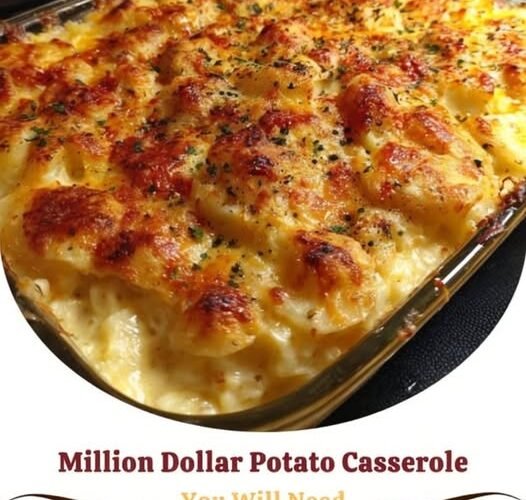
Cheesy Sour Cream Potatoes: The Creamy Baked Potato Casserole Everyone Fights Over
I made these cheesy sour cream potatoes last Tuesday because I had a bag of potatoes that needed using, and honestly, I wasn't expecting much. But my husband walked in from work, smelled it baking, and immediately asked what was for dinner. Then he had three servings. That's the whole review, really — a dish that started as a use-it-up project and turned into something my family asked for again the next week. This is one of those deceptively simple recipes that tastes like you spent way more effort than you actually did. Tender potato chunks swimming in this ridiculously creamy, cheesy sauce, then baked until the top gets all golden and bubbly with those crispy-edged bits that everyone fights over. The sour cream makes it so velvety, and the cheddar gets this gorgeous, caramelized crust on top that's borderline addictive. It looks like something you fussed over for an hour, and really it's just a bowl of stirred-together ingredients and a baking dish. I served it alongside some grilled chicken, but it honestly could have been the main event, and that's the part I keep coming back to. My daughter, who usually picks at her food, cleaned her plate without a single complaint, which alone made it worth making again. It's the kind of side that quietly takes over the plate, and the kind of recipe that earns a permanent spot in the rotation because it makes a normal Tuesday feel a little more like Sunday dinner. A few honest notes before we start. As written this is naturally gluten-free — there's no flour, no breadcrumbs, and no cream soup in it, just potatoes, dairy, cheese, and spices — so it's a genuinely easy dish to bring to a gluten-free guest, with just a label check on your spices and cheese. It's also naturally vegetarian, which makes it a reliable potluck contribution. It's not low-carb or keto, and I won't pretend a potato casserole is, since potatoes are the entire point here. It brings about 9 grams of protein per serving from the cheese and dairy, which I state as a number rather than a claim, and sodium runs about 300 milligrams per serving, mostly from the cheddar and the salted butter. One texture rule matters more than anything else: don't overcook the potatoes at the boil, because mushy potatoes make a mushy casserole. Let's make it.Why You'll Love These Cheesy Sour Cream Potatoes
- Creamy, cheesy, and comforting — the definition of a crowd-pleaser.
- About ten ingredients, most of which you already have.
- The top bakes into a golden, bubbly, crispy-edged crust people fight over.
- Naturally gluten-free and vegetarian as written.
- About a dollar a serving, and it feeds eight.
- Make-ahead friendly, which makes it a dream for potlucks and holidays.
- Kid-approved — even the picky eaters clean their plates.
- Doubles as a meatless main with a salad on the side.
Why This Cheesy Sour Cream Potatoes Recipe Works
This recipe works because sour cream and melted butter make a sauce that clings instead of separating. If you baked diced potatoes with just milk and cheese, you'd end up with a watery, curdled puddle at the bottom of the dish. The sour cream brings richness, a gentle tang, and body, and because it's already thick and stable, it holds the butter and milk together into a velvety coating that hugs every piece of potato and bakes into a cohesive, creamy casserole rather than a soupy one. That's the whole reason a baked potato casserole can turn out either luxurious or sad, and sour cream is firmly on the luxurious side. The potatoes themselves are the other half of the equation, and the technique is what keeps them right. Parboiling the diced potatoes in salted water until they're just fork-tender seasons them from the inside and shortens the bake, so the casserole comes together in the oven rather than drying out. The instruction to stop at fork-tender — around ten to twelve minutes, before they're mushy — is the single most important line in the recipe, because overcooked potatoes break down into paste and the whole dish turns gluey. Underdone potatoes, on the other hand, stay firm and slightly raw in the middle, so the window is real but forgiving: get them just tender and you're golden. Then the cheese does double duty. Mixing a full cup into the creamy base seasons and enriches the sauce from the inside, so the flavor is layered through the whole dish instead of just sitting on top, and the extra cheese sprinkled over the surface melts into that golden, bubbling, pull-apart crust with the crackly, crispy edges where it meets the dish. That crust is the reason people reach across the table for the corner pieces, and it's the reason this dish reads as more than the sum of its parts. Five minutes of resting at the end ties it together, letting the sauce thicken and the slices hold their shape instead of running across the plate.Ingredient Breakdown
| Ingredient | What it does | Notes |
|---|---|---|
| 2 lbs potatoes, peeled and diced | The hearty, tender base of the whole dish | Yukon Golds are ideal — creamy and buttery. Russets work but are starchier. Dice evenly so they cook at the same rate. |
| 1 cup sour cream | The velvety, tangy backbone of the creamy sauce | Full-fat gives the richest result. Greek yogurt works as a lighter swap — see substitutions. |
| 1 cup shredded cheddar (plus extra for topping) | Melts into the sauce and forms the golden top crust | Sharp cheddar for the most flavor. Freshly grated melts smoother. Main sodium source. |
| 1/2 cup melted butter | Richness and that unmistakable buttery depth | Salted butter brings flavor and sodium; unsalted gives you more control over salt. |
| 1/2 cup milk | Loosens the sauce so it coats and bakes evenly | Whole milk is richest; 2% works fine. Avoid skim if you can. |
| 1 tsp garlic powder + 1 tsp onion powder | The savory seasoning backbone | Powders, not salt blends — a garlic salt would send sodium up fast. |
| Salt and pepper, to taste | Seasons the potatoes and the sauce | Salt the boiling water too — it seasons the potatoes from the inside. Go easy at the end, since the cheese and butter already carry salt. |
| Fresh parsley or chives (optional) | A bright, fresh finish and a little color | Purely cosmetic and lovely — chives are my favorite with cheddar and sour cream. |
The one thing to get right: boil the potatoes to just fork-tender — about 10 to 12 minutes — and drain them well. Mushy potatoes turn the whole casserole gluey, and wet potatoes water down the sauce.
Kitchen Equipment You Actually Need
- 9x13 baking dish — the right size for this amount; a smaller dish makes it too deep and slows the bake.
- Large pot — for boiling the diced potatoes.
- Colander — for draining the potatoes thoroughly.
- Large mixing bowl — for the creamy base and folding in the potatoes.
- Whisk or spoon — to smooth the sour cream mixture.
- Knife and cutting board — for peeling and dicing evenly.
- Box grater (optional) — for grating your own cheddar if you prefer fresh.
- Measuring cups and spoons — for the sauce ingredients.
Step-by-Step Instructions
- Preheat and grease. Preheat your oven to 350°F and grease a 9x13 baking dish.
- Boil the potatoes. Boil the diced potatoes in salted water until they're just fork-tender, about 10–12 minutes. You don't want them mushy. Drain well.
- Make the sauce. In a large bowl, mix together the sour cream, melted butter, milk, garlic powder, onion powder, salt, and pepper until smooth.
- Fold it together. Fold in the cooked potatoes and 1 cup of shredded cheddar until everything's coated in the creamy mixture.
- Into the dish. Pour it all into your prepared baking dish and spread it out evenly.
- Top with cheese. Sprinkle extra cheese generously over the top.
- Bake. Bake 30–35 minutes, until the top is golden and bubbling at the edges.
- Rest and garnish. Let it rest for about 5 minutes before serving, then garnish with parsley or chives if you're feeling fancy.
Handling and leftovers, stated plainly. Boiling water and the hot baking dish will scald — drain carefully and use oven mitts. Because this dish is built on dairy and cheese, cool any leftovers within two hours of baking, refrigerate promptly, and eat within 3 to 4 days, reheating until steaming hot. Never leave it sitting out at a potluck for more than two hours; if you need it to hold longer, keep it warm in a slow cooker or insulated carrier. And always dice the potatoes into even, bite-sized cubes so they cook through at the same rate.
Expert Tips
Dice the potatoes evenly and bite-sized. Uneven chunks cook at different rates, so you'll get some mushy and some firm. A consistent half-inch dice fixes that before you even turn on the stove.
Salt the boiling water. Seasoning the water seasons the potatoes themselves, from the inside out. It's the easiest flavor upgrade in the whole recipe.
Stop at fork-tender, not falling apart. Ten to twelve minutes is usually right. The potatoes finish cooking in the oven, so pull them while they still hold their shape.
Drain really well, and let them steam dry a minute. Excess water on the potatoes thins the sauce. Dump them in the colander, give them a minute to steam off, and then fold them in.
Use Yukon Golds if you can. They're creamy, buttery, and hold their shape beautifully in a casserole. Russets are fine but starchier and more prone to breaking down.
Mix the sauce smooth before adding the potatoes. Whisk the sour cream, butter, milk, and seasonings first so there are no lumps, then fold the potatoes in gently so they stay intact.
Grate your own cheddar for the smoothest melt. Pre-shredded cheese is coated with anti-caking starch that can make the sauce slightly grainy; fresh-grated melts into silk.
Don't skimp on the cheese on top. That topping is what browns into the golden, crispy-edged crust. Cover the surface generously so every serving gets some.
Watch for bubbling at the edges, not just color. The casserole is ready when the sauce bubbles around the rim and the top is golden. That's your signal the center is hot through.
Rest five minutes before serving. This lets the sauce thicken and the portions hold together. Spoon it out too early and it slumps and runs.
Common Mistakes
Overboiling the potatoes. This is the number one mistake and the one that ruins the texture. Mushy potatoes become paste in the oven. Stop at just fork-tender.
Not draining well. Wet potatoes water down the creamy sauce and leave a puddle in the dish. Drain thoroughly and let them steam dry for a minute.
Cutting the potatoes unevenly. Big chunks stay firm while small ones dissolve. A consistent dice is what gives you even, tender bites.
Using a dish that's too small. Piling this into an 8x8 makes it too deep, so the center takes much longer to heat and the top can overcook. Use the 9x13.
Forgetting to salt the water. Unseasoned potatoes taste flat no matter how good the sauce is. Salt the boil.
Overmixing after adding the potatoes. Fold gently. Vigorous stirring breaks the chunks down and gives you mashed-potato casserole instead of tender cubes.
Underbaking the middle. If it's not bubbling at the edges, the center may still be cool. Give it the full time and look for the bubbles, not just a golden top.
Adding too much salt at the end. Cheddar and salted butter are already salty. Taste the sauce before you season it, and go light.
Skipping the rest. Cutting in immediately gives you a runny, sloppy spoonful. Five minutes makes the difference between a slice and a puddle.
Letting it sit out at a party. It's a dairy dish. Keep it within the two-hour window, then refrigerate the leftovers.
Ingredient Substitutions
| If you don't have… | Use… | Watch out for… |
|---|---|---|
| Sour cream | Full-fat Greek yogurt, or half sour cream and half yogurt | Yogurt is tangier and a touch thinner but works well. Don't use fat-free — it separates and turns grainy. |
| Cheddar cheese | Colby, Monterey Jack, a cheddar-jack blend, or Gruyère | All melt beautifully. Gruyère is richer and nuttier; jack is milder and stretchier. |
| Butter | An equal amount of olive oil or ghee, or a little less butter plus a splash of broth | Butter brings the flavor here, so cutting it too far changes the dish. Ghee is the closest swap. |
| Whole milk | 2% milk, half-and-half, or a splash of cream plus milk | All work and get richer toward cream. Skim makes a thinner sauce. |
| Yukon Gold potatoes | Russets, red potatoes, or baby potatoes (halved) | Russets are starchier and softer; reds hold shape well. Adjust boiling time to the variety. |
| Garlic powder / onion powder | Granulated garlic / granulated onion, or fresh minced garlic | Not garlic salt. Fresh garlic is lovely but can be sharper — use about one clove, minced fine. |
Variations
- Bacon cheddar. Fold in crumbled cooked bacon or scatter it over the top with the cheese — the classic, and nobody complains.
- Loaded baked potato. Add bacon, chives, and a little extra sour cream dolloped on top after baking for a fully loaded version.
- Crunchy topping. Sprinkle crushed cornflakes, panko, or crushed potato chips with a little melted butter over the cheese before baking for texture — note this makes it no longer gluten-free.
- Ranch style. Swap the garlic and onion powder for a tablespoon of ranch seasoning for a tangy, herby spin.
- Jalapeño cheddar. Add diced jalapeños and use pepper jack for a spicy, melty version.
- Hash brown shortcut. Use frozen shredded or diced hash browns (thawed and drained) in place of parboiled potatoes for a faster, more funeral-potato-style bake.
- Herb forward. Stir fresh thyme, rosemary, or dill into the sauce for a more grown-up, aromatic casserole.
- Smaller batch. Halve everything and bake in an 8x8 for a smaller household — reduce the bake time a little and watch the center.
Make It Healthier
I'll be honest with you: this is a rich, creamy, cheesy comfort dish, and it's built that way on purpose. Sour cream, butter, and cheddar are the whole appeal, and I'm not going to pretend a swap turns it into a light dish. That said, there are real ways to lighten it without losing what makes it good. The biggest lever is the sour cream: swapping it for full-fat Greek yogurt, or going half and half, cuts a meaningful amount of fat and calories while keeping the tangy, creamy body — and because the casserole is baked rather than served cold, the yogurt's slight thinness matters less than you'd think. You can also trim the butter from half a cup down to a third of a cup, though that's the ingredient I'd cut last, since it carries so much of the flavor. Beyond that, use 2% milk instead of whole, and consider reducing the cheese slightly or choosing a sharper cheddar so less goes further — a sharp cheddar delivers more flavor per ounce than a mild one, so you can use three-quarters of a cup in the sauce and a lighter sprinkle on top and still get plenty of cheesy character. Leaving the skins on the potatoes adds a little fiber, which is a nice, effortless upgrade. And as always, portion is the honest final lever: a modest serving alongside grilled chicken or fish and a big pile of green vegetables makes a reasonable plate, whereas a heaping pile of this plus bread plus dessert is where the richness stacks up. It won't ever be a light dish, and it shouldn't be — but a slightly leaner version still tastes like the cozy, creamy casserole everyone reaches for first.Make-Ahead and Everyday Prep
This is an excellent make-ahead dish, which is a large part of why it belongs in your potluck and holiday rotation. You can assemble the entire casserole — potatoes cooked and folded into the creamy sauce, spread in the dish, cheese on top — up to a day ahead, cover it, and refrigerate it. When you're ready, bake it straight from the fridge, adding about 10 minutes to the time and watching for the sauce to bubble at the edges so you know the center is hot. That means you can walk into a gathering with a fully prepped dish and have it come out of the oven golden and bubbling right on schedule. If you're prepping for the week, you can also boil and drain the potatoes a day ahead and keep them covered in the fridge, so assembly on the night takes five minutes. For a smaller household, halve the recipe into an 8x8 and it bakes a little faster. And because this reheats so well, it's a genuinely useful thing to have in the fridge for lunches or a quick side with dinner — one batch honestly covers a couple of weeknights. Just cool it within two hours, refrigerate promptly, and eat it within three to four days, since it's a dairy-heavy dish.Storage
Store leftover cheesy sour cream potatoes in an airtight container in the refrigerator for 3 to 4 days. Because this is a dairy dish, cool it within two hours of baking and refrigerate promptly — don't leave it out on the counter while you clean up. Keep it covered so the top doesn't dry out and the sauce stays creamy, and if you're stacking portions, use a layer of parchment so they don't merge into one block. It actually firms up nicely as it chills, which makes leftovers easy to portion out and reheat in single servings. You can store it right in the baking dish if it has a lid or a tight cover, which saves a container and keeps the shape of the dish. If you've left it out at a party for longer than two hours, or if it's been in the fridge past four days, discard it — dairy and potatoes don't improve with age, and this isn't the dish to gamble on. Reheated, it's nearly as good as fresh, especially if you warm it in the oven so the top can re-crisp a little, and a fresh sprinkle of chives before serving makes leftovers taste deliberate rather than leftover.Freezing
This casserole freezes well, and it's a great thing to have ready for a holiday or a busy week. You can freeze it either baked or unbaked. To freeze baked, let it cool completely, then portion it into airtight containers or wrap the whole dish tightly, and it keeps for up to 2 to 3 months. Thaw overnight in the refrigerator, then reheat in a 350°F oven until hot and bubbling, adding a fresh sprinkle of cheese for the last few minutes so the top comes back to life. Freezing unbaked works beautifully too — assemble the casserole, cover tightly, and freeze for up to a month, then thaw in the fridge and bake as directed, checking that the center is hot. One honest note: the potatoes can soften a bit in texture after freezing and thawing, since freezing changes their cell structure slightly, so the casserole may come out a touch more tender than a fresh batch. That's a small price for the convenience, and it's barely noticeable once everything is baked with sour cream and cheese. If you're doubling the recipe, this is a smart one to make one to eat and one to freeze, because it's exactly the kind of dish that saves you on a night when you need a side or a meatless main and don't want to cook from scratch. Just reheat it well and garnish fresh, and nobody will know it spent time in the freezer.Reheating and Serving Leftovers
The oven is the best way to reheat this, so the sauce comes back to a gentle bubble and the top re-crisps. Spread the leftovers in a baking dish, cover loosely with foil, and warm at 350°F for about 15 to 20 minutes, then uncover for the last few minutes so the cheese on top firms back up. The microwave works fine for a single portion in a hurry — cover the plate, heat in short bursts, and stir once so the middle warms evenly — but it won't restore the crispy top, so it's a lunch solution rather than a dinner one. An air fryer at 350°F also does nicely on a single serving and gets the edges crisp again. Leftovers are surprisingly versatile, which is another reason to make extra. A portion reheated alongside a fried egg and a little bacon makes a genuinely great breakfast, and a scoop alongside grilled chicken, a pork chop, or a steak is the obvious dinner move. You can also fold leftovers into an omelet, top them with a dollop of sour cream and chives for a quick loaded baked potato bowl, or thin a little of it with milk and broth to make a quick potato soup. However you bring it back, add a fresh sprinkle of chives or parsley before serving — it wakes up the color and makes a leftover look intentional, which is half the battle with reheated food.What to Serve With It
Because this casserole is rich, creamy, and cheesy, it's built to be the star of the plate, so it pairs best with something simple and savory next to it. It's wonderful with grilled or roasted chicken, a pork chop or roast, steak, or a holiday ham — anything that lets it shine without competing. On a lighter night, it works as a meatless main with a crisp green salad and a piece of crusty bread, and honestly it can carry the whole meal that way. The one thing I'd avoid is stacking it with another heavy, creamy side, since the richness adds up fast. For holiday and potluck tables, it sits happily beside green bean casserole, roasted or glazed carrots, steamed broccoli, or a bright salad, and adding something fresh and acidic — a vinegary slaw, sliced tomatoes, or pickles — keeps the plate balanced. It's also, quietly, one of the best things to serve next to a big holiday roast, because it soaks up gravy and juices beautifully. And on a normal weeknight, a scoop of this with roasted broccoli and a piece of fish is an easy, satisfying plate. Wherever it lands, give it a fresh herbal garnish and let one of the brighter sides do the balancing work — the potatoes are already doing plenty.Beverage Pairings
A rich, cheesy potato casserole calls for drinks with a little acidity or crispness to reset the palate between bites. A dry, unoaked white wine is the safest bet — a Sauvignon Blanc, an Albariño, or a crisp Chardonnay all cut through the cream and cheddar cleanly. If you prefer red, go light and fruity rather than big and tannic, since a heavy cabernet can feel heavy against a creamy dish; a Pinot Noir, a Beaujolais, or a bright Zinfandel works much better. Beer is a great match too: a crisp lager or pilsner keeps things easy, and a slightly hoppy pale ale loves the sharp cheddar. On the nonalcoholic side, this is a dish that pairs surprisingly well with something tart — lemonade, unsweetened iced tea with lemon, or sparkling water with lime all lift the richness nicely, and a dry apple cider is a lovely seasonal choice for a fall or holiday table. If you're serving it as a cozy weeknight side with chicken, honestly, cold water with lemon or a mug of hot tea is perfect, because the food is rich enough that it doesn't need a rich drink alongside. Whatever you pour, keep it cold and crisp and let it balance the cream, and the whole plate will feel lighter than it actually is.Frequently Asked Questions
Are these cheesy sour cream potatoes gluten-free?
Yes — as written, this casserole is naturally gluten-free, which is one of its best qualities. There's no flour, no breadcrumbs, and no cream soup in the recipe, so the ingredients are simply potatoes, sour cream, cheddar, butter, milk, and spices. The only things worth double-checking are your garlic and onion powders and any cheese blend, since a few packaged spice blends and some shredded cheese blends can carry gluten-derived additives or anti-caking agents. Check those labels and you're good. Note that if you add a cornflake or panko topping from the variations, it's no longer gluten-free.Can I use Greek yogurt instead of sour cream?
Yes, and it's the most popular lighter swap. Full-fat Greek yogurt gives you a similar tangy, creamy result with less fat, and because the casserole is baked, the yogurt's slightly thinner texture matters less than it would in a cold dip. My favorite middle ground is half sour cream and half Greek yogurt, which keeps most of the richness while lightening it a bit. Just avoid fat-free yogurt, which separates and turns grainy when baked — full-fat or 2% is the way to go.Can I make this ahead of time or freeze it?
Yes to both, and this is one of the most make-ahead-friendly dishes there is. You can assemble the entire casserole up to a day ahead, cover and refrigerate it, then bake straight from the fridge, adding about 10 minutes and watching for the sauce to bubble at the edges. To freeze, either freeze it baked and cooled in a tightly wrapped dish for up to three months, or assemble it unbaked and freeze for up to a month. Thaw overnight in the fridge and reheat at 350°F. The potatoes soften slightly after freezing, but with all that sour cream and cheese it's barely noticeable.What kind of potatoes should I use?
Yukon Golds are the best choice — they're creamy, buttery, and hold their shape well in a baked casserole, so you get tender cubes rather than mush. Russet potatoes work but are starchier and more likely to break down, so keep a closer eye on the boil. Red potatoes hold their shape nicely and are a solid option too. Whatever you use, dice them into even, bite-sized cubes so they cook at the same rate, and stop boiling them at just fork-tender — around 10 to 12 minutes — since they finish cooking in the oven.Can I add bacon or a crunchy topping?
Absolutely, and bacon cheddar is the classic upgrade. Fold crumbled cooked bacon into the mixture or scatter it over the cheese before baking. For crunch, a topping of crushed cornflakes, panko, or crushed potato chips tossed with a little melted butter gives a great textural contrast — just note that any of those make the dish no longer gluten-free, so choose a gluten-free alternative if that matters. If you go the cornflake route, that pushes it toward the classic funeral-potato style, which is a very good direction to go.Why did mine turn out mushy or watery?
Two culprits, and both are easy to fix. Mushiness almost always comes from overboiling the potatoes — they should be just fork-tender, not falling apart, since they continue cooking in the oven. Wateriness usually comes from not draining the potatoes well enough, so the extra water thins the creamy sauce and pools in the dish. Drain them thoroughly, let them steam dry for a minute, and stop the boil at the right point. Using a 9x13 dish rather than a smaller one also helps, since a deeper casserole can stay wet in the middle.Are these the same as funeral potatoes?
They're cousins, but not the same dish. Classic funeral potatoes are usually made with frozen shredded hash browns, a cream soup, and a crunchy cornflake topping, which gives them a softer, more casserole-y texture and a distinctly different flavor. This version uses diced potatoes, sour cream instead of cream soup, and a cheddar-only topping, so it comes out creamier and more like a cheesy baked potato. Both are wonderful potluck dishes — if you want the funeral-potato style, use thawed and drained hash browns from the hash brown variations and add a buttered cornflake topping.How many does this serve, and can I double it?
As written, it serves about 8 as a side dish, or 6 if it's the main event with a salad. It doubles easily — just use two 9x13 dishes or one large roasting pan, and note that two dishes bake more evenly than one very deep dish. If you double it in a single large pan, add a few extra minutes and look for the sauce to bubble at the edges so you know the center is hot through. This is a great recipe to double for a holiday or a big potluck, since it reheats and freezes well, so making one to serve and one to save is a smart move.Nutrition Facts (Estimated)
| Per serving (1 of 8) | Amount |
|---|---|
| Calories | ~340 |
| Total Fat | ~25 g |
| Saturated Fat | ~15 g |
| Carbohydrates | ~22 g |
| Fiber | ~2 g |
| Sugars | ~2 g |
| Protein | ~9 g |
| Sodium | ~300 mg |
Final Thoughts
Cheesy sour cream potatoes are the kind of recipe that earns its keep by doing something simple very well. Tender potato cubes folded into a velvety sour cream and cheddar sauce, baked until the top goes golden and bubbly with those crispy-edged bits everyone reaches for first — it's creamy, comforting, and about a dollar a serving. It started, in my kitchen, as a use-it-up project for a bag of potatoes, and it ended up as a dish my husband had three servings of and my picky daughter finished without a word. That's about the strongest recommendation a side dish can get, and it's naturally gluten-free and vegetarian besides. As for the bacon bits question — make it classic the first time so you can taste the sour cream and cheddar doing their thing, and then absolutely add bacon the next time, because a little smoky, salty crunch on top of all that cream is a genuinely great upgrade. Honestly, the smartest move is to make the classic version for the table and crumble bacon over half of it, which keeps everybody happy. Either way, remember the two rules that matter most: don't overboil the potatoes, and drain them well, because that's what separates a creamy, sliceable casserole from a gluey one. Save this one for your next potluck or Sunday dinner — it's the dish that disappears first, and now you'll know exactly why.Cheesy Sour Cream Potatoes
Tender potato cubes baked in a velvety sour cream and cheddar sauce with a golden, bubbly crust — naturally gluten-free and vegetarian, for about $1.05 a servingIngredients
Directions
- Preheat your oven to 350°F and grease a 9x13 baking dish.
- Boil the diced potatoes in salted water until just fork-tender, about 10–12 minutes. Don't let them get mushy. Drain well.
- In a large bowl, mix together the sour cream, melted butter, milk, garlic powder, onion powder, salt, and pepper until smooth.
- Fold in the cooked potatoes and 1 cup of shredded cheddar until everything's coated in the creamy mixture.
- Pour it into the prepared baking dish and spread it out evenly.
- Sprinkle extra cheese generously over the top.
- Bake 30–35 minutes, until the top is golden and bubbling at the edges.
- Let it rest about 5 minutes before serving. Garnish with parsley or chives if you like.
Cost: about $8.25 per dish — roughly $1.05 per serving (8 servings).
Keyword tips: targets "cheesy sour cream potatoes," "creamy cheesy potatoes," and "sour cream cheddar potato bake." Lean into the potluck, crowd-pleasing, naturally gluten-free angle in the intro.
Don't-skip step: boil the potatoes to just fork-tender (10–12 min) and drain well — mushy or wet potatoes make a gluey, watery casserole.
Safety: dairy-heavy dish — cool leftovers within 2 hours, refrigerate, and eat within 3–4 days. Don't leave it out at a potluck longer than 2 hours.
Naturally gluten-free and vegetarian as written (no flour, breadcrumbs, or cream soup — just check spice and cheese labels). Not low-carb or keto.
Sodium note: ~300 mg per serving from the cheddar and salted butter. Unsalted butter and less cheese trim it.
Nutrition (estimated per serving)
340Calories
9 gProtein
25 gFat
22 gCarbs
2 gSugar
300 mgSodium
Estimates only — not medical or dietary advice. Based on 8 servings. Naturally gluten-free and vegetarian as written; not low-carb or keto. Contains milk.