
Honey Cinnamon Butter: 5 Simple Ingredients, Six Jars, and the Christmas Morning Spread My Mother Guarded
My mother used to make something like this every Christmas morning, and I swear the smell of cinnamon and honey is still burned into my memory. She never called it anything special, never wrote it down, and never once measured it. She just pulled a jar off the shelf at some point during the holiday chaos and put it on the table next to the rolls, and somehow nobody in that house thought to eat anything else until it was gone. This honey cinnamon butter recipe is my attempt at recreating that, and the first time I made it my husband asked which jar was mine before we had even taken the lids off.
The recipe itself is almost insultingly simple. Softened butter, honey, ground cinnamon, a splash of vanilla, and a pinch of salt if you want it. You beat it until it turns pale and fluffy, and the honey goes in slowly so it disappears rather than pooling at the bottom. That is the whole technique. It takes ten minutes and it makes plain grocery-store toast taste like something somebody thought about.
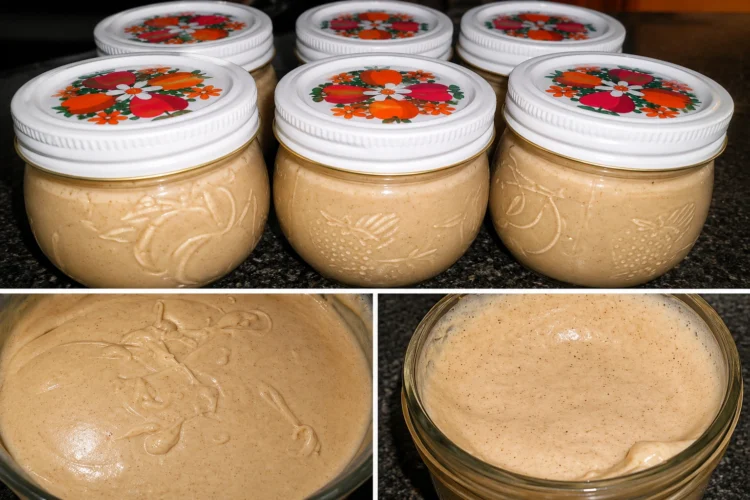
What makes it worth the effort is the texture, and I want to be specific about it because this is where most honey butters either succeed or turn into a disappointment. Made correctly, it is creamy and spreadable straight from the fridge, firm enough to hold a knife mark. Left out five minutes, it goes soft and glossy and starts to melt into whatever you put it on. That in-between stage is the best eating condition and it is the reason I make a double batch every December.
I filled six little jars with vintage floral lids this year and they looked almost too pretty to hand over. Which is the trap with this recipe, and I will warn you now. My mother guarded the last jar like treasure, and I understand exactly why she did, and I did not manage to give away all six.
Why You'll Love This Honey Cinnamon Butter
Because it is five ingredients, and three of them are already in your pantry. Cinnamon, vanilla, and salt. You are buying butter and honey and you already own everything else.
Because ten minutes of work makes about one and a half cups, which is 24 tablespoons, which is enough for six four-tablespoon jars. That is a genuine gift batch, not a token amount stretched into six tiny jars.
Because it does three jobs at once. It is a spread for toast and rolls, it melts into oatmeal and warm pancakes, and it turns a plain cup of coffee into something that tastes like it was made for you.
Because the honey is what makes it work instead of just being sweet. Beat sugar into butter and you get sweet. Beat honey into butter and you get sweet plus the faintest floral note underneath, which is the difference between a flavored butter and an actual honey butter. Use real honey. The good stuff matters here more than it would in a cake.
Because the cinnamon is doing the seasonal work. Cinnamon is not a holiday ingredient by nature, but combined with butter and honey it smells like a specific room at a specific time of year, and that smell is most of the value here.
Because it survives being eaten cold. A lot of nice spreads are only good at room temperature on fresh bread. This one is perfectly good straight from the fridge on a slice of leftover toast, which is what makes it a real breakfast butter rather than a decoration.
And because it is genuinely useful enough that nobody will be polite about it. A jar of this is not a thing people say thank you for and put in a cupboard. It gets eaten within a week.
Why This Honey Cinnamon Butter Recipe Works
There is no baking involved here, which means everything depends on how the fat and the sugar are combined. Four things decide whether you end up with something glossy and spreadable or something grainy and split, and all four are in the instructions.
First, the butter must be genuinely softened, not melted. Softened is the stage where a finger leaves a clean indent with no resistance but the butter still holds its shape. Melted butter and honey will not emulsify the same way, and you end up with a separated, oily mixture in the jar that looks wrong before you even open it. Room temperature, about 68 to 70°F, is the target. If you rushed it in the microwave, you have gone too far, and the whole batch is compromised.
Second, the honey goes in slowly while the butter is still being beaten. This is the step people skip, and it is the one that decides the texture. Drizzle it in over about a minute with the mixer still running and the butter has time to incorporate it evenly. Dump it in all at once and the honey sits in heavy streaks that never fully disappear, and those streaks are exactly where the butter will separate later.
Third, the butter has to be beaten light before the honey goes in. Two minutes of beating on medium speed aerates the butter and whips in a small amount of air, which is what gives this spread its cloud-like texture rather than the dense, oily feel of butter that was never worked. You are looking for a noticeably paler color and roughly25 percent more volume. Skip this and your honey butter is fine but it is just flavored butter.
Fourth, the salt is not optional in the way it sounds optional. A tiny pinch does not make the spread salty. It suppresses the sweetness slightly and makes the cinnamon taste more like cinnamon. Without it the honey can dominate and the whole thing reads as a sweet spread. With it you taste cinnamon first and honey second, which is the correct order.
And the reason it softens at room temperature rather than staying a brick is the honey itself. Honey holds onto water, so this spread keeps a small amount of free moisture in the fat. That is why it goes from firm to spreadable in about five minutes instead of staying solid, and it is also why it should be refrigerated. Left on a counter for a week, the moisture eventually migrates and you get a separated jar.
Ingredient Breakdown
1 cup unsalted butter, 2 sticks, softened to room temperature. The entire base. Unsalted is specified because the recipe includes salt and because salted butter varies so much between brands that your seasoning is unpredictable. If you only have salted butter, use it and cut the added salt entirely, because it is already seasoned. The butter contributes about 85 percent of the calories and almost all of the fat, and there is no way around that which is why I label the numbers honestly below.
1/2 cup honey, about 8 ounces. Roughly 10 tablespoons. This is the sweetener and the flavor, and the quality genuinely matters more here than in almost any other recipe on this site, because there is so little of it and you taste it directly. A honey that tastes of clover and grass will taste like clover and grass in the butter. Dark amber honey gives a deeper, more molasses-leaning result. Raw honey works and costs more and does not make it better.
1 and1/2 teaspoons ground cinnamon. Not cinnamon sugar, and not a cinnamon blend with nutmeg and clove already in it, though that blend does taste good here if you want a warmer direction. Regular ground cinnamon is the right call. The quantity is more generous than it looks because you are using a full tablespoon of butter per teaspoon of spice, and the fat carries flavor in a way water does not.
1/2 teaspoon pure vanilla extract. Pure, not imitation. The distinction is real in a recipe where vanilla is a supporting flavor rather than the headline, because imitation vanilla reads as a flat chemical sweetness on the finish and the difference is detectable when the butter is soft and barely sweetened. It goes in at the end of the mixing, not with the cinnamon, so you can taste it as it incorporates.
A tiny pinch of salt, about 1/8 teaspoon. This is the ingredient people leave out and then cannot figure out why the spread tastes one-dimensional. It does not make anything salty. It sharpens the cinnamon and stops the honey from flattening the whole thing into pure sweetness.
Kitchen Equipment
A stand mixer or a hand mixer. This is the one place where the equipment genuinely matters, because you need about two minutes of sustained beating to get the butter light and fluffy, and a fork will not get there. A hand mixer works perfectly, it is just more work for you.
Softened butter, which needs a plan. Either leave the sticks out for60 to 90 minutes, or cut them into one-inch cubes which softens in about 20 minutes, or cut them into small pieces and microwave them in five-second bursts, testing between each. The cubes and the short bursts are far better than just waiting, and testing between bursts is the part people skip.
A measuring spoon set that includes a1/2 teaspoon and a 1/8 teaspoon. A 1/8 teaspoon is half of a 1/4 teaspoon, so measure into that.
A spatula for smoothing the tops of the jars, and ideally an offset spatula if you have one, because the tops are what people see first when you hand someone a jar.
Six clean jars. Mason or Kerr are the obvious choice, and small 4-ounce or half-pint size is the right volume for 4 tablespoons each. If you are reusing jars, wash them and run them through a dishwasher cycle first, because wax and residue will interfere with the butter.
A fine-mesh strainer if your honey has any cloudiness or debris in it. Honey straight from a squeeze bottle can carry small particles.
Step-by-Step Instructions
Step 1: Soften the butter properly. Cut both sticks into one-inch cubes and leave them at room temperature for about 20 minutes, or microwave in five-second bursts, testing between each one. You want the stage where a finger presses in and leaves a clean indent with no resistance, and the stick still holds its shape. If it dents under your thumb without any pushback, it has gone too soft and you should chill it for 10 minutes. Melted butter will not work.
Step 2: Beat the butter light and fluffy. Put the softened butter in the bowl and beat on medium speed for about 2 minutes. You are watching for the color to turn noticeably paler and the volume to increase by roughly a quarter. This is where the cloud texture comes from and it is not optional.
Step 3: Drizzle the honey in slowly. With the mixer still running on medium, drizzle the honey in over about 60 seconds in a thin stream. Let each addition incorporate before the next. If you dump it in all at once, you get visible heavy streaks that never blend and those streaks are where the spread will separate later.
Step 4: Add the cinnamon, vanilla, and salt. Add the cinnamon, the vanilla extract, and the small pinch of salt. Beat on medium for another 30 to 45 seconds until the mixture is completely smooth, creamy, and evenly colored, with no dark streaks of cinnamon sitting at the bottom.
Step 5: Taste and adjust. Scrape a small amount onto a spoon and taste it. This is a genuine step, not optional. If it needs more sweetness, add honey a teaspoon at a time. If the cinnamon is not reading, add another quarter teaspoon. Adjusting in teaspoons rather than tablespoons matters, because it is very easy to overshoot and you cannot take it back once it is in the jar.
Step 6: Spoon into clean jars. Scrape the butter into your clean jars and smooth the top flat with a spatula or the back of a spoon. Wipe the rim clean, because any butter on the thread will stop the lid from sealing properly and will smell in the fridge.
Step 7: Chill to set. Refrigerate for at least 1 hour to firm up. It will firm considerably in that time and continue to firm in the fridge over the next few hours, which is why a jar made in the morning tastes better at dinner than it did straight off the spatula.
Step 8: Label and store. Label each jar with the date and a note to refrigerate. This matters for anything you hand to someone else, because a jar of butter left on a counter will separate and eventually smell, and it is much better if they know before it happens than after.
Expert Tips
Soften the butter properly, and check it with a finger. Softened is a specific stage between cold and melted, and guessing from the outside of the wrapper is how batches get ruined. A clean finger indent with the stick still holding its shape is the target.
Cut the butter into cubes instead of leaving it in sticks. Cubes soften evenly and about four times faster, and it takes the waiting out of the recipe.
Drizzle the honey over a full minute with the mixer running. This is the single most important technique in the recipe and it takes one minute longer than you think you need.
Beat the butter before the honey, not after. Two minutes of aeration first is what makes this a whipped spread rather than flavored butter.
Use real honey and use a decent one. In a recipe this simple, the honey is a third of the flavor profile and you taste it undiluted. There is no flour or heat to hide a mediocre jar.
Do not skip the salt. It is not a salty pinch, it is a flavor-sharpening pinch, and without it the spread reads as flatly sweet.
Taste before you jar it, and adjust in teaspoons. It is much harder to fix an over-cinnamon batch once it is set.
Add the vanilla at the end. If you add it with the honey it gets beaten longer than it needs to be and loses its roundness.
Fill the jars and smooth the tops properly. This is the part people see when you hand one over, and a domed or smeared top makes a good batch look homemade in the wrong way.
Wipe the jar rims clean before you screw the lids on. Butter on the thread prevents a seal and picks up fridge odors.
Label anything you give away, with the date and a refrigerate instruction. It is a small courtesy that prevents somebody leaving a jar on the counter for two weeks.
Make a double batch and keep one. I am serious about this and I am not going to pretend otherwise.
Common Mistakes to Avoid
Melted butter. The most common failure. Butter and honey will not emulsify properly when the butter is liquid, and you end up with a separated, oily mixture that looks wrong in the jar and does not spread like a butter should.
Dumping the honey in all at once. You will see heavy streaks that never blend, and those streaks are where the spread separates later. It takes one minute to drizzle it in properly.
Not beating the butter long enough first. Two minutes until pale and increased in volume. Skip it and you have flavored butter, which is still delicious, but it is a flatter and denser spread.
Leaving out the salt. Nothing is wrong on paper and everything is wrong on toast. The pinch sharpens the cinnamon and holds the honey in check.
Using salted butter plus the added salt. Now it is genuinely salty. Either unsalted butter with the pinch, or salted butter with none.
Overshooting the cinnamon or honey when adjusting. Add a teaspoon at a time and taste between additions. You cannot stir cinnamon back out once it is dispersed through the fat.
Using cinnamon sugar instead of ground cinnamon. Cinnamon sugar contains sugar that will not dissolve into the fat the same way and it makes the spread gritty.
Filling jars that are not clean or not warm. Warm jars help the butter spread and settle instead of leaving air pockets. Run reused jars through a dishwasher first.
Butter on the jar rims. It blocks the seal and picks up refrigerator odors, and it will smell in the fridge for weeks.
Letting a gift jar sit on a counter. The honey holds water and the moisture will migrate out of the fat. Refrigeration is not optional beyond a couple of hours.
Serving it straight from the fridge without waiting. You will be fighting the knife and it will not taste as good. Five minutes at room temperature is the whole difference.
Storing it in the door of the fridge. The temperature swings every time the door opens, which is exactly what you do not want with a fat-and-honey spread. Back of the fridge.
Ingredient Substitutions
Salted butter with no added salt. Perfectly fine and this is what most people will actually do. Just leave the pinch out entirely, because the brands vary too much for me to tell you how much is in there.
Any honey you like. Clover, wildflower, buckwheat, orange blossom. Buckwheat honey is dark and malty and gives you a more adult, less candy-like spread. Do not use honey syrup or a honey blend that is mostly corn syrup, which is not honey and will taste flat.
Maple syrup for the honey. Works and produces a different but very good butter, more of a breakfast spread than a dessert spread. Use3/4 cup rather than 1/2 because maple is less sweet than honey. Reduce the cinnamon slightly, since maple has its own warmth.
Brown sugar and cream. Not a swap, but if you want a similar effect without honey, brown sugar mixed into softened butter works and is essentially a brown sugar butter. Higher in sugar and more like a spreadable fudge than a honey butter.
Cinnamon and nutmeg together. A quarter teaspoon of freshly grated nutmeg along with the cinnamon gives a warmer, more baking-spice direction. This is the version that goes on the Christmas morning table. Do not add more than a quarter teaspoon, because nutmeg takes over fast.
Pumpkin pie spice instead of cinnamon. Works, and use a bit less, about 1 to 1 and 1/4 teaspoons, because the blend is more concentrated. A little goes a long way.
Coconut oil as the base. It works and produces a more distinctly coconut-tasting spread. Be aware it is a weaker fat and looser in texture, so it softens faster in the fridge and spreads more readily, and the coconut flavor competes a little with the honey.
Olive oil instead of butter. A completely different direction, and a good one, more of a drizzle than a spread. Reduce the honey to about a third of a cup because it will be much looser.
Recipe Variations
Honey cinnamon butter with orange zest. The zest of one orange stirred in at the end. This is the version that ends up on a breakfast table in December and gets asked about, because citrus lifts the honey without competing with it.
Coffee butter. Two tablespoons of very finely ground coffee, or instant coffee dissolved in a teaspoon of hot water so it does not leave grit. This is outstanding on warm buns and it is the most adult version of the recipe.
Cardamom honey butter. Half a teaspoon of ground cardamom along with the cinnamon. Cardamom is floral and warm and it is the flavor people usually cannot identify but cannot stop eating.
Cinnamon brown butter. Brown the butter first, let it cool to room temperature, then beat. The milk solids go nutty and it tastes like a bakery. Watch it closely at the end, since the moment it goes from golden to burnt is about ten seconds.
Crucial cinnamon butter. A quarter cup of finely chopped crystallized ginger stirred in at the end. The heat is a slow build and it is genuinely good on a cold morning.
Pumpkin spice honey butter. Swap the cinnamon for 1 teaspoon pumpkin pie spice plus 1/4 teaspoon extra cinnamon. Makes a pumpkin butter that is not pie filling, which is a good thing to have in December.
Chocolate honey butter. Two tablespoons of cocoa powder or finely chopped dark chocolate stirred into the butter. The honey keeps it soft and it tastes like a fudge spread.
Apple butter swirl. Layer thirds: butter, a thin layer of apple butter, butter again, then the cinnamon on top. A swirl rather than a mix, so you can see it.
Seasonal topping jars. Make the base and then divide it before jarring, adding a different note to each: orange zest, coffee, cardamom, cinnamon nutmeg, and one plain. This is how I make a batch that does not get boring by the fourth jar.
Larger jars, fewer gifts. Make 3 half-pint jars instead of 6 small ones. Same total butter, less spooning, and they look more generous.
Make It Healthier, Honestly
Let me put this plainly, because honey butter has a health halo that it has not earned. This is a spread made of a full cup of butter and a half cup of honey. A single tablespoon is about 95 calories, and about 3.5 grams of those are sugar, and nearly all of it is added sugar. Six tablespoons will carry about 21 grams of sugar, which is more than a can of soda.
There is genuinely no added sugar in the sense of table sugar, because the sweetness comes from honey. That is not a loophole. Honey is sugar. It is 64 calories per tablespoon and roughly 17 grams of sugar per cup, and the body treats it the same as any other simple sugar. Calling it a natural sweetener is accurate and it is not a health claim.
I am also not going to call this keto or low-carb, even though a tablespoon is only about 3.5 grams of net carbohydrate, which would technically fit. The baking of that label would be dishonest about what is happening, which is that you are eating butter and sugar together for pleasure, and the recipe is good because of it.
The honest levers, in order of how much they actually matter:
Use less of it. This is the only real answer. A tablespoon on toast is a normal amount. Half a cup is a different project. Portion is the entire lever here, the same as with the cake, and I am not going to pretend there is a reformulated version that behaves the same.
Swap the butter for olive oil and cut the honey to a third of a cup. You get a honey drizzle instead of a spread, roughly a third of the calories, and a genuinely different and good thing. This is the closest you get to an actual improvement.
Use half the honey and add a little more cinnamon. That drops the sugar per tablespoon by roughly 40 percent and pushes the flavor toward spice rather than sweetness. It is still a sweet spread, just a spicier one.
Use a stiffer, higher-fat butter and a very small amount. Butter is already almost entirely fat, so there is no low-fat butter worth buying here. That would be spending money to make it worse and worse for you.
What will not work: any sugar-free honey substitute in the main recipe. It will not emulsify the same way, the texture goes thin and separates, and honey is doing real structural work here as an emulsifier and a moisture holder, not just as a sweetener.
So the honest ceiling: this is a sweet spread, it is a small-cupboard-ingredient holiday gift rather than a health food, and the thing that makes it worth making is the cinnamon and the generosity of the batch, not the nutrition. Enjoy it on the rolls and do not overthink it.
Meal Prep Guide
This is a make-ahead recipe in the truest sense, and honestly the only way I would make it.
Make the whole batch a day or two ahead and keep it in the fridge. It does not need to be eaten fresh at all, and in my house the jar at day three has better cinnamon flavor than the jar at day one.
Portion it into the jars ahead of time, which is the part that makes gifting easy. Do the mixing and jarring in one sitting, label everything, and then you are only deciding who gets which jar.
If you are assembling a holiday basket, the jar is the thing to make early. It is stable, it travels at fridge temperature in a cooler, and it needs no last-minute work on the day.
Make enough that you can keep two. If you plan to give away six, make eight. This is not a money-saving recommendation, it is the observation that everyone who makes this ends up hiding a jar, and the ones who planned for it do not have to be embarrassed about it.
You can also prep the dry side. Measure out the cinnamon and salt for several batches into a small container ahead, so on the day you are only softening butter and drizzling honey.
Storage
Refrigerated in a clean jar, this keeps for about 2 weeks, and it stays spreadable the entire time.
The butter is what preserves it, at about 80 percent fat, and the salt contributes. That is enough to keep it safe in the fridge for two weeks and it is also why it does not need anything else in the jar.
Keep it in the back of the fridge rather than the door, because the temperature swings every time the door opens and you want the butter cold and steady.
Always use a clean utensil. This is the main spoilage risk in a butter spread. Do not double-dip a spoon that has been in it back into the jar, because you introduce water and bacteria that will shorten the life and eventually turn it rancid.
For a jar you are gifting, label with the date and refrigerate. Anything sitting at room temperature for more than a couple of hours will start to separate, and the honey will make it smell strange in a way that gives it away.
Take it out of the fridge5 to 10 minutes before serving. Straight from the cold it is firm and hard to spread and it does not taste nearly as good.
Freezing
Yes, and it freezes well. Butter-based spreads freeze without difficulty and honey does not separate badly when frozen, which is unusual and useful here.
Freeze for up to 3 months. Freeze it in the jar if the jar is freezer-safe, with a little headspace, or in a sealed container or small bags if not.
Leave the lid off or loose while it freezes solid, then tighten it once hard, because a sealed jar with air in it can crack as the butter expands.
Thaw it in the fridge overnight, which is the right way. You will be able to stir it and re-smooth the top, which is useful because butter spreads sometimes go slightly grainy after a freeze.
If you froze it in small servings, thaw only what you need on the counter, about 20 minutes, and put the rest straight back in the freezer.
Do not refreeze it after it has been at room temperature for hours, same as any butter spread. Once it has been warm and gone back into the fridge, freeze it only if you are confident it has been cold for most of its life.
This is a genuinely useful freezer recipe. Gifting season is when I end up with three open jars and a need for more, and freezing one batch in the fall solves it without buying a second pound of butter.
Reheating
You do not reheat this, you soften it. Warming butter-based spread and then trying to spread it is a way to end up with a mess of separated fat and grainy solids.
Room temperature for 5 to 10 minutes is the target for normal use. That gets you from firm to glossy and spreadable, which is the best eating texture in the whole range.
If you are in a hurry, 5 to 10 seconds in the microwave on a low power setting, in short bursts, testing each time. The microwave is faster but it heats unevenly, so you get one hot spot and one cold spot, and the hot spot will melt more than you want.
For a softer drizzle consistency over warm bread, put the jar in a warm place for a few minutes, or scoop a tablespoon into a small bowl and let it stand. Same thing, less risk.
Never microwave the whole jar, especially if it is glass. Decant a spoonful first, then heat it.
If the butter has been in the fridge for a while and is genuinely too hard to spread, let it sit rather than fighting it. There is no faster method and none of them taste as good.
What to Serve With Honey Cinnamon Butter
Warm dinner rolls are the first answer and the right one. This is what my mother did with it and it is the pairing the recipe was designed for.
Toast, thick-cut, from good bread. Day-old bread is actually better here, because a soft fresh slice tears when you spread butter on it.
Homemade yeast rolls or a batch of dinner rolls from the same day, which is the gifting version of this recipe at its most useful.
Buttermilk biscuits, split and buttered while still warm, so the butter melts into the layers.
Pancakes and waffles, applied between the layers rather than on top, so it melts in rather than sitting on the surface.
Warm oatmeal or porridge, stirred in at the end so it melts rather than sits on top. Cinnamon and honey on oatmeal is one of those combinations that makes a very plain breakfast taste deliberate.
Cornbread, warm, which is a genuinely good use and probably not where anybody expects it to land.
Apple slices with no dip at all. Honey cinnamon butter on a cold apple slice is one of the simplest things in this entire article and it works every single time.
Cheese, at room temperature, on crackers. A sharp cheddar with this is a real snack rather than a party trick.
Beverage Pairings
Coffee, black, is the correct answer and the reason this spread works as a breakfast butter rather than a dessert topping.
A latte or cappuccino, which is really just coffee again, and the milk cuts the sweetness enough that a full tablespoon is easy.
Hot tea, especially chai or a black tea with no milk. The spice in the butter and the spice in the chai are doing the same job, which is either very good or slightly busy, depending on how much you like cinnamon.
Cold milk, for the kids at the breakfast table, and for anyone who thinks a glass of milk makes toast taste more like breakfast.
Apple cider or hot cider, which is the most seasonal drink pairing available and takes about three minutes to make.
For adults, a coffee liqueur or a small pour of bourbon alongside the coffee. This is not a recommendation so much as an observation that butter and coffee and a warm roll at seven in the morning is a specific kind of morning.
The rule here is simple: something with bitterness or a little acidity, which cuts the honey. Anything sweet on top of sweet makes the whole thing cloying fast.
Frequently Asked Questions
How long does honey cinnamon butter keep? About2 weeks in the refrigerator, and it stays spreadable the whole time. It also freezes well for up to 3 months, which is the more useful storage method if you are making a big batch for the holidays.
Can I make this honey cinnamon butter ahead of time? Yes, and you should. It is stable for two weeks in the fridge and actually better on day three than on day one, because the cinnamon flavor settles into the fat. It is one of the few recipes on this site where making it early is strictly better.
Do I have to use real honey? For this recipe, yes. The honey is a third of the flavor profile and you taste it undiluted, so a mediocre jar tastes mediocre in the butter. Buckwheat honey gives a deeper, more malty result and orange blossom is lighter and more floral. Do not use honey syrup or a blend that is mostly corn syrup.
Why is my butter mixture greasy and separated? Almost always because the butter was melted rather than properly softened, or because the honey was dumped in all at once instead of drizzled in over a minute. Either one prevents proper incorporation and the mixture cannot be rescued. Start over.
Can I use salted butter? Yes, and just leave out the added pinch of salt, because brands vary too much in salt content for me to tell you what to adjust. Use unsalted if you have it, because you control the seasoning.
Can I make this honey cinnamon butter with coconut oil? You can, and it works, but the result is looser and more distinctly coconut-flavored. It softens faster in the fridge and spreads more readily. It is a good dairy-free version and it is not the same as the butter version.
Is this recipe keto or low-carb? No, and I am not going to let the low net carb number imply otherwise. Honey is sugar, and it is the second-largest ingredient after butter. A tablespoon is about 95 calories and 3.5 grams of sugar. Calling it keto because the carb count fits would be misleading about what is happening in the bowl.
How much does it make? About 1 and 1/2 cups, which is 24 tablespoons, which fills six jars at 4 tablespoons each. That is a real gift batch rather than a token amount.
How long does it stay soft on the counter? A couple of hours safely, and up to about 5 minutes for the best texture. Longer than that and the honey's moisture starts migrating out of the fat. Do not leave it out overnight, and refrigerate anything you give away.
Can I reduce the sugar? You can halve the honey and add a quarter teaspoon more cinnamon, which drops the sugar per tablespoon by about 40 percent and makes it a spicier spread. Do not try a sugar-free substitute, because honey is doing real emulsifying and moisture work in this mixture and a substitute will not hold together.
What is the best honey for this? Whatever tastes best on a spoon, because that is exactly what you will taste in the finished spread. Dark amber varieties like buckwheat give a deeper, more adult result, and lighter honeys taste more candy-like. Raw is fine and more expensive and not meaningfully better here.
Can I give these as gifts without telling people to refrigerate? You should tell them. Butter spreads are not shelf stable, and a jar left on a counter will separate within a day or two and eventually smell. A small label with the date and a refrigerate note prevents somebody losing a jar you spent an afternoon on.
Nutrition Information
These are estimates. The yield assumption is 1 and 1/2 cups of finished spread, which is 24 tablespoons, filling6 jars at 4 tablespoons each. Every figure below is derived from ingredient weights for the whole batch and divided by 24.
Per tablespoon: approximately 95 calories, about 7.7 grams of total fat, roughly 3.5 grams of carbohydrate, essentially all of it sugar, and negligible protein. Per jar at 4 tablespoons: roughly 380 calories, about 31 grams of fat, and 14 grams of sugar.
Where the calories come from: butter is about 85 percent of the batch by weight and roughly 75 percent of the calories, at about 72 calories per tablespoon of the finished spread. Honey supplies the remaining calories, about 27 per tablespoon, and essentially all of the carbohydrate. Cinnamon and vanilla together contribute under 1 calorie per tablespoon, which is worth knowing because they are doing a lot of flavor work for nothing.
Where the sugar comes from: entirely from the 1/2 cup of honey. There is no table sugar in this recipe, which is a fact about the ingredient list and not a health claim, because honey is sugar. There is a small additional amount in the milk solids of the butter, which is negligible.
Saturated fat is the fat to look at, and it is high, at roughly 4.6 grams per tablespoon, because butter is about 50 percent saturated fat and there is nothing in this recipe that dilutes it. Anyone following heart-health guidance should know that a tablespoon of honey cinnamon butter has more saturated fat than a tablespoon of the butter it started as, because the honey adds volume without adding any fat to speak of.
These are estimates from ingredient weights, so they will vary by brand. Honey varies most, both in density and in how much water it carries, which changes the calorie count by 10 to 15 percent between jars. Treat these as a guide, not a measurement.
Allergens: milk and dairy, which is the only allergen in the recipe. Honey is not one of the nine major allergens required to be declared in US labeling, which means it is not separately called out on a food label, but anyone avoiding honey or on a honey-restricted diet for other reasons should know it is the second-largest ingredient here. Cinnamon is not a declared allergen, and anyone with a cinnamon sensitivity should know it is a full tablespoon-scale amount in this spread.
Food safety: this is a high-fat, low-moisture product, which is why the butter keeps it safe for two weeks in the fridge. The butter is pasteurized, so there is no raw-egg or raw-dairy risk here. The real risks are more ordinary. Cross-contamination from a spoon that has been in the jar and back into the butter, which shortens the life and introduces water. Leaving it at room temperature for days, which lets the honey's moisture migrate out of the fat and turns it rancid. And using a jar that has not been properly cleaned. Refrigeration is required for anything beyond a few hours.
This is not keto, not low-carb, not low-fat, not heart-healthy, and not diabetic-friendly, and I am not going to hedge on that. It is a sweet butter spread with about 95 calories and 3.5 grams of added sugar per tablespoon, made from five ingredients for the sake of a holiday morning and the people you hand it to.
Final Thoughts
I have been making this every December for a few years now, and the part I did not expect was how much it would teach me about the recipe itself. My mother never measured it, never wrote it down, and never once said it was anything special. She just kept a jar on the shelf and put it on the table. Standing in my own kitchen with a hand mixer going, I understood that she had made the same five-ingredient decision every Christmas for decades and that the recipe was never the point.
The technique is almost nothing, which is why it is worth doing properly. Soften the butter to the finger-indent stage, beat it pale for two full minutes, and drizzle the honey in over a whole minute. That is the entire difference between a glossy, cloud-soft spread and something that separates in the jar by week two. Ten minutes of attention, and every one of those minutes is doing something.
What I like most is that it travels as a gift without any of the complications that baked goods bring. It does not need to be cooled and wrapped and delivered warm, it sits at fridge temperature in a cooler, and it cannot go stale on the way. It is a food gift for someone who is busy, which is most people in December.
So make it a day or two early. Fill the jars, label them, and keep two back before the rest go out. Warm the rolls, set the jar on the table the way she did, and let everybody find it on their own rather than handing it around.
And I do genuinely want to know. Are you the person who keeps a jar, or do you actually hand over all six? Because I have decided that the two of us are the same kind of person, and that one of us is going to end up texting the other in December asking for the recipe again.
Whip, Jar, Gift
Honey Cinnamon Butter Recipe
Softened butter whipped with honey, ground cinnamon, and pure vanilla until pale and cloud-soft, then jarred for spreading on warm rolls. Five ingredients, about ten minutes of work, six gift jars.
Ingredients
- 1 cup unsalted butter (2 sticks, softened to room temperature)
- 1/2 cup honey (about 8 oz; good quality, it matters here)
- 1.5 teaspoons ground cinnamon
- 1/2 teaspoon pure vanilla extract
- 1/8 teaspoon salt (optional but it balances the sweetness)
For the Jars
- 6 clean4 oz jars (or 3 half-pint jars)
- Cooking spray, for greasing the jars
- Labels or jar tags, marked with the date
Softened is not melted. Cut the butter into one-inch cubes and leave it about 20 minutes, or microwave in five-second bursts, testing each time. You want a clean finger indent with the stick still holding its shape.
Instructions
- Soften the butter. Cut both sticks into one-inch cubes. Leave at room temperature about 20 minutes, or microwave in five-second bursts, testing between each. Softened butter dents under a finger but still holds its shape. Melted butter will not emulsify and the batch is ruined.
- Beat until light. Beat the softened butter on medium for about 2 minutes, until it is noticeably paler and up in volume by roughly a quarter. This aeration is what makes it a whipped spread rather than flavored butter.
- Drizzle the honey in. With the mixer still running on medium, drizzle the honey in a thin stream over about 60 seconds, letting each addition incorporate before the next. Dumping it in all at once leaves heavy streaks that never blend.
- Add the cinnamon, vanilla, and salt. Beat on medium another 30 to 45 seconds until completely smooth and evenly colored, with no dark cinnamon streaks at the bottom.
- Taste and adjust. Scrape a little onto a spoon. More sweetness, add honey a teaspoon at a time. More spice, add a quarter teaspoon of cinnamon. Adjust in teaspoons, because once it is in the jar you cannot stir it back.
- Spoon into clean jars. Fill lightly greased clean jars and smooth the top flat with a spatula. Wipe the rims clean so butter does not block the seal.
- Chill to set. Refrigerate at least 1 hour to firm up. It continues to firm over the next few hours in the fridge.
- Label anything you give away. Mark the date and refrigerate. Anything sitting on a counter will separate and start to smell.
Cook's Notes
Costs are estimates for 2 sticks of store-brand unsalted butter, one half cup of honey, and pantry cinnamon, vanilla, and salt. Jars add about $2.50 for six; reuse your own and the batch drops to roughly $5.25. Assumes 24 tablespoons filling six 4 oz jars. Honey price and brand vary the most.
- The one technique that decides everything: drizzle the honey in over a full minute with the mixer running. Butter needs time to incorporate it evenly. Dump it in and you get streaks that never blend, and those streaks are exactly where the spread separates in the jar by week two.
- Beat the butter pale before the honey, and give it the full two minutes. The color change and the volume increase are the whole difference between a whipped honey butter and flavored butter. It is two minutes of work and it is the reason the texture is cloud-soft.
- Do not skip the salt, and do not use salted butter as well. A tiny pinch sharpens the cinnamon and keeps the honey from flattening the whole spread. It is not a salty pinch. Use either unsalted with the pinch, or salted with none.
Nutrition (Labeled Estimates)
Approximate values for 1 tablespoon of a batch made with unsalted butter, honey, ground cinnamon, pure vanilla extract, and a pinch of salt. The batch yields about 1.5 cups or 24 tablespoons, which fills six 4 oz jars at 4 tablespoons each. Estimates only; actual values vary by brand, particularly the honey, which differs in density by 10 to 15 percent between jars.
Sugar: approximately 3.5 g per tablespoon, all of it from honey. There is no table sugar in this recipe, which is a fact about the ingredient list and not a health claim, because honey is sugar. One full jar at 4 tablespoons carries about 14 grams, which is more than a can of soda. Per jar the total is roughly 380 calories. Contains milk and dairy, the only declared allergen; honey is not one of the nine major US allergens, though anyone avoiding honey should know it is the second-largest ingredient here. Butter is pasteurized, so there is no raw-dairy risk. The real spoilage risks are a spoon double-dipped back into the jar, an unclean jar, and leaving it at room temperature for days. Refrigerate beyond a couple of hours and use a clean utensil every time. Not keto, not low-carb, not low-fat, not heart-healthy, and not diabetic-friendly.