
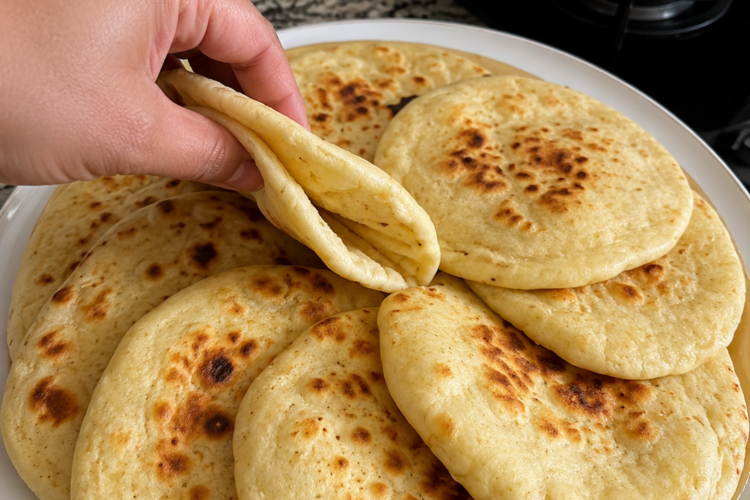
Soft Stovetop Flatbread: The 20-Minute Homemade Bread That Ruined Store-Bought for Me Forever
I used to believe homemade bread required a free afternoon, a stand mixer, and a certain amount of quiet suffering. Then my neighbor invited me over on a random Tuesday and casually made fresh flatbread while we talked about nothing important. She mixed a soft dough in one bowl, let it sit for ten minutes, rolled out rounds, and cooked them on a hot griddle. Steam rose every time she flipped one. The kitchen filled with that warm, slightly toasted smell that makes people wander in without realizing they’re doing it. She folded the first finished bread in half, tore off a piece, and handed it to me. It was soft, tender, and still hot enough to make me close my eyes for a second.
That night I made the same dough at home. My family appeared in the kitchen before I had even finished the second one, asking what smelled so good and whether dinner was ready. I’ve made these flatbreads at least a dozen times since then. Sometimes I brush them with melted butter the second they come off the pan. Sometimes I stuff them with cheese while they’re still warm. Most nights I just stack them under a clean towel and let people pull them apart at the table. They are the opposite of complicated. No long kneading, no hours of rising, no oven to preheat. Just mix, rest, roll, and cook until golden spots appear and the bread puffs like a little pillow.
If you’ve ever wanted warm, homemade bread on a weeknight without turning the evening into a project, this is the recipe that finally makes it possible.
Why You'll Love This Recipe
These flatbreads deliver everything people love about fresh bread with almost none of the usual work. The dough comes together in five minutes and needs only a short rest. You cook them on the stovetop, so the kitchen stays cooler and you can watch them puff in real time. The texture is soft and pliable with those beautiful browned spots that taste slightly nutty and toasted. They stay tender for hours when stacked under a towel, and they reheat beautifully the next day.
They are endlessly useful. Tear them into pieces for dipping, wrap them around grilled meat or vegetables, use them as a base for quick pizzas, or simply eat them warm with butter. The ingredient list is short and mostly pantry staples. The method is forgiving enough that even first-time bread bakers succeed on the first try. And because they cook so quickly, you can make a fresh batch while the rest of dinner finishes. That combination of speed, softness, and everyday usefulness is rare. These flatbreads have it.
Why This Recipe Works
The dough relies on a smart balance of flour, yogurt, and water. Yogurt adds tenderness and a subtle tang while its acidity helps relax the gluten, so the dough stays soft and easy to roll without long kneading. Warm water hydrates the flour quickly and encourages a little natural elasticity during the short rest. A small amount of oil keeps the crumb moist and prevents the breads from drying out on the hot pan. Salt and sugar season the dough and help with browning.
The brief ten-minute rest is enough for the flour to fully absorb the liquid and for the gluten to relax. That short pause is why the dough rolls out smoothly instead of springing back. Cooking on a dry, properly heated griddle or skillet creates the signature golden spots and encourages the bread to puff. The steam trapped inside the dough is what makes the interior soft and layered. Stacking the finished breads under a towel traps residual heat and steam, keeping them pliable instead of letting them crisp up as they cool. Every step is deliberate and simple, which is why the results feel almost too good for the amount of effort required.
Ingredient Breakdown
All-purpose flour forms the structure. Four cups give you eight to ten generous flatbreads. Spoon and level the flour or weigh it if you prefer precision; too much flour makes the dough stiff and the breads dense. Bread flour can be used for a slightly chewier result, but all-purpose keeps them soft and tender.
Plain yogurt is the secret to the soft texture. Full-fat or low-fat both work. Greek yogurt can be used if you thin it slightly with a splash of water or milk so the dough doesn’t become too stiff. The yogurt’s acidity tenderizes the dough and adds a gentle flavor that keeps the breads from tasting flat.
Warm water hydrates the flour and helps the dough come together easily. Aim for water that feels comfortably warm to the touch, not hot. Hot water can make the dough sticky and difficult to handle.
Salt seasons the dough thoroughly. One teaspoon is the right amount for four cups of flour. Without it the breads taste dull.
Sugar is a small but important addition. It helps with browning and balances the yogurt’s tang. One teaspoon is enough; you won’t taste sweetness in the finished bread.
Oil (any neutral oil or olive oil) adds richness and keeps the crumb soft. One tablespoon goes into the dough; a little extra is used for cooking if your pan tends to stick, though a well-heated dry pan usually needs none.
Kitchen Equipment
You need a large mixing bowl, a wooden spoon or clean hands for mixing, a clean kitchen towel, a rolling pin, and a heavy skillet, cast-iron pan, or flat griddle. A bench scraper or sharp knife helps divide the dough evenly. Measuring cups and spoons complete the list. No stand mixer, no special baking stone, no oven required. If you have a kitchen scale it can make dividing the dough more precise, but it is not necessary.
Step-by-Step Instructions
In a large bowl whisk together 4 cups all-purpose flour, 1 teaspoon salt, and 1 teaspoon sugar until evenly combined. Add 1 cup plain yogurt, 1 cup warm water, and 1 tablespoon oil. Stir with a wooden spoon or your hand until a soft, slightly sticky dough forms and no dry flour remains at the bottom of the bowl. The dough should feel tacky but not wet. If it seems too dry and shaggy, add water one tablespoon at a time. If it is overly sticky, sprinkle in a little more flour. You are aiming for a dough that is soft and pliable.
Cover the bowl with a clean towel or plastic wrap and let the dough rest at room temperature for 10 minutes. This short rest allows the flour to fully hydrate and the gluten to relax so the dough will roll out easily.
Turn the rested dough out onto a lightly floured surface. Divide it into 8 to 10 equal pieces. A kitchen scale helps if you want perfectly even breads, but eyeballing works fine. Roll each piece into a smooth ball by cupping your hand over it and moving in a circular motion. Cover the balls with the towel so they don’t dry out while you work.
Working with one ball at a time, flatten it with your palm, then roll it into a circle about ¼-inch thick and roughly 6 to 8 inches across. Add a light dusting of flour as needed to prevent sticking, but avoid working in too much extra flour or the breads will become tough. Keep the remaining dough balls covered.
Heat a heavy skillet, cast-iron pan, or griddle over medium-high heat until it is properly hot. A drop of water should sizzle and evaporate within a second or two. Place one rolled flatbread on the dry pan. Cook for 1 to 2 minutes, until the surface looks dry and bubbly and golden brown spots appear on the underside. Flip and cook the second side for another 1 to 2 minutes. The bread should puff in places and develop more golden spots. Adjust the heat if the breads are browning too quickly or not coloring at all.
As each flatbread finishes, brush it lightly with melted butter if desired and stack it on a plate. Cover the stack with a clean towel. The trapped steam keeps the breads soft and pliable. Continue with the remaining dough. Serve warm.
Expert Tips
The dough should be soft and slightly sticky when mixed. A stiff dough produces dense, dry breads. Err on the side of softer and use flour only as needed while rolling.
Let the pan get properly hot before the first flatbread goes on. A lukewarm pan gives pale, tough results.
Do not add oil to the pan unless the breads are sticking. A dry, hot surface creates the best browning and puff.
If the dough springs back while rolling, let that piece rest another two or three minutes. The gluten simply needs a little more time to relax.
Stacking the finished breads under a towel is not optional if you want them soft. Uncovered breads firm up as they cool.
These cook quickly. Stay at the stove and flip as soon as the underside has good color. Walking away is the fastest way to burn them.
For extra-soft breads, brush both sides with melted butter while they are still hot.
Common Mistakes to Avoid
Adding too much flour during mixing or rolling is the most common error. The dough should stay soft. Excess flour makes the breads dense and dry.
Skipping the ten-minute rest leaves the dough tight and springy, so it fights you when you try to roll it out.
Cooking on a pan that is not hot enough produces pale, steamy breads that never develop those desirable golden spots or the soft interior texture.
Rolling the dough too thin causes it to dry out and become cracker-like. Aim for about ¼-inch thickness.
Leaving the finished breads uncovered lets them cool and firm up. Always stack and cover them.
Overcrowding the pan if you try to cook more than one at a time (unless you have a large griddle) drops the temperature and leads to uneven cooking.
Ingredient Substitutions
Greek yogurt works if you thin it with a tablespoon or two of water or milk so the dough consistency stays the same.
Dairy-free yogurt can replace regular yogurt for a dairy-free version. Choose an unsweetened plain variety.
Whole-wheat flour can replace up to half of the all-purpose flour. The breads will be slightly denser and more flavorful. You may need an extra splash of water.
Olive oil, avocado oil, or melted butter can all be used in the dough and for brushing.
If you are out of yogurt, an equal amount of buttermilk or even sour cream thinned with a little water can stand in, though the flavor will shift slightly.
For a richer dough, replace ¼ cup of the water with milk.
Recipe Variations
Brush the hot breads with garlic butter and sprinkle with chopped parsley or cilantro for a quick garlic flatbread.
Scatter shredded cheese and a pinch of herbs on one half of a rolled circle, fold it over, and cook both sides for a stuffed version.
Add a teaspoon of cumin or za’atar to the dry ingredients for a gently spiced flatbread that pairs beautifully with Middle Eastern or Mediterranean meals.
Brush the cooked breads with olive oil and sprinkle with flaky salt and fresh rosemary for a more elegant table bread.
Use the warm flatbreads as the base for personal pizzas: top with sauce, cheese, and whatever you like, then return to the pan with a lid for a minute or two to melt the cheese.
For a sweeter breakfast version, brush with butter and cinnamon sugar while hot.
Make It Healthier
These flatbreads are already free of additives and made with simple ingredients. To increase fiber, replace one cup of the all-purpose flour with whole-wheat flour or white whole-wheat flour. The texture remains soft if you don’t go beyond that ratio. Using low-fat yogurt reduces the fat content slightly without harming the tenderness. Brushing with a lighter hand of butter or skipping the butter entirely keeps the calorie count lower. Because the breads are so satisfying, most people find that one is enough alongside a meal, which naturally helps with portion control. Serving them with protein-rich dips or vegetable fillings turns them into part of a balanced plate rather than just a carb side.
Meal Prep Tips
The dough can be mixed, covered, and refrigerated for up to 24 hours. Let it sit at room temperature for 20 minutes before dividing and rolling. Cooked flatbreads keep well and reheat beautifully, so you can make a full batch on the weekend and enjoy them through the week. Stack cooled breads with parchment between them, place in a zip-top bag, and refrigerate. They also freeze well (see Freezing section). For busy nights, cook only what you need and keep the remaining dough balls covered in the refrigerator for the next day.
Storage
Let the flatbreads cool completely, then stack them with parchment or wax paper between each one and place in an airtight container or zip-top bag. They keep at room temperature for one day or in the refrigerator for up to four days. The towel method right after cooking keeps them soft for serving the same day; for longer storage the parchment prevents them from sticking together.
Freezing
These freeze excellently. Cool the breads completely, stack with parchment between each, and place in a freezer bag. Press out excess air and freeze for up to three months. Thaw at room temperature or in the refrigerator. Reheat directly from frozen in a dry skillet over medium heat for a minute or two per side, or wrap in a damp paper towel and microwave briefly. The texture returns remarkably close to fresh.
Reheating
The best way to reheat is in a dry skillet over medium heat for 30 to 60 seconds per side until warmed through and soft again. A microwave works in a pinch: wrap one or two breads in a slightly damp paper towel and heat for 15 to 20 seconds. Avoid high power or long times or they can turn tough. A toaster oven or regular oven at 300°F for a few minutes also works if you are reheating a larger stack, but the skillet method restores the best texture.
What to Serve With It
These flatbreads are happiest alongside anything that benefits from a soft, warm scoop or wrap. Serve them with hummus, baba ganoush, or tzatziki for a simple appetizer. Use them to wrap grilled chicken, falafel, or roasted vegetables. They are excellent with curries, stews, and chili because they soak up sauces without falling apart. At breakfast they pair beautifully with eggs and avocado or with a drizzle of honey and a sprinkle of sea salt. For a casual dinner, set a stack on the table next to a big salad and let people build their own plates. They also make outstanding sandwich wraps the next day when filled with leftover roasted meat or vegetables.
Beverage Pairings
A cold beer—especially a light lager or wheat beer—complements the warm, slightly toasted flavor of the bread. Iced tea or sparkling water with lemon keeps things refreshing on warm nights. If you are serving the flatbreads with a spiced or saucy meal, a crisp white wine such as Sauvignon Blanc or a dry rosé works well. For a cozy evening, a simple glass of cold milk or a mild herbal tea lets the bread stay the focus. The goal is something clean that doesn’t compete with the gentle tang and toasted notes of the flatbread itself.
Frequently Asked Questions
Can I make the dough ahead? Yes. Mix it, cover tightly, and refrigerate up to 24 hours. Bring to room temperature for about 20 minutes before rolling.
Why didn’t my flatbreads puff? The pan may not have been hot enough, or the dough was rolled too thin. Proper heat and ¼-inch thickness give the best puff.
Can I use a nonstick pan? Yes, though cast iron or a heavy stainless skillet usually gives better browning. Avoid high heat with nonstick coatings.
How do I keep them soft for serving? Stack them as they come off the pan and cover with a clean towel. The steam does the work.
Can I bake these instead of cooking on the stovetop? You can, but the texture will be different. A very hot baking stone or sheet at 475°F for a few minutes per side approximates the result, yet the stovetop method is superior for this dough.
Is the yogurt necessary? It is what makes the breads especially soft and tender. Substitutions exist (see Ingredient Substitutions), but plain yogurt gives the classic result.
How thick should I roll them? About ¼ inch. Thinner and they become crisp; thicker and they may not cook through evenly.
Can I freeze the raw dough? Yes. Divide into balls, freeze on a tray, then transfer to a bag. Thaw in the refrigerator overnight before rolling.
Why is my dough so sticky? Humidity and yogurt brands vary. Add flour one tablespoon at a time until it is soft but manageable. A slightly sticky dough is better than a stiff one.
How many does this recipe make? Eight to ten flatbreads, depending on how large you roll them. Easily enough for a family dinner with leftovers.
Nutrition Information
Approximate nutrition per flatbread (based on 10 flatbreads, without extra butter): Calories: 190 Total Fat: 3g Saturated Fat: 0.5g Cholesterol: 2mg Sodium: 240mg Total Carbohydrates: 36g Dietary Fiber: 1g Total Sugars: 2g Protein: 5g
Values are estimates and will vary with exact flour measurement, yogurt fat content, and whether you brush with butter. The breads are modest in fat and provide a satisfying amount of carbohydrate energy.
Final Thoughts
There is a quiet joy in pulling warm, soft bread off a hot pan on a weeknight and watching the people you feed reach for it before anything else on the table. These stovetop flatbreads give you that feeling without asking for hours of your time or a long list of special ingredients. They are proof that homemade bread does not have to be a production. Once you make them a few times, the process becomes automatic, and the reward—steam rising, golden spots, that first hot tear—never gets old. Keep the ingredients on hand. On the next ordinary Tuesday when you want something warm and real on the table, you will already know exactly what to do.
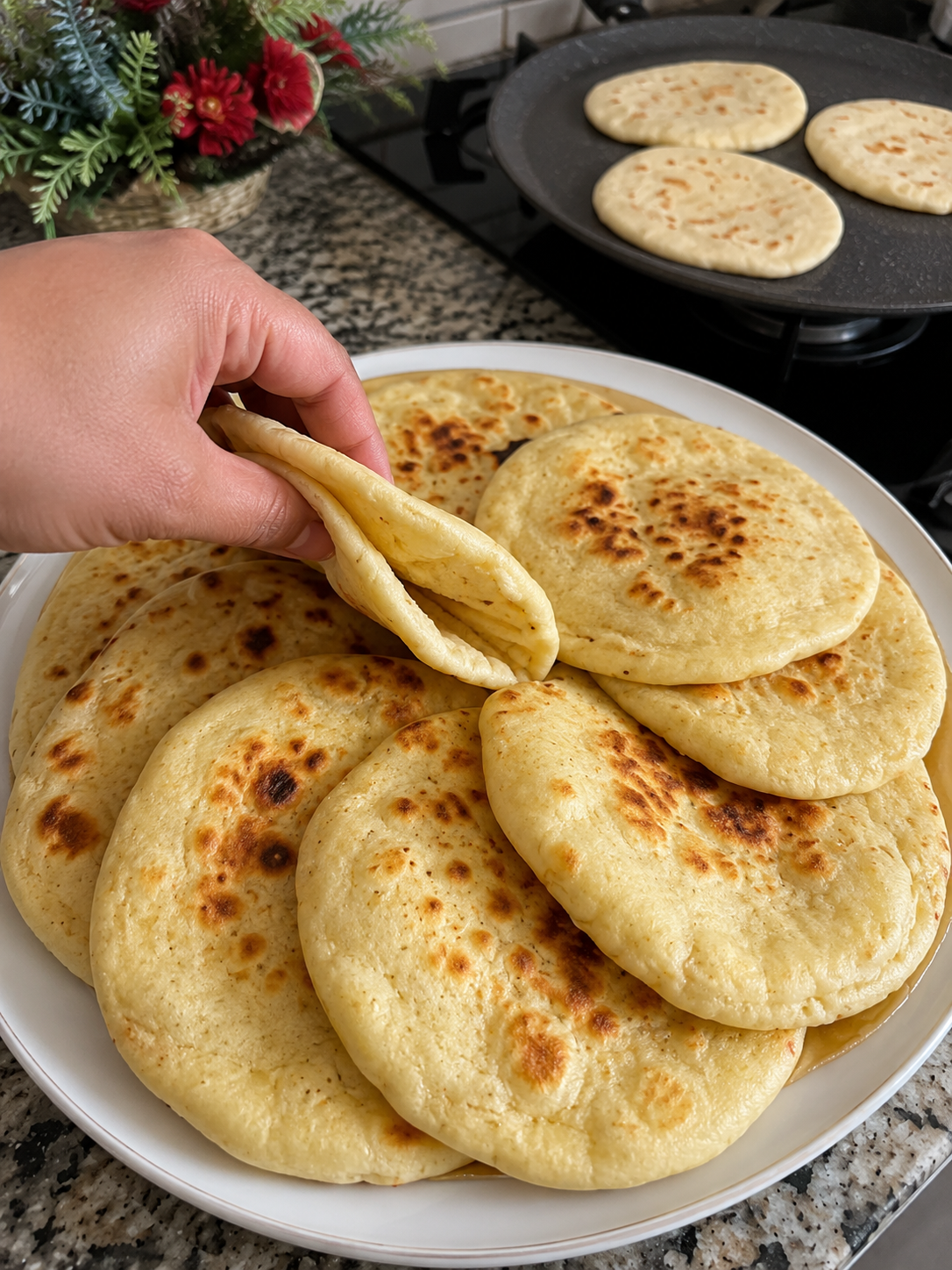
Soft Stovetop Flatbread
Ingredients
Equipment
Method
- In a large bowl, mix flour, salt, and sugar.
- Add yogurt, warm water, and oil. Stir until a soft, slightly sticky dough forms.
- Cover and let rest 10 minutes.
- Divide dough into 8–10 equal pieces and roll each into a ball.
- On a lightly floured surface, roll each ball into a ¼-inch-thick circle.
- Heat a dry skillet or griddle over medium-high heat.
- Cook each flatbread 1–2 minutes per side until golden brown spots appear and the bread puffs slightly.
- Brush with melted butter if desired. Stack and cover with a towel to keep soft.
- Serve warm.
Notes
Keep cooked breads stacked and covered for maximum softness.
Leftovers reheat beautifully in a dry skillet.
Dough can be refrigerated up to 24 hours before rolling.
Nutrition: Serving Size: 1 flatbread Calories: 190 Fat: 3g Carbohydrates: 36g Protein: 5g