
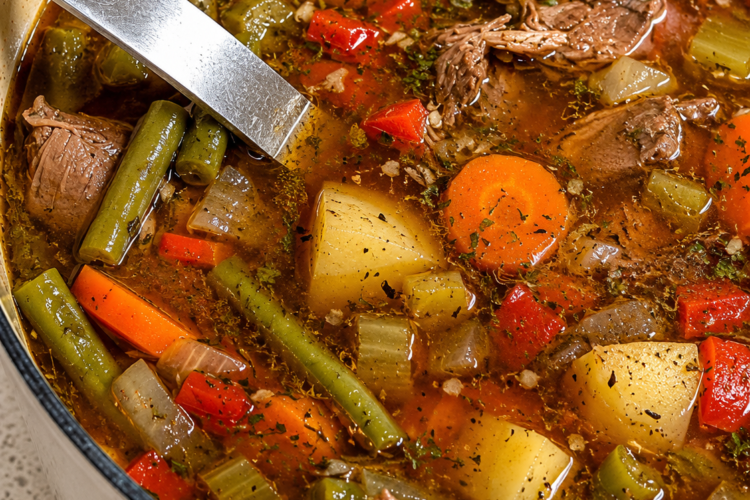
Best Ever Easy Vegetable Beef Soup
There are evenings when the house feels quieter than usual, when the light outside fades earlier than expected, and the only thing that seems right is a pot of something simmering on the stove. For me, that something has always been vegetable beef soup. Not the thin, watery kind that comes from a can, but a deeply flavorful, sturdy pot of soup that fills the kitchen with the smell of browned beef, sweet carrots, and thyme.
I can still picture my mother standing at the old gas stove, wooden spoon in hand, coaxing every last bit of flavor from the bottom of her heavy Dutch oven. She never measured much. She just knew. A little extra garlic when the day had been hard. An extra handful of green beans when the garden was generous. The soup always tasted like care itself—rich, honest, and filling in a way that went beyond the stomach.
Years later, when my own children started coming through the door with cold cheeks and empty stomachs, I reached for that same feeling. I wanted a soup that could be started after work and still land on the table before anyone got too restless. I wanted tender pieces of beef that practically melted, vegetables that stayed bright and distinct, and a broth so savory that people would ask for seconds before they finished the first bowl. This Best Ever Easy Vegetable Beef Soup is the version that finally stuck. It is the one I make when the week has been long, when friends drop by unannounced, or when I simply need the house to smell like home again.
It is hearty without being heavy, simple without being plain, and flexible enough to welcome whatever vegetables you happen to have on hand. Once you taste the way the seared beef and slow-simmered vegetables come together, you will understand why this recipe earns its name. Let me walk you through every step so you can make it with confidence and share it with the people who matter most.
Why You’ll Love This Recipe
This soup earns its place in the regular rotation for reasons that go far beyond convenience. First, the flavor is layered and deeply satisfying. Searing the beef creates a rich foundation that no amount of seasoning alone can match. The vegetables soften into the broth while still keeping their individual character, giving every spoonful both substance and brightness.
Second, it is genuinely approachable. The ingredient list is straightforward, the technique is forgiving, and the total hands-on time stays under thirty minutes. Once the pot is simmering, you are free to set the table, help with homework, or simply sit down for a moment.
Third, it is remarkably versatile. Serve it as a complete meal with crusty bread, pack it into thermoses for lunch, or freeze portions for nights when cooking feels impossible. It reheats beautifully and tastes even better the next day once the flavors have settled together.
Fourth, it feels nourishing in the truest sense. The combination of lean-ish beef, potatoes, carrots, green beans, and corn delivers protein, fiber, and a range of vitamins in one comforting bowl. It is the kind of meal that leaves everyone satisfied without feeling weighed down.
Fifth, it scales easily. Double the batch for a crowd or make a single pot for a quiet weeknight. The method remains the same, and the results stay consistent.
Finally, it carries the quiet comfort of tradition. In a world full of complicated recipes and long ingredient lists, this soup returns you to the simple pleasure of something warm, honest, and made with care.
Why This Recipe Works
Understanding the science behind the method turns good results into reliable ones. This vegetable beef soup succeeds because each step builds flavor deliberately.
Searing the beef over medium-high heat triggers the Maillard reaction. The amino acids and sugars on the surface of the meat brown and create hundreds of complex flavor compounds that water-based cooking alone cannot produce. Working in batches prevents overcrowding, which would steam the meat instead of browning it. Those browned bits left in the pot—the fond—become pure gold once they are deglazed with broth.
Sautéing the onion, carrots, and celery in the residual fat softens their cell walls and begins to release their natural sugars. Adding the garlic later protects its more delicate compounds from burning and turning bitter. Deglazing with a small amount of broth dissolves the fond and incorporates every bit of that concentrated flavor into the liquid base.
The long, gentle simmer allows collagen in the chuck roast to break down into gelatin. That gelatin gives the broth body and a silky mouthfeel without the need for additional thickeners. Potatoes release some of their starch as they cook, further enriching the texture. Adding the more delicate green beans and corn near the end keeps them bright and prevents them from turning dull or mushy.
Thyme and bay leaf contribute aromatic compounds that deepen during the simmer, while the tomatoes add acidity that balances the richness of the beef. The result is a soup that tastes complex yet remains clean and comforting.
Ingredient Breakdown
Beef chuck roast One and a half pounds, trimmed and cut into one-inch cubes. Chuck roast contains enough connective tissue to become meltingly tender during a long simmer while still delivering robust beef flavor. Look for well-marbled pieces with minimal excess fat. Store in the coldest part of the refrigerator and use within a few days of purchase, or freeze for longer storage. Stew meat can be substituted, though the texture may be slightly less consistent.
Olive oil Two tablespoons. Olive oil provides a clean fat for searing and sautéing. Its mild flavor does not compete with the beef. Store in a cool, dark place. Avocado oil or another neutral high-heat oil works equally well.
Yellow onion One medium, diced. Yellow onion brings natural sweetness and aromatic depth that form the backbone of the soup. Dice it evenly so it softens at the same rate. Store in a cool, dry place away from potatoes. White onion can stand in if needed.
Carrots Three large, peeled and diced. Carrots contribute sweetness, color, and beta-carotene. Uniform dice ensures even cooking. Store in the refrigerator crisper. Baby carrots can be used in a pinch; simply chop them to similar size.
Celery Two ribs, diced. Celery adds a subtle savory note and aromatic balance. Include some of the leafy tops if they look fresh. Store in the refrigerator wrapped loosely.
Garlic Three cloves, minced. Garlic provides pungent depth that mellows during cooking. Fresh cloves are preferable to jarred for brighter flavor. Store in a cool, dry place.
Low-sodium beef broth Four cups. Low-sodium broth lets you control the final seasoning. The beefy base amplifies the seared meat. Store unopened cartons in the pantry; refrigerate after opening. Homemade stock is wonderful if you have it.
Diced tomatoes One 14.5-ounce can, undrained. The tomatoes and their juices add acidity, umami, and body. Fire-roasted diced tomatoes bring a subtle smokiness if you prefer. Store unopened cans in the pantry.
Yukon gold potatoes Three medium, peeled and diced. Yukon golds hold their shape while still contributing a buttery texture and some natural starch. Russets can be used for a softer result. Store in a cool, dark place.
Dried thyme One teaspoon. Thyme offers earthy, slightly floral notes that pair beautifully with beef. Crush it lightly between your fingers before adding to release more aroma. Fresh thyme can be substituted at three times the amount.
Bay leaf One. Bay leaf contributes a quiet herbal background that rounds out the broth. Remove it before serving. Store dried bay leaves in an airtight container away from light.
Green beans One cup, trimmed and cut into one-inch pieces. Fresh or frozen both work. They add color, fiber, and a pleasant snap. Add them late so they stay bright.
Corn kernels One cup. Fresh, canned, or frozen. Corn brings gentle sweetness and cheerful color. Drain canned corn before adding.
Salt and freshly cracked black pepper To taste. Season the beef generously before searing and adjust the finished soup carefully. Freshly cracked pepper offers brighter flavor than pre-ground.
Fresh parsley Chopped, for garnish. Parsley adds a final pop of color and fresh herbal brightness. Flat-leaf parsley has more flavor than curly.
Kitchen Equipment
A large Dutch oven or heavy-bottomed soup pot is ideal. The thick base distributes heat evenly for proper searing and prevents scorching during the long simmer. A six-quart capacity gives ingredients room to move.
A wooden spoon is perfect for scraping up the fond without scratching the pot. A slotted spoon helps remove the seared beef cleanly.
A sharp chef’s knife and sturdy cutting board make quick, safe work of the beef and vegetables. Consistent knife cuts lead to even cooking.
Measuring cups and spoons ensure accuracy for broth and seasonings. A ladle makes serving neat and portion control simple.
Having these tools ready before you begin keeps the process calm and efficient.
Step-by-Step Instructions
Begin by trimming any large pieces of excess fat from the chuck roast and cutting the meat into uniform one-inch cubes. Pat the cubes dry with paper towels; dry surfaces brown far better than damp ones. Season them generously on all sides with salt and freshly cracked black pepper.
Heat the olive oil in a large Dutch oven over medium-high heat until it shimmers. Add the beef in a single layer, working in batches if necessary so the pieces do not touch. Listen for a steady sizzle. Let the meat sear undisturbed for two to three minutes per side until a deep brown crust forms. Turn the pieces carefully and continue until all sides are browned, about five to seven minutes total per batch. Transfer the seared beef to a plate with a slotted spoon, leaving the flavorful drippings in the pot.
Lower the heat to medium. Add the diced onion, carrots, and celery to the same pot. Stir to coat them in the residual fat and cook for about five minutes, until the onion turns translucent and the vegetables begin to soften. You will smell the sweetness of the onion rising. Add the minced garlic and cook for one full minute, stirring constantly, until fragrant but not browned.
Pour in about half a cup of the beef broth. Immediately use a wooden spoon to scrape the bottom of the pot, releasing every browned bit. Those bits dissolve into the liquid and become the soul of the broth.
Return the seared beef and any accumulated juices to the pot. Pour in the remaining broth, the entire can of diced tomatoes with their juices, the diced potatoes, dried thyme, and bay leaf. Stir gently to combine. The liquid should just cover the ingredients; add a splash more broth if needed.
Bring the soup to a gentle boil over medium-high heat. Once bubbles break the surface, reduce the heat to low, cover the pot, and let it simmer gently for forty-five to sixty minutes. The beef should become fork-tender and the potatoes should yield easily when pierced. Stir once or twice during this time to ensure even cooking.
Stir in the green beans and corn. Continue simmering uncovered for an additional ten to fifteen minutes, until the green beans are tender but still bright and the corn is heated through. The kitchen will smell richly of beef, thyme, and sweet vegetables.
Remove and discard the bay leaf. Taste the soup carefully and adjust with additional salt and pepper as needed. The broth should taste deep and balanced, the beef meltingly tender, and the vegetables distinct yet harmonious.
Ladle into warm bowls, scatter fresh chopped parsley over the top, and serve at once with crusty bread for dipping.
Expert Tips
- Pat the beef completely dry before seasoning; moisture prevents proper browning.
- Do not crowd the pot when searing; work in batches for the best crust.
- Resist the urge to move the beef too soon; let it develop a deep brown sear.
- Save every drop of the browned bits when deglazing; that is concentrated flavor.
- Cut all vegetables to similar sizes so they cook evenly.
- Use low-sodium broth so you control the final salt level.
- Simmer gently rather than boiling hard; a vigorous boil can toughen the meat.
- Add delicate vegetables like green beans and corn at the end to preserve color and texture.
- Taste the broth after the long simmer and adjust seasoning only then.
- Let the soup rest ten minutes off the heat before serving; flavors settle and deepen.
- For extra body, mash a few potato pieces against the side of the pot near the end.
- A splash of red wine vinegar or lemon juice at the finish brightens the whole pot.
- Fresh thyme sprigs can replace dried; tie them with the bay leaf for easy removal.
- If the broth tastes flat, a small pinch of sugar can balance the tomatoes.
- Always remove the bay leaf before serving; it is not meant to be eaten.
Common Mistakes to Avoid
- Skipping the sear. Without browning, the soup lacks depth and tastes one-dimensional.
- Crowding the beef in the pot. Overcrowding causes steaming instead of searing.
- Adding garlic too early. It can burn and turn bitter during the long sauté.
- Boiling the soup hard instead of simmering gently. High heat toughens the meat.
- Adding green beans and corn at the beginning. They will overcook and lose color.
- Using high-sodium broth without adjusting. The finished soup can become overly salty.
- Cutting the beef into uneven pieces. Smaller pieces overcook while larger ones stay tough.
- Forgetting to scrape the fond. Leaving those browned bits behind wastes flavor.
- Lifting the lid constantly during the simmer. Heat escapes and cooking time lengthens.
- Seasoning heavily at the start. Flavors concentrate as the liquid reduces.
- Using starchy potatoes that fall apart completely if you prefer distinct chunks.
- Serving without tasting and adjusting the final seasoning.
- Leaving the bay leaf in the pot when serving.
- Rushing the simmer time. Chuck needs the full period to become tender.
Ingredient Substitutions
Beef chuck can be replaced with stew meat or even leftover pot roast for a quicker version. Ground beef can be used in a pinch; brown it thoroughly and drain before continuing.
Olive oil can be swapped for avocado oil, canola oil, or beef tallow.
Yellow onion can be replaced with white onion or two large shallots.
Carrots can be swapped for parsnips for a slightly sweeter, earthier note.
Celery can be omitted or replaced with a small amount of fennel for a different aromatic profile.
Garlic can be increased or decreased to taste; garlic powder is not an ideal substitute here.
Beef broth can be replaced with chicken broth or vegetable broth for a lighter result, though the flavor will be less robust.
Diced tomatoes can be swapped for crushed tomatoes or even a few tablespoons of tomato paste plus extra broth.
Yukon gold potatoes can be replaced with red potatoes or russets. Russets will break down more and thicken the soup further.
Dried thyme can be replaced with Italian seasoning or a mix of oregano and rosemary.
Green beans can be swapped for peas, zucchini, or chopped kale added at the end.
Corn can be omitted or replaced with diced red bell pepper for color and sweetness.
Recipe Variations
- Italian-Inspired: Add a Parmesan rind during the simmer and finish with fresh basil and a drizzle of good olive oil.
- Spicy Southwest: Stir in a diced jalapeño with the onion and add a teaspoon of cumin and chili powder.
- Mushroom Lover’s: Sauté eight ounces of sliced mushrooms with the onion for deep earthy flavor.
- Cabbage and Beef: Add two cups of shredded cabbage during the last twenty minutes for extra heartiness.
- Barley Vegetable Beef: Stir in half a cup of pearl barley with the potatoes for a chewier, more filling soup.
- Root Vegetable: Replace the potatoes with diced turnips and parsnips for a different earthy profile.
- Tomato-Heavy: Use a 28-ounce can of diced tomatoes and reduce the broth slightly for a thicker, redder soup.
- Herb Garden: Add fresh rosemary and oregano along with the thyme for a more aromatic broth.
- Slow Cooker Version: Sear the beef and sauté the vegetables as directed, then transfer everything to a slow cooker and cook on Low for seven to eight hours, adding green beans and corn in the last hour.
- Instant Pot Version: Use the sauté function for browning and vegetables, then pressure cook on high for thirty-five minutes with a natural release before adding the final vegetables.
- Low-Carb: Omit the potatoes and corn and increase the green beans, celery, and add cauliflower florets.
- Extra-Veggie: Add diced zucchini, spinach, or frozen mixed vegetables during the last ten minutes.
- Smoky: Add a teaspoon of smoked paprika with the thyme for subtle campfire notes.
- Wine-Enhanced: Deglaze with half a cup of dry red wine before adding the broth for deeper complexity.
Make It Healthier
Small adjustments can shift the nutritional profile while keeping the soul of the soup intact. Choose the leanest chuck roast you can find and trim visible fat carefully. Use extra vegetables—more carrots, celery, green beans, and even a handful of spinach at the end—to increase fiber and volume. Reduce the potatoes slightly if you are watching carbohydrates. Choose a truly low-sodium broth and season at the end with a lighter hand. Skim any excess fat from the surface after the long simmer. Serve the soup in a balanced bowl alongside a simple green salad to create a more complete meal. These changes keep the comforting character while supporting different wellness goals.
Meal Prep Guide
This soup is ideal for batch cooking. Double the recipe in a large pot and portion it into individual containers or family-sized portions once cooled. It keeps well in the refrigerator for up to four days, making it perfect for a week of lunches or easy dinners. For weekly planning, pair it with baked potatoes, crusty bread, or a simple salad that can be prepared ahead. Family meal preparation is straightforward: start the soup after work and let it simmer while you handle other tasks. The hands-off simmer time frees you for the rest of the evening.
Storage
Allow the soup to cool to room temperature within two hours of cooking. Transfer to airtight containers and refrigerate promptly. Properly stored, it will keep for three to four days. The flavors continue to develop, and the texture remains excellent. Stir well when reheating, as a little fat may rise to the surface.
Freezing
This soup freezes beautifully for up to three months. Cool completely, then portion into freezer-safe containers or heavy-duty bags, leaving a little headspace. Thaw overnight in the refrigerator. Reheat gently on the stovetop, adding a splash of broth if needed to loosen the consistency. Potatoes may soften slightly after freezing, but the overall result remains satisfying.
Reheating
Stovetop: Warm gently over medium-low heat in a saucepan, stirring occasionally. Add a splash of broth if the soup has thickened. Microwave: Heat individual portions in a microwave-safe bowl on medium power, stirring every minute. Oven: Transfer to an oven-safe dish, cover, and warm at 325°F until heated through. Air fryer: Not ideal for soup, though small portions in an oven-safe ramekin can be warmed at low temperature if necessary. Always reheat to at least 165°F for food safety.
What to Serve With It
Crusty sourdough, French bread, or dinner rolls for dipping are classic. A simple green salad with a bright vinaigrette cuts the richness. Grilled cheese sandwiches turn the meal into ultimate comfort food. Cornbread offers a slightly sweet contrast. Roasted broccoli or green beans add extra vegetables. A side of applesauce or sliced fruit provides a fresh finish. Keep the accompaniments simple so the soup remains the star.
Beverage Pairings
A glass of full-bodied red wine such as Cabernet Sauvignon or Merlot complements the beef beautifully. For non-alcoholic options, sparkling water with lemon, iced tea, or a crisp apple cider work well. Hot herbal tea feels soothing on cold evenings. A light lager or amber ale pairs nicely for beer drinkers. Ginger beer offers gentle spice that stands up to the hearty broth.
Frequently Asked Questions
Can I make this in a slow cooker? Yes. Sear the beef and sauté the vegetables as directed, then transfer everything except the green beans and corn to the slow cooker. Cook on Low for seven to eight hours. Add the final vegetables in the last hour.
Can I use ground beef instead of chuck? Yes. Brown it thoroughly, drain the fat, and proceed with the recipe. The texture will be different but still flavorful.
Do I have to peel the potatoes? No. Leaving the skins on adds fiber and a rustic feel. Scrub them well.
Can I freeze this soup? Absolutely. It freezes well for up to three months. Thaw overnight in the refrigerator before reheating.
How can I thicken the broth? Mash a few potato pieces against the side of the pot, or simmer uncovered for an extra ten to fifteen minutes to reduce.
What if my beef is still tough after an hour? Continue simmering gently until it reaches the desired tenderness. Chuck can vary; some pieces need closer to seventy-five minutes.
Can I add other vegetables? Yes. Zucchini, spinach, peas, cabbage, or bell peppers all work well when added at appropriate times.
Is this soup gluten-free? Yes, as written, provided your broth is gluten-free.
How long will leftovers keep? Three to four days in the refrigerator when stored properly.
Can I make it ahead for a party? Yes. The soup tastes even better the next day. Reheat gently and adjust seasoning before serving.
What cut of beef is best? Chuck roast is ideal because of its collagen content. Brisket or bottom round can work with adjusted cooking times.
Can I use fresh tomatoes instead of canned? Yes. Use about two cups of chopped fresh tomatoes and add a bit more broth if needed.
Why is my soup bland? It likely needs more salt or a splash of acid at the end. Taste and adjust carefully.
Can I double the recipe? Yes. Use a larger pot and extend the simmer time slightly if needed to ensure the beef becomes tender.
How do I store leftover soup for lunches? Portion into individual containers once cooled and refrigerate or freeze as desired.
Nutrition Information
Nutrition values are estimates based on the ingredients listed and a yield of approximately eight servings. Actual values will vary depending on specific brands, exact cuts of beef, and any substitutions.
Per serving (approximate): Calories: 320 Total Fat: 14 g Saturated Fat: 4.5 g Cholesterol: 55 mg Sodium: 480 mg Total Carbohydrates: 28 g Dietary Fiber: 5 g Sugars: 6 g Protein: 24 g
These figures are provided as a general guide only. For precise nutritional information, calculate using the exact products you use or consult a registered dietitian.
Final Thoughts
There is a special kind of quiet satisfaction that comes from setting a heavy pot of vegetable beef soup on the table. It is the satisfaction of knowing you have created something nourishing and deeply flavorful from simple ingredients. This recipe has become one of my most trusted companions on busy weeknights and slow weekends alike. I hope it finds the same welcome place in your kitchen.
Make it when the weather turns cool. Make it when you need the house to smell like comfort. Share it with the people you love and watch the bowls empty. Thank you for letting me pass this recipe along. Now go brown that beef, scrape up every bit of fond, and enjoy the kind of meal that feels like home in every spoonful.
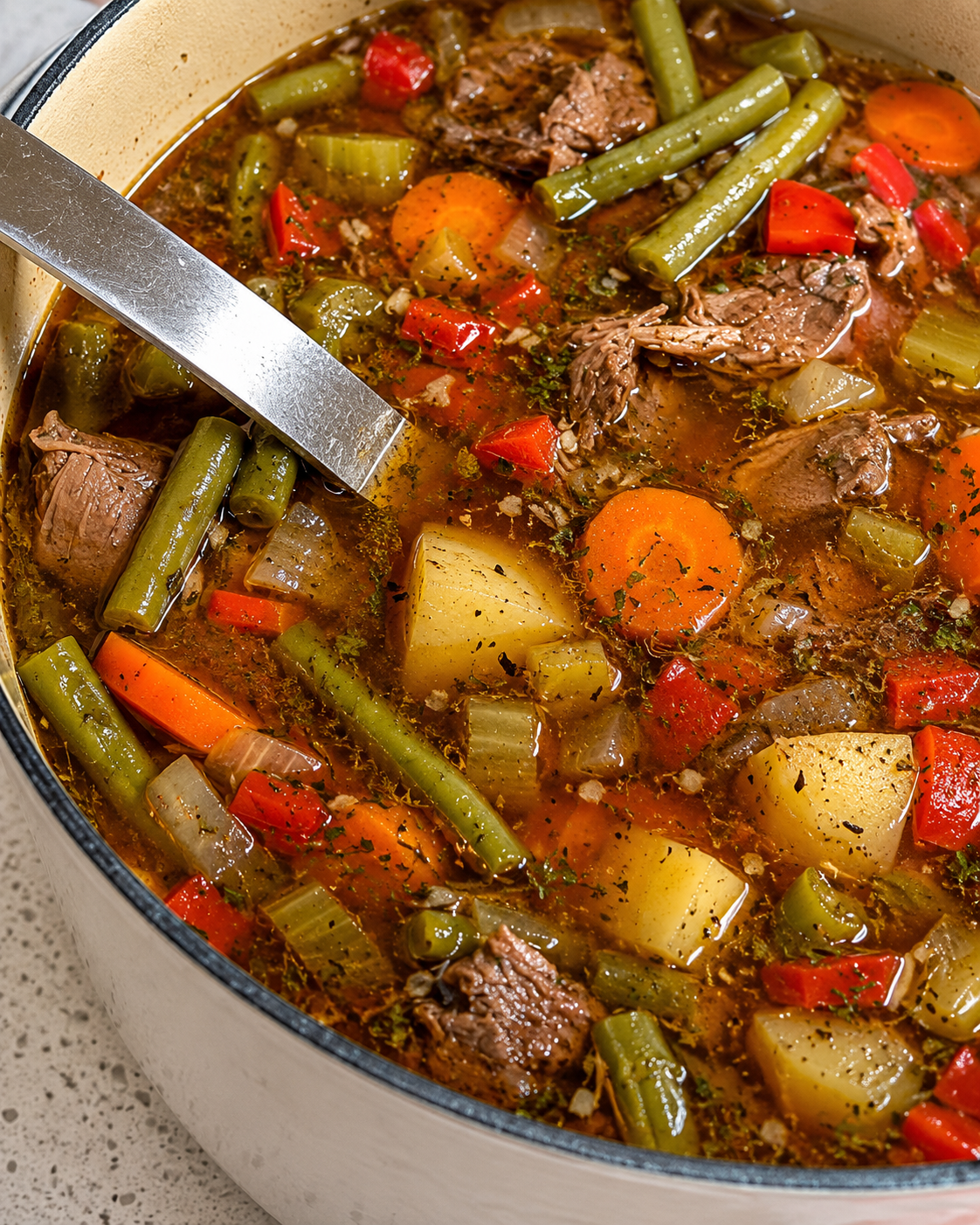
Best Ever Easy Vegetable Beef Soup
Ingredients
Equipment
Method
- Season beef cubes with salt and pepper. Heat olive oil in a large Dutch oven over medium-high heat. Sear beef in batches until browned on all sides, 5–7 minutes. Remove and set aside.
- Lower heat to medium. Add onion, carrots, and celery; sauté 5 minutes. Add garlic and cook 1 minute until fragrant.
- Pour in ½ cup broth and scrape up browned bits.
- Return beef and juices to pot. Add remaining broth, tomatoes, potatoes, thyme, and bay leaf. Stir.
- Bring to a gentle boil, then reduce heat to low, cover, and simmer 45–60 minutes until beef is tender.
- Stir in green beans and corn. Simmer uncovered 10–15 minutes until vegetables are tender.
- Remove bay leaf. Adjust seasoning. Garnish with parsley and serve
Notes