
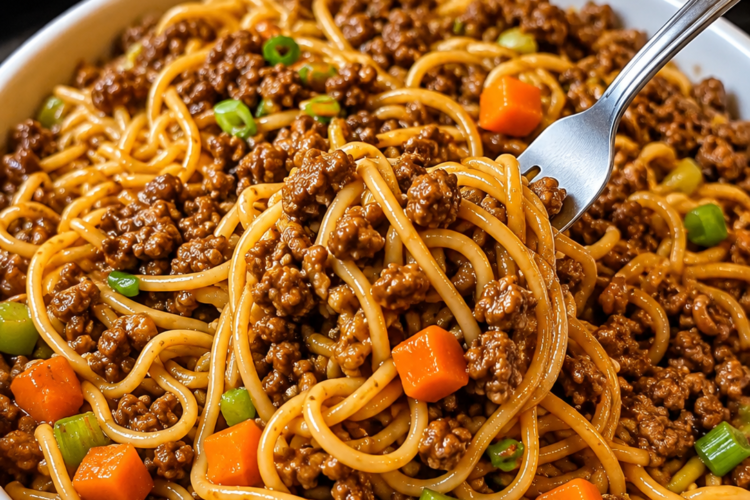
Ground Beef Lo Mein – Better-Than-Takeout Noodles in Just 25 Minutes
There are nights when the craving for takeout hits hard but the idea of waiting forty minutes and paying delivery fees feels like one step too many. On those nights I make this ground beef lo mein. It started as a desperate weeknight experiment when I had a package of ground beef, a box of spaghetti, and a serious need for something savory, saucy, and fast. Fifteen minutes of cooking later we were sitting down to a skillet of chewy noodles coated in a deeply savory sauce, studded with tender ground beef and crisp-tender vegetables. My family cleaned the pan. Someone asked if I had ordered in and just transferred it to a skillet to trick them.
This is the kind of dinner that proves you do not need a long list of specialty ingredients or complicated techniques to get that takeout-style satisfaction at home. Ground beef cooks in minutes and creates its own flavorful base. Spaghetti stands in beautifully for traditional egg noodles and soaks up the sauce. A quick combination of soy sauce, sesame oil, and rice cooking wine delivers the salty, nutty, slightly sweet flavor that makes lo mein so addictive. The whole thing comes together in one skillet after the pasta is boiled, and cleanup is minimal.
It is not authentic Chinese cooking, and it does not pretend to be. It is Chinese-American comfort food at its most practical—fast, flexible, deeply savory, and reliably delicious. Once you taste how good a simple ground-beef lo mein can be, the takeout menu starts to feel optional.
Why You’ll Love This Recipe
You will love this ground beef lo mein because it delivers big takeout flavor with almost no effort. The active cooking time is about fifteen minutes. The ingredient list is short and mostly pantry-friendly. The result is a skillet of chewy noodles, savory ground beef, and crisp-tender vegetables coated in a glossy, deeply flavored sauce that tastes like it came from your favorite local spot.
You will love how flexible and forgiving it is. Swap the vegetables for whatever is in the crisper. Use ground turkey or leftover steak if that is what you have. Adjust the sauce to be saltier, sweeter, or spicier. It reheats well for lunch the next day and scales easily if you are feeding more people. It is the definition of a practical weeknight dinner.
You will love the texture contrast. The spaghetti stays pleasantly chewy. The ground beef is tender and savory. The celery, carrots, and red onion keep a little bite so the dish never feels soft or one-note. The sauce clings to every strand without turning gummy.
Most of all, you will love that this recipe removes the friction from noodle-night cravings. No long simmering, no complicated prep, no multiple pots beyond boiling the pasta. Just a hot skillet, a handful of ingredients, and a satisfying dinner that makes everyone at the table happy.
Why This Recipe Works
The efficiency of this dish comes from the rapid cooking of ground beef and the self-saucing nature of the method. Browning the beef creates savory Maillard flavors and renders just enough fat to cook the vegetables. Adding garlic, soy sauce, and a pinch of sugar to the beef builds an immediate flavor base. The vegetables are cut small so they soften quickly while still retaining texture.
Cooking the spaghetti separately and then tossing it in the skillet allows the noodles to finish absorbing the sauce without becoming overcooked or gummy. The final sauce—sesame oil for nutty aroma, rice cooking wine for depth and slight sweetness, and additional soy sauce for saltiness—coats the noodles and beef in a glossy layer that tastes far more complex than the three ingredients suggest. A brief simmer after the sauce is added lets everything come together so the dish feels cohesive rather than like separate components thrown in a pan.
These simple techniques—browning for flavor, quick-cooking vegetables, and a concentrated finishing sauce—produce a lo mein that rivals takeout in taste while requiring far less time and money.
Ingredient Breakdown
Lean Ground Beef (8 oz) Ground beef provides quick-cooking protein and rich, savory flavor. Lean beef keeps the dish from becoming greasy while still delivering satisfaction. It browns in minutes and creates the foundation of the sauce. Beef contributes high-quality protein, iron, and B vitamins.
Celery (1 stalk, chopped) Celery adds fresh, slightly herbal crunch and classic lo mein texture. Chopping it keeps the pieces bite-sized so they cook quickly. Celery contributes fiber and volume with very few calories.
Red Onion (¼ cup, thinly sliced) Red onion provides mild sweetness and color. Thinly slicing it helps it soften rapidly while still offering a little bite. Onions add beneficial plant compounds and aromatic depth.
Garlic (1 tsp, minced) Fresh garlic is essential for the savory backbone of the dish. Minced finely so it cooks in seconds and distributes evenly. Garlic adds aromatic pungency that elevates the entire skillet.
Matchstick Carrots (¼ cup) Carrots bring sweetness, color, and a pleasant crunch. Pre-cut matchstick carrots save time; whole carrots can be cut into thin sticks just as easily. Carrots contribute beta-carotene and fiber.
Soy Sauce (1 tbsp + 1 tbsp for the sauce) Soy sauce is the primary source of saltiness and umami. Dividing it between the beef step and the finishing sauce layers the flavor. Low-sodium soy sauce can be used if you prefer more control over saltiness.
Spaghetti (8 oz) Spaghetti is an excellent, widely available stand-in for traditional egg noodles. It holds the sauce well and provides the chewy texture that makes lo mein satisfying. Any long pasta of similar thickness works.
Salt (½ tsp) and Sugar (½ tsp) A small amount of salt enhances the overall seasoning. A pinch of sugar balances the saltiness of the soy sauce and rounds out the flavor the way many restaurant versions do.
Sesame Oil (1 tsp) Sesame oil (preferably toasted) adds the distinctive nutty aroma that signals “lo mein.” A little goes a long way. It is added at the end so the flavor stays bright.
Rice Cooking Wine (1 tbsp) Rice cooking wine (or dry sherry in a pinch) contributes subtle sweetness and depth that plain water or broth cannot match. It is a key ingredient for authentic-tasting sauce.
Kitchen Equipment
A large pot for boiling the pasta, a colander, a large skillet or wok, a wooden spoon or spatula, a small bowl for the sauce, measuring spoons, a knife and cutting board, and tongs or chopsticks for tossing are all you need. That is the complete practical list.
Step-by-Step Instructions
Bring a large pot of salted water to a boil. Add the spaghetti and cook until al dente according to package directions. Drain and set aside. Do not rinse; the surface starch helps the sauce cling.
While the pasta cooks, heat a large skillet over medium-high heat. Add the ground beef and cook, breaking it into small pieces, until it is fully browned and no pink remains. Drain excess grease if needed.
Reduce the heat to medium. Add the minced garlic, 1 tablespoon of soy sauce, chopped celery, sliced red onion, matchstick carrots, salt, and sugar. Stir-fry until the vegetables begin to soften but still retain some crunch, about 3 to 4 minutes. The kitchen will smell savory and aromatic.
Add the drained spaghetti to the skillet. Toss everything together so the noodles are distributed among the beef and vegetables.
In a small bowl, stir together the sesame oil, rice cooking wine, and remaining 1 tablespoon of soy sauce. Pour the sauce over the noodle mixture.
Toss well so every strand is coated. Let the mixture simmer for about 1 minute so the sauce thickens slightly and clings to the noodles.
Taste and adjust seasoning if needed. Serve immediately while hot and glossy.
Expert Tips
- Cook the spaghetti just to al dente; it will finish absorbing flavor in the skillet.
- Brown the ground beef well for deeper savory notes.
- Cut all the vegetables small and evenly so they cook at the same rapid pace.
- Use toasted sesame oil for the fullest nutty aroma.
- Have the sauce mixed and ready before you start stir-frying; the process moves quickly.
- Do not overcrowd the skillet; use a large pan so the ingredients sear rather than steam.
- Taste before serving—soy sauces vary in saltiness.
- If the noodles seem dry, add a splash of the pasta cooking water or a little more soy sauce.
- Work over medium-high to high heat for the best texture and flavor.
- Drain the beef well if it releases a lot of fat so the final dish stays balanced.
- Fresh garlic is worth it; garlic powder does not give the same bright aroma.
- For extra gloss and flavor, add a second small drizzle of sesame oil right at the end.
- Double the vegetables if you want a more veggie-heavy version.
- Serve immediately; lo mein is best when the noodles are still hot and slightly chewy.
Common Mistakes to Avoid
- Overcooking the pasta. Mushy noodles ruin the texture.
- Under-browning the beef. Pale meat produces a less flavorful dish.
- Adding the sesame oil too early. Its aroma fades with prolonged heat.
- Using cold noodles straight from the colander without tossing them quickly. They can clump.
- Skipping the sugar. Even a small amount balances the saltiness of the soy sauce.
- Cooking the vegetables until completely soft. They should keep a little bite.
- Using a small skillet. Crowding causes steaming instead of stir-frying.
- Forgetting to drain excess grease from the beef. The dish can become oily.
- Substituting plain water for the rice cooking wine. You lose important depth.
- Over-salting before tasting the final dish. Soy sauce is already salty.
- Letting the finished lo mein sit too long before serving. The noodles continue to absorb sauce and can dry out.
- Using untoasted sesame oil. The flavor is much milder and less characteristic.
- Adding the garlic too early so it burns and turns bitter.
- Rinsing the cooked pasta. The surface starch helps the sauce cling.
Ingredient Substitutions
Ground beef can be replaced with ground turkey, ground pork, ground chicken, or crumbled tofu for different preferences.
Spaghetti can be replaced with actual lo mein noodles, ramen noodles (discard the seasoning packet), or any long pasta such as linguine.
Rice cooking wine can be replaced with dry sherry or a splash of mirin (reduce sugar slightly if using mirin).
Soy sauce can be replaced with tamari or coconut aminos for gluten-free needs.
Red onion can be replaced with yellow onion or green onions (add green onions at the end).
Matchstick carrots can be replaced with shredded cabbage, bell pepper strips, or snap peas.
Sesame oil can be reduced or omitted in a pinch, though the flavor will be less authentic.
Recipe Variations
- Spicy Ground Beef Lo Mein – Add 1–2 teaspoons of chili garlic sauce or sriracha with the finishing sauce.
- Vegetable-Packed Version – Double the celery, carrots, and onion and add shredded cabbage or broccoli florets.
- Chicken Lo Mein – Replace the ground beef with thinly sliced chicken breast or thigh.
- Shrimp Lo Mein – Use peeled shrimp and cook them just until pink before adding the vegetables.
- Teriyaki-Style – Replace part of the soy sauce with teriyaki sauce and reduce the added sugar.
- Ginger-Garlic Lo Mein – Add 1 teaspoon of grated fresh ginger with the garlic.
- Mushroom Lo Mein – Add sliced mushrooms with the other vegetables for extra umami.
- Extra-Sesame Version – Sprinkle toasted sesame seeds on top before serving.
- Low-Carb Version – Replace the spaghetti with spiralized zucchini or shirataki noodles (adjust cooking time).
- Egg Lo Mein – Push the ingredients aside and scramble an egg or two in the skillet before tossing everything together.
- Black Bean Sauce Version – Stir in a tablespoon of fermented black bean sauce with the finishing sauce for deeper flavor.
- Leftover Steak Lo Mein – Use thinly sliced leftover steak instead of ground beef and shorten the browning step.
- One-Pot Version – Cook the pasta in the skillet with extra liquid, then proceed with the beef and sauce (timing requires more attention).
Make It Healthier
This lo mein is already relatively balanced with protein, vegetables, and carbohydrates. To lighten it further, use the leanest ground beef available or switch to ground turkey. Increase the vegetable volume so each serving is heavier on celery, carrots, and onion. Choose whole-wheat or high-protein spaghetti if desired. Reduce the soy sauce slightly and rely more on the sesame oil and rice wine for flavor. Serve with an extra side of steamed broccoli or a simple cucumber salad. These adjustments keep the savory, satisfying character while supporting a more balanced plate.
Meal Prep Guide
This dish is excellent for quick meal prep. Cook a double batch, cool it completely, and portion into containers for lunches. It keeps well in the refrigerator for up to three days. The noodles will absorb more sauce as they sit, so you may want to drizzle a little extra soy sauce or sesame oil when reheating. You can also prep the vegetables and mix the sauce ahead of time so the actual cooking takes only the time needed to brown the beef and boil the pasta. This approach makes weeknight lo mein realistic even on the busiest evenings.
Storage
Store leftovers in an airtight container in the refrigerator for up to three days. The noodles will continue to absorb the sauce and soften slightly, but the flavor remains excellent. Cool the lo mein completely before refrigerating. Always reheat thoroughly before serving.
Freezing
Freezing is possible but not ideal. The noodles can become soft and the vegetables lose some texture upon thawing. If you choose to freeze, cool completely, portion into freezer-safe containers, and freeze for up to two months. Thaw overnight in the refrigerator and reheat gently with a splash of water or soy sauce to loosen. For best quality, enjoy this dish fresh or refrigerated rather than frozen.
Reheating
Stovetop: Place the leftovers in a skillet over medium heat. Add a splash of water, broth, or soy sauce to loosen the sauce. Toss frequently until hot.
Microwave: Heat individual portions in a microwave-safe bowl, covered loosely, stirring halfway through and adding a little liquid if needed, until steaming.
Avoid high heat for long periods so the noodles do not dry out or the beef become tough.
What to Serve With It
This ground beef lo mein is a complete meal on its own. For a larger spread, add simple sides such as steamed broccoli, cucumber salad, egg rolls, or potstickers. A bowl of miso soup or hot-and-sour soup makes a nice starter. Fresh fruit or a light dessert keeps the meal from feeling too heavy. Leftovers make an excellent next-day lunch with nothing more than a fork.
Beverage Pairings
Cold beer—especially a light lager or pilsner—cuts the savory richness perfectly. Jasmine tea or green tea complements the Asian-inspired flavors. Sparkling water with a slice of citrus refreshes the palate. For wine drinkers, a slightly off-dry Riesling or a light Pinot Gris pairs well with the salty-sweet sauce. Iced tea or a simple soft drink also works for casual family dinners. Choose a drink that either refreshes or stands up to the bold, savory noodles.
Frequently Asked Questions
Can I use real lo mein noodles? Yes. Fresh or dried lo mein noodles work beautifully. Adjust cooking time according to the package.
Can I make this with a different protein? Absolutely. Ground turkey, pork, chicken, shrimp, or tofu all work well. Adjust cooking time as needed.
Is rice cooking wine the same as rice vinegar? No. Rice cooking wine (or Shaoxing wine) is used for depth and slight sweetness. Rice vinegar is acidic and used for brightness. Do not interchange them.
Can I make it gluten-free? Yes. Use gluten-free spaghetti or rice noodles and tamari or coconut aminos instead of soy sauce. Confirm the rice wine is gluten-free if necessary.
How do I keep the noodles from getting soggy? Cook them just to al dente and toss with the sauce only long enough to coat and heat through.
Can I add more vegetables? Yes. Bell peppers, cabbage, broccoli, snap peas, or mushrooms are all excellent additions.
Is this spicy? As written it is not spicy. Add chili garlic sauce, sriracha, or red pepper flakes if you want heat.
Can I prepare it ahead? You can cook the components ahead and toss them together just before serving, or fully cook and reheat with a little extra liquid.
How long do leftovers keep? Up to three days in the refrigerator in an airtight container.
Can I double the recipe? Yes. Use a larger skillet or wok and brown the beef in batches if necessary so it sears properly.
What can I use instead of sesame oil? A small amount of toasted sesame oil is ideal. In a pinch you can omit it, but the characteristic flavor will be missing.
Why add sugar? A small amount balances the saltiness of the soy sauce and gives the sauce the rounded flavor typical of restaurant lo mein.
Can I use frozen vegetables? Fresh is best for texture, but frozen stir-fry mixes can work in a pinch. Add them straight to the pan and cook off excess moisture.
How do I make the sauce glossier? A brief simmer after adding the sauce and a final drizzle of sesame oil help create a glossy coating.
Is spaghetti really okay? Yes. It is a widely used and effective substitute for egg noodles in home versions of lo mein.
Nutrition Information
Estimated nutrition per serving (based on 4 servings): approximately 380–450 calories, 12–16 g fat, 45–50 g carbohydrates, 22–26 g protein. Values vary depending on the exact fat content of the beef, brand of soy sauce, and portion size. These figures are estimates only and are not a substitute for professional nutritional advice. This dish provides a solid balance of protein and carbohydrates and can be part of a balanced diet when paired with additional vegetables.
Final Thoughts
This ground beef lo mein has become one of the recipes I rely on when the day has been long and the need for something savory, satisfying, and fast is high. It proves that you can get that takeout-style noodle satisfaction at home with a short ingredient list and about twenty-five minutes of time. I love the way the sauce coats every strand, the way the vegetables keep a little crunch, and the way the whole skillet disappears before anyone has a chance to complain about leftovers.
I hope you make it on a night when you want dinner to feel easy and still taste like a treat. I hope the beef browns nicely, the noodles stay chewy, and the first bite makes everyone at the table happy. If you try it, I would love to know how quickly the skillet was scraped clean. From my kitchen to you
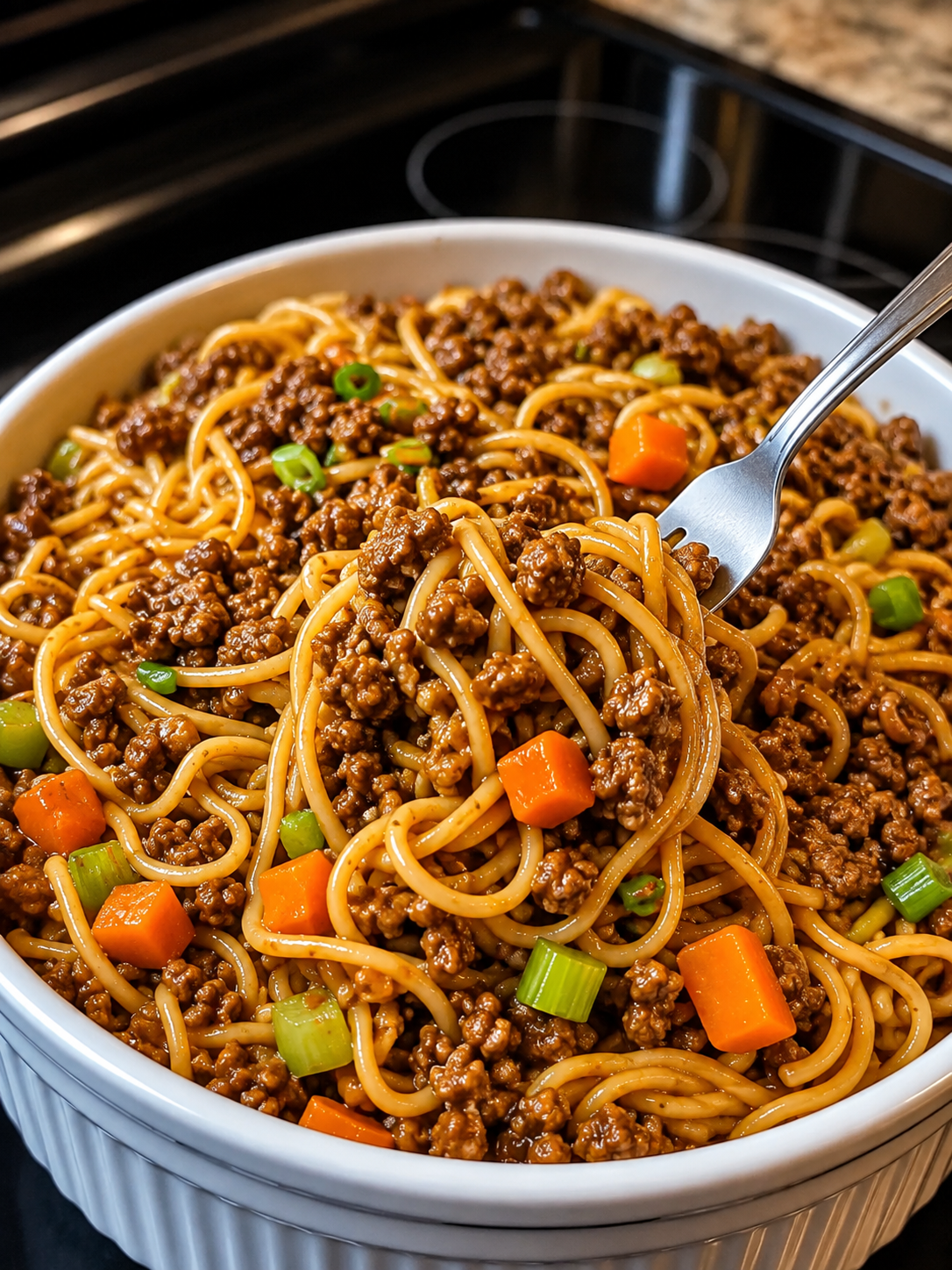
Ground Beef Lo Mein
Ingredients
Equipment
Method
- il spaghetti until al dente; drain and set aside.
- Brown ground beef in a large skillet over medium-high heat; drain excess grease.
- Reduce heat to medium. Add garlic, 1 tbsp soy sauce, celery, red onion, carrots, salt, and sugar. Sauté until vegetables begin to soften.
- Add cooked spaghetti and toss to combine.
- Mix sesame oil, rice cooking wine, and remaining 1 tbsp soy sauce in a small bowl. Pour over the noodle mixture.
- Stir well to coat and simmer 1 minute. Serve warm.
Notes
rs—fast, savory, and better than delivery.