
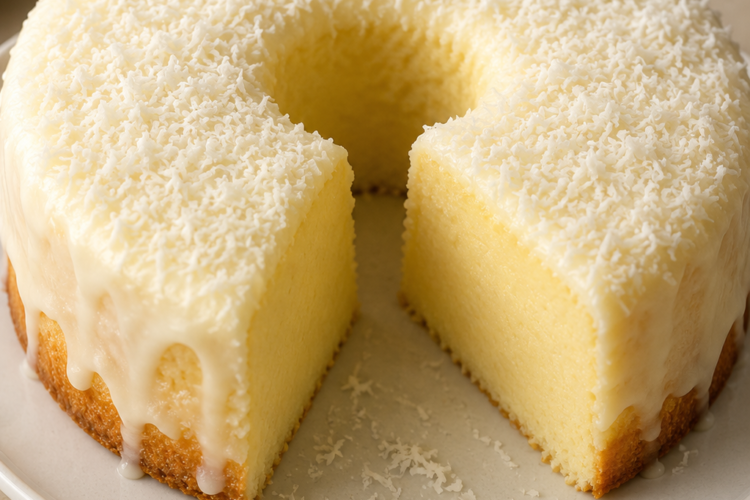
Secret Weapon Coconut Cake – The Creamy, Custardy, Coconut-Crusted Cake That Tastes Like a Tropical Hug
My grandmother used to make this cake every Sunday after church, and I swear the entire neighborhood could smell it cooling on her windowsill. She called it her “secret weapon cake,” and she was not wrong. The first time I tasted it I understood why she guarded the recipe so carefully. The texture is impossibly creamy—somewhere between flan and cheesecake, yet lighter than both. A soft, custardy interior gives way to a golden top and a coating of sweetened coconut that turns just barely crispy at the edges while staying soft and fragrant everywhere else.
Last weekend I pulled out her old bundt pan and made it for the first time in years. My husband wandered into the kitchen three separate times asking when it would be ready. Then he ate two slices before dinner and claimed he had no regrets. The cake is sweet without being heavy, tropical without feeling out of place on a regular dessert table, and somehow elegant even though the method is basically dump, blend, and bake.
This is the cake I now make when I want something that feels special with almost no effort. It uses three cans, a few eggs, and a blender. The batter is thin—exactly as it should be—and bakes into a silky, sliceable custard cake that only gets better after a long chill in the refrigerator. Once you taste that first cool, creamy, coconut-scented bite, you will understand why my grandmother considered it her secret weapon.
Why You’ll Love This Recipe
You will love this secret weapon coconut cake because it delivers a luxurious, custardy texture with almost no work. Everything goes into the blender, pours into a prepared pan, and bakes until golden. The long chill firms it into clean slices while the flavor deepens. The coconut coating on the outside adds a gentle crunch and pure tropical aroma.
You will love how reliable and make-ahead friendly it is. The cake needs several hours in the refrigerator, which means you can bake it the day before a gathering and simply unmold and finish it when you are ready to serve. It travels well, slices beautifully, and always draws compliments. It is perfect for potlucks, Sunday dinners, holidays, or any time you want a dessert that feels fancy without the stress.
You will love the balance of flavors. Sweetened condensed milk gives richness and sweetness, coconut milk brings tropical depth, and the shredded coconut in the batter and on the exterior reinforces the theme without overwhelming it. The texture is smooth and creamy yet light enough that a second slice feels completely reasonable.
Most of all, you will love the reactions. This is the cake that makes people ask for the recipe before they finish their first piece. It is the one that disappears quietly from the cake stand. In a world of complicated desserts, a blender cake this good is pure magic.
Why This Recipe Works
The unique texture comes from the high proportion of dairy and eggs relative to any flour or starch. Sweetened condensed milk provides concentrated sweetness and body. Whole milk and coconut milk add liquid and richness. Eggs set the mixture into a silky custard as it bakes. Blending everything until the shredded coconut is finely broken down creates a smooth batter that bakes evenly without large coconut strands interrupting the creamy interior.
Baking in a well-buttered and coconut-dusted pan does two things: it prevents sticking and creates a built-in coconut crust that turns golden and lightly crisp. The thin batter rises only modestly and sets from the outside in, leaving a gentle jiggle in the center that firms during cooling and chilling. A long refrigerator rest is essential—it allows the custard to finish setting so the cake slices cleanly and the flavors meld into a cohesive, tropical whole.
These principles—blender smoothness, dairy-and-egg custard structure, coconut-coated pan, and thorough chilling—produce a cake that tastes far more complex and elegant than the short ingredient list and simple method suggest.
Ingredient Breakdown
Sweetened Condensed Milk (14 oz can) Sweetened condensed milk is the backbone of the cake’s sweetness and creamy body. It contributes richness and helps the custard set with a smooth, dense-yet-light texture.
Whole Milk (1 can, measured with the empty condensed-milk can) Whole milk thins the batter to the proper consistency and adds additional dairy richness. Using the empty can as a measuring tool keeps the ratios exact and the method simple.
Coconut Milk (1 can, measured the same way) Coconut milk supplies the signature tropical flavor and extra fat that keeps the cake silky. Full-fat canned coconut milk is best for richness and mouthfeel.
Large Eggs (3) Eggs provide structure and help the custard set. They give the cake its sliceable yet tender texture.
Sweetened Shredded Coconut (1 cup + extra for coating) Shredded coconut in the batter reinforces the coconut flavor and adds subtle texture once finely blended. The extra coconut used to coat the pan and finish the cake creates the fragrant, lightly crisp exterior.
Vanilla Extract (1 teaspoon) Vanilla rounds out the flavors and adds warmth that balances the tropical notes.
Butter (for greasing) Butter helps the coconut flakes stick to the pan and prevents the cake from adhering. It also contributes a little extra richness at the edges.
Kitchen Equipment
A blender, a bundt pan or 9-inch round cake pan, a measuring cup (or the empty condensed-milk can), a spatula, and a serving plate are the essentials. A knife for releasing the cake and a refrigerator for chilling complete the list. No mixer or special tools required.
Step-by-Step Instructions
Preheat the oven to 350°F. Generously butter a bundt pan or round cake pan, making sure to coat every ridge or corner. Sprinkle sweetened shredded coconut over the buttered surface and tilt the pan so the flakes stick evenly. Tap out any excess.
Add the sweetened condensed milk, the whole milk (measured in the empty condensed-milk can), the coconut milk (measured the same way), the eggs, 1 cup of shredded coconut, and the vanilla extract to a blender. Blend on high until the mixture is completely smooth and the coconut is finely broken down, about 30–60 seconds.
Pour the thin batter into the prepared pan. It will look very liquid—this is correct.
Bake for 50–60 minutes, until the top is golden brown and the center barely jiggles when the pan is gently shaken. A toothpick inserted near the center should come out mostly clean with a few moist crumbs.
Remove the cake from the oven and let it cool completely in the pan on a wire rack. Once cool, cover and refrigerate for at least 4 hours, or preferably overnight. The long chill is essential for clean slices and the best texture.
When ready to serve, run a thin knife around the edges of the pan to loosen the cake. Invert it onto a serving plate. While the surface is still slightly moist, coat the top and sides generously with additional shredded coconut so the flakes adhere.
Slice with a sharp knife and serve cold.
Expert Tips
- Use full-fat canned coconut milk for the richest texture and best flavor.
- Blend until the shredded coconut is very finely broken down so the interior stays silky.
- Butter the pan thoroughly and coat it well with coconut—this creates the signature exterior and prevents sticking.
- The batter will be thin; do not be tempted to add flour or thickeners.
- Bake until the center has only a slight jiggle; it will continue to set as it cools and chills.
- Cool completely before refrigerating so condensation does not form on the surface.
- Chill for the full 4 hours (or overnight) for the cleanest slices and fullest flavor.
- Coat with extra coconut while the cake is still slightly moist from the refrigerator so the flakes stick.
- A bundt pan makes a beautiful presentation, but a round cake pan works equally well.
- Wipe the knife between cuts for neat slices.
- For stronger coconut flavor, toast the coating coconut lightly before pressing it on.
- Double the recipe and bake in two pans if serving a larger crowd.
- Serve the cake cold; the texture is at its best straight from the refrigerator.
- Leftovers keep beautifully and the flavor improves on the second day.
Common Mistakes to Avoid
- Using light coconut milk. The cake will be less rich and may not set as firmly.
- Under-blending the batter. Large pieces of coconut will interrupt the creamy texture.
- Not greasing and coating the pan thoroughly. The cake can stick and tear.
- Adding flour or trying to thicken the batter. The thin consistency is intentional.
- Under-baking. The center will be too soft and may not slice cleanly.
- Over-baking until the cake is completely firm in the oven. It can become dry or rubbery.
- Skipping the long chill. The cake needs refrigerator time to set properly.
- Trying to unmold the cake while it is still warm. It will fall apart.
- Using desiccated (very dry) coconut without adjusting. Sweetened shredded coconut is preferred for moisture and flavor.
- Serving the cake at room temperature. It is designed to be eaten cold.
- Cutting with a dull knife. The creamy texture requires a sharp blade for clean slices.
- Forgetting to measure the whole milk and coconut milk in the empty condensed-milk can. The ratios matter.
- Opening the oven repeatedly during baking. Heat loss can affect the set.
- Coating with coconut when the cake is completely dry. The flakes will not adhere well.
Ingredient Substitutions
Sweetened condensed milk has no perfect substitute here; it is essential for sweetness and texture.
Whole milk can be replaced with 2% milk; the cake will be slightly less rich.
Full-fat coconut milk can be replaced with another can of whole milk in a pinch, though the coconut flavor will be milder. Do not use coconut cream, which is too thick.
Sweetened shredded coconut can be replaced with unsweetened shredded coconut; the cake will be less sweet and you may want to add a tablespoon of sugar to the batter.
Vanilla extract can be replaced with coconut extract for stronger tropical flavor or almond extract for a different note.
Butter for greasing can be replaced with coconut oil or a neutral oil spray.
Recipe Variations
- Toasted Coconut Cake – Toast the coating coconut in a dry skillet until golden before pressing it onto the cake.
- Lime Coconut Cake – Add the zest of two limes to the blender for bright citrus notes.
- Pineapple Coconut Cake – Blend in ½ cup well-drained crushed pineapple with the other ingredients.
- Chocolate Coconut Cake – Add ¼ cup cocoa powder to the blender for a chocolate-coconut version.
- Coffee Coconut Cake – Add 1 teaspoon instant espresso powder for subtle mocha depth.
- Mango Coconut Cake – Blend in ½ cup mango puree for a tropical variation.
- Coconut Rum Cake – Add 1–2 tablespoons dark rum to the batter for an adult version.
- Mini Coconut Cakes – Bake in greased and coconut-dusted muffin tins; reduce baking time to 25–30 minutes.
- Layered Trifle Style – Cube the chilled cake and layer it in glasses with whipped cream and fresh fruit.
- Coconut Custard Cups – Pour the batter into ramekins and bake in a water bath for individual custards.
- Extra-Coconut Version – Increase the shredded coconut in the batter to 1½ cups for more texture.
- Vanilla Bean Cake – Scrape a vanilla bean into the blender along with the extract for deeper vanilla flavor.
- Holiday Spiced Coconut – Add a pinch of cinnamon and nutmeg for a warmer, seasonal twist.
Make It Healthier
This cake is rich by design thanks to the condensed milk and coconut milk. To lighten it slightly, use reduced-fat sweetened condensed milk if available and replace the whole milk with 2% milk. Serve smaller slices and pair each piece with fresh berries or pineapple for brightness and volume. The cake is already flourless and naturally gluten-free, which is a quiet advantage. Enjoy it as an occasional special dessert rather than an everyday treat.
Meal Prep Guide
This cake is ideal for making ahead. Bake it the day before you need it, chill overnight, and unmold and coat with coconut a few hours before serving. The flavor and texture actually improve with the long rest. Leftovers keep well for several days, making it perfect for potlucks, holidays, or a weekend dessert that supplies sweet bites throughout the week. The blender method means active time is minimal even when preparing it in advance.
Storage
Keep the cake covered in the refrigerator for up to five days. The creamy texture stays perfect when cold. For the neatest presentation, coat with the final coconut layer only when you are ready to serve or a few hours beforehand. Always store it chilled.
Freezing
The cake can be frozen after it has been fully chilled and unmolded. Wrap it tightly in plastic wrap and then foil, or place it in an airtight container. Freeze for up to one month. Thaw overnight in the refrigerator, then refresh the coconut coating if needed before serving. The texture remains very good after freezing.
Reheating
This cake is meant to be served cold. There is no need to reheat it. If it has been frozen, simply thaw it completely in the refrigerator and serve chilled. Room-temperature slices will be softer; most people prefer the firmer, creamier texture straight from the fridge.
What to Serve With It
This coconut cake is lovely on its own. Fresh tropical fruit—pineapple, mango, or passion fruit—complements the flavors beautifully. A dollop of lightly sweetened whipped cream or a scoop of vanilla ice cream adds extra richness. At a brunch or dinner party it pairs well with coffee or tea. For a simple finish after a heavier meal, a modest slice is perfect with nothing more than a fork and a quiet moment.
Beverage Pairings
Hot coffee or espresso balances the sweetness and enhances the coconut notes. Black tea or a lightly sweetened iced tea also works well. Cold milk is comforting and classic. For a special occasion, a glass of Moscato or a coconut-based cocktail echoes the tropical theme. Sparkling water with a squeeze of lime refreshes the palate between bites. Choose a drink that either contrasts the creamy richness or leans into the soft coconut flavor.
Frequently Asked Questions
Why is the batter so thin? The high proportion of milk and condensed milk is intentional. It bakes into a creamy custard rather than a traditional cake crumb.
Can I use a different pan? Yes. A 9-inch round cake pan, a loaf pan, or even a 9×13-inch pan (with adjusted baking time) will work. A bundt pan gives the prettiest presentation.
Do I have to use a blender? A blender is best for fully incorporating the shredded coconut. A food processor also works. Whisking by hand will leave larger coconut pieces.
Why does it need such a long chill? Chilling allows the custard to finish setting so the cake slices cleanly and the texture becomes silky and firm.
Can I make it dairy-free? It would require multiple substitutions (dairy-free condensed milk alternative, plant-based milks, etc.) and the texture may differ significantly.
Is this cake gluten-free? Yes, as written. It contains no flour.
How do I know when it is done baking? The top will be golden and the center will have only a slight jiggle. It firms considerably as it cools and chills.
Can I reduce the sweetness? The sweetened condensed milk is central to the texture. Reducing it will change both flavor and structure.
Why did my cake stick to the pan? The pan may not have been buttered and coated with coconut thoroughly enough. Be generous with both.
Can I add other flavors? Yes. Lime zest, pineapple, cocoa, or a little rum all work well as variations.
How long does it keep? Up to five days covered in the refrigerator.
Can I freeze it? Yes. Wrap well and freeze for up to one month. Thaw in the refrigerator.
What if I do not have sweetened shredded coconut? Unsweetened shredded coconut works; the cake will be less sweet. Avoid large coconut flakes that will not blend smoothly.
Can I serve it warm? It is designed to be served cold. Warm slices will be much softer and harder to cut cleanly.
Why use the empty can to measure? It keeps the ratios exact and the method simple—no extra measuring cups needed for the milks.
Nutrition Information
Estimated nutrition per slice (based on 12 slices): approximately 280–330 calories, 14–18 g fat, 34–38 g carbohydrates, 6–7 g protein. Values vary depending on the exact brands of condensed milk and coconut milk used and the size of the slices. These figures are estimates only and are not a substitute for professional nutritional advice. Enjoy this cake as a special dessert within a balanced diet.
Final Thoughts
This secret weapon coconut cake has become one of the recipes I reach for when I want something that feels both nostalgic and a little luxurious. It carries the memory of my grandmother’s windowsill and the quiet pride she took in a dessert that always drew people back for more. The method is almost laughably simple, yet the result is creamy, fragrant, and quietly impressive.
I hope you make it for a Sunday dinner, a potluck, or simply because a cool slice of coconut custard cake sounds perfect. I hope the top turns golden, the center sets into pure silk, and the first bite makes someone at your table ask for the recipe before they finish their slice. If you try it, I would love to know how quickly it disappeared. From my kitchen to yours—creamy, tropical, and still a secret weapon after all these years.
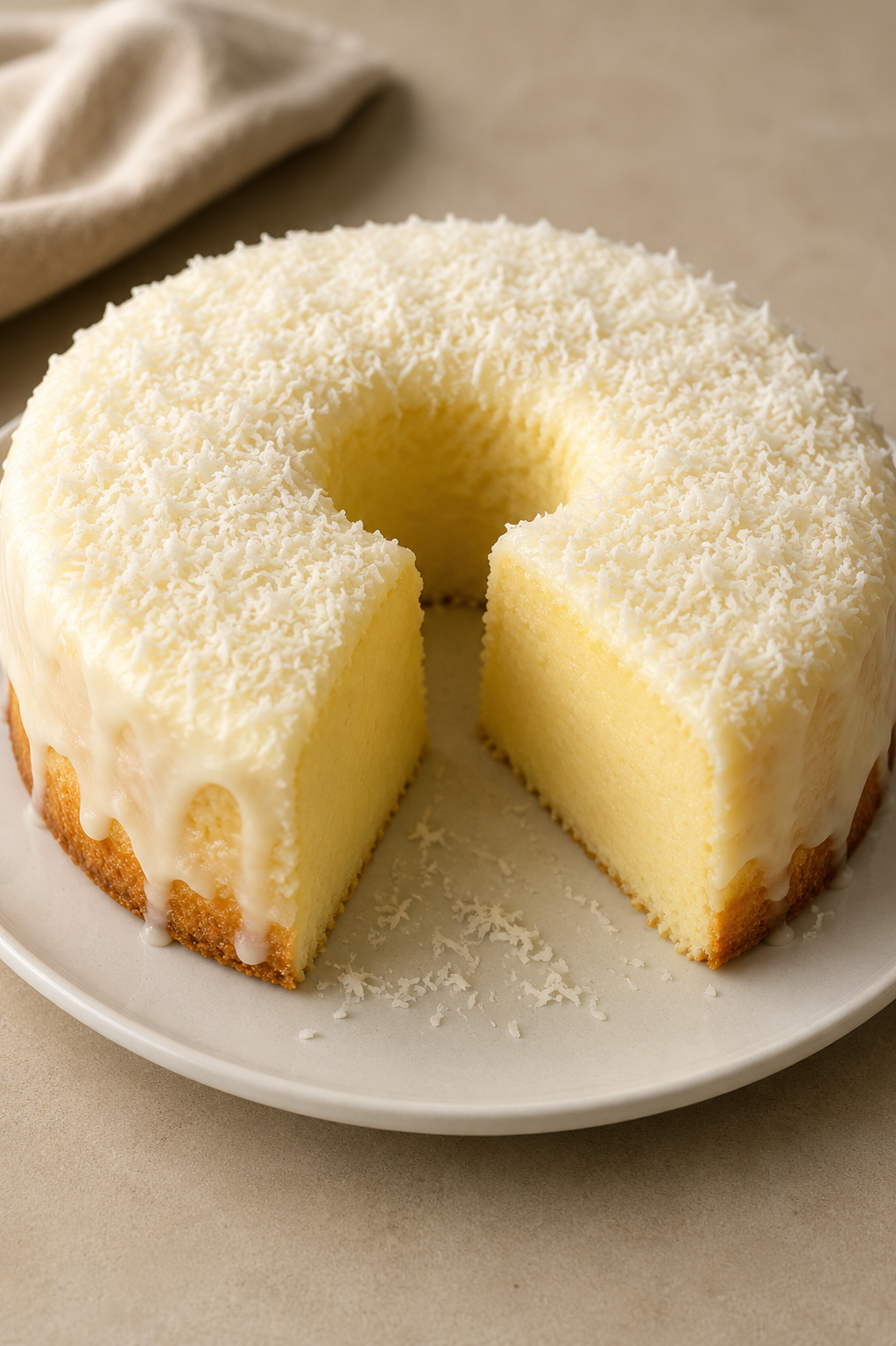
Secret Weapon Coconut Cake
Ingredients
Equipment
Method
- Preheat oven to 350°F. Generously butter a bundt or round cake pan and dust with shredded coconut.
- Add condensed milk, whole milk, coconut milk, eggs, 1 cup shredded coconut, and vanilla to a blender. Blend until completely smooth.
- Pour the thin batter into the prepared pan.
- Bake 50–60 minutes until the top is golden and the center barely jiggles.
- Cool completely in the pan, then refrigerate at least 4 hours or overnight.
- Run a knife around the edges, invert onto a plate, and coat with additional shredded coconut.
- Slice and serve cold.
Notes