
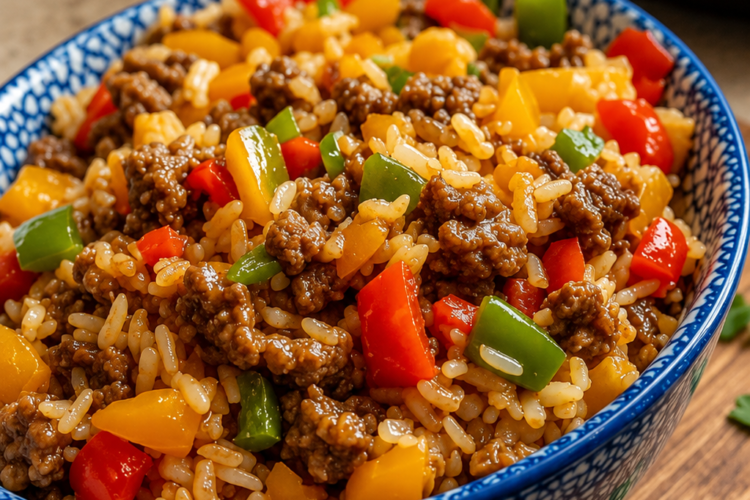
Beef and Pepper Rice Bowl – Savory, One-Skillet Weeknight Comfort
There are nights when you want something hearty, flavorful, and on the table fast without a sink full of dishes. This Beef and Pepper Rice Bowl is exactly that. Seasoned ground beef, colorful bell peppers, and onion come together in a savory soy-hoisin sauce, then get tossed with fluffy rice for a complete meal in one skillet. It is simple, satisfying, and packed with the kind of bold, slightly sweet-savory flavor that makes everyone ask for seconds.
I started making this on busy weeknights when I needed dinner that felt complete but required almost no planning. The peppers add sweetness and crunch, the sauce clings to every grain of rice, and the whole thing comes together in about 25 minutes. The first time I served it, the skillet was scraped clean and someone asked if there was more. It has been in regular rotation ever since.
This is the kind of recipe that works for family dinners, meal prep, or anytime you want a flavorful rice bowl without takeout prices or complicated steps. Once you taste how the sauce coats the beef and rice, it becomes a go-to.
Why You’ll Love This Recipe
You will love this Beef and Pepper Rice Bowl because it delivers big flavor with minimal effort. Ground beef browns quickly and soaks up a savory sauce made from soy, hoisin, sesame oil, garlic, and ginger. Bell peppers and onion add color, sweetness, and texture. Tossed with cooked rice, it becomes a complete, satisfying meal in one pan.
You will love how practical it is. Prep is simple—dice a few vegetables, measure a few pantry sauces. Everything cooks in a single skillet. It uses cooked rice (day-old works best), so it is perfect for using leftovers. It feeds four, reheats beautifully, and adapts easily to what you have on hand.
You will love the balance of flavors and textures. The beef is savory and rich. The peppers stay slightly crisp. The sauce is salty, slightly sweet, and aromatic from the sesame and ginger. Green onions on top add freshness. Every bite feels complete.
Most of all, you will love the ease and the reactions. This is the bowl that disappears while people are still talking about how good it smells. In a world of complicated dinners, a one-skillet beef and pepper rice bowl this good is pure weeknight gold.
Why This Recipe Works
Browning the ground beef first develops savory flavor and creates a foundation for the sauce. Draining excess grease keeps the dish from becoming oily. Sautéing the diced peppers and onion until softened but still slightly crisp adds sweetness and texture without turning them mushy. The combination of soy sauce and hoisin provides saltiness, umami, and a touch of sweetness that coats the ingredients evenly. Sesame oil adds nutty aroma. Garlic powder and ground ginger give reliable, even seasoning without the need for fresh aromatics that might burn. A pinch of red pepper flakes adds optional gentle heat.
Adding the cooked rice at the end lets it warm through and absorb the sauce so every grain is flavorful. Using day-old rice helps it hold its shape and prevents the bowl from becoming sticky or mushy. A final garnish of green onions adds brightness and color. These simple techniques—proper browning, balanced sauce, and careful rice addition—produce a cohesive, restaurant-style rice bowl with almost no effort.
Ingredient Breakdown
Ground Beef (1 lb) Ground beef is the hearty protein base. An 80/20 or 85/15 blend provides good flavor; leaner options work if you prefer less fat. Beef supplies satisfying richness and protein.
Red and Green Bell Peppers (1 each, diced) Bell peppers add color, mild sweetness, and a slight crunch. Using both red and green gives visual appeal and a balance of flavors.
Small Onion (diced) Onion provides aromatic depth and sweetness as it softens with the peppers.
Cooked White or Brown Rice (3 cups) Rice turns the skillet mixture into a complete meal. Day-old or cooled rice holds its texture best and absorbs the sauce without becoming gummy.
Soy Sauce (¼ cup) Soy sauce delivers saltiness and umami that season the entire dish.
Hoisin Sauce (2 tablespoons) Hoisin adds a touch of sweetness, thickness, and complex savory flavor that makes the sauce cling beautifully.
Sesame Oil (1 tablespoon) Sesame oil provides nutty aroma and richness that elevates the overall flavor.
Garlic Powder (1 teaspoon) and Ground Ginger (½ teaspoon) These dried seasonings give reliable garlic and ginger notes that distribute evenly.
Red Pepper Flakes (¼ teaspoon, optional) Red pepper flakes add gentle heat for those who like a little spice.
Green Onions (2, sliced) Green onions add a fresh, mild onion finish and bright color as a garnish.
Kitchen Equipment
A large skillet, a wooden spoon or spatula, a cutting board and knife, measuring cups and spoons, and a colander (if draining the beef) are the main tools. That is the complete practical list.
Step-by-Step Instructions
Heat the sesame oil in a large skillet over medium heat. Add the ground beef and cook, breaking it apart with a spoon, until fully browned. Drain any excess grease.
Add the diced red and green bell peppers and the diced onion to the skillet. Sauté for 4–5 minutes, stirring occasionally, until the vegetables have softened but still have a little bite.
Stir in the soy sauce, hoisin sauce, garlic powder, ground ginger, and red pepper flakes (if using). Cook for 2–3 minutes, allowing the sauce to coat the beef and vegetables and thicken slightly.
Add the cooked rice to the skillet. Mix thoroughly until the rice is evenly coated with the sauce and heated through.
Taste and adjust seasoning if needed. Garnish with sliced green onions and serve warm.
Expert Tips
- Use day-old or cooled rice for the best texture—it holds its shape and absorbs sauce without turning mushy.
- Drain the beef well after browning so the finished dish is not greasy.
- Dice the peppers and onion into even pieces so they cook at the same rate.
- Do not overcook the peppers—they should stay slightly crisp for texture contrast.
- Taste the sauce before adding the rice and adjust soy or hoisin if needed.
- A large skillet gives everything room to cook evenly without steaming.
- Freshly sliced green onions at the end keep their bright flavor and color.
- For deeper flavor, let the sauce simmer an extra minute to reduce slightly.
- Brown rice works well and adds extra fiber and nuttiness.
- Double the recipe easily for meal prep or larger families.
- Keep the heat at medium so the garlic and ginger do not burn.
- A splash of water or broth can loosen the mixture if it seems too dry.
- Leftovers reheat beautifully and often taste even better the next day.
- Serve immediately for the best texture, or keep warm over low heat if needed.
Common Mistakes to Avoid
- Using freshly cooked, hot, sticky rice. It can make the bowl gummy—day-old is better.
- Skipping the drain step after browning the beef. Excess grease makes the dish heavy.
- Overcooking the peppers until they are completely soft. They lose their pleasant texture.
- Adding the rice too early. It can become overcooked or absorb too much liquid.
- Using a small skillet. Crowding causes steaming instead of proper sautéing.
- Under-seasoning. Taste and adjust the soy, hoisin, or spices at the end.
- Burning the garlic powder or ginger by using too high heat.
- Forgetting the sesame oil. It adds important aroma and flavor.
- Overloading with red pepper flakes on the first try. Start small and adjust.
- Serving without the green onion garnish. It adds freshness that balances the rich sauce.
- Letting the finished dish sit too long without stirring. The rice can dry out or stick.
- Using low-quality soy sauce or hoisin. The sauce is the flavor backbone.
- Expecting a saucy stir-fry consistency. This is more of a coated rice bowl.
- Skipping the step of breaking the beef into small pieces. Larger chunks do not distribute as well.
Ingredient Substitutions
Ground beef can be replaced with ground turkey, chicken, pork, or a plant-based ground.
White rice can be replaced with brown rice, cauliflower rice, or quinoa.
Soy sauce can be replaced with low-sodium soy sauce, tamari, or coconut aminos.
Hoisin sauce can be replaced with a mix of soy sauce, a little honey or brown sugar, and a touch of peanut butter in a pinch.
Sesame oil can be replaced with a neutral oil plus a few drops of toasted sesame oil at the end if available.
Fresh garlic and ginger can replace the powdered versions (use about 2–3 cloves garlic and 1 teaspoon grated ginger).
Red and green peppers can be replaced with any color bell peppers or even diced zucchini.
Recipe Variations
- Spicy Beef and Pepper Bowl – Increase red pepper flakes or add a drizzle of sriracha.
- Teriyaki Style – Replace hoisin with teriyaki sauce for a sweeter profile.
- Veggie-Loaded – Add diced carrots, broccoli florets, or snap peas with the peppers.
- Egg Topping – Top each bowl with a fried or soft-boiled egg.
- Cheese Finish – Sprinkle shredded cheddar or mozzarella over the hot bowl and let it melt.
- Korean-Inspired – Add a spoonful of gochujang and a drizzle of sesame seeds.
- Pineapple Beef Bowl – Stir in diced pineapple for a sweet-savory twist.
- Low-Carb – Serve over cauliflower rice or zucchini noodles.
- Chicken Version – Use ground or diced chicken instead of beef.
- Tofu Version – Use crumbled firm tofu and a bit of extra oil for browning.
- Meal-Prep Bowls – Divide into containers with extra vegetables on the side.
- Crispy Rice – Press leftover rice into a skillet to crisp the bottom before adding the beef mixture.
- Fresh Herb Finish – Add cilantro or Thai basil along with the green onions.
Make It Healthier
This bowl is already relatively balanced with protein, vegetables, and rice. To lighten it further, use lean ground beef or turkey, increase the proportion of peppers and onion, choose brown rice or cauliflower rice, and use low-sodium soy sauce. Serve with an extra side of steamed or raw vegetables. The dish provides solid protein and can fit easily into a balanced eating pattern when portions are mindful.
Meal Prep Guide
This recipe is excellent for meal prep. Cook a full batch and divide into containers for grab-and-go lunches or dinners. It reheats well and the flavors continue to develop. You can also cook the beef and vegetable mixture ahead and add freshly cooked or reheated rice when ready to serve. Day-old rice makes the final assembly even faster. This flexibility makes it ideal for busy weeks.
Storage
Cool leftovers completely, then store in airtight containers in the refrigerator for up to four days. Keep the green onion garnish separate if possible so it stays fresh. Reheat gently to avoid drying out the rice.
Freezing
The beef and pepper mixture freezes well for up to three months. Cool completely, portion, and freeze. Thaw overnight in the refrigerator and reheat with freshly cooked or thawed rice. The full assembled bowl can also be frozen, though the rice texture is best when added fresh or reheated carefully with a splash of water.
Reheating
Stovetop: Reheat in a skillet over medium heat with a splash of water or broth, stirring until hot. Microwave: Heat individual portions, covered, stirring once halfway, until steaming. Add a few drops of sesame oil or soy sauce when reheating if the mixture seems dry. Always ensure it is heated through before serving.
What to Serve With It
This rice bowl is a complete meal on its own. A simple side of steamed broccoli, cucumber salad, or edamame adds freshness. For a larger spread, serve with egg rolls, dumplings, or a light soup. Leftovers make an excellent lunch with no additional sides required. A fried egg on top turns it into a heartier breakfast-for-dinner option.
Beverage Pairings
A cold beer—especially a lager or light pilsner—pairs well with the savory-sweet sauce. Sparkling water with lemon cleanses the palate. Iced green tea or jasmine tea complements the Asian-inspired flavors. For wine drinkers, a light red or off-dry white can work. Choose a drink that either refreshes or matches the bold, comforting profile of the bowl.
Frequently Asked Questions
Can I use freshly cooked rice? Yes, but day-old or cooled rice gives better texture and is less likely to become sticky.
Can I make this with a different protein? Absolutely. Ground turkey, chicken, pork, or plant-based grounds all work well.
Is hoisin sauce necessary? It adds important sweetness and body. If you do not have it, a mix of soy sauce and a little honey or brown sugar can approximate the flavor.
How spicy is this? Mild as written. Adjust the red pepper flakes or add sriracha to taste.
Can I use frozen peppers? Yes. Add them straight from the freezer and cook a minute or two longer to evaporate excess moisture.
How long do leftovers keep? Up to four days in the refrigerator or three months in the freezer (for the meat and vegetable mixture).
Can I double the recipe? Yes. Use a larger skillet or cook in batches so everything browns properly.
What kind of rice is best? White or brown rice both work. Jasmine or long-grain white rice is classic; brown rice adds nuttiness and fiber.
Can I make it gluten-free? Yes. Use tamari or gluten-free soy sauce and confirm the hoisin is gluten-free.
Why is my rice mushy? It may have been too wet or freshly cooked and hot. Day-old rice or spreading hot rice to cool first helps.
Can I add more vegetables? Yes. Carrots, broccoli, snap peas, or mushrooms are all excellent additions.
Do I need a wok? No. A large skillet works perfectly.
Can I meal-prep this? Yes. It holds up very well and reheats nicely.
Is sesame oil important? It adds distinctive aroma and flavor. A neutral oil can be used in a pinch, but the taste will be different.
How can I make the sauce thicker? Let it simmer an extra minute or two before adding the rice, or add a small cornstarch slurry if desired.
Nutrition Information
Estimated nutrition per serving (based on 4 servings): approximately 420–480 calories, 18–22 g fat, 40–45 g carbohydrates, 25–28 g protein. Values vary depending on the fat content of the beef, type of rice, and exact brands of sauces used. These figures are estimates only and are not a substitute for professional nutritional advice. This bowl provides a good balance of protein, carbohydrates, and vegetables and can be part of a balanced meal.
Final Thoughts
This Beef and Pepper Rice Bowl has become one of my most reliable weeknight dinners. It is fast, flavorful, flexible, and deeply satisfying—the kind of meal that feels like takeout but comes together in one skillet with ingredients you probably already have. Every time the sauce coats the rice and the peppers stay just a little crisp, I am reminded how good simple cooking can be.
I hope you make this the next time you need a hearty, no-fuss dinner. I hope the beef browns nicely, the sauce clings perfectly, and the first bowl earns a second. If you try it, I would love to know whether you kept it classic or added your own twist—and how quickly the skillet emptied. From my kitchen to yours—savory, colorful, and pure weeknight comfort.
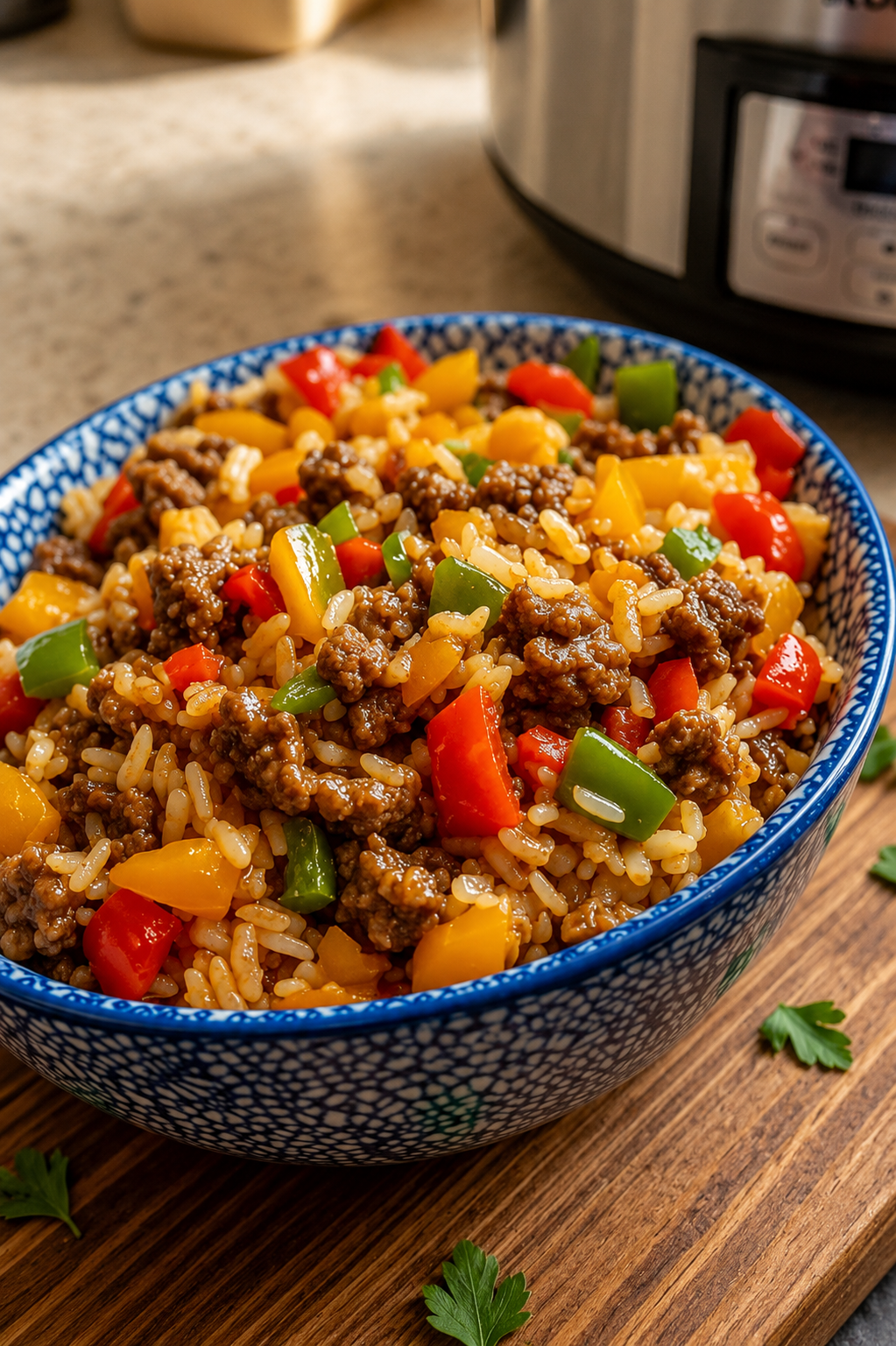
Beef and Pepper Rice Bowl
Ingredients
Equipment
Method
- Heat sesame oil in a skillet over medium heat. Cook ground beef until browned; drain excess grease.
- Add diced peppers and onion; sauté 4–5 minutes until softened.
- Stir in soy sauce, hoisin, garlic powder, ginger, and red pepper flakes. Cook 2–3 minutes.
- Add cooked rice and mix thoroughly until coated and heated through.
- Garnish with green onions and serve warm.
Notes
Can you steak or beef stew or stir-fry meat in place of ground beef.