
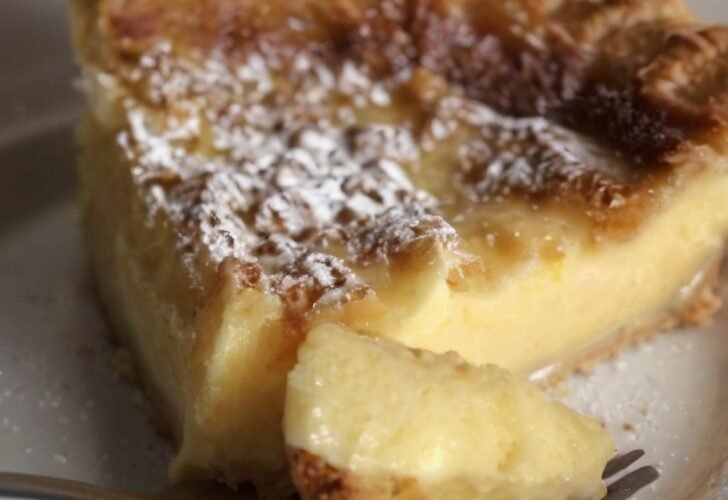
Magic Custard Pie – The Self-Crusting Old-Fashioned Classic
I made this last weekend because I couldn’t stop thinking about how my mom’s kitchen used to smell on Sunday mornings. That warm vanilla-butter scent that made you want to stay in your pajamas all day.
This custard pie is one of those old-fashioned recipes that feels like a hug. The magic? You literally pour everything into one dish, and while it bakes, the flour sinks to the bottom and forms its own golden crust. No rolling. No crimping. Just pure comfort.
My husband took one bite and got quiet. Then he said, “This tastes like my grandmother’s house.” That’s when I knew this recipe was a keeper.
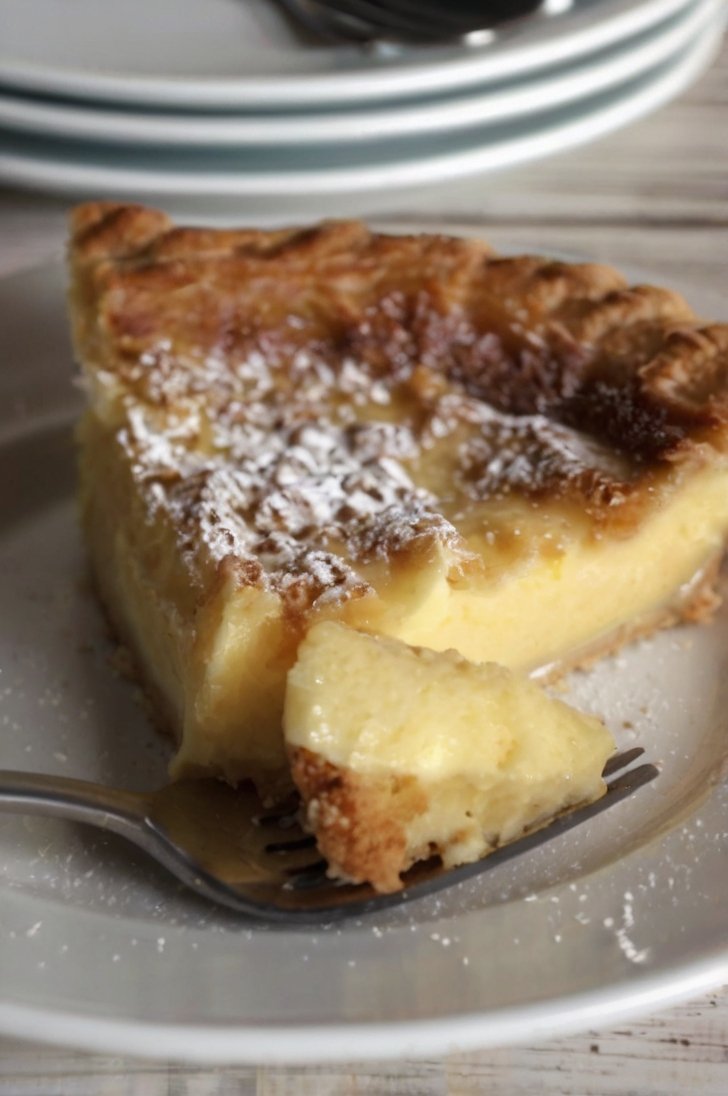
The top gets a beautiful caramelized finish with a light dusting of powdered sugar, and the custard inside is silky, sweet, and just custardy enough without being heavy. It’s the kind of dessert that disappears faster than you’d think.
Why You’ll Love This Recipe
You will love this magic custard pie because it delivers old-fashioned comfort with almost no effort. A thin batter of eggs, sugar, flour, milk, vanilla, and butter goes into a simple pie dish. In the oven the flour settles and forms its own delicate golden crust while the rest sets into a silky, lightly sweet custard. A dusting of powdered sugar finishes it with a soft, bakery-style touch.
You will love how practical it is. One bowl, no crust to roll, no water bath, no complicated steps. The batter looks thin—that is exactly right. Bake, cool, dust, and serve. Perfect for Sunday mornings, potlucks, or anytime you want a nostalgic dessert that feels special without the work.
You will love the texture and flavor. The top is gently caramelized and golden. The interior is smooth, creamy, and lightly set. The bottom has a thin, tender “crust” that forms on its own. Vanilla and butter give it that classic homemade taste that reminds people of grandmother’s kitchen.
Most of all, you will love the reactions. This is the pie that makes people pause after the first bite. It is the one that disappears while the coffee is still hot. In a world of complicated desserts, magic custard pie this good is pure simple comfort.
Why This Recipe Works
Eggs and sugar whisked together create structure and sweetness. A modest amount of flour is enough to settle during baking and form a thin, tender bottom layer that acts as a crust. Whole milk keeps the custard silky and rich without being heavy. Melted butter and vanilla add flavor and that characteristic warm, buttery aroma. A pinch of salt balances the sweetness.
Pouring the thin batter into a greased pie dish and baking at a moderate 350°F allows the flour to sink and the custard to set gently. The top browns and caramelizes lightly while the center remains just set with a slight jiggle. Cooling completely lets the custard firm up so it slices cleanly. A final dusting of powdered sugar adds sweetness and a pretty finish. These simple techniques produce a reliable, self-crusting custard pie with minimal effort.
Ingredient Breakdown
Eggs (4 large) Provide structure, richness, and help the custard set. Room-temperature eggs mix more evenly.
Sugar (1¾ cups) Sweetens the pie and helps the top caramelize to a beautiful golden color.
All-Purpose Flour (½ cup) The “magic” ingredient. It settles during baking to form a thin, tender bottom crust.
Whole Milk (2 cups) Creates a silky, creamy custard. Whole milk gives the best texture and flavor.
Vanilla Extract (1 teaspoon) Adds classic warm, aromatic flavor. Pure vanilla is ideal.
Melted Butter (¼ cup) Contributes richness and that signature buttery aroma.
Salt (pinch) Balances the sweetness and enhances the other flavors.
Powdered Sugar (for dusting) A light finish that makes the pie look bakery-perfect and adds a soft sweetness.
Kitchen Equipment
A 9-inch pie dish, a large mixing bowl, a whisk, a measuring set, and a wire rack for cooling are the main tools. A fine-mesh sieve can be used if you want an ultra-smooth batter, but it is optional.
Step-by-Step Instructions
Preheat the oven to 350°F. Lightly grease a 9-inch pie dish.
In a large bowl, whisk the eggs and sugar together until smooth and slightly pale.
Add the flour and whisk until there are no lumps.
Slowly pour in the milk, vanilla extract, melted butter, and salt. Whisk until the mixture is silky and fully combined. The batter will look thin—that is correct.
Pour the mixture into the prepared pie dish.
Bake for 45–50 minutes, until the top is deeply golden and the center is just set with a slight jiggle.
Remove from the oven and let the pie cool completely on a wire rack. The custard will firm up as it cools.
Just before serving, dust generously with powdered sugar. Slice and serve at room temperature or slightly chilled.
Expert Tips
- Whisk the eggs and sugar well until the mixture lightens slightly—this helps create a smooth custard.
- Add the flour gradually and whisk thoroughly so there are no dry pockets.
- Pour the milk in slowly while whisking to keep the batter smooth.
- The batter will be thin and pourable; do not add extra flour.
- Grease the pie dish well so the self-formed crust releases cleanly.
- Bake until the top is deeply golden and the center has only a slight jiggle—it will continue to set as it cools.
- Cool the pie completely before slicing so the custard firms up properly.
- A generous dusting of powdered sugar just before serving looks pretty and tastes right.
- Room-temperature eggs and milk mix more evenly and help the pie bake more uniformly.
- For the cleanest slices, use a sharp knife dipped in hot water and wiped dry between cuts.
- The pie is delicious at room temperature or lightly chilled from the refrigerator.
- Leftovers keep well covered in the fridge and make a lovely next-day breakfast or snack.
- A 9-inch pie dish is ideal; a deeper dish may need a few extra minutes.
- Trust the process—the flour really does settle and form a crust on its own.
Common Mistakes to Avoid
- Adding too much flour. The modest amount is what allows the “magic” crust to form without making the custard dense.
- Underbaking. The center should be just set with a slight jiggle; too wet and it will not firm up properly.
- Overbaking until the top is very dark and the custard is rubbery. Pull it when it is deeply golden and still has a gentle jiggle.
- Slicing while the pie is still hot. The custard needs to cool and set completely.
- Skipping the grease on the pie dish. The pie can stick and tear when you try to serve it.
- Expecting a thick, pastry-style crust. The bottom layer is thin and tender—more of a set custard base than a traditional pie crust.
- Using low-fat milk. Whole milk gives the best silky texture and flavor.
- Forgetting the salt. Even a pinch makes a noticeable difference in balancing the sweetness.
- Opening the oven door repeatedly. This can affect the rise and even baking.
- Dusting with powdered sugar too early. It can dissolve into the warm surface; add it just before serving.
- Using a dark metal pan without checking early. It may brown faster; glass or ceramic is more forgiving.
- Stirring the batter vigorously after it is poured into the dish. Pour and leave it so the flour can settle naturally.
- Expecting the exact texture of a pastry-cream pie. This is a simpler, more rustic, self-crusting custard pie.
- Making only one for a gathering—people tend to come back for second slices.
Ingredient Substitutions
Whole milk can be replaced with 2% milk for a slightly lighter result; the custard will be a bit less rich.
Vanilla extract can be replaced with vanilla bean paste for a more intense flavor and visible flecks.
Melted butter can be replaced with an equal amount of neutral oil in a pinch, though butter gives better flavor.
Powdered sugar can be omitted or replaced with a light drizzle of honey or a few fresh berries if preferred.
Recipe Variations
- Nutmeg Finish – Add a light grating of fresh nutmeg on top of the powdered sugar for a classic custard note.
- Cinnamon Sugar – Sprinkle a little cinnamon sugar over the top before baking for a warm, caramelized finish.
- Lemon – Add the zest of one lemon to the batter for a bright citrus version.
- Coconut – Replace ½ cup of the milk with coconut milk and sprinkle toasted coconut on top after baking.
- Chocolate – Stir 2–3 tablespoons of cocoa powder into the flour for a chocolate custard variation.
- Berry Topping – Serve slices with fresh berries or a simple berry compote.
- Mini Pies – Bake in ramekins or a muffin tin (reduce time) for individual servings.
- Maple – Replace a portion of the sugar with maple syrup for a deeper, more complex sweetness (texture may vary slightly).
- Make-Ahead – Bake the pie a day ahead; cool completely, cover, and refrigerate. Dust with powdered sugar just before serving.
- Gluten-Free – Use a 1:1 gluten-free flour blend; results may be slightly more delicate but still good.
- Extra Vanilla – Increase the vanilla to 1½ teaspoons for a stronger aroma.
- Caramel Drizzle – Serve with a light drizzle of caramel sauce instead of (or in addition to) powdered sugar.
- Holiday Spice – Add a pinch of cinnamon and nutmeg to the batter for a warmer, seasonal version.
Make It Healthier
This pie is a sweet, comforting dessert. To enjoy it more mindfully, cut smaller slices, serve it with fresh fruit, and savor it as an occasional treat. Using whole milk and real butter keeps the ingredient list simple and recognizable. Portion awareness is the most practical approach for an old-fashioned custard pie like this.
Meal Prep Guide
Magic custard pie is excellent made ahead. Bake it the day before you plan to serve it—the texture improves as it cools and rests. Keep it covered in the refrigerator and bring it to room temperature (or serve lightly chilled) before dusting with powdered sugar and slicing. It travels well for potlucks and family gatherings.
Storage
Cool the pie completely, then cover and store in the refrigerator for up to 3–4 days. The texture remains pleasant, and many people prefer it lightly chilled. Dust with powdered sugar just before serving so it stays fresh-looking.
Freezing
Freezing is not ideal because the custard texture can become watery or grainy upon thawing. This pie is best enjoyed fresh or within a few days from the refrigerator.
Reheating
This pie is meant to be served at room temperature or lightly chilled. If you prefer it slightly warm, heat individual slices gently in a low oven or microwave for a few seconds—do not overheat or the custard can become rubbery. Most people enjoy it cool or at room temperature.
What to Serve With It
Magic custard pie is perfect on its own with a cup of coffee or tea. Fresh berries, a dollop of lightly sweetened whipped cream, or a few sliced strawberries make lovely accompaniments. It also sits nicely on a dessert table with other simple, nostalgic treats. For a Sunday-morning feel, serve it as a sweet finish after a leisurely breakfast or brunch.
Beverage Pairings
Hot coffee is the classic partner—the bitterness balances the sweet custard. Black tea, Earl Grey, or a mild green tea also pair beautifully. Cold milk is simple and comforting. A small glass of dessert wine or a lightly sweet sparkling wine can make it feel more special. Choose a drink that either contrasts the sweetness or enhances the warm vanilla-butter notes.
Frequently Asked Questions
Why is it called “magic” custard pie? Because the flour settles during baking and forms its own thin crust at the bottom—no separate crust to make or roll.
Is the batter supposed to be thin? Yes. The thin, pourable consistency is correct and necessary for the layers to form properly.
Why did my pie not form a crust? Possible causes include too little flour, underbaking, or stirring the batter after pouring. Follow the quantities and pour without disturbing.
Can I use a different size pan? A 9-inch pie dish is ideal. A slightly larger or deeper dish may affect thickness and baking time.
How do I know when it is done? The top should be deeply golden and the center should be just set with a slight jiggle. It will firm up as it cools.
Can I make it ahead? Yes. Bake a day ahead, cool completely, cover, and refrigerate. Dust with powdered sugar just before serving.
Is this the same as a crustless custard pie? It is similar, but the small amount of flour creates a thin, self-formed bottom layer that acts like a delicate crust.
Can I reduce the sugar? You can reduce it slightly, but the texture and browning may change. The given amount produces the classic sweet, golden result.
How long does it keep? 3–4 days covered in the refrigerator.
Can I freeze it? Freezing is not recommended; the custard texture suffers upon thawing.
Do I need a water bath? No. This recipe bakes directly in the pie dish at 350°F without a water bath.
Why is my custard watery? It may have been underbaked or sliced before it cooled and set fully. Bake until just set and cool completely.
Can I add fruit? The basic pie is best plain or with fruit served on the side. Adding fruit to the batter can interfere with the self-crusting process.
Is it gluten-free? Not as written. A 1:1 gluten-free flour blend can be tried with some variation in texture.
How many slices does this make? About 8 slices, depending on how you cut it.
Nutrition Information
Estimated nutrition per slice (based on 8 slices): approximately 280–320 calories, 10–12 g fat, 42–48 g carbohydrates, 5–6 g protein. Values vary depending on exact egg and milk sizes. These figures are estimates only and are not a substitute for professional nutritional advice. This pie is a sweet, comforting dessert best enjoyed in moderate portions.
Final Thoughts
Magic custard pie is proof that the simplest recipes often taste the most like home. A handful of pantry ingredients, one bowl, and a quiet hour in the oven produce a silky, golden, self-crusting pie that smells like Sunday mornings and tastes like grandmother’s kitchen. No rolling pin, no stress—just pure old-fashioned comfort.
I hope you make it the next time you want that warm vanilla-butter scent filling the house. I hope the top turns deeply golden, the custard sets just right, and someone goes quiet after the first bite. If you try it, I would love to know whether you served it at room temperature or chilled—and how quickly it disappeared. From my kitchen to yours—silky, golden, and pure nostalgic comfort.
WP Recipe Maker Card
Description Old-fashioned Magic Custard Pie that forms its own golden crust while baking. Silky, lightly sweet custard with a caramelized top and powdered-sugar finish—no rolling required.
Prep Time 10 minutes
Cook Time 45–50 minutes
Rest Time 1–2 hours (cooling)
Total Time Approximately 2–2½ hours (mostly cooling)
Servings 8 slices
Course Dessert
Cuisine American
Equipment 9-inch pie dish
Ingredients
- 4 eggs
- 1¾ cups sugar
- ½ cup all-purpose flour
- 2 cups whole milk
- 1 teaspoon vanilla extract
- ¼ cup melted butter
- Pinch of salt
- Powdered sugar for dusting
Instructions
- Preheat oven to 350°F. Lightly grease a 9-inch pie dish.
- Whisk eggs and sugar until smooth and slightly pale. Whisk in flour until no lumps remain.
- Slowly whisk in milk, vanilla, melted butter, and salt until silky. The batter will be thin.
- Pour into the prepared dish. Bake 45–50 minutes until the top is deeply golden and the center is just set with a slight jiggle.
- Cool completely. Dust with powdered sugar just before serving. Serve at room temperature or lightly chilled.
Notes The thin batter is correct—flour settles to form a crust. Cool completely before slicing. Excellent made ahead. Store covered in the refrigerator. Pure old-fashioned comfort with almost no effort.
Nutrition Estimated values only; see full article for details.
Category Dessert
Method Baking
Cuisine American
3-Ingredient Baked Breakfast –
Ingredients
Equipment
Method
- Preheat oven to 350°F. Lightly grease a 9-inch pie dish.
- Whisk eggs and sugar until smooth and slightly pale. Whisk in flour until no lumps remain.
- Slowly whisk in milk, vanilla, melted butter, and salt until silky. The batter will be thin.
- Pour into the prepared dish. Bake 45–50 minutes until the top is deeply golden and the center is just set with a slight jiggle.
- Cool completely. Dust with powdered sugar just before serving. Serve at room temperature or lightly chilled.
Notes