
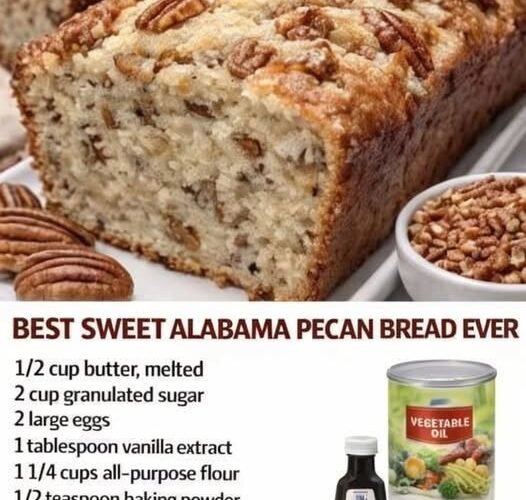
Alabama Pecan Bread: The Sweet, Nutty Loaf That Tastes Like a Southern Sunday Morning
I am not going to pretend I invented this one. My grandmother made a version of Alabama pecan bread every Sunday morning, and by the time I was tall enough to reach the oven rack, the whole house smelled like toasted butter and pecans before a single alarm went off. I have tried to shortcut it since then. I have tried box mixes, I have tried skipping the cooling step because I was impatient, and I have ruined it in every conceivable way a person can ruin a loaf cake. This is the version that finally worked, and it is the one I make when I want my kitchen to feel like somebody loves me. The honest thing about a good pecan bread is that it is not a complicated bake. There is no yeast, no sourdough starter, no frosting that needs a piping bag. It is a two-bowl, one-pan sweet loaf that leans entirely on melted butter, a genuinely unreasonable amount of sugar, and a very low oven. What it gives you back is a crumb so tender it almost melts, a top crust the color of a pecan shell, and a slice that is genuinely good with nothing on it at all. Alabama pecan bread is also one of the best-value bakes in my whole rotation. Twelve slices for under seven dollars, and it feeds a table of people who all somehow assume the dessert is the interesting part of the meal. It travels beautifully to a potluck, it disappears at a holiday brunch, and the second day it is somehow better than the first, which is a sentence I would not believe if I had not watched it happen repeatedly.Why You'll Love This Alabama Pecan Bread
First, it is a one-pan bake. You need a bowl, a loaf pan, and a spoon, and about fifteen minutes of actual work before it goes in the oven. If you can stir, you can make this. Second, it makes its own topping. There is no glaze, no drizzle, no cream cheese frosting to buy or to hide a mistake behind. The pecans pressed into the top caramelize in the oven and form this crisp, faintly salty shell over a soft, almost custard-like interior. It is the kind of top you will pick at with your fingers and then feel mildly guilty about. Third, it is sweet, but it is sweet in a specific way. The sugar here is doing structural work, not just flavoring, so the loaf stays moist for days instead of drying out into a brick by Tuesday. If you have ever thrown away day-old sweet bread because it got tough, that is the whole reason, and this formula does not have that problem. Fourth, it has genuine staying power. This is a breakfast loaf that can sit on a counter under a cake dome for a week and still taste like the day you baked it. That is why it is my default contribution to any gathering where I am expected to bring something that will be eaten standing up in a kitchen. And fifth, it is unreasonably forgiving. I have made this recipe with slightly over-browned butter and a ten-minute difference in bake time, and it has never once been inedible. It is a good first baking project, and it is also the recipe I bring out when I want to look like I am trying.Why This Pecan Bread Recipe Works
A sweet loaf is mostly a structural engineering problem, and this one solves it in four moves. First, melted butter instead of creamed butter. Traditional pound cake creams solid butter and sugar with air, then relies on that air plus baking powder to rise. This recipe skips creaming entirely, which means it rises very little and bakes into a dense, moist, almost pudding-like loaf instead of a cake. That is not a shortcut failure. It is a deliberate style, and it is why the slices hold together on a plate. Second, sugar at a two-to-one ratio by volume. Two cups of sugar to one and a quarter cups of flour is a very sweet ratio by bread standards, and that sugar is doing three jobs: it tenderizes the crumb by competing with gluten for water, it provides structure through the eggs, and it caramelizes during the long bake. That last job is the pecan topping. The sugar is what turns those nuts into a crisp lacquered shell. Third, both eggs and oil. The eggs set the crumb and give the loaf its lift and its yellow color. The half cup of vegetable oil adds fat that keeps the crumb from tightening up as it cools, which is the entire difference between a moist slice and a dry one on day three. Using butter and oil together instead of going all-in on either is the trick that makes this one work as both a snacking loaf and a breakfast loaf. Fourth, 325 degrees for sixty to seventy minutes. That is low for a cake and exactly right for this one. A hot oven would set the outside crust and burn the sugar before the middle finished setting, which is how you get the dreaded raw-gummy-center pecan bread. A low, slow bake lets the loaf set from the outside in while the sugar melts rather than scorches, and it gives the pecans time to toast without turning bitter. There is very little leavening here, just a half teaspoon of baking powder. The lift comes from trapped air in the beaten eggs and from the steam in the oven. Do not double the baking powder to get a taller loaf. You will get a better-looking loaf and a worse-tasting one.Ingredient Breakdown: What Each One Is Actually Doing
Unsalted butter, melted (half a cup). Flavor first, tender crumb second. Melting it means you skip the creaming step, so the loaf is denser and moister. If you use salted butter, drop the salt to an eighth teaspoon. Melt it and let it cool for five minutes, because butter straight out of the microwave will scramble the eggs when it hits the sugar. Granulated sugar (2 cups). Structure, moisture retention, and the caramelized top. Do not reduce it by more than a quarter cup or you will lose both the crumb and the topping. If you go sugar-free, you are making a different bread, and you will want to read the swaps below before you commit. Large eggs (2). The main structural ingredient. Room temperature eggs emulsify into the fat more smoothly, which gives you a finer crumb. Add them one at a time and whisk each until it disappears before the next one goes in. Vanilla extract (1 tablespoon). Pure vanilla, not imitation. This is a two-cup-sugar recipe, so the aromatics are very loud. If you use vanilla bean paste, halve it, because it is roughly three times stronger. All-purpose flour (1 and a quarter cups). This needs gluten to develop but does not need a strong flour, and you do not want whole wheat in here unless you are deliberately making the whole-wheat version below. Weigh it if you can. A cup of flour varies by almost a quarter cup depending on how hard it was scooped. Baking powder (half teaspoon) and salt (quarter teaspoon). A small amount of leavening, because the eggs are doing most of the lifting. The salt is not for flavor alone; it tightens the gluten slightly and balances two cups of sugar, which is the difference between sweet and cloying. Do not omit it. Vegetable oil (half cup). Fat that stays tender as the loaf cools. Canola works. Avocado oil works and tastes a little nicer. Olive oil is a mistake, because its flavor competes with the butter and the pecans. Chopped pecans (1 and a half cups, plus extra). Texture, flavor, and fat. Buy them in-shell at the grocery store if you can, because shelled pecans are expensive and go stale fast. Chopping them yourself, rather than using the bagged pieces, gives you more consistent texture and means fewer big wedges that burn on top. A rough chop on a sheet pan with the bottom of a heavy pan takes about four minutes.The Kitchen Equipment You Actually Need
You need a 9-by-5-inch metal loaf pan, and I mean a light-colored aluminum or steel one. A dark nonstick loaf pan will caramelize the sugars in this recipe and give you a black bottom and a raw middle. Do not line it with parchment if your pan is dark; instead, drop the oven temperature by 25 degrees and pull it a little early. A wire cooling rack is not optional. The loaf has to come out of the pan on day one of its life, or the bottom will steam itself soggy and tear when you slice. You need an oven thermometer. This recipe bakes at 325 degrees, which is precisely the temperature people trust without checking and precisely the temperature many home ovens miss. An underheated oven is the number one reason pecan bread comes out pale and dense. If you only buy one tool for this recipe, buy that. An instant-read thermometer is nice but not essential; the toothpick test is reliable enough on this loaf. A stand mixer is optional; this comes together with a whisk and a rubber spatula in about ten minutes. A sharp serrated knife matters more than you would expect. A dull blade squishes a dense loaf into crumbs. If you run your finger along the cutting edge and it catches, sharpen it or swap it before you cut. Finally, an airtight container or a cake carrier. A loaf this moist will dry out within a day or two exposed to air.Step-by-Step: How to Make Alabama Pecan Bread
Step 1. Preheat the oven to 325 degrees and grease a 9-by-5-inch loaf pan generously, working the butter into all four corners and up the sides. Step 2. Melt half a cup of butter and let it cool for five minutes, until it is warm rather than hot. Step 3. Chop1 and a half cups of pecans roughly, and set aside two tablespoons for the top. Step 4. In a large bowl, whisk the melted butter and 2 cups of granulated sugar until smooth and slightly frothy. Step 5. Add the eggs one at a time, whisking each until it is fully absorbed. Stir in the tablespoon of vanilla. Step 6. In a separate bowl, whisk together 1 and a quarter cups of flour, half a teaspoon baking powder, and a quarter teaspoon salt. Step 7. Fold the dry ingredients into the wet just until no dry streaks remain. Do not beat this. Stop the moment it looks combined. Step 8. Stir in half a cup of vegetable oil, then fold in the chopped pecans. Step 9. Scrape the batter into the prepared pan and smooth the top. Press the reserved pecans into the surface so they sit at the batter's skin rather than floating on top. Step 10. Bake for 60 to 70 minutes, until the top is deeply golden and a toothpick comes out clean or with a few moist crumbs. Step 11. Cool in the pan for 15 minutes, then turn out onto a wire rack to cool completely before slicing.Expert Tips From the Times I Burned This
Chop your own pecans and toast them dry. Bagged pecans are mostly halves, which burn unevenly. Spread chopped nuts on a dry sheet pan and toast them at 325 degrees for four to six minutes before you add them to the batter. They will smell twice as nutty and they will not scorch on top of the loaf the same way. Stop mixing the moment it comes together. This is the single most common reason a pecan bread comes out tough and bouncy. Once you see no white streaks, put the spatula down. Weigh your flour. Two cups of loosely scooped flour can be a full quarter cup heavier than two cups of weighed flour, and this is a low-leavening, low-bake recipe with no slack for error. Tent it if it browns too fast. If your top hits deep golden at the 45-minute mark, lay a piece of foil loosely over the pan. You want to slow the top from burning, not trap steam inside. Press the top nuts in, not on. Nuts that just sit on the surface float to the middle during the bake. Push them in about a quarter inch with your knuckle. Use a light pan and check your oven temperature. Both of these are boring and both of them are the difference between the loaf in the photo and the loaf on your counter. Warm your knife before you slice. Run a serrated knife under hot water and dry it thoroughly between cuts. A cold blade drags through the dense crumb and takes a third of the slice with it.Common Mistakes and How to Fix Them
The middle is raw and gummy. Almost always one of four things: the oven was really at 340 degrees, the loaf was too deep, you pulled it ten minutes early because the top looked done, or you overmixed the flour. Fix all four by using a thermometer, a 9-by-5 pan, waiting the full 60 to 70 minutes, and folding gently. The top is dark and the bottom is doughy. Too much sugar for your oven, or a dark pan. Drop to 300 degrees for the last fifteen minutes, and if you are using a dark pan, line it with parchment and cut the temperature by 25 degrees. The loaf sank in the middle. You overmixed, or you opened the door before 40 minutes, or you bumped the pan on the way to the oven. Settle it on the counter, back in the oven, and do not look at it again. The crust stuck and tore. Under-greased. Butter and flour the pan properly even if it is nonstick, because this recipe has enough sugar in it to essentially glue itself to the pan. It came out tough and dense. Too much flour or not enough mixing of the wet ingredients. Sift if you must, but also make sure you are whisking the eggs and sugar long enough to actually emulsify before the flour goes in. The pecans all sank to the bottom. You folded them in too late and too gently, after the batter was already stiff. Fold them in while the batter is still loose enough to suspend them, and tap the bowl once on the counter to release trapped air. The bottom is soggy a day later. You sliced it in the pan, or you left it in the pan to cool completely. Turn it out at fifteen minutes, no exceptions.Ingredient Substitutions That Actually Work
Walnuts for pecans. A straight swap, one cup for one cup. Walnuts are more bitter, so reduce the sugar by two tablespoons. Black walnuts are intense and worth it, but they are very strong, so use half walnuts and half pecans. Other nuts. Hazelnuts and macadamias work. Macadamias are much sweeter, so cut the sugar by a quarter cup. Almonds are too mild and go bitter at the edges in a long bake, so avoid them. Pistachios are excellent in a variation, not in the base recipe. Nut-free. Sunflower seeds or pumpkin seeds, one cup for one cup, plus an extra tablespoon of butter. This is a genuinely good nut-free version and it is the one I send to school. Gluten-free. A one-to-one cup-for-cup gluten-free flour blend works. Add1 teaspoon xanthan gum if the blend does not already contain it, reduce the bake to 55 to 65 minutes, and check early, because gluten-free loaves go from done to dry fast. Dairy-free. Vegan butter works fine here. Do not swap the eggs; use aquafaba only if you also expect a much softer, cakier result. Sugar-free. Monk fruit and allulose blends can be used, but expect a visibly different crumb with a cakier, less tender texture and a less caramelized top, because there is no real sugar to caramelize. This recipe is not low-sugar by design and I would rather tell you that than sell you something that bakes wrong. Lower-fat. Replace3 tablespoons of the oil with unsweetened applesauce and add2 tablespoons extra flour. You will get a slightly denser loaf. Do not try to remove the butter entirely; the flavor is the point.Variations: Southern Pecan Bread and Friends
Bourbon pecan bread. Add2 tablespoons of bourbon or bourbon vanilla in with the vanilla extract. Reduce the vanilla to1 teaspoon so they do not fight. Orange pecan bread. Add the zest of one large orange and 2 tablespoons of fresh orange juice. This is a holiday-table winner. Coconut pecan bread. Swap 1 cup of the chopped pecans for sweetened shredded coconut and add 2 tablespoons of coconut milk in place of the same amount of oil. Pecan date bread. Stir in 1 cup of chopped, pitted Medjool dates. This one is close to a Southern pound cake and is my favorite of the bunch. Bundt or loaf version. Bake in a 10-inch bundt pan at 325 degrees for 55 to 60 minutes. It loosens more than a pound cake does, so grease thoroughly. Muffin version. Fill a 12-count muffin pan just over three-quarters full and bake at 325 degrees for 22 to 26 minutes. This is the best use of the batter if you want it to last a month in the freezer. Cream cheese glaze. Beat 4 ounces softened cream cheese with 1 cup powdered sugar and 1 tablespoon milk, thin it with milk, and drizzle over the cooled loaf. This pushes it from a sweet loaf into a dessert.How to Make This Pecan Bread a Little Healthier
I want to be straight with you: this is a sweet loaf with two cups of sugar, and there is no version of it that I would call healthy. But you can move the needle in a few honest directions. Cut the sugar by a quarter cup. 1 and 3/4 cups still gives you a moist loaf and a caramelized top. Do not go below that, or the structure suffers and the top never crisps. Swap half the flour for whole wheat. Use 1 cup whole wheat flour and 1/4 cup all-purpose. You get more fiber and a nuttier crumb. Expect to pull it a few minutes earlier. Use half the oil and replace the rest with unsweetened applesauce. Saves about 4 grams of fat per slice. Add 2 tablespoons extra flour to compensate. Add a vegetable nobody will notice. Two tablespoons of ground flaxseed or finely grated zucchini disappears entirely in a recipe with 1 and a half cups of pecans. Add 1 tablespoon extra flour per2 tablespoons of vegetable. Have a slice with protein next to it. Two eggs, a scoop of Greek yogurt, or a thick slice of bacon turns a 450-calorie breakfast pastry into an actual breakfast. This is the cheapest and most effective change of all.Meal Prep and Freezer Tips
Sweet bread is not really a meal prep recipe, but there are two ways to make it work for you in a week. Prep the dry mix. Chop the pecans and mix the flour, baking powder, and salt together in a jar. That turns this from a fifteen-minute project into a five-minute one, which is the difference between baking it on a random Wednesday or never baking it at all. Bake two and freeze one. This is the move. Pecan bread genuinely improves on day two, and it is even better coming out of the freezer at week three, so baking a spare is not a compromise. If you are feeding a crowd, bake the loaf version and the muffin version in the same session. Freeze the batter, not the loaf. It works. Pour the mixed batter into a lined loaf pan, freeze solid, wrap it, and thaw overnight in the fridge before baking. Add five to ten minutes to the bake and use a toothpick rather than the clock. Muffins are the real meal-prep win. A dozen muffins portion out into lunches and freeze in a single layer. Let them cool completely first, and do not stack them until they are truly room temperature.How to Store Pecan Bread
Store it at room temperature, covered, for up to 4 days. A cake dome is ideal because it keeps air off the top crust while letting it breathe. If you do not have one, an airtight container with a clean tea towel inside works nearly as well. Slice it with a sharp serrated knife rather than cutting it end-first, and keep the cut side down on a plate inside the container so the exposed crumb does not dry against a hard surface. Do not refrigerate it. Refrigerator air will firm up the starch and dry the loaf out within two days. It is a counter-stable recipe and refrigeration only hurts it. The top nuts are the first thing to get soft. If you plan to keep it more than two days, hold back the reserved topping pecans and add them fresh the day you serve it. That is a small trick that buys you another day of proper texture.Can You Freeze Pecan Bread?
Yes, and this is one of the best reasons to bake it. Pecan bread freezes for up to 3 months with essentially no quality loss, which is rare for a sweet loaf. Let the loaf cool completely, then wrap the whole loaf tightly in two layers of plastic wrap and a layer of foil. Freeze it whole for the freshest top crust. If you are freezing individual slices, lay them in a single layer on a sheet pan, freeze them solid for 30 minutes so they do not stick together, then move them to a freezer bag or container with parchment between the slices. Thaw slices on the counter for 20 to 30 minutes, or overnight in the fridge for the whole loaf. Reheat the slices from the freezer in a toaster or oven rather than thawing them first. The microwave makes it soft all the way through, which is not what you want here.How to Reheat Pecan Bread
From the oven (best result). Wrap a slice in a single layer of foil and bake at 325 degrees for 8 to 10 minutes. Unwrap it for the last 3 minutes to get the top nuts crisp again. Crisp-edged and quick. Bake unwrapped at 400 degrees for 4 to 5 minutes. The loaf will feel like it just came out of the oven. Toaster. Split a slice and toast it in a toaster or toaster oven. This is what I actually do most mornings, and it takes ninety seconds. Microwave (last resort). 20 to 25 seconds for one slice. It will be warm and soft in a way that flatters the butter, but the top crust is gone. Thirty seconds is too long and it turns the edges leathery. The best option of all. Toast a slice in butter in a skillet, then let it sit for two minutes. That is the closest thing to eating it straight out of a bakery.What to Serve With Alabama Pecan Bread
This is sweet, rich, and pretty heavy on its own, so pair it with something salty, sharp, or acidic to cut straight through it. Smoked bacon or griddled sausage is the obvious move and the right one. Salt and fat against sugar is the whole point of a brunch table. Soft scrambled eggs work, and so does a firm herb omelet. Eggs are also the fastest way to turn a slice into breakfast instead of dessert. Sharp cheddar or a crumbled blue cheese on top adds salt, tang, and a crumbly texture that plays off the soft crumb. Whipped butter, clotted cream, or a thick slice of cream cheese spread over the warm loaf is the most Southern answer and needs no apology. Fresh berries or a lemon curd on the side will cut the sweetness about as effectively as anything else on this list. If you are plating it rather than serving it on a board, put a single slice next to a small scoop of vanilla ice cream and let it soften a minute before serving. The temperature contrast does a lot of work.Beverage Pairings
Black coffee. The most important pairing, because it is the default and it works. The bitterness cuts the sugar and brings out the toasted pecan flavor. Vanilla or pecan coffee. Which sounds redundant and is not. You want the coffee to echo the loaf, not fight it. Use a lightly flavored blend, not a syrup-heavy one. Sweet tea or iced tea with lemon. This is the combination I grew up with and it is exactly right. The tannin in black tea handles two cups of sugar better than anything else will. Milk. Not what you would pair with cake, but this is breakfast bread and cold milk is genuinely the correct temperature next to a warm slice. Chai. The warm spice profile reads as a variation on the vanilla and the brown butter rather than a contradiction. A bourbon coffee or an Irish coffee. If you are serving this as an afternoon dessert rather than breakfast, the whiskey heat plays off the brown butter notes and the vanilla. Serve it at a table where that is appropriate. A mimosa. Sugar plus sparkling wine is a lot, so keep it to one slice and a splash of dry champagne rather than the full sweet cocktail. Cold brew. Low acidity and high body make it the easiest coffee to drink with a very sweet bake. No milk, or just a splash.FAQ
Why is my pecan bread gummy in the middle?
Gummy pecan bread almost always comes down to four things: an oven that is running hot, a pan that is deeper than 9-by-5 inches, a loaf that came out too early, or flour that was overmixed. Check all four. Start by putting an oven thermometer in there, because a 325-degree setting is not the same as a 325-degree oven, and this particular Alabama pecan bread spends so much of its bake at a low temperature that a20-degree error is the whole ballgame. Pulling it at 50 minutes because the top looks done is the other classic. Give it the full 60 to 70.Can I make Alabama pecan bread ahead of time?
Yes, and this recipe actually rewards it. The flavor settles overnight and day two is reliably better than day one. Make it up to two days ahead and keep it in an airtight container at room temperature. If you want to get further ahead, bake it, cool it completely, wrap it in two layers of plastic plus foil, and freeze it for up to three months. Many bakers freeze the unbaked batter in a lined pan and thaw it in the fridge overnight, adding five to ten minutes to the bake.Is pecan bread better with butter or oil?
Use both, and do not substitute one for the other. The melted butter is for flavor and tenderness, and the half cup of oil is what keeps the crumb from drying out over the following days. If you go all butter you get a richer-tasting loaf that is noticeably drier by day three. If you go all oil the loaf keeps longer but tastes flat, and you have thrown away the entire reason the recipe is worth making. The one substitution worth trying is swapping in avocado oil for the vegetable oil, which tastes a little cleaner against the pecans.How long does pecan bread keep at room temperature?
About4 days covered, and I would genuinely push it toward the shorter end of that if your kitchen is warm. Keep it on the counter in a cake dome or an airtight container with a towel inside, and slice it only when you are ready to eat. Do not refrigerate it, because refrigerator air firms up the starch and dries the crumb out in a matter of days. For anything longer than four days, freeze it.Can I freeze pecan bread?
Easily, and it barely suffers. Freeze the whole loaf tightly wrapped for up to 3 months, or freeze individual slices flat on a sheet pan first so they do not fuse together, then transfer them to a bag with parchment between layers. Thaw on the counter, or overnight in the fridge for the whole loaf. Reheat slices straight from the freezer in a toaster or a 400-degree oven so the top crust comes back. The microwave works but leaves you with a warm, soft slice and no crust.Is this recipe keto, gluten-free, or low sugar?
None of those, and I would rather say so clearly than dress it up. It contains 1 and a quarter cups of all-purpose flour and 2 cups of granulated sugar, so it is not keto, not gluten-free, and not low-sugar, and it is a sweet loaf by design. I do include gluten-free and nut-free swaps below because they genuinely work, but even those are not keto. If you need those claims to be true, this is not the recipe for you.How do I keep the pecans from sinking to the bottom?
Fold them in while the batter is still loose. That is the entire trick. If you wait until the flour is fully hydrated the batter is too stiff to suspend anything, and the nuts find the bottom. Also chop them small rather than using bagged halves, tap the bowl once on the counter to release trapped air, and press the reserved topping nuts about a quarter inch into the surface instead of resting them on top. Toasting them dry in the oven for four to six minutes first also helps, because they are less likely to sink when they are drier and lighter.Can I make pecan bread in a bundt pan or as muffins?
Both work. For a 10-inch bundt pan, bake at 325 degrees for 55 to 60 minutes and grease it very thoroughly, because this much sugar will glue the loaf to anything it touches. For muffins, fill a 12-count pan just over three-quarters full and bake at 325 degrees for 22 to 26 minutes. The muffin version is the most useful one if you plan to freeze, since you can portion it out into lunches and thaw a single muffin at a time.Nutrition Information
These figures are estimates, calculated for the recipe as written and rounded to the nearest sensible unit. They will vary a little depending on your flour, your butter, and how much of that lovely pecan oil ends up in the pan. Per slice, based on 12 slices from one 9-by-5-inch loaf:- Calories: approximately 450
- Total fat: approximately 29 g, of which about 16 g is saturated
- Carbohydrates: approximately 43 g, of which about 34 g is sugars
- Protein: approximately 4 g
- Dietary fiber: approximately 2 g
- Sodium: approximately 70 mg
Final Thoughts
There is a reason this bread shows up at every potluck, every holiday brunch, and every Sunday morning table across the South, and it is not that it is impressive. It is that it is generous. Twelve slices, under seven dollars, and a kitchen that smells like somebody cares about you before you have even had coffee. I have been making a version of this since I could reach the counter, and I have never gotten quite as comfortable with it as I would like to admit. So here is what I want to know: do you eat pecan bread plain and let the butter do the talking, or are you a frosting person? Because I have strong opinions and I am fully prepared to defend them in the comments.Alabama Pecan Bread
Southern Pecan Bread · Sweet Pecan Loaf
Ingredients
Instructions
- 1Preheat the oven to 325°F. Grease a 9x5-inch loaf pan generously, working butter into all four corners and up the sides.
- 2Melt 1/2 cup of butter and let it cool 5 minutes, until warm rather than hot.
- 3Roughly chop 1-1/2 cups of pecans and set aside 2 tablespoons for the top.
- 4In a large bowl, whisk the melted butter and sugar until smooth and slightly frothy.
- 5Add the eggs one at a time, whisking each until fully absorbed, then stir in the vanilla.
- 6In a separate bowl, whisk together the flour, baking powder, and salt.
- 7Fold the dry ingredients into the wet just until no dry streaks remain. Do not beat; stop the moment it looks combined.
- 8Stir in the oil, then fold in the chopped pecans. Tap the bowl once on the counter to release trapped air.
- 9Scrape the batter into the prepared pan, smooth the top, and press the reserved pecans about1/4 inch into the surface.
- 10Bake 60–70 minutes, until the top is deeply golden and a toothpick comes out clean or with a few moist crumbs. If the top browns too fast, tent loosely with foil.
- 11Cool in the pan 15 minutes, then turn out onto a wire rack to cool completely before slicing.
Kitchen Notes & Cost Breakdown
- Estimated cost: about $6.70 total, or $0.56 per slice across 12 slices.
- Biggest cost item: pecans at roughly $4.00 of the $6.70. Buying them in-shell and shelling them yourself is the single best way to cut this.
- Keyword tip: For a search for alabama pecan bread, this is the target query, not the primary one. Keep the primary phrase on this card header and in the JSON-LD below.
- Keyword tip: People searchingwhy is my pecan bread gummy need the oven thermometer line above more than they need the ingredient list. Lead with that in your images.
- Do not double the baking powder. The eggs provide the lift. Extra baking powder produces a taller, worse-tasting loaf.
- Never refrigerate. It dries the crumb out in about two days. Counter storage in an airtight container holds for 4 days.
- Best make-ahead: bake two loaves and freeze one whole, wrapped, for up to 3 months.
Nutrition Facts (estimated, per slice)
450Calories
29 gTotal Fat
43 gCarbs
34 gSugars
4 gProtein
70 mgSodium
Nutrition is an estimate calculated from the ingredients as written and rounded. Values will vary by brand. Saturated fat is approximately 16 g and dietary fiber approximately 2 g per slice.
This recipe contains all-purpose flour and granulated sugar and is not keto, gluten-free, low-sugar, or diabetes-friendly. All nutrition figures are estimates. Nothing on this page is medical advice or a weight-loss claim — if you have specific dietary guidance from a clinician, follow that instead of a website.