
Oven Baked Chicken Thighs: 4 Ingredients, 40 Minutes, and Pan Juices Worth Fighting Over
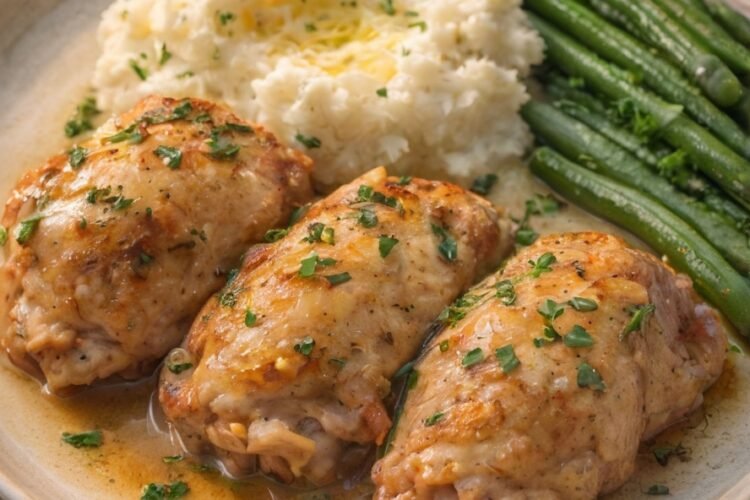
There is a night most weeks when I am standing in the kitchen at six o'clock with absolutely nothing left in me, and this is what I make. Four ingredients. One dish. Forty minutes, and most of that is the oven doing the work while I sit down. I have made these oven baked chicken thighs more than any other chicken recipe I own, and I have made them on weeknights when I was too tired to think and on weeknights when I was in a mood and wanted something that felt like more than it cost. It comes out of the oven as a shallow pool of seasoned juices with chicken sitting in it, the tops bronzed and a little bit crispy from the Parmesan, and the fat rendered down until the bottom of the dish is slick and seasoned. You put mashed potatoes next to it and the potatoes drink the pan up like they were waiting for exactly this. That is the dish. There is no sauce to make separately because the sauce is what was in the dish. I want to be honest about something, because this recipe gets described online as if it were a health food and it is not. It is chicken thighs, which are fatty by nature, coated in bottled Italian dressing, which is sugar and oil and salt, and topped with Parmesan. It is a genuinely delicious weeknight dinner for about two dollars fifty a serving, and roughly 44 grams of protein, which is a good reason to eat it. It is not a low-fat dinner and I am not going to pretend it is. What I like about it most is the margin for error. If you overcook the chicken a few minutes you get slightly drier thighs and a saucier dish. If you undercook it, put it back in for five minutes. There is no technique here to master, no timing that punishes you, and no point in the process where it can go wrong irrecoverably. That is why it is in my rotation instead of in a drawer with three other chicken recipes I keep meaning to make.Why You’ll Love These Oven Baked Chicken Thighs
Four ingredients, honestly counted. Thighs, dressing, Parmesan, garlic powder. The cooking spray does not count because it is optional and you can just use the fat the chicken makes. There is no marinade to mix, no rub to combine, no vegetables to chop. One dish, start to finish. A 9x13 and a spoon. That is the entire equipment list. You will wash two things. About forty minutes, mostly hands-off. Twenty covered, then fifteen to twenty uncovered. You can put it in the oven and go sit down, which is the actual reason I make it on nights when I am empty. It is 44 grams of protein per serving. That is real and I verified it rather than assuming. Two pounds of thighs divided four ways gets you there, and it is one of the easier protein targets I have hit without protein powder, supplements, or a plan. The pan juices are a built-in gravy. This is the underrated part. Rendered thigh fat plus Italian dressing plus melted Parmesan plus the garlic, all reduced for forty minutes, is a genuinely seasoned cooking liquid, and it is worth more on a plate than anything you would have made separately. It works with whatever is already in the fridge. Any green vegetable, any starch, bread for the juices. It does not need a side planned in advance. Leftovers reheat better than they should. Day-two thighs in that dish, with the sauce re-reduced, are legitimately good.Why This Recipe Works
Four things are doing the work, and understanding them means you can adjust it without guessing. First, boneless skinless thighs are the right cut for this and breasts are not. Thighs are dark meat, which means they are forgiving of a longer cook and they carry enough fat to stay moist without a brine or a marinade. Chicken breast in this method dries out badly, because breast is lean and this dish has no fat other than what the chicken brings. If you make this with breast, add 3 tablespoons of olive oil and pull it at 165 degrees. But make it with thighs. They are also usually cheaper, which nobody mentions. Second, the two-stage cook is a moisture decision, not a browning decision. Twenty minutes under foil traps steam and lets the chicken finish cooking in a wet environment, which is the only reason lean-ish thigh meat survives forty minutes at 400 degrees. Then the foil comes off and the surface dries out, which is the only reason the Parmesan browns and the dressing reduces into something with flavor instead of remaining a salad dressing pooled at the bottom. Cover the whole time and you get steamed chicken with cheese that never melted properly. Do not cover the whole time and you get dry chicken with a burnt top. The changeover at twenty minutes is the recipe. Third, bottled Italian dressing is a real marinade, not a shortcut. Oil carries flavor into the meat and carries heat into the surface, sugar and vinegar from the dressing react with the rendered fat over forty minutes, and the acid tenderizes the surface proteins. What you are left with is a glaze you did not have to reduce on a stove. This is why the swap suggestions below matter: changing the bottle genuinely changes the dish rather than just changing a flavor note. Fourth, 2 pounds in a 9x13 is snug, and snug means you need to rotate the dish. Twelve to fourteen boneless thighs will fit but they will not lie perfectly flat, so the pieces in the middle cook slower than the pieces at the corners. Rotating the dish halfway through the uncovered stage is the fix, and checking the temperature at 30 minutes rather than only at the end is what keeps the pieces in the middle from going dry while the edges are perfect. This is the one step most versions of this recipe omit. And the thing that is doing nothing clever at all, but which is the reason the dish works: thighs render a lot of fat. Two pounds of them in a hot dish for forty minutes produces a shallow layer of seasoned rendered fat at the bottom, and that is not a byproduct. That is the gravy.Ingredient Breakdown: What Each One Is Actually Doing
Boneless skinless chicken thighs, 2 pounds. About 44 grams of protein per serving and all of the fat. Buy them from the meat counter where they are usually cheaper than breasts and ask for them not to be pre-marinated, because store-injected thighs come with brine and sodium you did not ask for. Fully thawed, never from frozen, because a frozen thigh bakes unevenly and the part that thaws last is the part that stays raw. If you buy frozen, move them to the fridge the night before. Bottled Italian salad dressing, 1/2 cup. The marinade and the sauce. Half a cup is about 8 tablespoons, which sounds like a lot until you realize most of it renders away and reduces with the fat. Use a decent one, not the cheapest, because the vinegar and the herb profile are the entire flavor. Reduced-sodium is a reasonable choice if you care about the salt, and honestly it barely tastes different after forty minutes. Do not use fat-free. There is nothing in a fat-free dressing to render with and you get a watery pan. Grated Parmesan, 1/4 cup. About 28 grams, which is roughly 3 tablespoons of loose grated or 1 ounce of a chunk. It does three things: it adds salt, it browns into a crisp coating in the uncovered stage, and it melts into the fat at the bottom and thickens the juices into something that clings. This is the ingredient that makes the dish look like somebody cooked on purpose. Grate it yourself; pre-shredded has anti-caking powder in it and will not brown properly. Garlic powder, 1 teaspoon. Use powder, not fresh minced garlic. Fresh garlic in a long hot bake burns bitter and turns acrid, and there is nowhere for it to hide under the Parmesan. Powder survives forty minutes at 400 degrees and stays present without dominating. This is a swap that sounds backwards and is not. Cooking spray or oil, optional and not counted. Genuinely optional. Two pounds of thighs render enough fat that the dish effectively greases itself after the first ten minutes. Use spray if you are nervous about sticking, and expect it to not matter.The Kitchen Equipment You Actually Need
A 9x13-inch baking dish. Glass is better than metal here, for one reason: you can see through the side and check the rendered liquid and the browning without pulling anything out and letting the heat escape. It also heats more evenly, which matters with a crowded dish. A meat thermometer. This is the only piece of equipment I will insist on for this recipe, and the reason is specific: the thigh pieces in the center of a crowded pan run behind the pieces at the corners by 10 to 15 degrees. If you test one piece at the edge you will think you are done and you will serve you raw chicken. A large spoon or a spatula for basting, which you should absolutely do at the end even though the recipe technically does not require it. Spooning the juices over the thighs for30 seconds before serving is the difference between coated and dry. You do not need a mixing bowl, a whisk, a marinating container, a silicone brush, or a thermometer probe that goes into the oven. That is the entire point. If you want to buy one thing, buy a cheap 9x13 glass dish. You will use it for this, for the dump cake, for casseroles, and for about nine other things in this kitchen.Step-by-Step: How to Make Oven Baked Chicken Thighs
Step 1. Preheat the oven to 400°F. Lightly grease a 9x13-inch glass baking dish with cooking spray. Step 2. Arrange 2 lb fully thawed boneless skinless thighs in the dish in a snug single layer. Snug is fine, a full pile is not. Step 3. Pour 1/2 cup Italian dressing evenly over the thighs. Turn and coat each piece lightly in the dish. Step 4. Sprinkle 1 teaspoon garlic powder evenly, then 1/4 cup grated Parmesan in a light, even layer. Step 5. Cover tightly with foil and bake 20 minutes on the middle rack. Step 6. Carefully remove the foil. Check the temperature in the thickest thigh at this point. If it is already at 165°F, move to step 8. If the top is darkening, tent it loosely with foil. Step 7. Rotate the dish 180 degrees so the pieces that were in the center are now at the edge. Continue baking uncovered 15 to 20 minutes, until the juices are bubbling, the Parmesan is melted and lightly golden, and the thickest piece reads 165°F. Step 8. Rest 5 minutes. Spoon the pan juices over each serving and serve from the dish.Expert Tips From the Dishes I Burned
Check the temperature at the 20-minute mark, not just at the end. Two pounds crowded in a pan is not the same cook as two pounds spread out, and the middle pieces lag. This one check is the difference between serving evenly cooked chicken and serving two dry ends and two raw centers. Rotate the dish when the foil comes off. Cheap, thirty seconds of work, and it fixes the same problem from the other direction. If your oven has a hot spot, this puts the same pieces under the heat that were last time. Tent the Parmesan if it looks dark at 30 minutes. Parmesan goes from golden to burnt in about90 seconds at 400 degrees, and a foil tent over the top, loose enough for steam to escape, saves it without slowing the chicken. Baste at the end, even though you do not have to. Spoon the juices over the top and let them sit 30 seconds. The surface goes from baked to glossy and the chicken picks up all the garlic and Parmesan sitting at the bottom of the pan. Use a decent bottle of dressing. The vinegar quality and the dried herb load are everything, and after forty minutes the cheap one tastes like vinegar with chicken fat in it, which is not a compliment. I have tested this with three bottles and the difference is real. Buy from the meat counter and ask about brine. Many thighs are pre-brined with salt and phosphate. Not terrible, but it means you should skip any extra seasoning, and it costs about a dollar more. Spoon off the excess fat before serving if you are serving to people who are not grease-tolerant. This dish produces a lot of rendered fat. I leave it, because it is the good part and it is what the potatoes drink. But skim the top with a spoon first if the table includes anyone who flinches at a shiny plate.Common Mistakes and How to Fix Them
The Parmesan burned but the chicken was done. Oven too hot or oven too small, or you left it uncovered too long. Tent with foil for the last five minutes next time. The chicken was fine, so this is a cosmetic failure, but it looks like carelessness. The edges were perfect and the center was raw. Overcrowding, and you did not rotate or check early. Pull from the center of the pan, not the edge. If this happens to you twice, use two dishes. The chicken was dry. You left it uncovered the entire time, or you used breasts. Thighs covered for the first 20 minutes will not dry out. If they are dry, next time cover for 25 and check at 25. It was greasy and salty. Bottled dressing carries sugar and sodium and thighs carry fat, so the pan bottom concentrates all three over40 minutes. Use reduced-sodium dressing, use a light hand with the Parmesan, and pull the dish out the moment the chicken hits 165. Do not reduce the cook to fix greasiness, that makes the chicken worse. Nothing browned on top. You used pre-shredded Parmesan with anti-caking powder in it, or you put the foil back on. It has to be real grated cheese and it has to be uncovered. The whole dish smelled bitter. You used fresh minced garlic instead of powder, and it scorched. Scrape the bottom and start over; there is no fixing bitter garlic. Parts of it were frozen in the middle. You baked from frozen. Thaw in the fridge overnight, not on the counter. A part-frozen thigh has ice in the center that will not cook through in40 minutes. The pan juices tasted thin. You drained them or lifted the chicken out to rest on a plate. Those juices need to sit in the dish and reduce with the fat. Rest the chicken in the dish.Ingredient Substitutions That Work
The dressing is the variable that changes the dish most. Ranch gives you a milder, creamier, herby result and it browns more gently, so watch the top. Honey mustard produces a sweet glaze that kids reliably prefer to adults. Balsamic and Italian is excellent and slightly more adult. Any of these at 1/2 cup works. Do not go to 1 cup; the dish gets greasy and the chicken steams instead of browning. Chicken breasts. Workable but not recommended. Add 3 tablespoons of olive oil, cover for 20 minutes as directed, and pull at 165 degrees, no longer. Expect them to be fine rather than great. Bone-in thighs. Better flavor, and they need 10 to 15 more minutes. They also render more fat and go more crisp on the skin side. Two and a half pounds of bone-in will fit the same pan. This is the upgrade version and it is worth the extra fifteen minutes. Different cheese. Gruyere or Swiss is better than Parmesan if you want a more savory result. Sharp cheddar browns faster, so add it in the last 10 minutes. Mozzarella melts but does not brown and will not crisp, so it is not worth it. Add dried herbs with the Parmesan. A teaspoon of Italian seasoning, dried oregano, or dried parsley adds aroma and costs nothing. Fresh herbs go on after baking, not in, because they burn. Lower sodium. Reduced-sodium Italian dressing plus a light hand with the Parmesan drops this meaningfully. Do not use fat-free dressing. Gluten-free. Already gluten-free as written. Bottled dressing is the thing to check, and most are, but read the label because a few contain malt vinegar.Oven Baked Chicken Thighs
4 Ingredients · One Dish · ~44 g Protein per Serving
Ingredients
Instructions
- 1Preheat the oven to 400°F. Lightly grease a 9x13-inch glass baking dish.
- 2Arrange the2 lb of thawed thighs in a snug single layer. Snug is fine; a pile is not.
- 3Pour 1/2 cup Italian dressing evenly over the thighs and turn each piece lightly to coat.
- 4Sprinkle 1 tsp garlic powder evenly, then 1/4 cup grated Parmesan in a light even layer.
- 5Cover tightly with foil and bake 20 minutes on the middle rack.
- 6Remove the foil. Check the temperature in the thickest thigh. If already165°F, move on. If the top is darkening, tent loosely with foil.
- 7Rotate the dish 180 degrees, then bake uncovered 15-20 minutes, until juices bubble, the Parmesan is melted and lightly golden, and the thickest piece reads 165°F.
- 8Rest 5 minutes in the dish. Spoon the pan juices over each serving and serve from the dish.
Kitchen Notes & Cost Breakdown
- Estimated cost: about $10.00 total, or $2.50 per serving across 4. Chicken thighs about $8.00, dressing about $0.75, Parmesan about $1.00, garlic powder $0.10.
- Buy meat-counter thighs and ask about brine. Pre-injected thighs carry added sodium and cost about a dollar more. Not a dealbreaker, just know it.
- Garlic powder, not fresh garlic. Fresh garlic scorches over40 minutes at 400°F and turns the whole dish bitter. This is the one swap that sounds wrong and is right.
- Check the temperature in the CENTER of the pan at 20 and 30 minutes. Crowded thighs cook 10-15° behind the edges, and the edges are always the first thing you test.
- Rotate the dish when the foil comes off. Thirty seconds of work, fixes uneven cooking completely.
- Keep the fat. It is the gravy. Spoon it over the chicken and pour it on your potatoes. Only skim the top if you are serving people who are not grease-tolerant.
- Keyword tip: A shot of the pan juices being spooned over the thighs with a potato beside it is the image that sells this. The dish itself, photographedsitting in the pan, sells it better.
- Not low-fat and not low-sodium. Thighs are fatty and bottled dressing is sweet, oily, and salty. High protein at ~44 g per serving, and that is the honest headline.
Nutrition Facts (estimated, per serving)
520Calories
44 gProtein
45 gTotal Fat
5 gCarbs
600 mgSodium
1 gFiber
Nutrition is an estimate calculated from the ingredients as written and rounded, based on 4 servings. Sodium and fat are both high because of the thighs and the bottled dressing; reduced-sodium dressing and a light hand with the Parmesan will lower both. Values vary by brand.
Food Safety
- Chicken must reach 165°F in the thickest part. Check the center of the pan, not the edge.
- Do not bake from frozen. Thaw in the refrigerator overnight.
- Wash hands, boards, and utensils that touched raw chicken with hot soapy water. Do not rinse the chicken.
- Refrigerate leftovers within 2 hours, use within 3 to 4 days, and reheat until steaming hot throughout.
This recipe contains boneless chicken thighs and bottled Italian dressing and isnot low-fat, low-sodium, keto, or low-carb. It is a high-protein (~44 g/serving) one-dish dinner and all nutrition figures are estimates. Nothing on this page is medical advice or a weight-loss claim — if you have specific dietary guidance from a clinician, follow that instead of a website.