
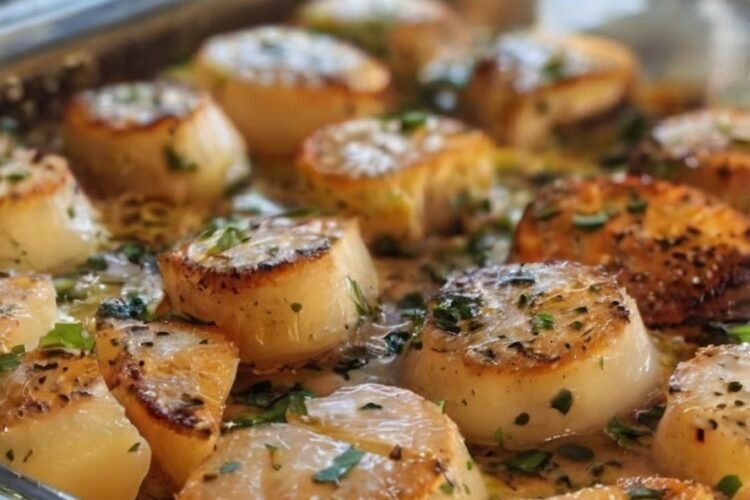
Baked Scallops: Buttery Garlic Parmesan Scallops Ready in 20 Minutes
This is my third attempt at these baked scallops this week, and tonight's batch is the best one yet — ridiculously good, the kind of good where you eat one standing at the oven and then have to actively stop yourself from eating a second before dinner is on the table. I have been perfecting this version for days now, and I feel no remorse about it whatsoever. Baked scallops with garlic butter, breadcrumbs, and a shower of Parmesan, coming out of a 400°F oven in about twenty minutes, golden at the edges and creamy in the middle. That is the whole recipe. Scallops have a way of making any Tuesday feel like an occasion, and this is the version I make when I want that feeling without the fuss of searing. Searing scallops properly is a real skill — screaming-hot pan, bone-dry surface, forty-five seconds of nerve — and lovely when it works and heartbreaking when it doesn't. This approach asks nothing of you. Dip, coat, bake. The oven does the cooking, the butter-breadcrumb mixture does the browning, and you get a dish that looks like it took far more attention than it did: plump scallops under a golden crust, swimming in garlic butter you will absolutely want bread for. It is also genuinely fast. Ten minutes of prep while the oven heats, eighteen to twenty minutes of baking, and dinner is plated. I serve these with a sharp green salad and warm crusty bread for the butter — the bread is not optional in my house, it is the entire reason the salad exists as a courtesy — but they're just as happy over a simple bed of linguine if you want something more filling. One pound feeds four modestly, or two people generously with a salad, which is exactly how the last three batches have disappeared. The technique secrets are small and they matter: pat the scallops thoroughly dry so they bake instead of steam, keep the butter layer thin enough that the crumbs crisp rather than drown, and take them out the moment a thermometer reads 145°F in the center. That last one is the difference between tender and rubbery, and I'll show you exactly how. Let's make them.Why You'll Love These Baked Scallops
- Restaurant-plated results from five real ingredients and about ten minutes of hands-on work.
- The oven does everything — no searing, no splattering, no timing a hot pan while guests arrive.
- Ready in under 30 minutes total, start to finish, on a weeknight.
- Golden Parmesan-breadcrumb crust over garlic butter that begs for a piece of crusty bread.
- A one-pound batch serves four for roughly $3.60 each — far cheaper than any seafood restaurant plate.
- The method works identically with frozen-thawed scallops, which is what's actually in most freezers.
Why This Recipe Works
Scallops are mostly protein and water held in a tight, delicate matrix, which is why they reward speed and punish hesitation. At 400°F, a scallop cooks through in the time it takes the topping to brown — the two timelines happen to match almost perfectly, and that coincidence is what makes this recipe work. The butter and breadcrumb coating isn't just flavor; it's a shield. It buffers the direct heat, slowing the outer surface so the center reaches doneness before the edges dry out. Scallops baked naked in a dish go from tender to tense very fast; crumbed ones have a margin for error you can actually cook in. The two-bowl dip method is doing something specific. Melted butter mixed with minced garlic acts as the glue, and it also bastes the scallop as it bakes — butter melts, runs down, and pools in the dish, essentially poaching the bottoms in garlic fat while the tops crisp. Meanwhile the breadcrumb-Parmesan mixture absorbs that butter where it lands and toasts. Two textures from one tray: crunchy on top, poached underneath. Parmesan in the crumb adds both salt and its own browning proteins, which is why the crust colors so evenly at a temperature where plain breadcrumbs would need longer. Why a baking dish and not a sheet pan? Depth. The butter pools around the scallops instead of running off onto the oven floor, and that shallow pool of garlicky butter is the sauce — there isn't a separate one because there doesn't need to be. One dish, one sauce, one crumb layer, all built in the same fifteen minutes of assembly. It's an efficient piece of cooking disguised as an elegant one.Ingredient Breakdown
| Ingredient | What it does | Notes |
|---|---|---|
| 1 lb sea scallops | The whole show — sweet, tender, quick-cooking | Bay scallops work too but cut the bake to 8–10 min. Thaw frozen completely first. |
| 2 tbsp unsalted butter, melted | The glue, the basting liquid, and half the sauce | Don't reduce below 2 tbsp — the crumbs need butter to toast in. |
| 3 cloves garlic, minced | Aromatic backbone of the butter | Fresh, not jarred. The difference in a 400°F oven is significant. |
| 1/2 cup bread crumbs | The golden crust | Plain dried crumbs, not panko — panko won't hold the butter the same way. |
| 1/4 cup grated Parmesan | Salt, browning, and savory depth | Grate it yourself from a wedge; the shaker-can stuff won't melt the same. |
| 1/4 tsp salt + 1/4 tsp black pepper | Seasoning for the crust layer | Hold back if your Parmesan and breadcrumbs are both salty — taste the crumb first. |
| 1 tbsp fresh parsley | Color and a fresh finish | Garnish only. Dried parsley is not a visual substitute here. |
| 1 lemon, wedged | Acid that cuts the butter and brightens the scallop | Squeeze it over at the table, every time. Not decorative. |
Kitchen Equipment You Actually Need
- 8-inch baking dish or similar — deep enough to hold the butter pool, wide enough that scallops sit in one layer.
- Two shallow bowls — one for the garlic butter, one for the crumb mixture. An assembly line of two.
- Kitchen towels or paper towels — for drying the scallops properly. This step is not optional.
- Instant-read thermometer — the only reliable way to know they're done at 145°F without guessing.
- Sharp knife and cutting board — for mincing garlic and wedging the lemon.
- Spoon or spatula — for scattering the leftover crumb mixture over the top.
Step-by-Step Instructions
- Heat and prep. Heat the oven to 400°F. Set a rack in the middle position — too high and the crust browns before the scallops cook.
- Dry the scallops. Rinse them, then pat thoroughly dry with towels. Every scallop, both sides. Wet scallops steam instead of bake and will not brown.
- Set up the assembly line. In one bowl, stir the melted butter with the minced garlic. In a second bowl, combine the bread crumbs, grated Parmesan, salt, and pepper.
- Dip and coat. Dip each scallop into the butter mixture, letting the excess drip for a second, then press it into the crumb mixture to coat generously. Arrange in a single layer in the baking dish.
- Use everything up. Pour any remaining garlic butter over the arranged scallops, then scatter the leftover crumb mixture evenly over the top.
- Bake 18–20 minutes. Until the topping is golden brown and a thermometer inserted into the center of the largest scallop reads at least 145°F. The scallops should look opaque and feel firm but still give slightly when pressed.
- Finish and serve. Garnish with chopped parsley and serve immediately with lemon wedges for squeezing. Bread for the butter, seriously.
Expert Tips
Common Mistakes
Ingredient Substitutions
| If you don't have… | Use… | Watch out for… |
|---|---|---|
| Bread crumbs | Panko, crushed crackers, or GF bread crumbs (verified swap for gluten-free) | Panko browns faster — check at 15 min. GF crumbs work cup-for-cup; that's the only basis to call this gluten-free. |
| Fresh garlic | 1/2 teaspoon garlic powder whisked into the melted butter | Less depth. Fresh is noticeably better in a 20-minute bake. |
| Parmesan | Pecorino Romano or Grana Padano | Pecorino is saltier — reduce the added salt to a pinch. |
| Fresh parsley | 1 teaspoon dried parsley, or fresh basil/dill (source variation) | Herbs are mostly garnish here — dried won't give the color. |
| Fresh lemon | 1 tablespoon bottled lemon juice, spooned over after baking | Add at the end, not before baking — juice can make crumbs soggy. |
| Sea scallops | Bay scallops, or large shrimp (peeled, deveined) | Bay scallops: 8–10 minutes only. Shrimp: 10–12 minutes, pull at 145°F. |
| A baking dish | A rimmed sheet pan in a single layer | The butter runs off and you lose the sauce — add a spoon of butter over each before baking. |
Variations
- Extra kick. Add crushed red pepper to the crumb mixture — a quarter teaspoon is a hum, half a teaspoon is a statement.
- Herb swap. Chopped fresh basil or dill instead of parsley pushes the whole plate toward summer. Dill with lemon is the standout.
- Gruyère blend. Replace half the Parmesan with shredded Gruyère for a deeper, nuttier crust that browns beautifully.
- Garlic butter linguine. Toss the cooked pasta in the butter left in the baking dish — the scallops go on top. This is the filling dinner move.
- Calabrian chili butter. Stir a teaspoon of chili paste into the melted butter before dipping. Restaurant-level with zero extra effort.
- Bacon topping. Two slices cooked crisp and crumbled into the crumb mixture. Surf-and-turf in one dish, no apologies.
Make It Healthier
Scallops themselves are the good news here: lean, high in protein, low in fat — about 21 grams of protein per serving against roughly 7 grams of fat. The added fat is the butter and Parmesan, and that's where the honest lever sits. Cutting the butter from 2 tablespoons to 1 still works; the crust browns slightly less aggressively and you'll want to make sure every scallop gets dipped rather than drizzled, but the dish holds up and saves about 50 calories per serving. On the crumb side, a full tablespoon less breadcrumbs barely changes the outcome — you'll get slightly more butter contact per scallop and a crust that's more Parmesan than filler, which frankly tastes better. What I would not do is switch to a butter substitute here; the butter isn't just flavor, it's the cooking medium pooling under the scallops, and margarine breaks the sauce. Between the protein-rich scallop and the modest portions, a serving of this is a reasonable dinner centerpiece — it just also happens to taste like an indulgent one, which is the whole point.Meal Prep
Scallops are a cook-now protein, and I'd steer you away from assembling these far ahead: breadcrumbs sitting on raw scallops absorb moisture and go pasty before they ever hit the oven, and you'll lose the crisp entirely. Prep no more than 30 minutes ahead — get the two bowls mixed, the garlic minced, the lemon wedged, the dish greased — then dip and bake when the oven's hot. The dip takes five minutes once your station is set. The crumb mixture itself is the make-ahead winner: combine it airtight and keep it at room temperature up to 3 days, so the twenty-minute dinner becomes a five-minute one. Butter should be melted fresh — congealed butter won't coat. If you're timing a full dinner, bake the scallops last: salad dressed, pasta water on, bread warmed, everything else plated and waiting. Scallops come out of the oven and go straight to the table, no exceptions.Storage
Cool leftovers within two hours, then store in an airtight container in the refrigerator for up to 2 days. Keep them in the butter sauce from the dish rather than draining it — the sauce protects the scallops as they chill, and you'll reheat them in it. The crust softens in storage no matter what you do; that's the tradeoff of a breadcrumb topping. Two honest notes. First, scallops are at their best within about 20 minutes of the oven, and leftovers are a genuinely different — still good, just softer — eating experience. Second, keep the lemon wedges separate; citrus left on cooked seafood overnight turns the flavor sour. Squeeze fresh when you reheat, not when you store.Freezing
Cooked, sauced, crumbed scallops: I wouldn't. The texture of cooked scallops turns spongy in the freeze-thaw cycle, and the butter sauce separates into greasy and watery layers that never fully re-emulsify. You'll thaw something that reads as the memory of scallops rather than scallops. Given that they take twenty minutes to make fresh, freezing the finished dish saves you nothing. What does freeze beautifully is raw scallops — which is almost certainly what you're buying anyway if you're not coastal. Pat them dry, spread in a single layer on a parchment-lined tray, freeze until solid, then bag them for up to 3 months. Thaw overnight in the refrigerator, dry them thoroughly again, and proceed with this recipe exactly as written. That's the smart way to keep scallops on hand for a weeknight.Reheating
If you must, do it gently: 325°F, covered loosely with foil, 6–8 minutes just until warmed through — long enough to heat the center, short enough to keep the scallop from tightening further. A skillet over the lowest heat with a tablespoon of the reserved sauce also works, lid on, about 4 minutes. What you cannot do is microwave them at full power; rubbery scallops become actively unpleasant, and the crumb topping goes chewy. My actual recommendation for day-two scallops: eat them cool or barely warm, spooned over a green salad with a fresh squeeze of lemon. Cold scallops over greens is a genuinely great lunch, the butter sauce acts as a makeshift dressing, and you sidestep the reheating texture problem entirely. Sometimes the best reheating method is deciding you didn't need them warm.What to Serve With Them
The butter pool in that baking dish is the sauce, so your side's job is to either catch it or contrast it. A crisp green salad with a sharp vinaigrette does the contrast — the acidity slices through the garlic butter and resets your palate between bites, and it's what I make every single time. Warm crusty bread does the catching, and in my house bread isn't a side so much as the point: torn pieces dragged through the dish after the scallops are gone is the actual dessert of this meal. For something more filling, spoon the scallops and their butter over a bed of linguine or orzo — the pasta drinks up the sauce like it was designed for it, and it turns four modest servings into a real dinner. Roasted asparagus, broiled lemon-herb potatoes, or simple buttered rice all work when you want the scallops to stay the star. And if you're building a fuller seafood spread, this pairs naturally with a tomato-based soup or a lighter broth-forward dish — the Parmesan in the crust plays beautifully against tomato.Beverage Pairings
Seafood and butter means white wine, and the classic choices are classic for a reason: a crisp Sauvignon Blanc or a dry Albariño cuts the richness while echoing the lemon. Unoaked Chardonnay is the richer move if you want the wine to stand up to the butter rather than contrast it — avoid anything heavily oaked, which will bulldoze the scallop's sweetness. Sparkling wine is never wrong here and makes a Tuesday feel like the occasion scallops promise. For beer, a light pilsner or wheat beer keeps things clean; anything hoppy fights the Parmesan. Non-alcoholic: sparkling water with lemon is the move — the bubbles do the palate-cleansing job that a crisp wine would, which matters a lot with a butter-based dish. For the kids, milk or juice; they'll go for the crunchy topping first, which is exactly how it should go. And whoever's finishing the butter with bread? Coffee or nothing. They're busy.Frequently Asked Questions
How do you know when baked scallops are done?
An instant-read thermometer in the center of the largest scallop reading at least 145°F — that's the reliable answer. Visually they'll be opaque and firm with a slight give when pressed, but the thermometer is what separates tender from rubbery, because the visual window closes faster than you'd think. Start checking at 16 minutes; they're usually perfect between 18 and 20.Why did my baked scallops come out rubbery?
Almost always overbaking. Past 145°F, scallop proteins tighten fast and squeeze out moisture — you get a dense, chewy result. The other contributors: starting from fridge-cold, which forces a longer bake, and skipping the drying step, which steams the scallops instead of baking them. Pat dry, room-temperature start, thermometer pull at 145°F. Those three habits solve it.Can I use frozen scallops for this recipe?
Yes — thaw them completely in the refrigerator overnight, then pat them very thoroughly dry before dipping. Frozen-and-thawed scallops release more surface water than fresh, so the drying step goes from important to critical. If they were frozen in a glaze (some are), rinse and dry extra well. Proceed exactly as written from there.Can I make these scallops ahead of time?
The crumb mixture and garlic butter, yes — mix both up to a day ahead and refrigerate the butter. Assembled scallops, no longer than 30 minutes: breadcrumbs sitting on raw scallop absorb moisture and turn pasty instead of crisping. This is a cook-and-serve dish by design, and the twenty-minute bake is short enough that "ahead" isn't needed.Can I make this recipe gluten-free?
Yes, with one swap: use gluten-free bread crumbs in place of regular, cup for cup. Everything else in the dish — scallops, butter, garlic, Parmesan, parsley, lemon — is naturally gluten-free. That substitution is the only basis for calling the finished dish gluten-free, so check your crumb label and your Parmesan's anti-caking ingredients if you're cooking for someone with celiac disease.What kind of baking dish should I use?
An 8-inch square or similar 2-quart dish that fits all the scallops in one layer with a little room between them. Depth matters: the butter needs to pool around them rather than run off. A 9x13 works too for a thinner butter layer — check a couple of minutes early, since the shallower depth browns the crust faster. Crowded beats stacked, always; use two dishes rather than piling scallops on each other.What's the best breadcrumb for baked scallops?
Plain dried bread crumbs are the right choice here — they absorb the butter, cling to the dip, and brown evenly in the 18-to-20-minute window. Panko works but browns faster, so start checking at 15 minutes. Italian-seasoned crumbs add uncontrolled salt and dried herbs that taste dusty under the Parmesan. If you want extra crunch, mix a small handful of panko into plain crumbs rather than replacing them.Should I sear scallops instead of baking them?
Searing is lovely when it works — a deep brown crust, a quick cook, restaurant technique — but it demands a bone-dry surface, a very hot pan, and about 45 seconds of undivided attention. Baking gets you 80% of the flavor for 20% of the stress, plus the garlic butter sauce built in for free. Different dishes honestly: seared is for a composed plate, baked-with-crumbs is for the Tuesday dinner you actually want to eat.Nutrition Facts (Estimated)
| Per serving (1/4 of batch) | Amount |
|---|---|
| Calories | ~250 |
| Total Fat | ~7 g |
| Saturated Fat | ~4 g |
| Carbohydrates | ~15 g |
| Sugars | ~2 g |
| Protein | ~21 g |
| Sodium | ~380 mg |
Final Thoughts
Three batches in a week and tonight's is the one — the crust came out exactly golden, the butter pooled exactly right, and the center thermometer read 145°F on the largest scallop like the recipe promised it would. That's the whole trick with baked scallops: it looks like the kind of dinner that requires nerve and a hot pan, but it's actually dip, coat, bake, and a thermometer. Twenty minutes, five ingredients, one dish, and a plate that feels like somebody made an effort. Somebody did — just not very hard. Make these the next time you want a Tuesday to feel like an occasion, or the next time someone shows up unannounced and you want the kind of dinner people talk about later. Salad, bread, lemon wedges, and a bottle of something cold. And do yourself the favor of not walking away from the oven during the last three minutes — the line between tender and rubbery is short, and the thermometer knows exactly where it is.
Baked Scallops
Garlic butter, golden Parmesan crust, restaurant plate in twenty minutesIngredients
Directions
- Heat oven to 400°F. Pat the scallops thoroughly dry — both sides, every scallop.
- In one bowl, mix the melted butter with the minced garlic. In a second bowl, combine the bread crumbs, Parmesan, salt, and pepper.
- Dip each scallop into the butter mixture, then coat generously with the bread crumb mixture. Arrange in a single layer in a baking dish.
- Pour any remaining garlic butter over the scallops, then sprinkle the leftover crumb mixture over the top.
- Bake 18–20 minutes, until the topping is golden and a thermometer in the center of the largest scallop reads 145°F.
- Garnish with parsley and serve at once with lemon wedges for squeezing.
Nutrition (estimated per serving)
Estimates only — not medical or dietary advice. Values vary by scallop size and cheese brand. Fresh scallops carry natural sodium; reduce added salt if your Parmesan is sharp.