
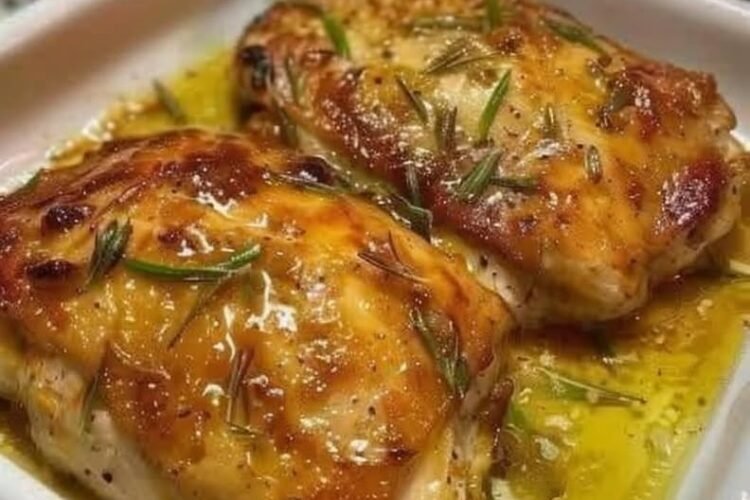
Mayo Parmesan Chicken: The 5-Minute Prep Baked Chicken That Tastes Slow-Roasted
My husband took one bite of this mayo parmesan chicken and literally closed his eyes. Then he looked at me and said, "We're making this every week now, right?" I wasn't even planning to make chicken that night. I had thawed these breasts thinking I'd do something basic, but then I remembered this trick my neighbor told me about — the mayonnaise and Parmesan situation that makes chicken taste like it's been slow-roasted for hours when really it's just easy. I almost didn't believe her, but now I get it. The kitchen smelled so good while this was baking that my daughter wandered in twice asking when dinner would be ready. When I plated it, the chicken was sitting in this golden, garlicky, herby butter that I may or may not have soaked up with bread after everyone finished. The meat was unbelievably tender, the kind of fork-tender where you don't even need a knife, and the coating on top had gone golden and slightly bubbling and just a little crisp at the edges. It's the kind of dinner that feels like a restaurant plate but asks almost nothing of you. What makes it work is a little counterintuitive if you've never baked with mayonnaise before. Mayonnaise is essentially oil and egg, so when you spread it over chicken it melts into a rich, creamy layer that seals in moisture and keeps lean breasts from drying out, while the Parmesan, garlic powder, and onion powder turn that layer into a savory, golden crust. Then you drizzle melted butter around the chicken rather than over it, so it pools at the bottom of the dish and bakes into a garlicky pan sauce that's perfect for spooning over rice or mashed potatoes. Fresh rosemary on top perfumes the whole dish as it roasts. A few honest notes before we start. This recipe is genuinely low-carb and keto-friendly as written — the mayo, Parmesan, butter, and spices add up to only about 2 to 3 grams of net carbs per serving. It's also naturally gluten-free, provided your mayonnaise and Parmesan are gluten-free, which most are, though flavored mayonnaise and some grated Parmesan blends can carry wheat-derived additives, so read the labels. It brings a real, verified 45 grams of protein per serving, because chicken breast is genuinely a high-protein food. Sodium is the thing to watch at about 770 milligrams per serving, mostly from the mayonnaise, the Parmesan, and the added salt. And because it's poultry, the chicken must reach 165°F. Let's do this.Why You'll Love This Mayo Parmesan Chicken
- Five-minute prep — mix the coating, spread it, bake.
- Unbelievably moist, tender chicken breasts that slice like butter.
- Only eight everyday ingredients you probably already have.
- The coating bakes into a golden, garlicky, cheesy crust.
- Genuinely low-carb and keto-friendly — about 2 to 3 net carbs per serving.
- A real 45 grams of protein per serving, honestly stated.
- Oven-baked in one dish, so cleanup is a single pan plus a bowl.
- Tastes like a special-occasion meal but works on a random Tuesday.
Why This Mayo Parmesan Chicken Recipe Works
This recipe works because mayonnaise is a surprisingly perfect coating for lean chicken. It's an emulsion of oil, egg, and vinegar or lemon, and when you spread it over a chicken breast and bake it, the oil bakes into the surface and keeps it tender while the egg and cheese set into a slightly crisp, golden layer. That's why the chicken comes out juicy and pull-apart tender instead of dry and stringy, which is the usual fate of a skinless boneless breast in a hot oven. It's a technique that feels like a secret the first time you try it, but it's just basic food science doing the work for you. The seasoning mix is built to layer flavor without much effort. Garlic powder and onion powder bloom into the coating as it bakes, black pepper and a modest half-teaspoon of salt season it through, and the Parmesan brings both a salty, nutty savoriness and the fat and protein that help the crust brown and set. Fresh rosemary laid on top of each piece infuses the chicken and the surrounding butter with that piney, roasty perfume, and because it sits on top rather than being chopped into the coating, it releases aroma without turning bitter or overpowering the dish. The butter drizzle is the quiet genius of the whole thing. By melting butter and pouring it around the chicken instead of over the top, you're building an instant pan sauce at the bottom of the dish — the butter picks up the drippings from the chicken, the rosemary, and any coating that slides off, and it reduces into a golden, savory, garlicky spooning sauce. That's the part people fight over, the part you pour over rice or mashed potatoes, and it costs you nothing but a two-tablespoon drizzle and the self-restraint not to eat it straight from the pan. Finally, the recipe is forgiving in the ways that matter. The coating protects the chicken while it roasts, the timing window is generous because the mayo layer keeps everything moist, and the five-minute rest at the end is what lets the juices settle back into the meat so nothing runs out when you cut into it. There's no brining, no marinating, no breading station, and no skill required beyond spreading a mixture over four pieces of chicken.Ingredient Breakdown
| Ingredient | What it does | Notes |
|---|---|---|
| 4 boneless, skinless chicken breasts | The protein star — lean, quick-cooking, and the perfect blank canvas | Knock them to even thickness if they're thick (see tips). Must reach 165°F. ~45 g protein per serving. |
| 1/2 cup mayonnaise | The moisture-locking, flavor-carrying coating base | Full-fat mayo bakes best. Greek yogurt works as a lighter swap but is tangier and can separate slightly. |
| 1/2 cup grated Parmesan cheese | Salty, nutty savoriness plus the fat that helps the crust set and brown | Freshly grated melts and browns more smoothly. Big sodium contributor — check the label for GF status. |
| 1 tsp garlic powder + 1 tsp onion powder | The savory backbone of the coating | Powders, not salt blends — that matters because a garlic salt would send sodium through the roof. |
| 1/2 tsp black pepper + 1/2 tsp salt | The seasoning balance | Half a teaspoon of salt is right when the Parmesan and mayo are already salty. Reduce if watching sodium. |
| Fresh rosemary sprigs | The piney, roasty aroma that perfumes the chicken and the butter | 2 sprigs per breast. Dried rosemary works but use far less and crush it — see substitutions. |
| 2 Tbsp melted butter | Creates the golden pan sauce at the bottom of the dish | Drizzle around the chicken, not over it, so the crust stays put and the butter makes a sauce. |
The one thing to get right: pour the melted butter around the chicken into the dish, not over the tops. Over the tops, it softens the Parmesan crust; around the sides, it becomes the golden sauce everyone will spoon over everything.
Kitchen Equipment You Actually Need
- Baking dish — a 9x13 or an 8x8, big enough to hold the breasts in a single layer without crowding.
- Small mixing bowl — for the mayo-Parmesan coating.
- Spoon or spatula — for spreading the coating evenly.
- Paper towels — patting the chicken dry is what helps the coating cling.
- Instant-read thermometer — the reliable way to confirm 165°F. Strongly recommended.
- Meat mallet or rolling pin (optional) — to pound thick breasts to even thickness so they cook through without drying.
- Aluminum foil (optional) — a loose tent if the tops brown too fast.
Step-by-Step Instructions
- Preheat. Preheat your oven to 375°F.
- Dry the chicken. Pat the chicken breasts dry with a paper towel and place them in a baking dish.
- Mix the coating. In a small bowl, mix together the mayo, Parmesan, garlic powder, onion powder, pepper, and salt until smooth and creamy.
- Spread it on. Spread the mixture evenly over the top of each chicken breast — don't be shy, coat them generously.
- Top with rosemary. Lay a couple of sprigs of fresh rosemary on top of each piece.
- Add the butter. Drizzle the melted butter around the chicken in the dish.
- Bake. Bake 30–35 minutes, until the chicken reaches 165°F inside and the tops are golden and slightly bubbling.
- Rest. Let it rest 5 minutes before serving so the juices settle back in.
Poultry doneness and leftovers, stated plainly. Chicken is poultry and must reach a safe internal temperature of 165°F in the thickest part of the breast — check with an instant-read thermometer rather than judging by color or time, since breast size varies widely. Rest for 5 minutes before cutting. The baking dish and the butter sauce are very hot straight from the oven. Cool leftovers within two hours, refrigerate, and eat within 3 to 4 days, reheating until steaming hot. Never leave cooked chicken at room temperature for more than two hours.
Expert Tips
Pat the chicken bone-dry. A dry surface is what lets the mayo coating cling instead of sliding off. This twenty-second step genuinely changes the result.
Pound thick breasts to even thickness. Modern chicken breasts are often huge, and a thick one will overcook on the outside before it hits 165°F at the center. Lay them flat, cover with plastic, and pound to a uniform 3/4-inch. They cook faster and far more evenly.
Use full-fat mayonnaise. Reduced-fat and fat-free mayo can turn watery and split under oven heat. Save the light versions for sandwiches and use the real thing here.
Grate your own Parmesan if you can. Freshly grated melts into the coating more smoothly and has better flavor than the pre-shredded, cellulose-coated kind, and it also lets you confirm it's gluten-free.
Season the chicken, not just the coating. A light pinch of salt and pepper directly on the meat before you coat it seasons the chicken itself, not only the top layer.
Drizzle the butter around the sides. As noted, butter over the top softens the crust. Around the chicken, it becomes the golden sauce.
Don't crowd the dish. Breasts need a little space so the coating bakes and browns instead of steaming. Use a dish that fits them in a single layer with a small gap between pieces.
Tent with foil only if needed. If the tops are browning faster than the centers are cooking, lay a loose sheet of foil over the dish for the last stretch — loosely, so steam can escape.
Let it rest the full five minutes. This is not optional if you want juicy chicken. Cutting immediately sends the juices running out onto the plate instead of staying in the meat.
Spoon the pan butter over everything. Rice, mashed potatoes, orzo, crusty bread — that garlicky, herby butter at the bottom of the dish is the bonus prize, so use it.
Common Mistakes
Using wet chicken. If you skip patting the breasts dry, the coating slides around and bakes unevenly. Dry them first.
Leaving breasts thick and uneven. A thick breast overbrowns outside before it reaches 165°F inside. Pound to even thickness or butterfly them.
Using light or fat-free mayo. It turns watery and can split. Use full-fat mayonnaise.
Pouring the butter over the coated tops. It softens the golden crust. Keep it around the sides of the dish.
Overcrowding the pan. Too many pieces too close together steams the chicken and the coating never browns. Give them room.
Overbaking past 165°F. The coating is forgiving, but a breast taken to 180°F will still dry out. Pull it at 165°F and rest.
Skipping the rest. Cutting straight from the oven lets the juices run out. Five minutes makes a visible difference.
Underseasoning the meat. Seasoning only the coating leaves the chicken itself a little flat. A pinch on the meat fixes it.
Adding salt on top of salty Parmesan. A half-teaspoon of salt is right here; more can tip the whole dish salty. Taste your Parmesan — it varies.
Not checking the Parmesan label. If gluten-free matters to you, confirm your grated Parmesan isn't a blend with wheat-derived additives.
Ingredient Substitutions
| If you don't have… | Use… | Watch out for… |
|---|---|---|
| Mayonnaise | Full-fat Greek yogurt, or half mayo and half yogurt | Yogurt is tangier and can separate slightly under heat, but it works and lightens the dish. Don't use fat-free yogurt. |
| Parmesan cheese | Pecorino Romano, Asiago, or a Parmesan-Romano blend | Pecorino is saltier and sharper, so reduce the added salt. Asiago is creamier and milder. |
| Fresh rosemary | Dried rosemary (about 1 tsp), or fresh thyme, oregano, or sage | Dried rosemary is potent — use a third as much and crush it. Thyme and oregano are gentler and very forgiving. |
| Garlic powder / onion powder | Granulated garlic / granulated onion | Not garlic salt or onion salt — those add a lot of sodium. Same quantities work fine. |
| Boneless chicken breasts | Boneless skinless chicken thighs | Thighs are juicier and forgiving, but they're darker and benefit from a few extra minutes in the oven. Still 165°F. |
| Melted butter | Olive oil or ghee | Olive oil gives a lighter, more Mediterranean flavor; ghee browns beautifully and keeps it dairy-rich. |
Variations
- Extra garlic. Add a minced clove or two to the mayo mixture — it deepens the garlicky flavor and is my favorite personal tweak.
- Creamy Dijon. Whisk a tablespoon of Dijon mustard into the coating for a tangy, sophisticated edge.
- Italian style. Swap the rosemary for Italian seasoning and add a little mozzarella on top for the last five minutes.
- Lemon-herb. Add lemon zest to the coating and a few lemon slices under the chicken for a bright, summery version.
- Spicy kick. Add red pepper flakes or a spoonful of sriracha to the mayo mixture for heat that plays well with the Parmesan.
- Panko crust. For a crispier topping, sprinkle a light layer of panko over the coated chicken — note this makes it no longer low-carb or gluten-free.
- Chicken thighs. Use bone-in, skin-on thighs for an even richer, juicier version; cook to 165°F and expect a longer bake.
- Parmesan-crusted salmon or pork. The same coating works beautifully on salmon fillets or thick pork chops — adjust times to those proteins' safe temperatures.
Make It Healthier
Here's the good news: this recipe is already fairly kind to you, which is why it earns its low-carb label honestly. The real wins are built in — chicken breast is lean, high-protein, and genuinely filling, and the mayonnaise coating is what keeps it moist without needing breading or frying. The honest levers for lightening it further are straightforward. Swapping the mayonnaise for full-fat Greek yogurt, or a half-and-half blend, cuts a meaningful amount of fat and calories while keeping the moisture-locking effect, at the cost of a tangier flavor and a slightly less golden crust. Using reduced-fat mayonnaise works too, though it can bake up a little watery, so a yogurt half-and-half is usually the better call. Beyond the coating, you can trim the Parmesan slightly and cut the salt from half a teaspoon to a quarter, which helps a lot if you're watching sodium, since the mayo and Parmesan already carry plenty. Go easy on the butter — two tablespoons for four breasts is already modest, but you can cut it to one if you're being strict, accepting a smaller pan sauce. The portion itself is the biggest honest lever: one breast with a pile of vegetables or a salad is a genuine high-protein, low-carb plate, whereas two breasts plus rice and mashed potatoes turns it into a much heavier meal. Serve it over greens, roasted vegetables, or cauliflower rice to keep the whole plate low-carb, and this becomes a dinner you can eat often without a second thought. I won't call mayonnaise a health food, because it isn't — but as a Tuesday-night dinner, this is a far better choice than most things that taste this good.Meal Prep
This is one of the easiest dinners to build into a weekly prep routine, which is a big part of why it's become a repeat dish. You can mix the mayo-Parmesan coating up to two days ahead and keep it covered in the fridge, so dinner is literally spreading a pre-made mixture over chicken and sliding it in the oven. You can also assemble the entire dish — chicken coated, rosemary on top, butter in the dish — cover it, and refrigerate it for up to 24 hours before baking. If you do that, add a few minutes to the bake time since the chicken starts cold, and always confirm 165°F with a thermometer. For meal prep, the baked chicken holds and reheats very well, which makes it ideal for lunches. Bake a full tray, let the chicken cool, and portion it into containers with the pan butter spooned over and low-carb sides like roasted broccoli, green beans, or cauliflower rice. The coating stays creamy and the chicken stays tender, and because it's already cooked through, reheating is quick. Just remember the standard rules for cooked poultry: cool it within two hours, refrigerate promptly, and eat it within three to four days. I usually make a double batch on Sunday and lean on it through the week — it's the kind of prep that actually saves you on a busy night instead of just sitting in the fridge looking virtuous.Storage
Store leftover mayo parmesan chicken in an airtight container in the refrigerator for 3 to 4 days. Because it's cooked poultry, cool it within two hours of baking and refrigerate promptly — don't leave it sitting out on the counter while you clean up. If you have the pan butter left over, spoon it over the chicken before storing, since that extra fat helps keep the meat moist on reheat. Separate pieces with a little space or a piece of parchment if you're stacking them, and keep the container sealed so the coating doesn't dry out. The coating does firm up and loosen a bit in the fridge, which is completely normal and not a sign anything is wrong — a good reheat brings it back. Discard anything that's been refrigerated longer than four days, and if you're ever unsure whether leftovers are still good, trust the smell and the date rather than a hopeful glance. Cooked chicken that's been properly cooled and chilled will hold up nicely for a few days, and after that the quality drops off and the safety margin narrows, so it's worth staying on top of the dates.Freezing
You can freeze this chicken, and it's a handy thing to have on hand, though I'll be honest that it's best fresh from the oven. To freeze, let the chicken cool completely, then wrap each breast tightly in plastic wrap or seal it in a freezer bag, ideally with a spoonful of the pan butter to keep it moist. It keeps for up to 2 to 3 months. Thaw overnight in the refrigerator rather than on the counter, then reheat gently so the coating doesn't dry out. You can also freeze the dish unbaked, fully assembled, if you're planning well ahead. Assemble the chicken in a foil-lined freezer-safe dish, cover tightly, and freeze for up to a month; then thaw in the fridge overnight and bake as directed, adding a few minutes to account for the cold start, and verifying 165°F with a thermometer. The one thing to avoid is freezing and reheating it more than once — each cycle dries the chicken a little more and risks the coating going watery. Frozen and gently reheated, it's a reliable weeknight dinner you pulled out of your own freezer, which is a very good feeling on a night when you have nothing planned.Reheating and Serving Leftovers
The oven is the best way to reheat this so the coating firms back up and the chicken stays tender. Arrange the breasts in a baking dish, spoon a little of the reserved pan butter or a splash of broth over them, cover loosely with foil, and warm at 325°F for about 15 to 20 minutes, until heated through. An air fryer works well too, at 350°F for about 5 to 7 minutes, and gives the top a little of its original crispness back. The microwave is fine in a pinch for a quick lunch, but it's the least flattering method — the coating goes soft and slightly rubbery, so use it only when speed matters more than texture, and cover the plate to trap steam. Leftovers are genuinely versatile, which is half the reason to make extra. Slice a breast over a big salad with extra Parmesan for a serious high-protein lunch, shred it into a wrap or a low-carb lettuce cup with avocado, chop it into a creamy pasta or over cauliflower rice, or set it on a plate beside the reheated pan sauce with roasted vegetables. It's also excellent cold, straight from the fridge, sliced thin for chicken salad or a sandwich. However you bring it back, add a spoonful of that garlicky, herby butter if you saved any — it's the difference between reheated leftovers and a plate that tastes intentional.What to Serve With It
The golden, garlicky butter in the dish is basically asking for something to soak it up, so on nights when carbs are welcome, this is a match for fluffy white rice, mashed potatoes, buttered orzo, crusty bread, or a simple risotto. Spoon that pan butter generously over whatever you choose and it tastes like a whole separate dish. The chicken is rich and savory, so a bright, acidic side balances it nicely — a lemony green salad, roasted cherry tomatoes, or a squeeze of fresh lemon over the plate all cut through the Parmesan and mayo. If you're keeping the meal low-carb, which this recipe makes easy, serve it over cauliflower rice, alongside roasted broccoli, green beans, asparagus, or zucchini, or with a big pile of sautéed spinach and garlic. Steamed green vegetables with a little butter are a particularly good fit, both because the flavors line up with the rosemary and because they echo the butter in the dish. A crisp, simple cucumber-and-tomato salad works beautifully too on a hot night. And honestly, the chicken is flavorful enough to carry a plate on its own with just a vegetable and a glass of something cold — that's the kind of effortless, elegant dinner this recipe is built to deliver.Beverage Pairings
Because this chicken is rich, garlicky, and Parmesan-forward, you want a drink with a little acidity or crispness to reset the palate between bites. A dry white wine is the natural pairing: an unoaked Chardonnay, a Sauvignon Blanc, or a crisp Pinot Grigio all cut through the buttery, cheesy richness cleanly. If you prefer red, keep it light and low-tannin — a Pinot Noir or a Beaujolais works far better than a big cabernet, which would fight the garlic and the Parmesan. For beer, a crisp lager, a pilsner, or a saison is excellent, and a hoppy pale ale adds a citrusy bitterness that happens to love Parmesan. On the nonalcoholic side, sparkling water with lemon or lime is genuinely refreshing here, and iced tea or a dry apple cider both work well against the herb and garlic notes. If you're serving it as a cozy weeknight dinner, honestly, a glass of cold water with lemon or a mug of hot tea is perfect — the chicken is the star, and it doesn't need much help. Whatever you pour, keep it cold and crisp, and let the food do the talking.Frequently Asked Questions
Can I use Greek yogurt instead of mayonnaise?
Yes, and it's the most popular lighter swap. Greek yogurt keeps the chicken moist and cuts fat and calories, though it's tangier than mayonnaise and can separate slightly into a watery edge under oven heat — which is normal and stirs right back into the pan sauce. My favorite approach is half mayo and half Greek yogurt, which keeps most of the rich flavor and smooth texture while trimming some fat. Avoid fat-free yogurt, which turns grainy and watery when baked.Is mayo parmesan chicken low-carb or keto?
Honestly, yes — this is one of the rare recipes where that's true without any faking. The mayo, Parmesan, butter, and spices add up to only about 2 to 3 grams of net carbs per serving, so it fits comfortably into a low-carb or keto way of eating. Keep it that way by serving it over cauliflower rice, greens, or roasted low-carb vegetables rather than rice or potatoes. Note that if you add a panko crust from the variations section, it's no longer low-carb or gluten-free.Can I use chicken thighs instead of breasts?
Absolutely, and they're more forgiving because the darker meat stays juicy. Boneless, skinless thighs are the easiest swap and take roughly similar or slightly longer time; bone-in, skin-on thighs get beautifully rich but need a longer bake, closer to 40 to 45 minutes. Whichever you use, the target is still 165°F in the thickest part, so always confirm with a thermometer. The coating works exactly the same way on thighs.How do I keep the chicken from drying out?
The mayonnaise coating is doing most of that work, so use full-fat mayo and coat generously. Beyond that, the two biggest factors are even thickness and pulling it at the right temperature. Pound thick breasts to an even 3/4-inch so they cook through without the outside drying, use an instant-read thermometer, and remove the chicken at 165°F — not by the clock. Finally, let it rest the full five minutes so the juices settle back into the meat instead of running out when you slice.Can I make this ahead of time?
Yes, in two useful ways. You can mix the coating up to two days in advance and refrigerate it, or assemble the whole dish — coated chicken, rosemary, butter in the pan — cover and refrigerate it for up to 24 hours, then bake it straight from the fridge with a few extra minutes, verifying 165°F. You can also bake it fully, cool it, and refrigerate for meal prep; it reheats well and holds up for lunches for three to four days.Is it gluten-free?
It can be, yes — as written the recipe is naturally gluten-free, since mayonnaise, Parmesan, chicken, butter, and spices contain no wheat. The catch is that not every brand cooperates: flavored or "light" mayonnaises sometimes include wheat-derived ingredients, and some grated Parmesan or Parmesan blends use anti-caking or flavoring additives that can sneak in gluten. Read both labels, choose plain mayonnaise and real Parmesan, and you have a genuinely gluten-free main dish.Can I use dried rosemary or another herb?
Yes. Dried rosemary is much more concentrated than fresh, so use about a third of the amount — roughly 1 teaspoon total, crushed between your fingers — and sprinkle it over the coated chicken rather than laying whole sprigs. Fresh thyme, oregano, or sage are all lovely and gentler than rosemary; thyme is my favorite swap, and oregano gives it a more Italian feel. Fresh herbs are more aromatic, but dried works perfectly well in a pinch.Would extra garlic be too much?
Not at all — if you love garlic, adding a minced clove or two to the mayo mixture is my favorite personal tweak, and it deepens the flavor without overwhelming the Parmesan or the rosemary. Just use fresh minced garlic rather than more garlic powder, since the powder is already in the coating and stacking more of it can taste flat. If you're cooking for people who prefer things milder, keep it just as written and let the rosemary lead. Either way, it's the kind of recipe that welcomes a little personal tinkering.Nutrition Facts (Estimated)
| Per serving (1 of 4) | Amount |
|---|---|
| Calories | ~550 |
| Total Fat | ~34 g |
| Saturated Fat | ~9 g |
| Carbohydrates | ~2 g |
| Fiber | ~0 g |
| Net Carbs | ~2 g |
| Sugars | ~1 g |
| Protein | ~45 g |
| Sodium | ~770 mg |
Final Thoughts
Mayo parmesan chicken is the dinner that made me believe my neighbor, and it earns its place because it's genuinely easy and genuinely delicious at the same time. Eight everyday ingredients, five minutes of prep, one baking dish, and you get fork-tender chicken under a golden, garlicky, Parmesan crust sitting in a butter sauce people will spoon over everything on the table. It's honestly low-carb and keto-friendly, it brings a real 45 grams of protein per serving, it's naturally gluten-free with the right labels, and it costs about two dollars and forty-five cents a plate. It's the kind of recipe I keep meaning to save for a special occasion and then make on a Tuesday instead, because my husband asked nicely and I have no defense against a closed-eyes, one-bite reaction like that. As for whether I'd add extra garlic or keep it just like this — my honest answer is that it depends on who's at the table. Just as written, the rosemary and Parmesan sing and it's beautifully balanced, which is exactly what I'd serve to guests or picky eaters. For a regular weeknight, I absolutely sneak in a minced clove or two because we're a garlic household and it makes the butter sauce even better over rice. So my real recommendation is to make it exactly as written once, see what you think, and then make it yours — extra garlic, Dijon, lemon, thyme, or all of the above. Serve it over whatever soaks up that pan butter, keep an eye on the thermometer at 165°F, and don't be surprised when everyone asks if you're making it again next week. You are. You always are.Mayo Parmesan Chicken
Five-minute-prep baked chicken breasts under a creamy garlic-Parmesan coating with rosemary and a golden butter pan sauce — low-carb, keto-friendly, and naturally gluten-freeIngredients
Directions
- Preheat the oven to 375°F.
- Pat the chicken breasts dry with a paper towel and place them in a baking dish.
- In a small bowl, mix together the mayo, Parmesan, garlic powder, onion powder, pepper, and salt until smooth and creamy.
- Spread the mixture evenly over the top of each chicken breast — don't be shy, coat them generously.
- Lay a couple of sprigs of fresh rosemary on top of each piece.
- Drizzle the melted butter around the chicken in the dish.
- Bake 30–35 minutes, until the chicken reaches 165°F inside and the tops are golden and slightly bubbling.
- Let it rest for 5 minutes before serving so the juices settle back in.
Cost: about $9.75 per batch — roughly $2.45 per serving (4 servings).
Keyword tips: targets "mayo parmesan chicken," "mayonnaise parmesan chicken," and "baked chicken with mayo and parmesan." Lean into 5-minute prep, low-carb/keto, and high-protein in the intro.
Don't-skip steps: pat the chicken dry so the coating clings, pour the butter around (not over) the chicken, and rest 5 minutes before slicing.
Safety: poultry must reach 165°F in the thickest part — verify with a thermometer. Cool leftovers within 2 hours; refrigerate and use in 3–4 days.
Naturally gluten-free if your mayonnaise and Parmesan are GF — check labels on flavored mayo and grated Parmesan blends. Genuinely low-carb/keto-friendly: ~2 g net carbs per serving.
Sodium note: ~770 mg per serving from the mayo, Parmesan, and added salt. Cut the salt to 1/4 tsp and use a lower-sodium Parmesan to trim it.
Nutrition (estimated per serving)
550Calories
45 gProtein
34 gFat
2 gNet Carbs
1 gSugar
770 mgSodium
Estimates only — not medical or dietary advice. Based on 4 servings. Low-carb and keto-friendly as written; naturally gluten-free if mayo and Parmesan are GF. Contains egg and dairy.