
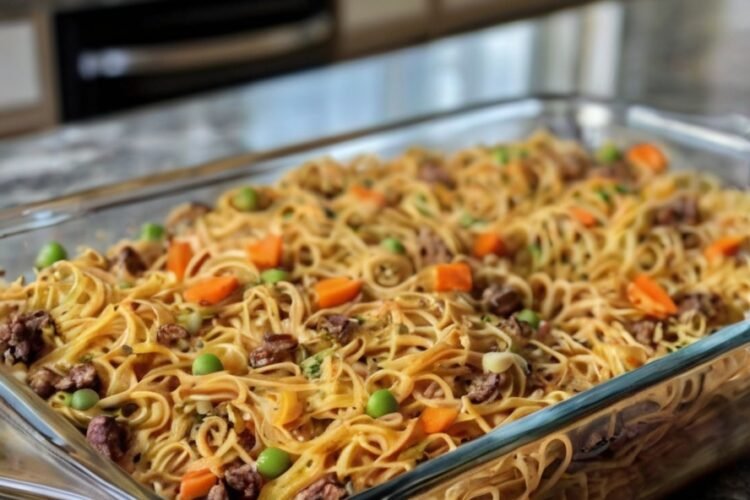
Ground Beef Chow Mein Casserole: The Oven-Baked Fakeout That Tastes Like Takeout
Ground beef chow mein casserole is what happens when a weeknight cook loves takeout chow mein but also loves the idea of one dish, a lid of bubbling cheese, and a potluck that people actually remember. Browned beef, onion, garlic, and ginger go into a skillet, then celery, carrots, cabbage, and mushrooms pile in, and everything gets tossed with soy sauce, a little broth, sesame oil, and cornstarch, folded together with noodles, moved to a 9x13, and baked under a blanket of cheddar until the edges catch. It is a Midwestern casserole wearing a Chinese-American coat, and I mean that as the highest possible compliment. The whole pleasure of this dish is how cheerfully it borrows from both worlds. The stir-fry technique gives you tender-crisp vegetables and a glossy, savory sauce, while the casserole format gives you convenience, a cheesy top, and the ability to feed six or eight without standing at the stove. It is the best kind of fusion — not precious, not fussy, just a smart home cook asking why the delicious thing has to be hard. Weeknight me? It is a small, honest life hack. It is also, quietly, the most vegetable-heavy thing I make all month. Six vegetables go in — cabbage, celery, carrots, onion, garlic, mushrooms — and because they are shredded and sliced thin and tossed through a flavorful sauce, they disappear into the dish instead of sitting on the side of the plate getting negotiated with. If you have a household that is a little suspicious of vegetables, casseroles like this are the oldest trick in the book. The noodles and cheese get them to the table, and the cabbage and carrots do the rest of the work. Before we start, the honest caveat: soy sauce and oyster sauce and beef broth add up, and this lands around 650 milligrams of sodium a serving. I'll show you exactly where it lives and how to cut it hard with low-sodium swaps. It is not a low-carb or gluten-free dish as written, though I give you the gluten-free path below. What it is, is a veggie-loaded, crowd-sized, takeout-flavored dinner for about a dollar seventy-five a plate. Let's make it.Why You'll Love This Ground Beef Chow Mein Casserole
- Real chow mein flavor — soy, ginger, sesame, and cabbage — in an oven-baked casserole.
- Six vegetables in one dish, sneaked in and delicious rather than pushed to the side.
- Feeds 6 to 8, which makes it a natural potluck and family-gathering recipe.
- Cheesy, bubbly top with a savory, glossy sauce underneath.
- About $1.75 a serving, with pantry sauces you probably already own.
- Endlessly adaptable — swap the protein, the vegetables, or the cheese.
- Leftovers reheat well and often taste even better the next day.
Why This Recipe Works
The reason this tastes like chow mein instead of a generic hamburger casserole is the sauce. Beef broth, soy sauce, oyster sauce, sesame oil, and a spoonful of cornstarch come together to make a glossy, savory gravy that clings to the noodles and vegetables. The cornstarch matters more than people expect: it's what turns a thin, wet mixture into a sauce that coats everything instead of pooling at the bottom of the dish. When that starch-thickened liquid hits the heat of the skillet, it simmers, tightens, and transforms the whole pan from a pile of cooked components into something cohesive and restaurant-adjacent. The cooking order does real work too. Brown the beef first so it develops flavor and its fat seasons the pan, then bloom the onion, garlic, and ginger in that same fat — the ginger especially needs that heat to wake up. Add the tougher vegetables (celery, carrots) before the tender ones (cabbage, mushrooms) so everything lands at tender-crisp at the same time instead of some pieces being mush and others still raw. That sequencing is the whole technique of a stir-fry, and here it's simply done before the dish goes in the oven, which is what keeps this a manageable weeknight recipe rather than a wok-at-the-stove sprint. Then the casserole phase takes over. Moving everything into a 9x13 and baking it with cheese on top does two things: it lets the pasta and sauce finish melding in the steady, even heat of the oven, and it gives you that browned, bubbly cheese lid that makes a casserole a casserole. The bake is short — 20 to 25 minutes — because the components are already cooked. You're not cooking the dish in the oven, you're finishing and marrying it there, and that's why it comes out tender and saucy instead of dry and overworked.Ingredient Breakdown
| Ingredient | What it does | Notes |
|---|---|---|
| 1 lb ground beef | The savory backbone and the fat that seasons the pan | 80/20 is ideal. Drain well after browning. Ground turkey or chicken works for a lighter version. |
| Onion, garlic, ginger | The aromatic base that makes it taste like a real stir-fry | Fresh grated ginger is worth it here. That trio is what reads "chow mein" more than anything else. |
| Celery and carrots | Crunch, sweetness, and bulk — the structural vegetables | Add them before the tender vegetables so they finish tender-crisp, not mushy. |
| Cabbage (3 cups) and mushrooms (8 oz) | The volume and the authentic chow mein character | Slice cabbage thin. Both cook down a lot, so 3 cups isn't as much as it looks. |
| Cooked chow mein noodles or spaghetti (8 oz cooked) | The starch that carries the sauce | The recipe calls for already-cooked noodles. Don't add them dry — they won't hydrate enough in a short bake. |
| Soy sauce, oyster sauce, sesame oil | The sauce that defines the flavor | Oyster sauce is optional but adds depth. Soy sauce is where most of the sodium lives. |
| Beef broth + cornstarch | The liquid and the thickener that make a clingy gravy | Whisk cornstarch into cold-ish liquid before it hits the heat, or it clumps. |
| Vegetable oil | For browning the beef and vegetables | Any neutral high-heat oil works. |
| Cheddar cheese (1 cup, optional) | The savory, browning top | Optional. Monterey Jack or a blend melts beautifully. Adds sodium — factor it in. |
| Green onions or chives | A fresh, sharp garnish | Don't skip — the fresh bite balances the rich, salty sauce. |
Kitchen Equipment You Actually Need
- Large skillet or wok — big enough to hold a pound of beef plus six vegetables without steaming them. Crowding is the enemy of a good stir-fry.
- 9x13-inch baking dish — the standard casserole size this recipe is built around.
- Small bowl and whisk — to blend the broth, soy, oyster sauce, sesame oil, and cornstarch before it hits the pan.
- Chef's knife and cutting board — you're doing real knife work here: shredding cabbage, julienning carrots, slicing mushrooms and celery.
- Grater or microplane — for the fresh ginger and the cheese.
- Instant-read thermometer — to confirm the ground beef reaches 160°F.
- Colander — to drain the browned beef and the cooked noodles.
Step-by-Step Instructions
- Heat and prep. Preheat the oven to 350°F and grease a 9x13-inch baking dish.
- Brown the beef. Heat the vegetable oil in a large skillet over medium heat, add the ground beef, and cook until browned, breaking it up as it cooks. Drain the excess fat.
- Bloom the aromatics. Stir in the onion, garlic, and ginger and cook until the onion turns translucent, about 3 to 4 minutes.
- Add the vegetables in stages. Add the celery and carrots and cook a few minutes until they start to soften, then add the cabbage and mushrooms and cook until everything is tender-crisp.
- Whisk and add the sauce. In a small bowl, whisk the beef broth, soy sauce, oyster sauce (if using), sesame oil, and cornstarch. Pour it over the beef and vegetables, stir well, and simmer until it thickens slightly.
- Fold in the noodles. Gently toss the cooked noodles into the skillet until everything is evenly combined.
- Move to the dish and top. Transfer the mixture to the prepared baking dish and spread it evenly. Top with the grated cheddar.
- Bake. Bake about 20 to 25 minutes, until the cheese is bubbly and beginning to brown.
- Garnish and serve. Scatter with chopped green onions or chives and serve hot.
Doneness and leftovers, stated plainly. The ground beef must reach 160°F before the dish goes in the oven — after browning it fully, the bake is about finishing, not cooking the meat through. Then cool leftovers within two hours, refrigerate in an airtight container, and use within 3 to 4 days. Because this dish holds a lot of cooked vegetables and a starch-thickened sauce, reheat it covered with a splash of broth or water so it loosens back up instead of drying out.
Expert Tips
Use a big enough pan. A crowded skillet steams vegetables instead of sautéing them, which makes everything soft and watery. Give the vegetables room, or cook them in two batches.
Don't skip fresh ginger. It's the ingredient that most makes this taste like chow mein and not like a plain beef-and-noodle bake. Grate it fine so it distributes evenly.
Whisk the cornstarch into the liquid first. Never sprinkle cornstarch dry into a hot pan — it clumps instantly. Blend it into the broth-and-soy mixture in a bowl, then pour it in.
Cook the vegetables tender-crisp. They get a second cook in the oven, so pull them off the heat while they still have some bite. Mushy here means mushy at the table.
Use already-cooked noodles. The recipe calls for cooked chow mein noodles or spaghetti. Dry noodles won't have enough liquid or time to soften in a 20-minute bake.
Drain the beef fat. Leaving it in makes the dish greasy and dilutes the sauce. Drain it, then let the seasoning come from the soy and aromatics.
Hold back on added salt. Soy sauce, oyster sauce, broth, and cheese are all salty. Taste the filling before it goes in the oven and only salt if it genuinely needs it.
Let it rest a few minutes before serving. The sauce sets slightly and the portions hold together instead of running. It also cools from molten to edible.
Common Mistakes
Adding salt out of habit. Between soy sauce, oyster sauce, broth, and cheddar, this dish is already seasoned hard. Salting the beef early is the fastest way to make it too salty to eat.
Using raw or undercooked noodles. The bake is too short to hydrate dry pasta. Cook the chow mein noodles or spaghetti first, as the recipe says, or you'll get a crunchy, dry casserole.
Crowding the pan. Too many vegetables at once means steam instead of sear, and soft, watery results. Use a large skillet or cook in batches.
Letting the cornstarch clump. Dry cornstarch hitting a hot skillet seizes into lumps. Always slurry it into the cold-ish liquid first.
Overcooking the vegetables in the skillet. They cook again in the oven. Pull them tender-crisp so they don't turn to mush during the bake.
Skipping the drain on the beef. Excess fat makes the sauce greasy and the whole dish heavy. Drain, then keep cooking.
Adding every optional extra. Piling on cheese, extra sauces, and heavy add-ins can tip the dish salty and wet. Build it as written, then adjust next time.
Baking too long. Twenty to twenty-five minutes is finishing time. Going much longer dries the noodles and turns the vegetables soft. Pull it when the cheese bubbles and browns.
Ingredient Substitutions
| If you don't have… | Use… | Watch out for… |
|---|---|---|
| Ground beef | Ground chicken or turkey | Leaner, so add a touch more oil. Cook poultry to 165°F. This is the lighter, lower-fat version in the source notes. |
| Soy sauce (gluten-free) | Tamari or coconut aminos | Tamari is the standard gluten-free soy swap; coconut aminos is lower-sodium but sweeter. The dish is not GF with regular soy sauce. |
| Chow mein noodles or spaghetti (gluten-free) | Rice noodles or a gluten-free pasta | Rice noodles can clump and soften fast — cook them just shy of done. This swap plus tamari is the only GF path. |
| Oyster sauce | Hoisin, or a splash of extra soy plus a pinch of sugar | Oyster sauce adds depth and a little sweetness. Hoisin is sweeter. Both add sodium. |
| Cheddar | Monterey Jack, mozzarella, or a blend | Jack melts creamier and milder; it's the source's suggested swap. All cheeses add salt. |
| Cabbage | Napa cabbage, bean sprouts, or extra mushrooms | Bean sprouts add crunch but release water — add them late or they'll water down the sauce. |
| Fresh ginger | 1/2 teaspoon ground ginger | Ground is more pungent and less bright. Use half as much and taste. |
| Beef broth | Low-sodium beef broth or vegetable broth | Low-sodium broth is the single easiest way to cut the dish's sodium without changing flavor. |
Variations
- Ground turkey version. Swap the beef for ground turkey and cook to 165°F. Lighter, lower in fat, and the sauce covers any leaner flavor.
- Extra-crunchy chow mein. Leave the noodles slightly underdone and add a scattering of crispy chow mein noodles on top just before serving for texture.
- Vegetable-packed vegetarian. Omit the beef and double the mushrooms, or add tofu or a can of drained water chestnuts. Use vegetable broth and keep the vegetarian sauces.
- Bean sprout and pepper version. Add bean sprouts and sliced bell peppers at the end for a classic chow mein vegetable mix. Watch the water the sprouts release.
- Spicy Szechuan twist. Add a teaspoon of chili-garlic sauce or a pinch of red pepper flakes to the sauce, and finish with sesame seeds.
- Low-sodium build. Use low-sodium soy, low-sodium broth, cut the oyster sauce, and use half the cheese. It drops the sodium dramatically and still tastes rich.
- Beef-and-broccoli lean. Reduce the cabbage and bump up the broccoli florets for a beef-and-broccoli casserole from the same method.
Make It Healthier
This dish already leads with vegetables, which is a real advantage, so the health levers here are mostly about lean protein and sodium. Swapping to 93/7 ground beef or ground turkey/ground chicken cuts saturated fat without hurting the flavor, since the sauce and aromatics carry the taste. The bigger move is sodium: low-sodium soy sauce, low-sodium beef broth, less or no oyster sauce, and half the cheddar can bring the per-serving number down by hundreds of milligrams. Since soy sauce is the main culprit, that one swap does most of the work. You can also lean harder into vegetables — more cabbage, extra bell peppers and mushrooms, a handful of spinach or snow peas — because each addition stretches the dish further for almost no calories and adds fiber. Using a whole-wheat spaghetti in place of standard noodles adds a little fiber and protein as well. Portion-wise, this is a moderate-calorie casserole at roughly 290 calories a serving, so the honest concern is more about how much sodium and cheese you stack in, not the calorie load. What I won't do is pretend a cheese-topped casserole is a salad. It's a smart weeknight dinner that happens to be packed with vegetables, and that's genuinely worth something.Meal Prep
This is an excellent make-ahead and batch-cook recipe, and it's actually easier than most, because the filling is cooked before it goes in the oven. You can do the entire skillet phase a day in advance, cool it, and refrigerate; then the next day you just fold in the noodles, transfer to the baking dish, top with cheese, and bake. That splits the work into a fast assembly night, which is exactly the kind of planning that keeps a weeknight from turning into takeout. The noodles hold up fine overnight once they're mixed with sauce, and honestly a little time in the fridge only deepens the flavor. For batch cooking, it portions cleanly into containers for lunches, and it keeps well enough that making a double batch is a rational move. If you're prepping for a potluck, do the whole thing in the morning, refrigerate it topped with cheese, and bake it at the host's house — just add a few extra minutes since it starts cold. If you want it entirely done ahead, bake it fully, refrigerate, and reheat covered with a splash of broth. The one thing I'd keep fresh is the green onion garnish, which is there for a clean, bright bite against all that savory sauce.Storage
Cool leftovers within two hours, then store in an airtight container in the refrigerator for 3 to 4 days. This casserole actually benefits from a night in the fridge, because the cabbage, mushrooms, and noodles keep absorbing the soy-sesame sauce and the flavors marry into something rounder than they taste on night one. Keep the portions in their sauce rather than draining them — the gravy is what keeps the noodles from drying out. The sauce will firm up as it chills, which is normal; a splash of broth or water when you reheat brings it right back to glossy. Don't store it in a reactive metal container, since the soy and tomato-free but acidic-enough sauce is best kept in glass or plastic. And once it's been reheated a second time, plan to finish it — repeated reheating softens the noodles further and can make the vegetables limp, so the sweet spot is two or three days in.Freezing
Chow mein casserole freezes reasonably well, which makes it a good candidate for cooking once and eating twice. Cool it completely, portion into freezer-safe containers, and freeze for up to 3 months. Thaw overnight in the refrigerator, then reheat covered at 350°F for 20–25 minutes with a splash of broth or water to loosen the sauce. Individual portions reheat in the microwave in about two minutes, covered, with that same splash. Two honest caveats. First, the noodles soften noticeably after freezing and thawing and lose a little of their bite — fine for a cozy casserole, less ideal if you loved the firmer texture fresh. Second, the vegetables, especially cabbage and mushrooms, give up more water on thawing, so the reheated dish can be saucier than it was on day one; a spoonful of extra cornstarch-slurry reheated in, or simply a minute uncovered in the oven, tightens it back up. If you're freezing on purpose, I'd leave the cheese off until after thawing and add it during the final bake for a fresher top.Reheating
The oven is the best route for a full dish: cover with foil and warm at 350°F for 20–25 minutes, adding a splash of broth or water first so the sauce comes back to a glossy texture, then uncover for the last 5 minutes if you want the cheese to bubble again. The cover is the point — this dish dries out fast when exposed to dry oven heat, and the liquid is what keeps the noodles and sauce pleasant. For a single serving, the microwave is quick and perfectly good: cover the portion, add a splash of broth, and heat in 60-second bursts, stirring between, until hot. A covered skillet over medium-low with a splash of liquid also works and lets the bottom crisp a little, which is a happy bonus. What to avoid is blasting it uncovered on high heat — the cheese toughens, the noodles dry at the edges, and the sauce reduces to a salty film. Gentle, covered, with a little liquid every time.What to Serve With It
The dish is a full meal on its own, so sides are about freshness and balance. Steamed or lightly sautéed green beans with a hint of garlic are the classic pairing the recipe itself suggests, and they cut the richness beautifully. An Asian-inspired slaw dressed with rice vinegar and sesame oil does the same thing with more crunch — and both echo the flavors already in the casserole, so they feel intentional rather than random. If you want to make it a bigger spread, a simple egg drop soup or a light miso soup to start nods to the dish's culinary roots and adds a warm, low-effort course. Steamed white or jasmine rice alongside stretches the meal further and soaks up extra sauce, which is a smart move if you're feeding a crowd. And because it's a potluck natural, it sits happily on a buffet next to slaw, pickled vegetables, or a fresh cucumber salad — anything cool and crisp to play against the savory, cheesy bake.Beverage Pairings
Cold and light wins here. Unsweetened iced tea is the easy match — the tannin cuts the soy-sesame richness and the salty cheese. A crisp lager or a rice lager is the beer pairing that makes the most sense, clean and refreshing against the dish's savory depth; a dry hard cider works too. If you're pouring wine, go for something with bright acidity and low tannin — a dry Riesling, a Grüner Veltliner, or a light Beaujolais — rather than a big tannic red, which fights the ginger and soy. Nonalcoholic options are strong for this one: sparkling water with lime, a ginger ale (echoing the fresh ginger in the dish), or jasmine iced tea all work nicely. What to avoid: heavy oaky whites, very tannic reds, and anything cloyingly sweet, all of which clash with the salinity and ginger. There's nothing formal happening at this table — it's a takeout-inspired casserole, so the right drink is whatever's cold and crisp and lets you go back for a second scoop.Frequently Asked Questions
Can I make ground beef chow mein casserole with dry noodles?
No — cook the noodles first. The recipe is built on already-cooked chow mein noodles or spaghetti, and the 20-to-25-minute bake is a finishing step, not a cooking step for the pasta. Dry noodles won't get enough liquid or time to soften, so you'll end up with a dry, crunchy casserole. Cook them to just shy of done, drain, and fold them in as directed.Why did my casserole turn out salty or watery?
Salty almost always means the soy sauce, oyster sauce, broth, and cheese stacked up, or salt was added out of habit. Taste the filling before baking and only salt if it truly needs it. Watery usually means crowded, steamed vegetables, mushrooms and cabbage releasing liquid, or not draining the beef fat. Use a big skillet, cook the vegetables tender-crisp, and drain the beef, and the sauce will stay glossy and clingy.Can I use ground turkey or ground chicken instead of beef?
Yes, and it's a good lighter swap the source notes too. Use the same amount and cook it fully — poultry needs to reach 165°F. Leaner meat means a slightly drier pan, so add a touch more oil when browning, and taste the sauce before adding any salt since the soy and cheese carry plenty. The dish stays just as flavorful because the soy-ginger-sesame sauce is doing the heavy lifting.Is this chow mein casserole gluten-free?
Not as written. Soy sauce and standard chow mein noodles or spaghetti both contain wheat, so the dish is not gluten-free. To make it gluten-free, use tamari or coconut aminos in place of soy sauce and swap the noodles for rice noodles or a gluten-free pasta, checking them early since they soften quickly. That combination is the only basis for calling it gluten-free — the standard recipe is not.Can I make it without the cheese?
Yes — the cheddar is optional. Without it, you have a lighter, saucy chow mein casserole closer to the stir-fry it's inspired by, and you cut a meaningful amount of sodium and fat. If you skip the cheese, add the green onion garnish and maybe a drizzle of sesame oil before serving so the top doesn't look or taste bare. It's a perfectly good version, just less casserole-y and more stir-fry-ish.How do I keep the sodium down?
Attack the four salty ingredients. Use low-sodium soy sauce and low-sodium beef broth, reduce or skip the oyster sauce (or use a lower-sodium brand), and cut the cheese in half. Skip added salt entirely and taste at the end. Those changes can drop the per-serving number by hundreds of milligrams while keeping the flavor, because the ginger, sesame, and vegetables carry a lot of the taste without contributing sodium.Can I make it ahead of time?
Absolutely, and it's one of its best qualities. Do the entire skillet phase a day ahead, cool it, and refrigerate; the next day, fold in the noodles, transfer to the dish, top with cheese, and bake. You can also fully assemble it, refrigerate covered, and bake later, adding a few extra minutes since it starts cold. Fully baked and refrigerated, it reheats covered with a splash of broth in 20–25 minutes. Just add the green onion garnish fresh.What vegetables can I add or swap?
The vegetable list is flexible. Bean sprouts, bell peppers, water chestnuts, snow peas, and broccoli all work well — the source suggests the first three. The main watch-out is water: mushrooms, cabbage, and especially bean sprouts release liquid, so add sprouts late or they'll thin the sauce. If you add a lot of extra vegetables, bump the cornstarch slightly so the sauce still clings instead of pooling.Nutrition Facts (Estimated)
| Per serving (1/8 of casserole) | Amount |
|---|---|
| Calories | ~290 |
| Total Fat | ~17 g |
| Saturated Fat | ~7 g |
| Carbohydrates | ~15 g |
| Fiber | ~3 g |
| Sugars | ~5 g |
| Protein | ~16 g |
| Sodium | ~650 mg |
Final Thoughts
Ground beef chow mein casserole is the kind of weeknight invention that earns a permanent spot in the rotation: the flavors of your favorite takeout — soy, ginger, sesame, cabbage — folded into the convenience of a one-dish bake and finished under a lid of bubbly cheese. Browned beef, a skillet full of vegetables, a glossy cornstarch-thickened sauce, noodles, and a 9x13 of golden cheddar — six to eight servings for about a dollar seventy-five a plate, with more vegetables in it than most people get in a week. Build it as written the first time, then make it yours: ground turkey for a lighter version, tamari and rice noodles if you need it gluten-free, low-sodium sauces and less cheese to tame the salt, extra mushrooms or tofu to make it vegetarian, or a spoonful of chili-garlic sauce if you like heat. Serve it with garlicky green beans or a crisp sesame slaw, pour something cold, and watch a table full of people who usually build a wall of vegetables around their plates finish every bite. And one last honest word from me: since this is the fourth ground-beef casserole in the collection, next time send a different protein and I'll happily build around it — the source even offers ground chicken or turkey as the swap. Until then, enjoy the fakeout; it's a genuinely good one.Ground Beef Chow Mein Casserole
Six vegetables, savory soy-ginger noodles, and a bubbly cheddar top — takeout flavor, one dishIngredients
Directions
- Preheat oven to 350°F and grease a 9x13-inch baking dish.
- Heat the vegetable oil in a large skillet over medium heat, add the beef, and cook until browned, breaking it up. Drain the excess fat.
- Stir in the onion, garlic, and ginger and cook until the onion is translucent, about 3–4 minutes.
- Add the celery and carrots and cook a few minutes, then add the cabbage and mushrooms and cook until tender-crisp.
- Whisk the beef broth, soy sauce, oyster sauce, sesame oil, and cornstarch in a bowl. Pour over the beef and vegetables, stir, and simmer until slightly thickened.
- Gently toss in the cooked noodles until well combined.
- Transfer to the baking dish and top evenly with the grated cheddar.
- Bake 20–25 minutes, until the cheese is bubbly and beginning to brown. Garnish with green onions or chives and serve.
Cost: about $14.00 per casserole — roughly $1.75 per serving.
Noodles: use already-cooked chow mein noodles or spaghetti. Dry noodles won't soften in a 20-minute bake.
Sauce: whisk the cornstarch into the cold broth-soy mixture before it hits the pan, or it will clump.
Sodium: about 650 mg per serving, mostly from soy sauce, oyster sauce, broth, and cheese. Low-sodium soy and broth plus less cheese cut it hard.
Gluten-free: not as written. Use tamari and rice or GF pasta for a GF version.
Nutrition (estimated per serving)
290Calories
16 gProtein
17 gFat
15 gCarbs
3 gFiber
650 mgSodium
Estimates only — not medical or dietary advice. Based on 8 servings; rises toward ~850 mg sodium if served as 6. Values vary by brand and cheese.